


Behind the World Cup Film that Passed the Baton to the Next Generation


On June 14th 2026, Haiti’s national football team took to the World Cup stage for the first time since 1974. While the game ended in defeat to Scotland, the atmosphere in the lead up to the game – both in Haiti and on the ground at the tournament – was jubilant, as the country’s national team made history.
To celebrate and mark the significance of the occasion, the Haitian Football Federation, production company Invisible North and director Leo Volcy created Haiti’s official World Cup film, honouring the moment, the players and the fans past and present, who had stood by the team over the past five decades and beyond.
Collaborating closely with Leo to bring the film to life, Invisible North’s vice president, head of film and content, Nariman Hamed, notes that it was clear from the offset that the director was the “heart and soul of the film”.
“From our very first call with him, we understood that this was not a traditional project,” he shares. “It was deeply personal, and it carried the weight of a nation behind it.”
The premise was bigger than football, and this had to be conveyed in the film, Nariman explains. “This was a huge cultural and emotional moment for the country, so we wanted to make something that spoke to Haiti’s history, its people, and the generations who had held onto this dream. Our goal was to create a film that felt poetic, cinematic and genuinely Haitian.”
This was achieved in part through the use of music and sound. Painting a portrait of unity, resilience and national pride, the film is soundtracked by Konpa music, a genre which originated in the country in the 1950s.
“We never wanted this to feel like an outside interpretation of Haiti” says Nariman, “It had to feel honest and personal. Many people involved in the project, starting with the players, Leo and Michael Brun [Haitian DJ and record producer] have a deep connection to Haiti, and every decision was made with that in mind.
“We scored the film with Michael’s ‘Gaya’, a word that means 'healing' in Haitian Creole. Michael’s influences are rooted in the ancient rhythms of Rara, but draw from hip-hop and electronic music too. Sung entirely in Kreyol, ‘Gaya’ calls Haitians from every corner of the world to come together. It’s a cross-generational bridge between Haiti’s roots and its diaspora sound.”
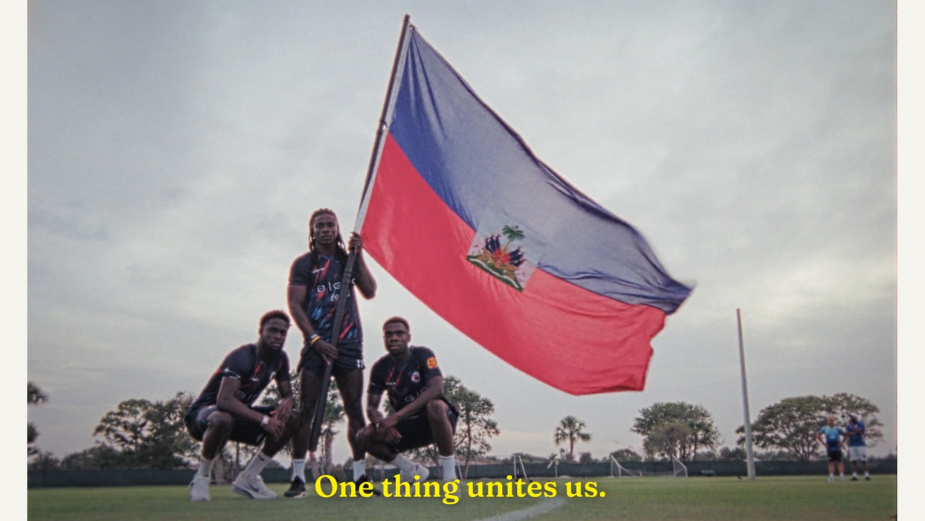
The music choice was deeply intentional, envisioned as a way for Haitians to see themselves represented in the film, and feel that that country’s history and culture was treated with care. Additionally, the sound design helped to steer the narrative as it moved between moments of celebration and moments of reflection. “We wanted the film to feel intimate, but also carry the emotion and scale of what this achievement means.
“It is impossible to understand the importance of this moment without looking at the history behind it,” he says, as he discusses the decision to weave past and present together in the film.
“For Haitians, history is not the past. It is something they carry with them every day,” he explains. “They are the descendants of the only enslaved people who freed themselves and built a nation. That weight and that pride does not leave you. When Haiti returned to the World Cup after 51 years, it was impossible to separate that moment from everything that came before it. You cannot tell this story without telling that one, and this new team is not separate from that history. They are part of the same story.
“We wanted the film to show that connection between generations, and to honour the people who kept believing in this moment long before it finally arrived.”
A tether between the past and present came in the form of a young boy who had walked onto the pitch at the 1974 World Cup. Wearing a Haiti kit and holding a baton aloft, he was a symbol of belonging, pride and dreaming that the production team embraced as a visual metaphor, signalling the passing of the baton from one generation to another.
“For Leo, the image in 1974 really ignited the idea and brought him back to his childhood,” says Nariman. “The uniform and the colours and spirit of the way we dress for celebration, for Kanaval, for Flag Day.
“The baton is about inheritance, responsibility, and hope. One generation carries it for a while and then passes it forward. That image allowed us to connect the past, the current team, and the children who will grow up inspired by this moment.”
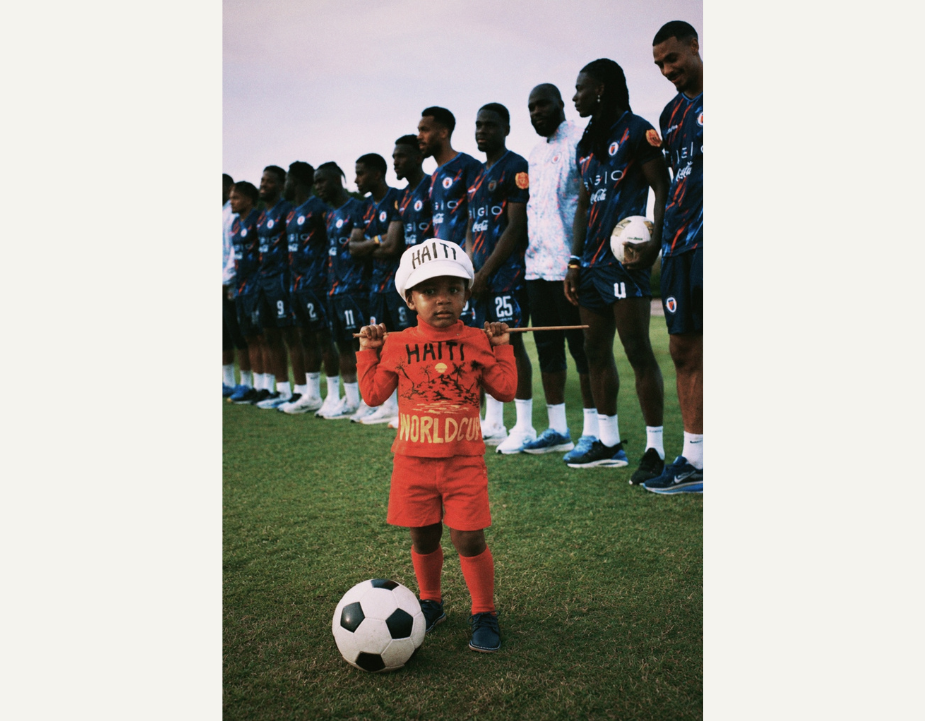
The use of 16mm film, Polaroid and digital also helped to forge the connection between past and present. “We wanted the film to feel like a collection of memories from different generations, so using different formats felt very natural.
“The 16mm gave the footage warmth and a timeless quality,” he explains, while the Polaroids “felt personal”; akin to family photographs kept and passed down over the years. Meanwhile, shooting on digital allowed Leo and Invisible North to capture the national team – also nicknamed ‘The Grenadiers’ – with “more immediacy and freedom” in the midst of their training in Port St. Lucie, Florida.
“The players were preparing for one of the biggest moments of their careers, so their training always had to come first,” Nariman recalls. “We had limited time with them and needed to work around their schedule. That meant being very prepared, flexible, and able to move quickly. We also wanted to be respectful of their space and avoid turning their training environment into a traditional production set.
“In the end, that helped the film feel more honest because we were capturing real moments rather than trying to control everything.”
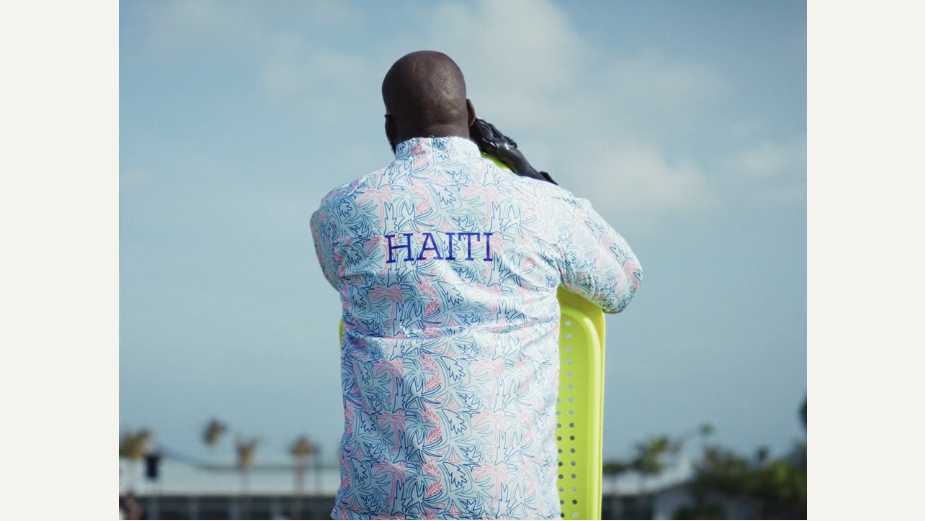
Looking back at the process as a whole, Nariman says that overcoming some of the production-specific hurdles and challenges felt “nothing short of miraculous”. However, he adds that it’s work like this that Invisible North is energised by. “We embrace the challenges and find solutions without sacrificing the creative.”
He adds, “This film reflects the kind of work we care most about. Work that is rooted in culture, has a real emotional point of view, and can live beyond a traditional campaign.
“At Invisible North, we bring creative development and production together, so we can stay close to the idea from the beginning through the final film. This project is a good example of how we like to work, with a strong story, real cultural meaning, and a very collaborative process.”
The reception to the film from Haitians at home and across the diaspora mirrored the team’s initial intentions and ambitions. “People connected with the film not only because of the football, but because of what it represented about Haiti, its history and its future,” says Nariman.
Celebrated widely online and in the press, Nariman notes that the most rewarding part was hearing from people in real life that had seen and connected with the spot. “I was at the DMV and saw someone wearing a Haiti jersey. I approached him and asked if he had seen the film, and he immediately became emotional. Honestly, that was one of the biggest highlights of my career!
“Football was the reason for the film,” he continues, “but the deeper story is about identity, pride, resilience, and the power of a country seeing itself move forward and we are honoured to be part of it.”


