


Taste, According to Nils Leonard, Justine Armour and Franki Goodwin


Taste is quickly becoming adland’s hottest buzzword. And amid AI’s proliferation, taste and discernment are being positioned as the ultimate human differentiator.
That’s all well and good on an individual level but what does it mean when you're leading creative on global brands looking to reach everyone on the planet? And before we get that far, how do you account for, and design culture and processes around, something that’s difficult to even define?
On the LBB & Friends Beach during Cannes Lions 2026, a panel of creative luminaries were tasked with the challenge of unravelling these very questions. Moderator Zhenya Tsenzharyk, LBB’s managing editor, editorial strategy, was joined by Uncommon founder Nils Leonard, 72andSunny’s international chief creative officer, Justine Armour, and Saatchi & Saatchi’s chief creative officer, Franki Goodwin.
What even is ‘taste’?
“If you're a creative, you've been fanboying or fangirling over taste your whole career,” began Nils. “AI has appeared and reminded everybody that all the meaningless cack can be done by something else. Taste isn't a new conversation, it's just a really relevant one that, thank God, the world has reminded us matters.”
Seeking to define the collection of intangibles that constitute taste, he made the distinction between ‘taste’ and simply ‘making good decisions around work’. “Decisions around fame and impact are mechanical decisions,” he said. “Does it dance on a friction? Does it have a new idea or truth inside it? These are questions everyone can ask. They're nothing to do with taste… Taste is how you execute.”
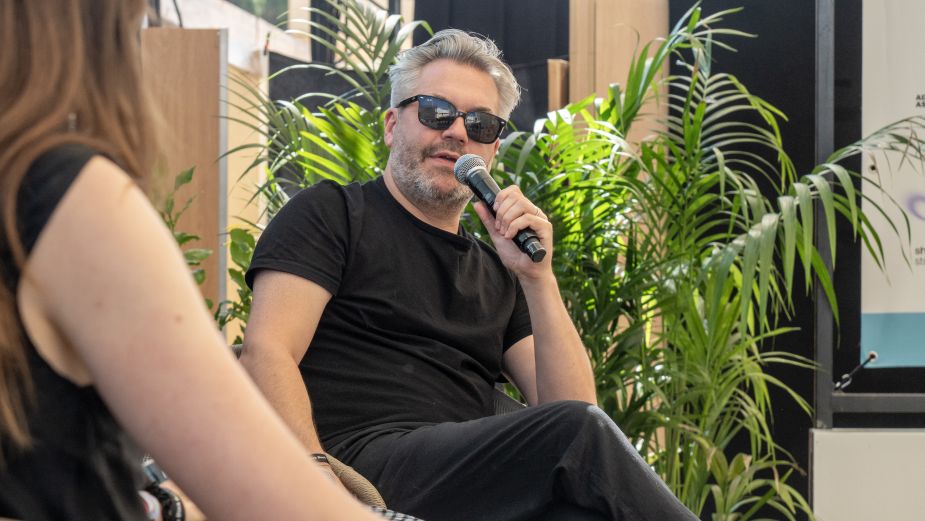
“It's the accumulation of everything you've ever been obsessed with,” offered Justine, “every life experience, your whole humanity, which becomes your intuition in the work.” Like Nils, she also believes that taste and discernment are “incredibly poignant” in today’s environment where certain parts of the creative process have been devalued, and AI offers an “infinite supply of creative ideas”.
“As a young creative, I used to think [taste] was just about knowing what was cool,” she added. “But as you get more experience, you realise it's actually understanding what work resonates with people, not just you.” And, as Franki was quick to highlight, what resonates is always changing. “It evolves, it's not like you go to art college and then you're like, ‘I have it, I can see it all in front of me’,” said the Saatchi CCO. “You learn the rules and then you break the rules, and then the rules change.”
Despite some of these rules being identifiable in the moment, the panellists agreed that you can’t simply put some ‘tasteful signifiers’ into AI tools and expect tasteful work. For them, taste runs deeper than the aesthetic.
“It's the human meaning behind it,” explained Justine. “We all have references, but if you don't have the human, emotional meaning behind it, it will always be empty.” Franki added, “It actively tries to stop you coming up with new things… I have a little rallying cry at Saatchi, which is: ‘I'm sick of the references, be the reference’. And that could never be more relevant than now.”
“Endeavour, which is intangible, is something you can feel in work,” said Nils. “And it sounds mad, but it's true. You know when something has been worked on. You can feel, in the experience of an object or a film, real human work. I think we make light of that, but AI is attempting to have this conversation where it's saying ‘the output is just the same’. It's not. It doesn't hit.”
Leading tasteful agencies
For Nils, the work that ‘does hit’ – that which exemplifies good taste – includes the creative from agency Isle of Any. “I'm annoyed by those guys,” he joked. “They have high taste, man. All the work is on a level; they are fucking class and I'm so glad they've done what they've done. And it’s not just Coinbase, by the way… The way they executed their New York Times work was fucking phenomenal.”
Coinbase -- 'Your Way Out', Isle of Any
For Justine, Mother’s work for Anthropic’s AI assistant Claude (winner of this year’s Film Grand Prix) is a recent example of “absolute perfection”, when it comes to taste. And for Franki, her envy of Apple’s tasteful creative output only continues. “They just keep making great stuff. They made a brilliant short film this year with Stormzy. They also made brilliant Christmas ads and… won their first Grand Prix in Design this week for a logo.”
Above: Apple TV Rebrand
But how are the creatives behind these examples, as well as the panellists’ own agencies, implementing taste at scale across their organisations? For Justine, it’s all about putting “outlier thinkers” on the team. “Consensus doesn't really get you anywhere interesting,” she said. “As creative leaders, the choices we make about who's on the team and who’s working on what is as much a part of the creative taste conversation.
“Consensus will get you to efficient work but efficiency has never been the goal of creativity,” she continued. “AI makes a lot of acceptable work, but doesn't make you love it. You've got to do the things that a few people will absolutely love.”
“I don't think we should make work for anyone but ourselves, and I mean that sincerely,” added Nils. “If you think about the millions of people you're trying to appease, what are you going to do with that? You're just going to round the edges of any idea to make it unremarkable. The hardest thing in the world is to make something new. And you'll know it when you see it. That's our job. And if we try to write for other people, we're removing our power as artists. People come to us to make things that might just hit, and might just matter. And I can tell you now, artists aren't making work for us; they're making it for them.”
Rejecting the idea that large-scale creative necessitates a shift to the middle, he pointed out that the ideas which scale are often not the generic ones. “The most watched entertainment in the world is the most provocative,” he says. “‘Game of Thrones’, probably the biggest show in the world – every other word is the C-bomb, everyone's shagging each other or murdering people. It's completely unfiltered and we fucking love it. So when we're having a chat about global brands, and that's the most watched show – people are paying to watch that – the lessons are clear.”
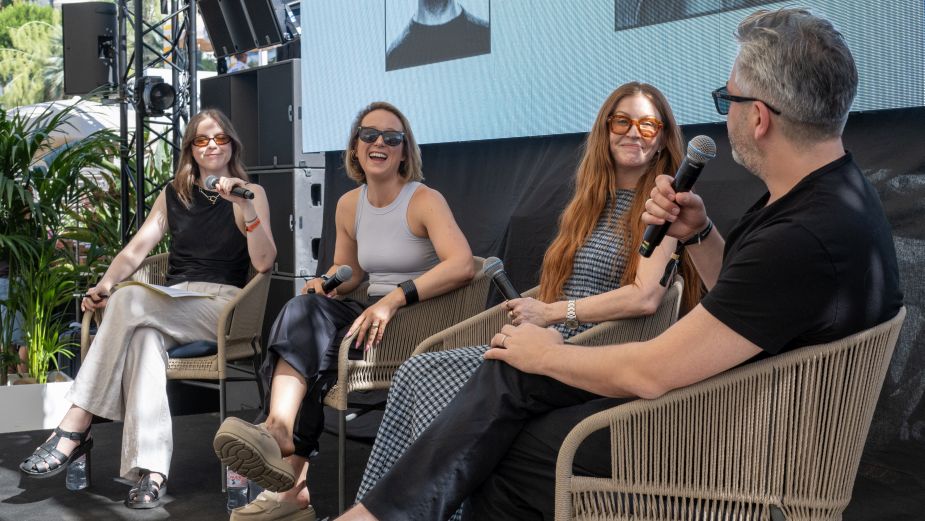
Justine affirmed, “Generic doesn't scale. You have to pay for generic to get exposure. Think about Liquid Death, I would say it’s the most ‘Game of Thrones’ brand there is; it’s so unhinged but it's got a very clear point of view and it shows up in a lot of different ways, and it's definitely global.”
Franki looked to the current box office successes for evidence of this. “You've got ‘Backrooms’ as the highest grossing film, and ‘Obsession’. The audience is craving low budget,” she said, describing audiences’ growing apathy towards blockbuster franchises like ‘Avengers’. “They have a beveling, shiny, plastic kind of thing, and it's regurgitating. Even though it's obviously not made in AI, it's sort of ‘giving’ AI… They always look the same and somehow in Hollywood, the CGI got worse… But now they’re commissioning YouTubers who are 20 years old to make insane shit, and that’s a global insight we should take.”
Can taste and data co-exist?
In Hollywood and adland alike, data is highly coveted, but something as intangible and ephemeral as taste can sometimes defy the numbers. It’s here when creative leaders’ instincts kick in. “Sometimes you do something and everyone goes, ‘Why?’. And you literally have to go, ‘Because it just works’. And that's really, really scary. It's scary because there's no rationalisation,” explained Franki.
“The joy of data is that you can get it to say anything you want and back up any argument you want. It's an input and then the output is what you do with that. It’s useful, but it can be cut in so many ways – don't get me started on research,” she grinned. “It’s helpful and provocative but also sometimes it's not. Sometimes the anomalies in data are way more interesting than the trends.”
“They're two tools,” added Justine. “Your data's going to tell you everything that happened and everything that is happening already. And then your taste is about what is in the future. What can we do with it?”
Nils agreed that data can unlock provocative positionings but “won't make you throw a chair across the room”, saying, “We're presented with the truth every day in the news about things that are, frankly, unacceptable. And it doesn't fucking change anything. And that's because it's not been made emotional by somebody else. That is the trick… Without the work, the data is irrelevant.”
Who are the taste-makers?
With this renewed call for taste in an data-powered, AI era, the question is raised of who should, or can, be the taste-makers of today.
Justine suggested that this is where older, more experienced creatives may have an opportunity to expand their careers and combat ageism. “What's going to be valuable is knowing what not to make,” she said. “It's important to have people with decades of exposure who have made mistakes and know where not to go. They’re the ones who are able to help us decide which, of the infinite choices we have, are the valid choices.”
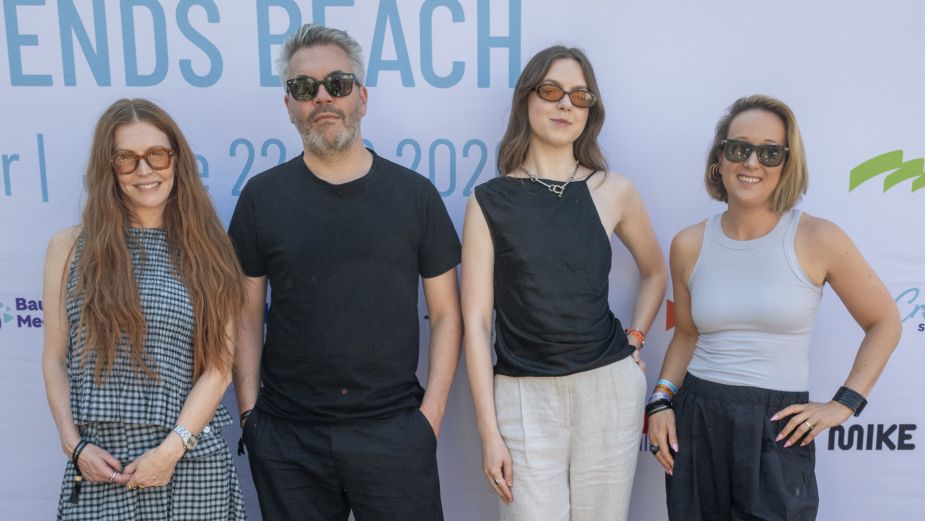
Above: (L-R) Justine Armour, Nils Leonard, Zhenya Tsenzharyk, Franki Goodwin
Though, with taste becoming the word of the moment, creatives aren’t the only people looking to prove they have it. In February of this year, OpenAI's president said taste is ‘a new core skill’, echoing the sentiments of a former colleague who had described taste as a ‘distinguishing factor in the age of AI’. With the architects of this technology eyeing up taste as their next frontier, should creatives pay attention? Nils thinks not.
“They're not cool! Why are we asking them about taste?” he laughed. “Alexander McQueen can talk about taste, Virgil Abloh can talk about taste. What the fuck are we doing, man? ‘Blah blah blah who owns OpenAI said ‘this’ on taste’… I don't give a shit!”
Justine added, “In the tech world, taste's the one thing they don't have that they can try to pay for. But it's something that you learn over the years; you're not going to wake up rich one day and sit front row at a runway or go to the Met Gala and suddenly have taste. You bought something; taste is a life, it’s knowledge that you accumulate over your lifetime and through all of your human experiences, and that cannot be bought.”
Getting a taste for taste
So for creatives looking to develop their taste through their daily actions, what can they do? Justine put it plainly: “Have an interesting life.”
She elaborated, “Go and get nerdy about something that's got absolutely nothing to do with advertising. See everything, read everything. Get fascinated by all kinds of art and culture. Be in love; getting your heart broken is really good for getting into poetry. The collisions of you and all those things become your creative taste.”
“Go to galleries, go to the theatre!” added Franki. “Keep imbibing the things that people are making and have opinions about them, recommend them and talk about them. That’s how interesting artists get funded as well, so champion the things that you love!”
Rounding out the panel in agreement, Nils invoked the former Vogue editor-in-chief Anna Wintour, who has been on record saying that taste can be improved with ‘the obsessive accumulation of high quality inputs’.
“The inputs we take on are the taste we end up spitting out; you are the sum of everything you've ever seen, heard and been moved by,” he said. “And despite this incredible claim that, with the internet and social media, the world's never been so available, we're all watching the same shit. More than ever, we’re on the same platforms, listening to the same stuff, watching the same crap. So do your homework, look at old stuff!”
“Be a collector!” he added. “When you're hit by something, take a photo, record it. Literally, I record stuff in the street. If you feel it, learn to collect it, and learn to decode why it hit you. That's the skill.”


