


Dave Bowman’s Record Obsession Takes Him Down Rabbit Holes and Into Abandoned Nightclubs


It’s 2002 and Dave Bowman is in a gold-wheeled Cadillac, headed to a boarded-up nightclub in Syracuse, New York.
The acclaimed creative leader had spent years hunting for a specific record -- a song called ‘Funky Thing’ by Larry Ellis and the Black Hammer. He’d called every person with the surname Ellis who lived in Washington DC, New York City, Buffalo, and Syracuse. He used to do that a lot: get home from working in an Australian creative agency as late as 1am, then spend a few hours cold-calling US-based artists behind songs he loved.
“I'd find the most obscure looking name on a record label and then call everyone in the phone book from the state that record had come from,” he tells LBB. “I used to do that every night of the week.”
In the case of ‘Funky Thing’, he hit dead end after dead end. “One of the band members had died of a heroin overdose. Another was in jail.” Then, he found Larry’s manager, who revealed he owned a nightclub. He’d locked the doors on it in the 1970s; it had been boarded up ever since. Perhaps the record -- a 45, holding a single song -- had been left in the abandoned jukebox?
When the green Cadillac pulled up to the nightclub 24 years ago, the motley crew crowbarred open the doors. A thick layer of dust, “like an inch”, coated everything. Unopened cans of Budweiser lined the bar. There was the jukebox, untouched for 30 years. And once it was prised open, “there's a copy of this 45 in there.”
‘Funky Thing’ was reissued; a few thousand copies printed. A few months later, Larry sent Dave the original as a token of his gratitude. It’s his favourite record of the 11,000 he owns.
Publicis Groupe’s AUNZ chief creative officer confesses he has a “psychological problem, and I don't say that as a joke”: he is obsessed with collecting rare records. Specifically, soul and funk records from the 1960s.
It started when he was a kid. Growing up, he was exposed to an eclectic array of music. His mum had dreams of becoming a concert pianist; he listened to her play everyday. He learned himself, but “was terrible”. Cut to the 1990s -- Dave hated high school maths, so spent his lessons listening to the radio on his Walkman, one earphone in.
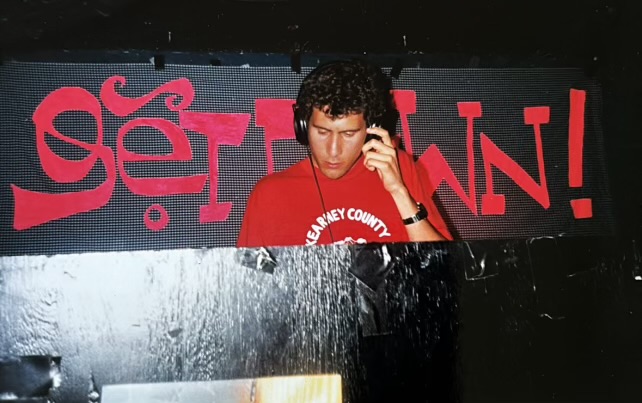
“The names of songs that I really liked, I would just write them down in my maths book,” he recalls. “I went down a slippery slope … And you can see the scale of the problem.”
We’re speaking on a video call, and at this point, Dave lifts his laptop and turns it, so the camera pans over a five-metre-high wall of blue shelves, built a year ago to store his sprawling collection. There is a library-esque ladder, and a shelf of his most precious records.
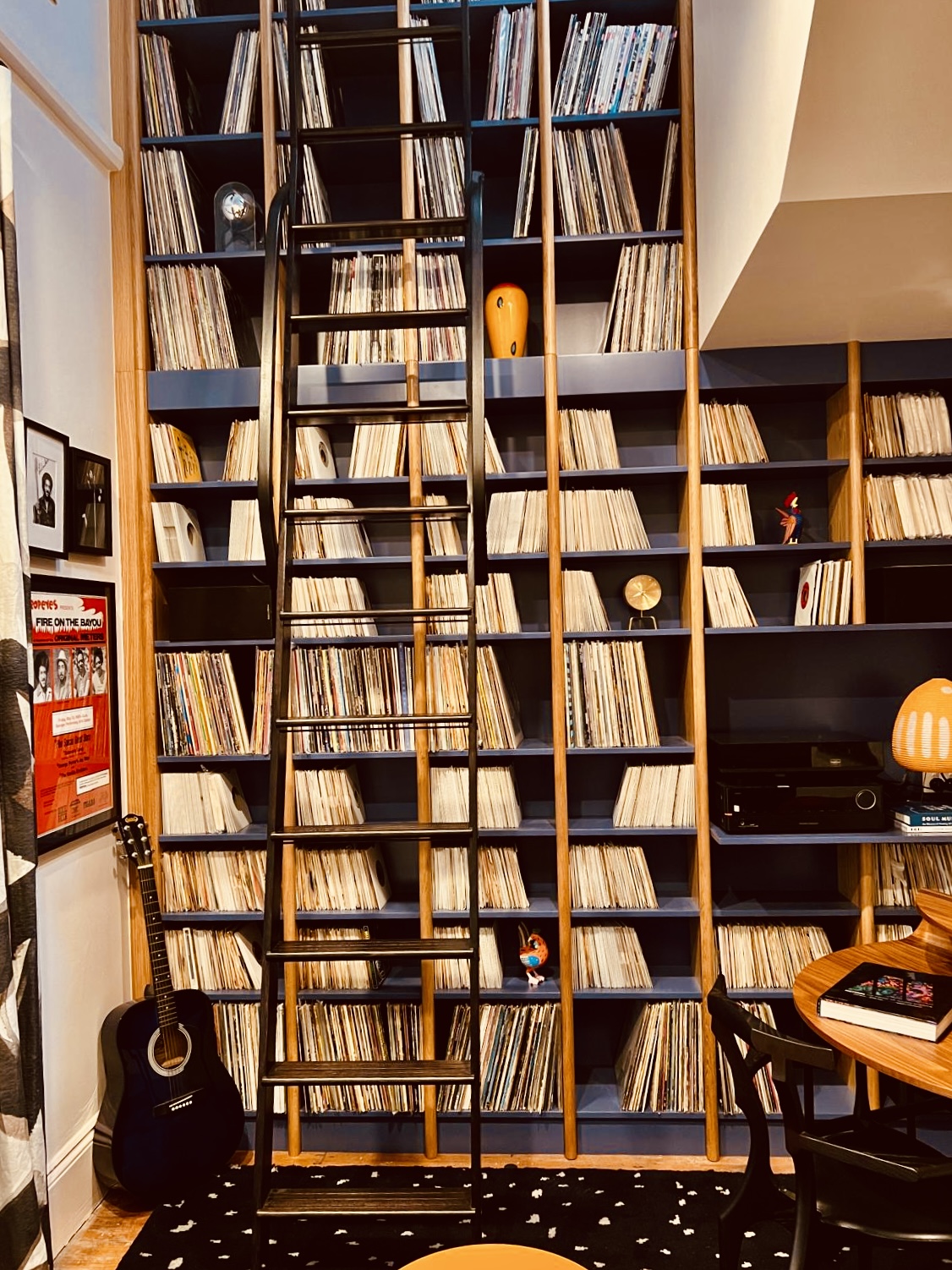
When he lived at an old apartment in Sydney’s inner-west, Dave called the fire brigade on a plastics factory blaze across the road. It burned for two weeks, the building melted, and a wall collapsed onto his balcony. “Ever since then, I have a shelf” of “the most spiritually and financially important items” in case of an emergency.
An emergency-level misfortune is the only time he’ll ever move a chunk of the records again, he promises. He’s moved the collection five or six times, between houses and storage units and across oceans.
“It's a real problem. You lose a lot of friends moving house. I've had people come and go, ‘I'll give you a hand’ and [then they see the collection and] they're like, ‘Oh god, no, this is terrible.’”
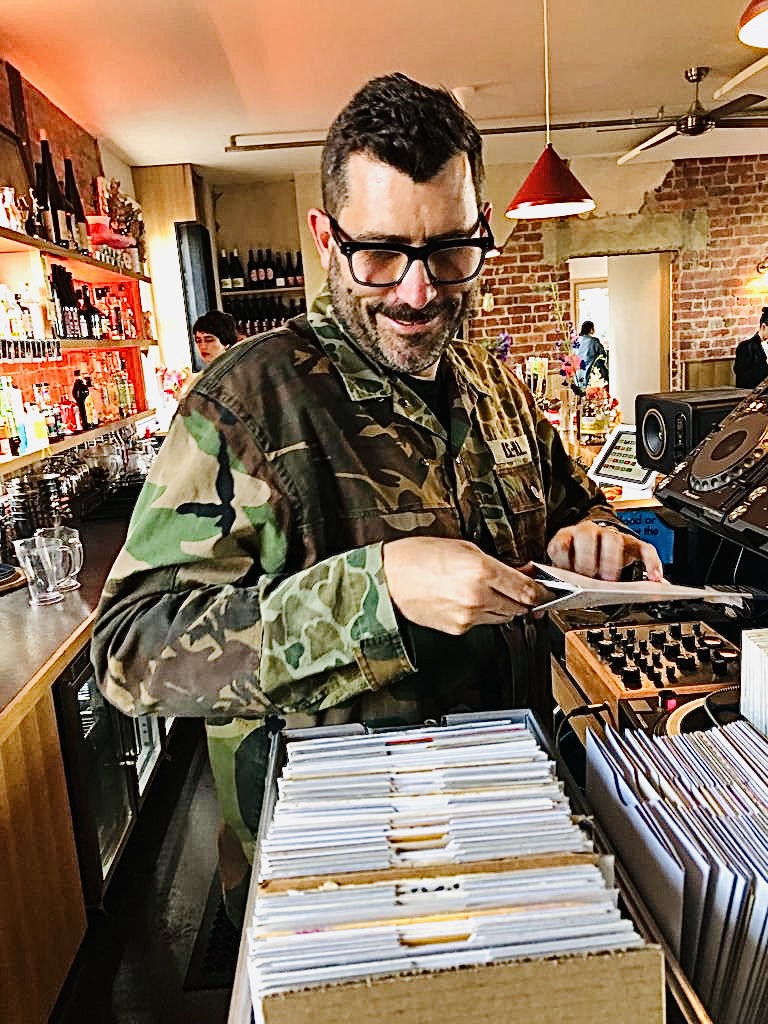
His cataloguing system has suffered as a result. “At the moment, I could very easily find 45s, but albums are a bit of a nightmare because I've kind of got them [sorted] by genre of music and nothing much beyond that.” Chunks of his archive are alphabetised within genre -- he plans to eventually catalogue by year -- and a pile of recently-acquired records are grouped in a corner, waiting to be filed. He doesn’t recommend following in his footsteps.
“If someone's into that music and I ever talk to them, I'm like, ‘Don't buy a record player. That's a really stupid idea because it will start shifting your attention from what it should be, which is listening to music, to owning a thing,’” he says.
“Or, and this happens a lot, getting into some weird competitive thing with other people around the world.”
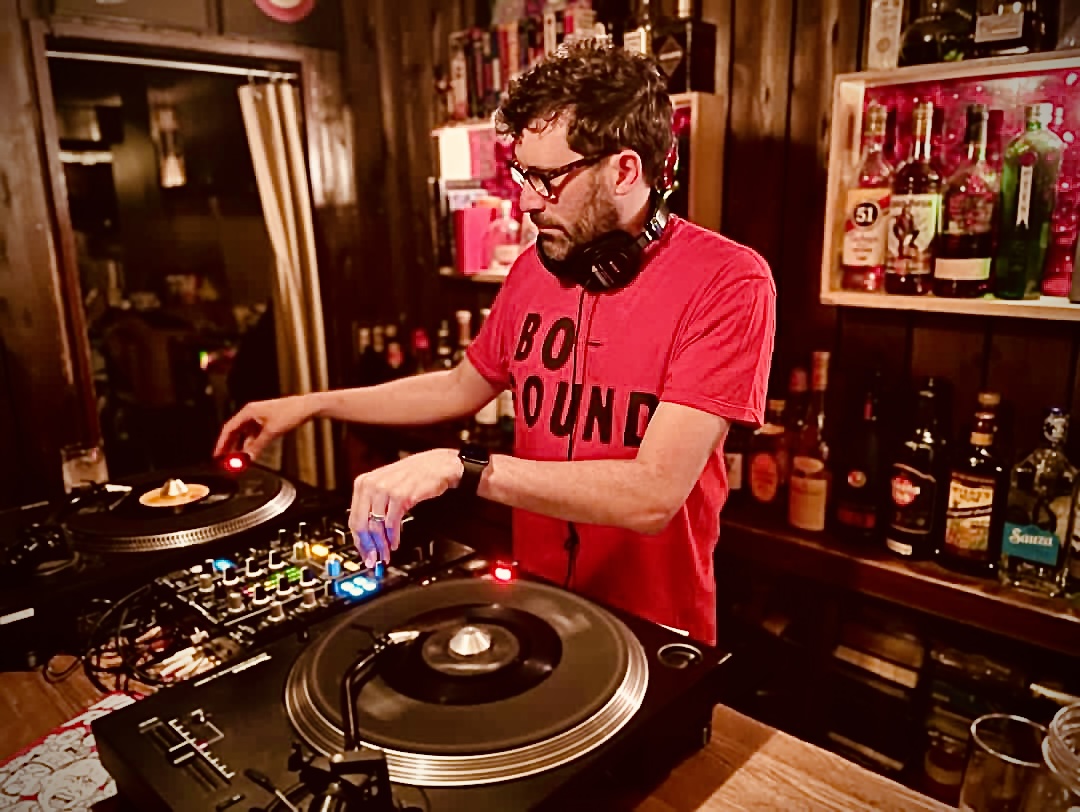
He struggles to articulate just why he’s so obsessed. It isn’t about listening to the songs -- “a lot of that stuff is on Spotify now.” It’s sort of about staying close to the music scene. In the early 2000s, he was in a band called PVT -- “we were runner-up Triple J Album of the Year,” he says. “We lost to Wolfmother” -- but left when his advertising career took him to New Zealand and touring became tough.
It is about collecting something rare, the thrill of the chase, and the deep satisfaction that comes from solving a mystery and building a network of just-as-obsessed friends across the world.
He used to fly to the US, spend days sorting through thousands of records, then take his purchases to Japan to resell them at a higher value. The profits would fund the next US trip. At one point, he spent three or four months in America, finding records and interviewing artists.
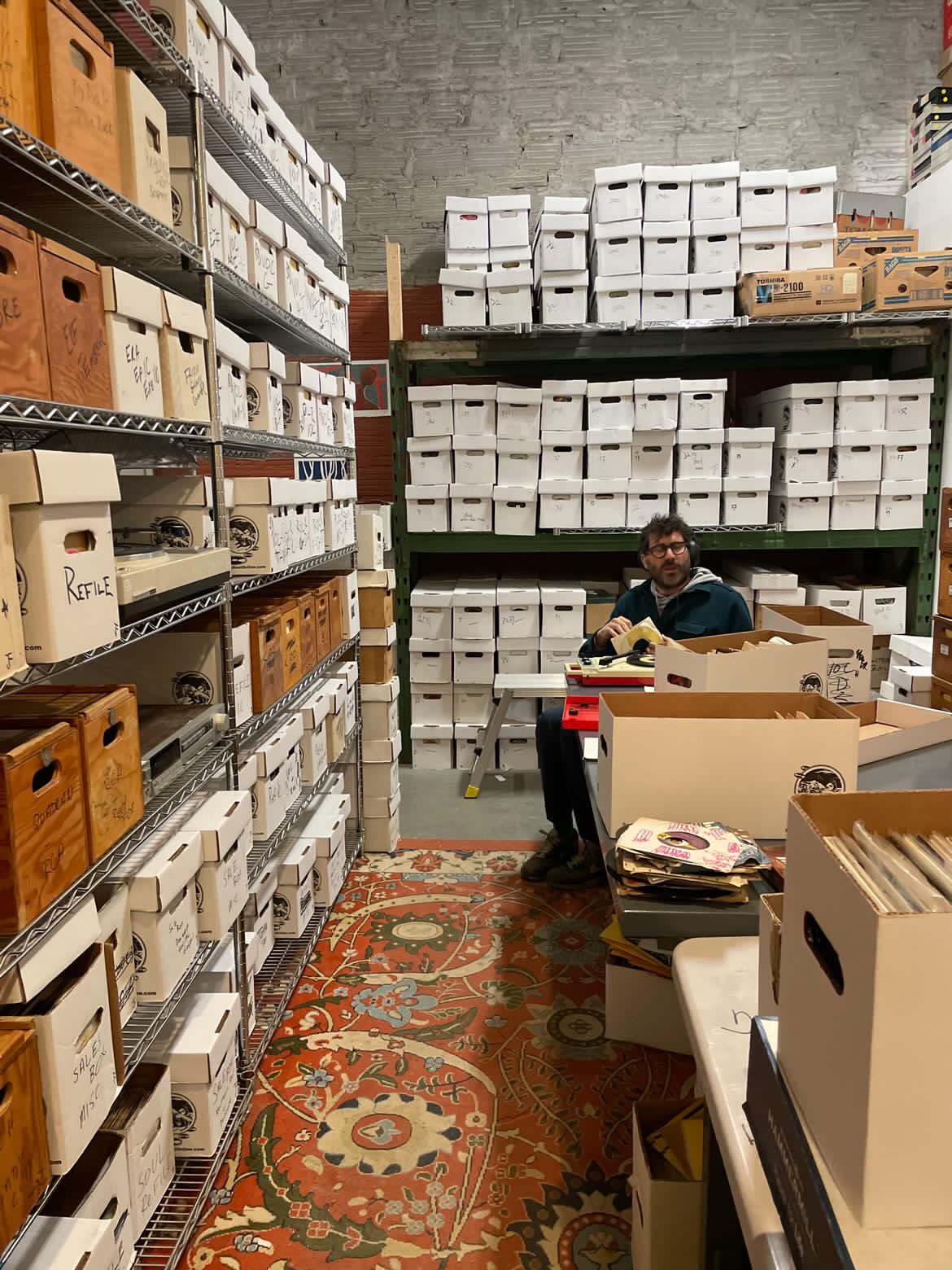
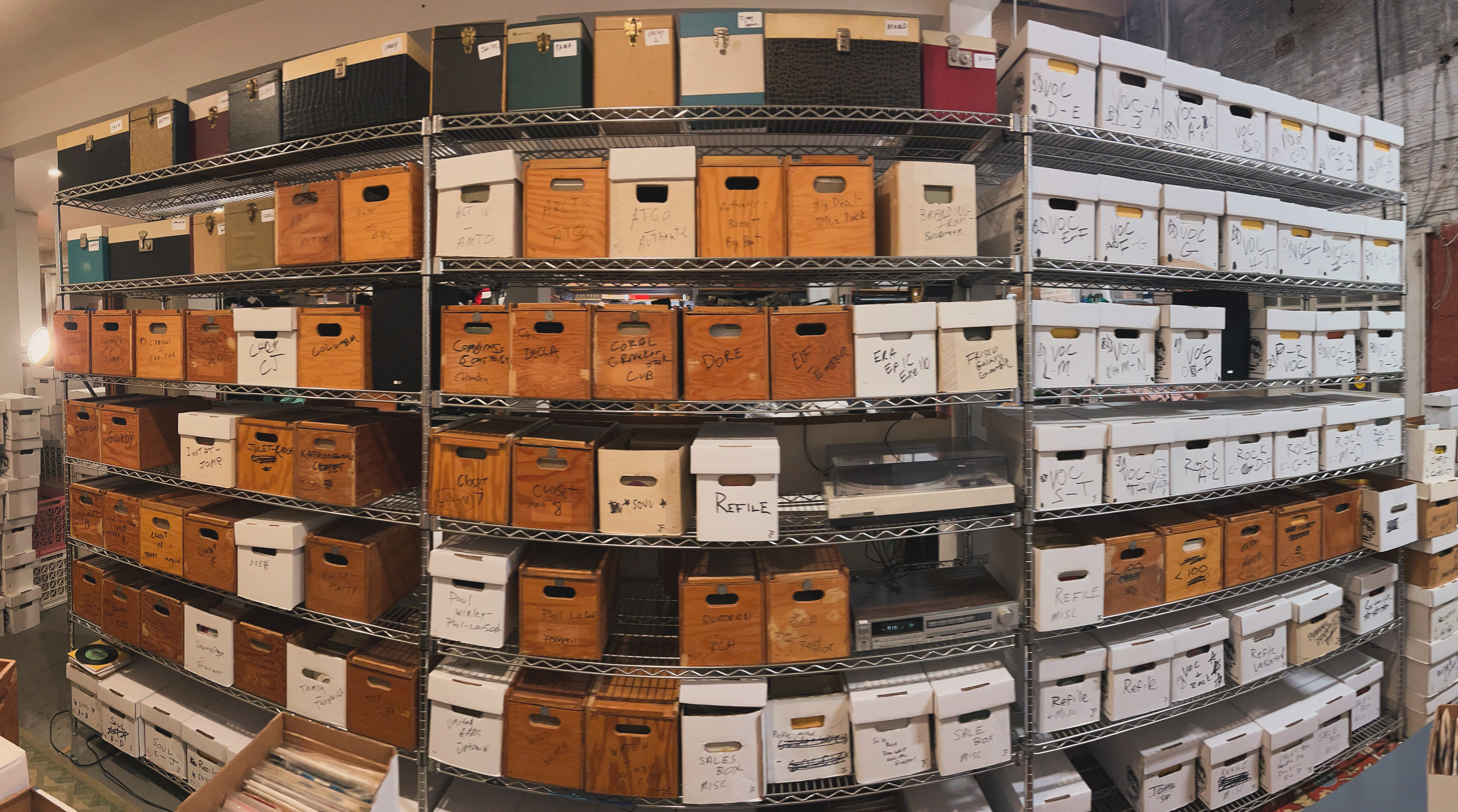
“It would be like this weird little flywheel: go buy things in America cheap, fly to Japan, sell them for lots of money, or trade them for other records I didn't have, and then repeat.”
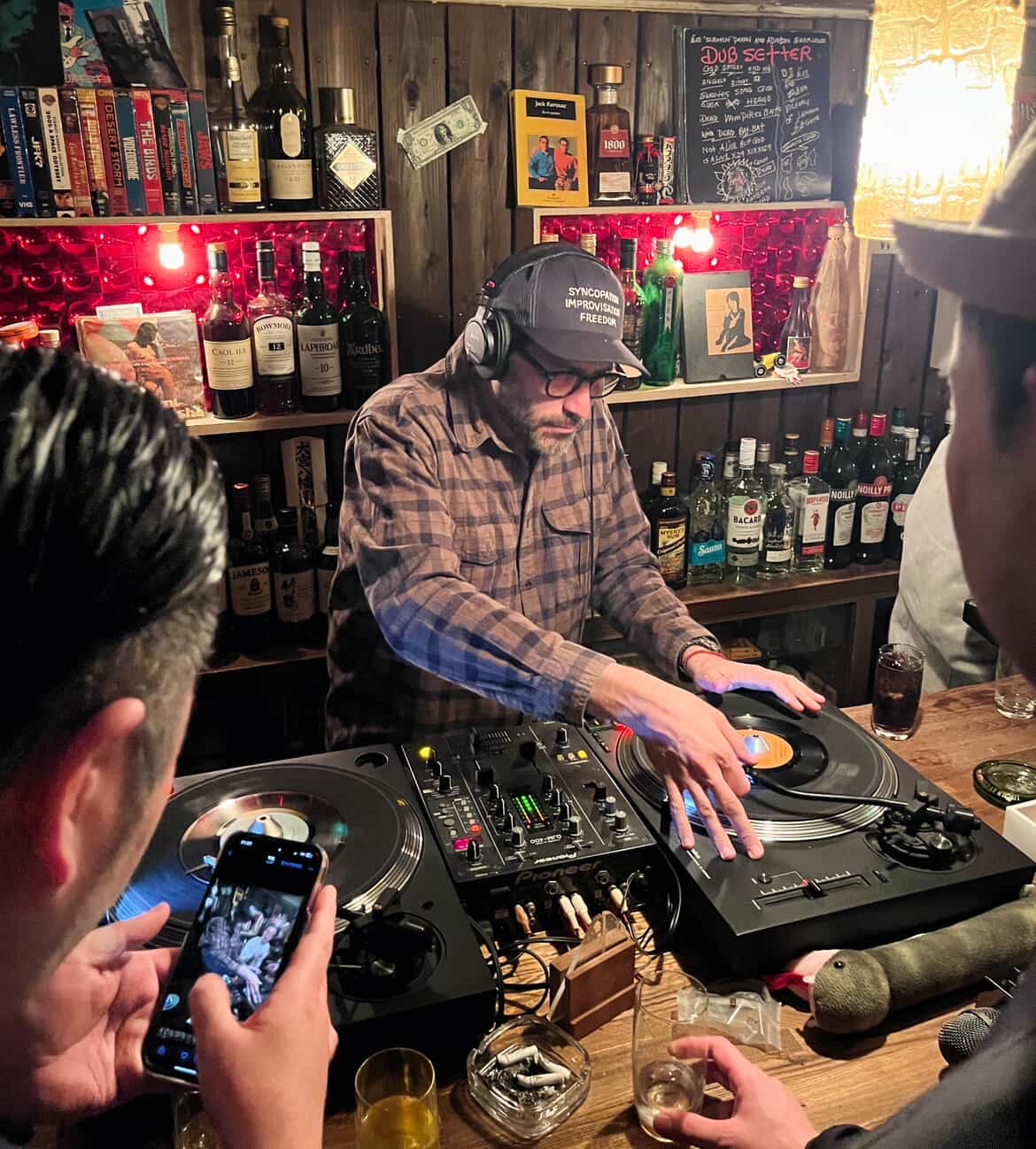
He travels to Japan to DJ -- he’s going again next month -- where he has a “record crew”. He’s seen fellow obsessives DJ with “hot boxes” -- a collection of ultra-rare records valued up to $5,000 apiece. The niche scene has also served as an “accidental tourism hack”. For example, in 2007 or 2008, he judged the LIA Awards in Las Vegas, and took his fellow ad execs to a music event for hospitality workers hosted in a gravel carpark.
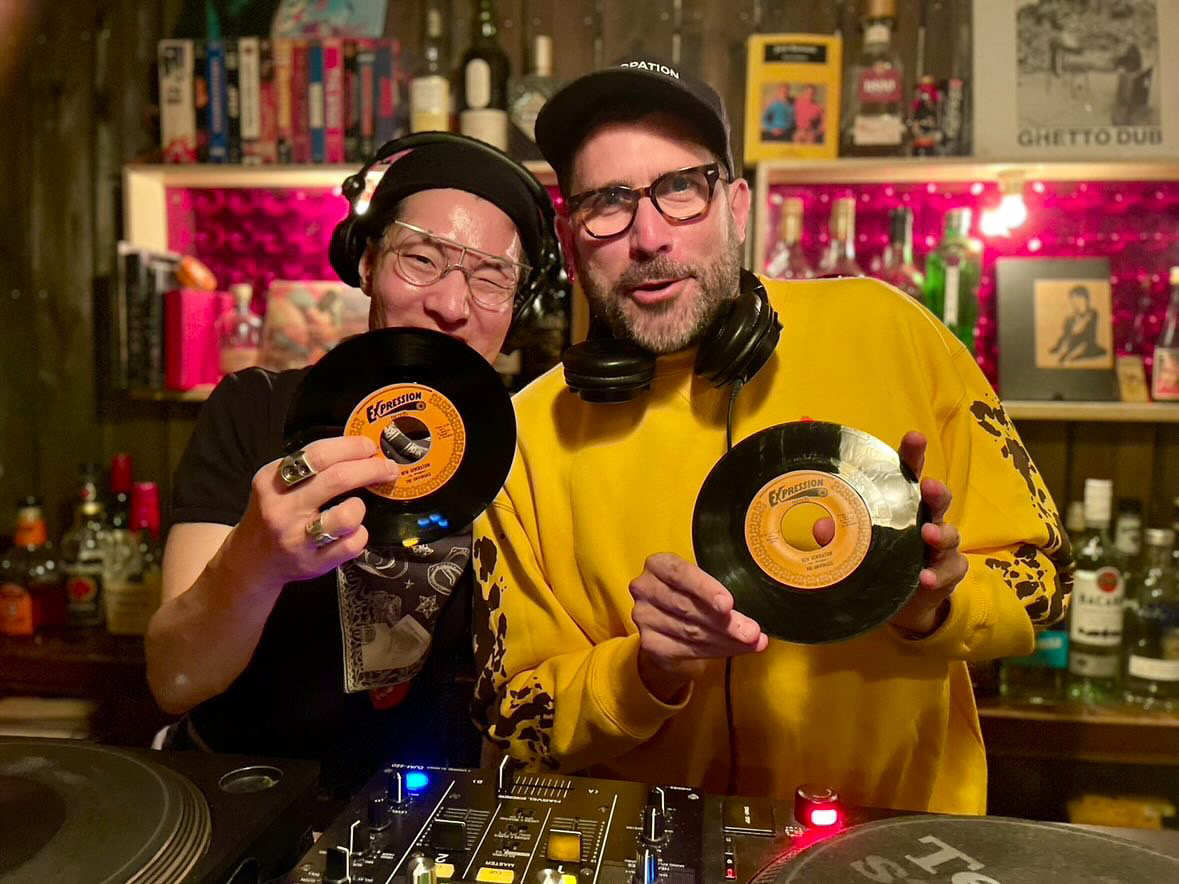


Now, he tries to find gems on eBay: mislabelled records listed by amateurs who don’t understand the value of the thing they’re selling. Last year, he won an auction for a “one-of-one unreleased song by James Brown” sold by a furniture dealer. The records degrade quickly when played, so he made eight copies -- “one for myself, and then one for all of my record crew in Japan”. His kids drew the label designs, and he presented the gifts on a DJing trip last Christmas.
“Two of the crew just immediately broke down in tears. It was actually the loveliest thing I’ve ever experienced.”
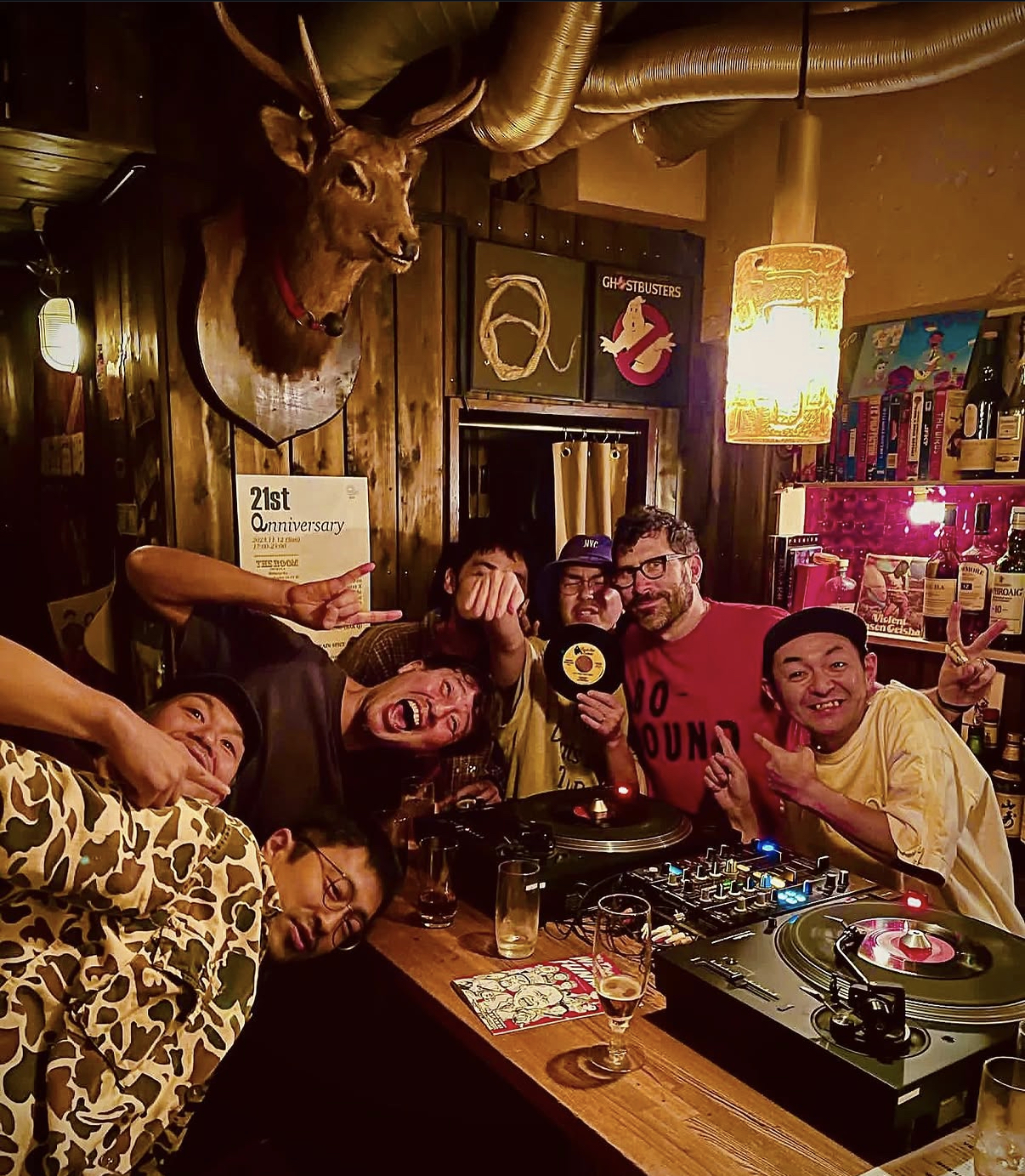
He wonders if that’s actually what he loves about this deep, “weird” obsession he doesn’t completely understand: it’s not just that these old songs connect him with new people. It’s that he gets to unearth the stories behind them.
The reason these records are rare, he observes, is because the artists ultimately weren’t successful. “They made 100 copies or 200 or 500 copies of this thing, no one bought it.” Many of them are 45s because those artists couldn’t afford to produce a whole album -- a single on a 45 was the “cheapest possible way to get something out in the world”.
“No one was trying to be obscure,” he says. “The amount of raw energy that these people put into that artefact… it's everything.”
He’s tracked down a lot of artists over the past 30 years. Most of them have “moved on,” Dave says. “They're preachers, mechanics, school teachers, engineers.” Sometimes, they’ve forgotten about the song they made 50 years ago. Often, they’re surprised when he reveals they have unknowingly built a niche, passionate fan base.
“You're like, 'I think it's awesome. And there's all these other people who think it's awesome. And I played your record in Japan last year and this is the crowd listening to your record in Japan on a Saturday night.' That blows people's minds because the thing that failed for them has been a secret success.”
A few years ago, when Larry, the artist behind ‘Funky Thing’, was on his deathbed, well after the record was found trapped inside that boarded-up nightclub, Dave told him Jay-Z had sampled the song on a track, and Larry received an out-of-court settlement of around USD$80,000.
“It's not mainstream cool, but I love the fact that energy gets inserted back into someone's life 50 years on when they're an older person. They get this moment of, 'Ah. I knew there was something in that.'”
–
This is the first in an LBB AUNZ series charting execs’ true obsessions. Next up: watches and steam trains. If you’re a leader who is truly obsessed with something, get in touch with brittney@lbbonline.com


