


“Don’t Do Things Because You Can. Do Things Because You Should” – Say the Women Leading the Future of Production


On Thursday afternoon at the LBB & Friends Beach, four leaders from across the global production landscape joined LBB founder and CEO Matt Cooper for a conversation titled ‘Calling the Shots: The Women Leading the Future of Production’.
While the title positioned the session around female leadership, the discussion quickly expanded into an exploration of the ways in which the discipline is evolving, from execution to strategy. Each of the speakers cited their own experiences when explaining what that means for creativity, AI, craft and the next generation of producers. Regardless of gender, this was a talk about the future of production through the lens of important people who are already building it.
Drawing on experiences spanning agencies, global production networks and independent production companies, Claire Young, CEO of Girl&Bear; Laura Davis, chief client officer at Publicis Production US; Melissa Tifrere, chief production officer at Havas Creative; Angharad ‘AJ’ Jones, global chief strategy officer at Omnicom Production; and Ali Brown, president of PRETTYBIRD and Ventureland, explored what that shift means for creativity, AI, craft, commercial models and the next generation of producers.
Rather than debating whether production belongs at the decision-making table, the panel assumed it already does. The conversation instead focused on what today's production leaders must do once they have that seat: build operating models that scale, embrace new technology without sacrificing judgement, and protect creative craft while helping brands produce more work than ever before.
How to Produce Exceptional Work
The first theme to emerge was that, despite the industry's rapid pace of change, the essence of production has remained remarkably consistent. AI, new platforms and changing client demands may have altered the landscape, but the job itself is still about solving creative problems.
"My job has always been to say yes," said Laura. "Now, I feel like there's just more possibilities and more ways to say yes to bigger, more ambitious production opportunities."
All were in agreement that the volume of work, however, has changed dramatically.
Brands expect more assets across more platforms than ever before, often with the same budgets and tighter deadlines. Melissa explained that success now depends less on working harder, and more on planning smarter, with production teams designing shoots capable of generating everything from hero films to social-first content in a single production.
For Claire, those changing demands have elevated production's role within agencies. "What we're seeing our clients needing is production strategies and operating models," she explained. "Production conversations are on a par with strategic conversations and creative conversations."
It was perhaps the clearest indication of how production has matured from a service department into a business discipline capable of shaping how brands create work at scale.
Unsurprisingly, AI occupied part of the conversation, but with considerably more nuance than in other discussions. Rather than seeing it as either a threat or a silver bullet, the panel repeatedly returned to the important role of human judgement.
"It's knowing when to bring it in and having intention behind using it," said Melissa. "You still need the human craft."
Laura agreed, arguing that technology should always serve creativity, not dictate it.
"The AI has to be in service to the idea," she said. "The idea can't be in service of AI."
According to these leaders, AI is expanding what's possible, enabling teams to work more efficiently behind the scenes while opening new creative opportunities for clients. It is not, as many suggest, replacing producers.
In fact, as AJ noted, it has become a powerful tool for producers who are helping brands solve increasingly complex content challenges, even if audiences never realise AI played a role in the finished work. Plus, if AI lowers the barrier to creating content, as the panel suggested, then taste has become even more valuable.
"Taste and craft are the best bedfellows," AJ observed. "When those two things go together, that's when the work becomes really exceptional."
Ali took that idea a step further, arguing that while different projects demand different levels of craft, exceptional taste remains the constant that clients are ultimately investing in.
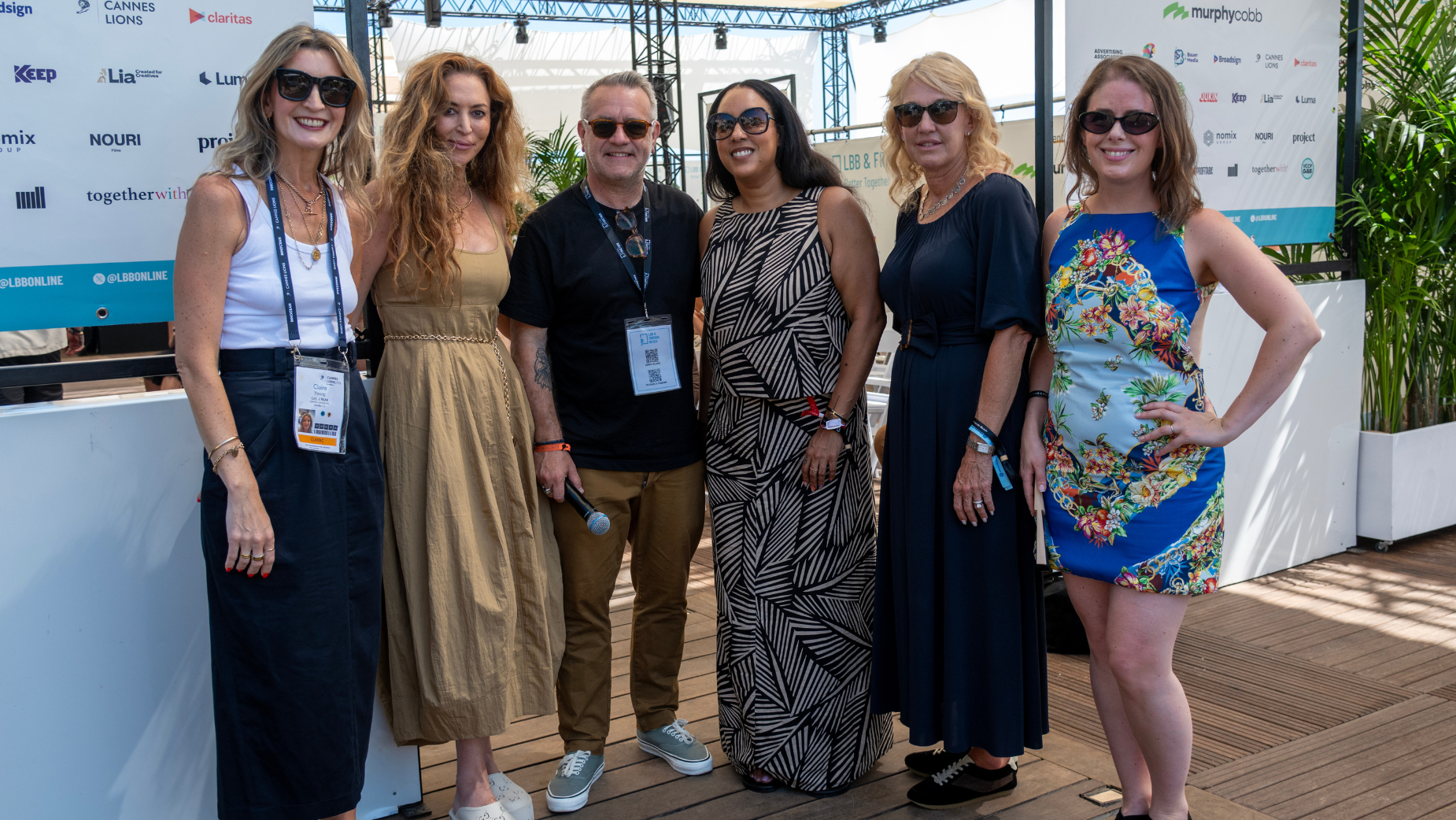
Left to right: Claire Young, Ali Bird, Matt Cooper, Melissa Tifrere, Laura Davis, and Angharad ‘AJ’ Jones
Doing the Work for the Right Reasons
The conversation also challenged the assumption that producing more content automatically creates more value. Instead, the panellists questioned whether the industry has become too comfortable generating assets simply because technology makes it possible.
"I don't believe in filling the digital landfill," Laura said. "Don't do things because you can. Do things because you should."
Echoing this sentiment, AJ pointed to the industry's startling statistic that 52% of content produced is never ultimately used, arguing that production leaders have an increasingly important responsibility not only to create content, but to help clients determine what deserves to exist in the first place.
Later, discussion turned to long-form storytelling, where several panellists saw significant opportunities for brands to become genuine entertainment producers rather than advertisers.
Ali, for one, believes the convergence of entertainment and advertising is only accelerating, and feels excited when imagining a future where brands are actively contributing to the culture.
Marvelling at this concept, she said, "You're becoming ubiquitous with how your brand is attached to pop culture in so many different ways.”
As the session drew to a close, LBB’s CEO, Matt Cooper, asked what qualities tomorrow's producers would need. The answers varied: flexibility, curiosity, adaptability, authenticity were all seen as valid and useful. But, one common throughline was that, like it or not, this is an industry where job descriptions are becoming increasingly fluid.
Laura finished up by encouraging young producers to deliberately seek discomfort, arguing that growth comes from tackling unfamiliar challenges. Meanwhile, Claire urged newcomers not to become "sloppy", despite the convenience of new technologies, while Melissa stressed the importance of staying curious in an industry changing almost daily.
Ali Brown, however, offered the panel's most memorable piece of advice. Inspired by guidance she once received from veteran producer John McAdory, she described how producers should communicate under pressure.
"He said his teacher told him, 'Deliver all the information like you're the pilot of a plane'. If you're arriving early, tell everyone to relax and enjoy the ride. If there's turbulence coming, tell them to put on their oxygen masks. Just deliver it like the pilot."
For Ali, the metaphor perfectly captures what modern production leadership requires: remaining calm amid uncertainty, while giving everyone else confidence that they'll arrive safely.
"To every future producer," she concluded, "be the pilot."
Find out what else is happening on LBB &Friends Beach here
Read more about Cannes 2026 here


