


The Sonic Pulse of Storytelling: How 2025’s Visual Media Is Trailerizing Emotion


Scanning the nominees and winners of the 2025 Hollywood Music in Media Awards (HMMA) can feel overwhelming. With 38 categories and 269 nominees covering everything from feature films to video games, it is difficult to see the forest for the trees.
Even if you had the time to listen to every song, how do you summarise in a digestible way?
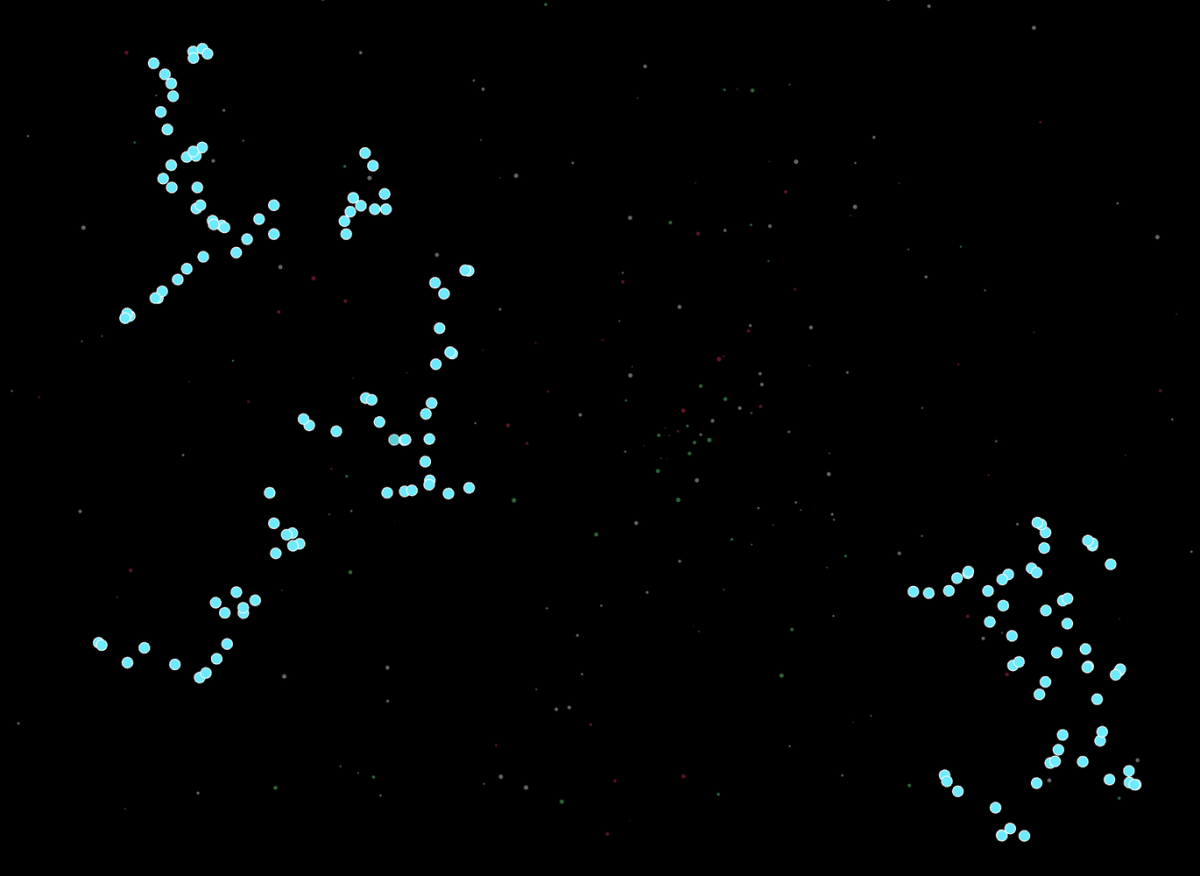
Instead of a list of nominees – we can group them by sound
AI to zoom out
To understand the state of music in storytelling, we used AI to zoom out and analyse the data behind the music. What emerged is a landscape where some fundamental truths remain unchanged. The gravitational pull of a famous artist is as powerful as ever, but the application of that power has shifted. It is no longer just about how it sounds.
It is about the why.
The Sonic Spectrum: A Genre Breakdown
Before dissecting the intent, we must look at the sound itself. Analysing the 2025 HMMA nominees reveals a sonic landscape that is increasingly rejecting single-genre classifications in favour of complex hybrids. However, three distinct musical pillars dominated the year.
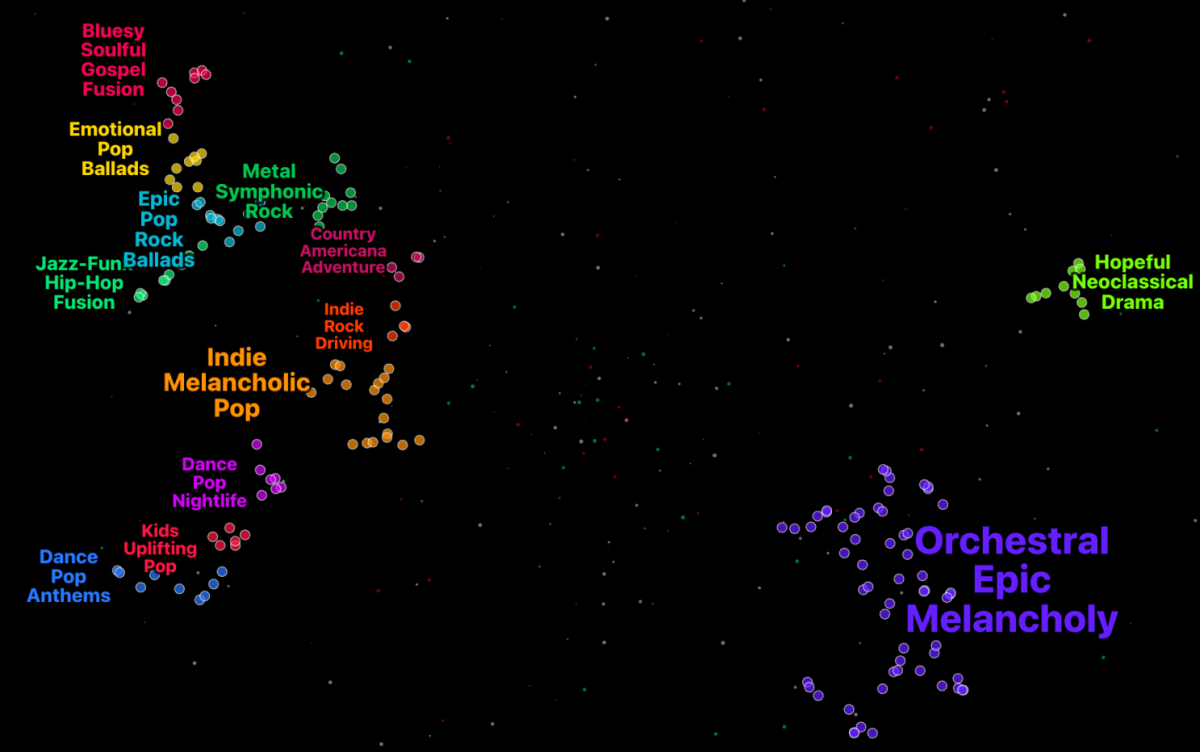
Music clusters by genre & mood
The Cinematic Hybrid (~37%)
This sound defines the blockbuster experience. It fuses traditional orchestral swells with modern electronic pop production to create scale. It lives primarily in sci-fi and fantasy epics like 'Wicked', 'Avatar: Fire and Ash', and 'Chief of War', using a “Big Build” structure to fill IMAX speakers and create a sense of awe.
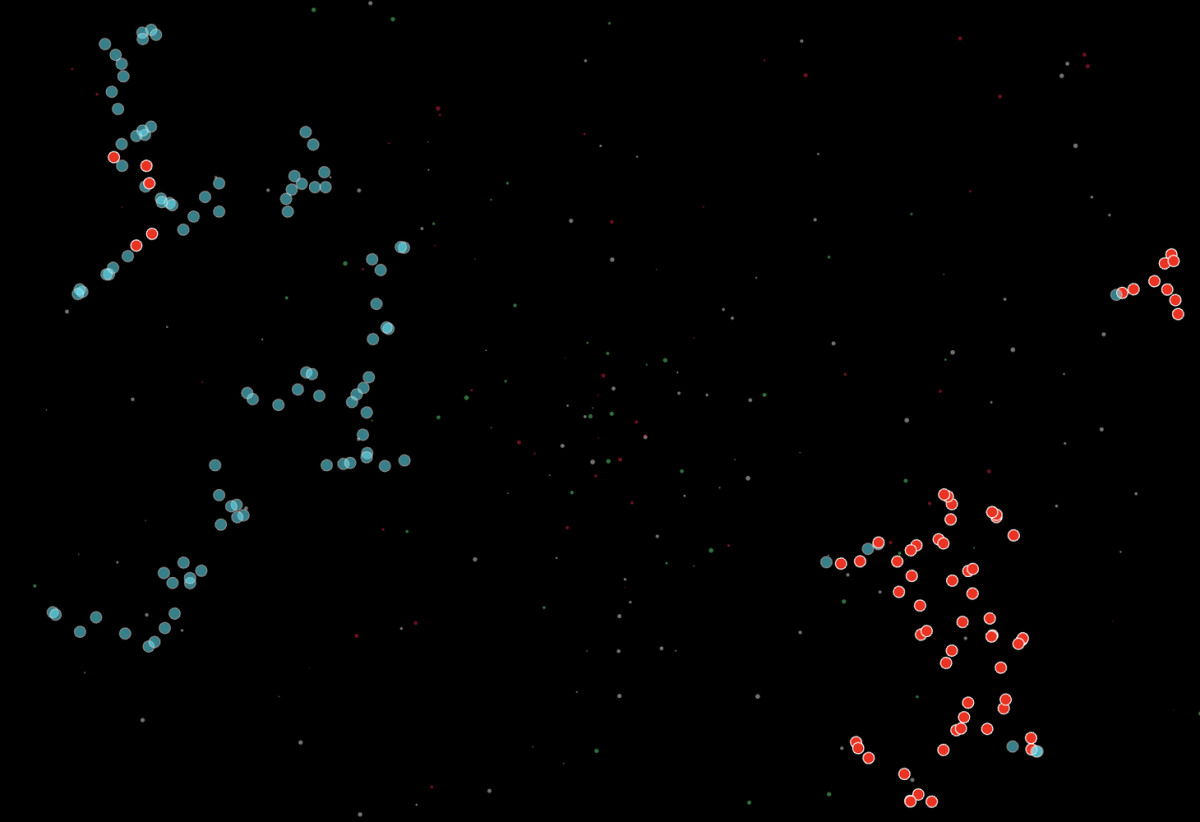
Cinematic/ Orchestral music highlighted in red
Roots & Resonance (~32%)
This is the sound of authenticity. In an age of digital perfection, biopics and documentaries like 'Springsteen', 'Billy Idol', and 'Sinners' are turning to Americana, Delta Blues, and Folk. They rely on acoustic instruments like pianos and harmonicas to signal grit, history, and human imperfection.
High-Voltage Rhythm (~25%)
Here, physics takes over. In Sports, Gaming, and Action titles like F1, or Government Cheese, the music is selected strictly for its tempo. Genres like Trap, Phonk (trap), and Rock are used to physically elevate the audience’s heart rate and mirror the velocity of the on-screen action.
The Architecture of Mood
When we look at how these songs are being used, the industry seems to have split into distinct emotional lanes.
On one side, the vast majority of productions follow the Epic Script. For action, sci-fi, and fantasy, the go-to sound is the Orchestral Hybrid. This mix of electronic pop and power ballads is designed to sound enormous.
Heartstring Pull
On the other side, we see the Heartstring Pull. Documentaries and biopics are stripping away the production. They utilise folk, acoustic guitars, and minimalist pianos to create moods that are nostalgic, reflective, or melancholic.
'A Dream Called Khushi (Happiness)' is a great example of this.
The Rise of Bespoke Celebrity
One clear insight from the 2025 data is the dominance of bespoke celebrity content. Studios are (still) commissioning original anthems from massive stars to construct a film’s sonic identity from scratch.
Original compositions remain the backbone of storytelling, providing immersive world-building for high-budget sci-fi like Avatar: Fire and Ash and fantasy epics like Wicked. But the key trend is the Blockbuster Anthem. We see major artists like Miley Cyrus, Ed Sheeran, Lady Gaga, Evanescence, Karol G and Shakira creating original tracks specifically for the screen. This blurs the line between a traditional film score and a radio pop hit.
And the Indie?
While smaller in number, the Indie and Remix segment plays a crucial role in authenticity. Indie tracks were heavily favoured in character-driven dramas or stylised TV intros like 'The Joneses for Your Friends & Neighbors' or 'Nights Are For Love for' ‘Étoile’ to establish a unique, non-commercial tone.
The Why Matters More Than the How
Zooming out to see these trends is valuable, but zooming in reveals the true artistry. In an era where AI can generate epic music in seconds, the most successful projects are the ones defined by intent.
Storytellers don’t just want to be seen. They want to transmit complex emotions to their audiences. A prime example from this year’s selection is the soundtrack for 'Sinners'. The track I Lied to You isn’t just a blues song. It is a raw performance full of historical context and ancestral weight. It blends culture, time, and genre to elevate the scene in a way that a simple AI prompt like “sad blues guitar music” never could.
The Human Signal
We are living in an overwhelming moment of technological efficiency. AI tools allow us to process vast amounts of data and see the big picture of the media landscape like never before. But this data also offers a relief to artists feeling the pressure of automation.
Even as generative models improve, our analysis of the 2025 HMMAs proves that success in the media industry still hinges on the “Why.” The consumers are people, and people respond to connection. It is not just about the notes playing in the background. It is about the deep, unspoken conversation between the creator and the audience.


