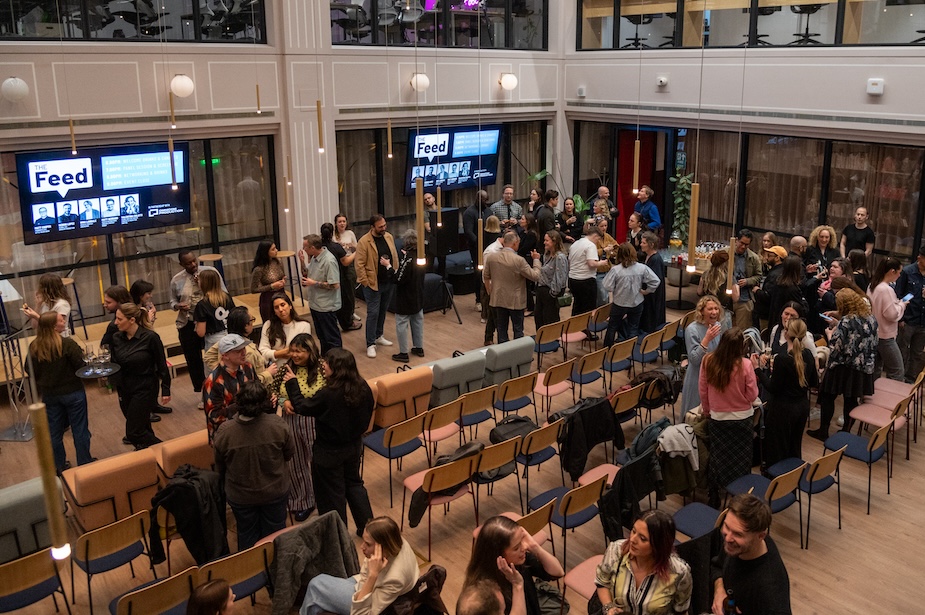
The Feed: Snap, Reddit, and More Debate Social, Communities, and Trends


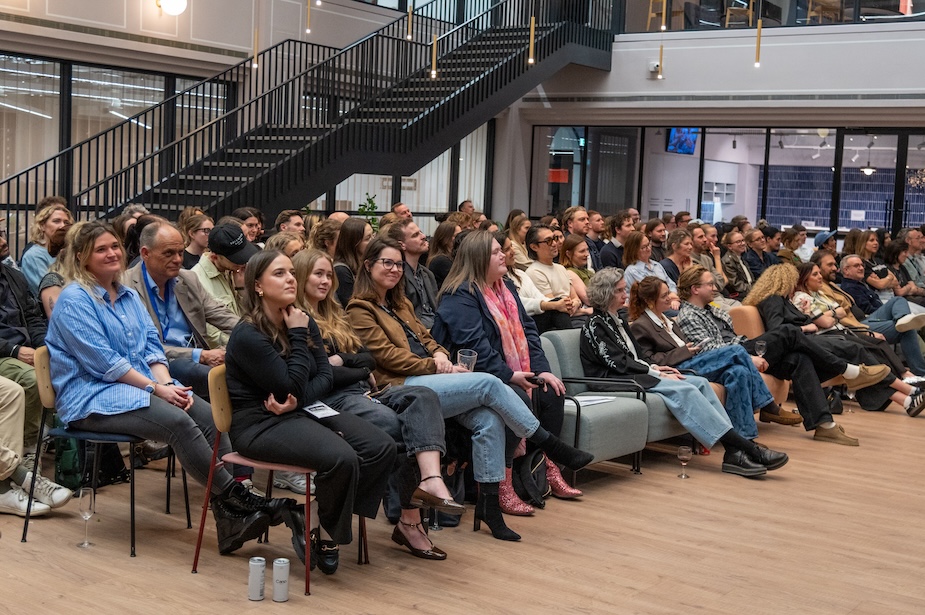
Little Black Book’s inaugural The Feed event took place on Tuesday March 24th in association with Omnicom Production. But before the packed room of attendees were treated to the 13-strong reel of top scoring social work, Matt Cooper, LBB’s founder and CEO, led a quick-fire panel of experts discussing why social is now wholly inextricable from advertising. Discussing the work and The Feed were Creative Council members Valentina Culatti, global director creative strategy and production, Snap Inc; Matthew Gerrard, head of international creative strategy, Reddit; Nina Landale, head of strategy, Uncovered Group; and Sergio Lopez Ferrero, global CEO, Omnicom Production.
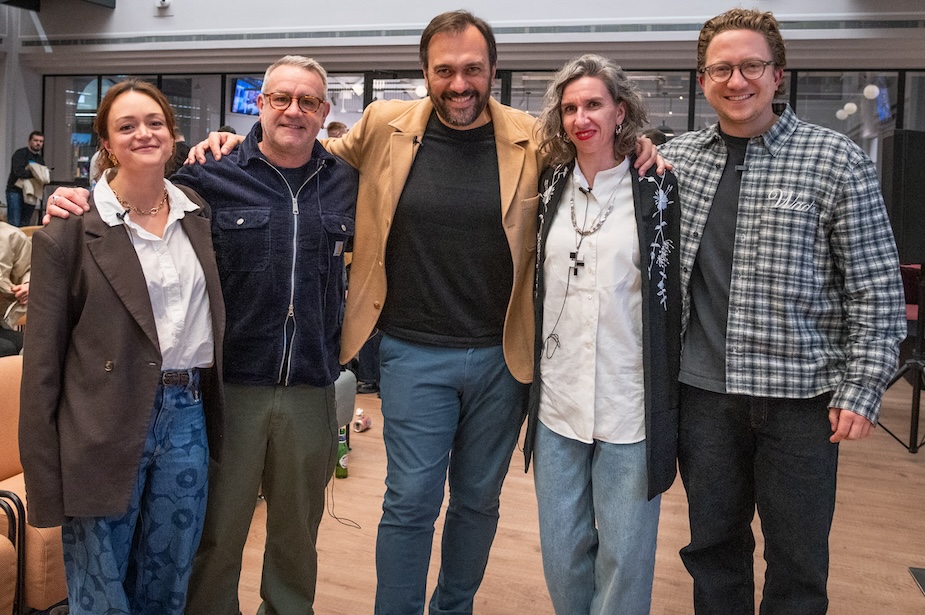
Above (left to right): Nina Landale (Uncovered Group), Matt Cooper (LBB), Sergio Lopez Ferrero (Omnicom Production), Valentina Culatti (Snap Inc), and Matthew Gerrard (Reddit)
Matt opened the discussion asking why social work doesn’t get as much attention as other types of work, considering how prolific it is. It’s “seen as a very small component of the broader media mix,” answered Matthew, “but nowadays I think what we're finding is how influential social can be and how effective it can be for brands to build great, compelling, meaningful campaign ideas that really shift culture.” He did note that this is changing as brands are experiencing more success in this area and “people are starting taking it a bit more seriously”.
The judging process was new to all the Creative Council members and Valentina said she particularly enjoyed the curatorial aspect of seeing so much social work in one place. “The fact that we are beginning the conversation and we are bringing the work to the light will allow us to develop more of a taste and a point of view on work that is not necessarily seen as much,” she commented.
For Nina, the judging felt refreshing because “when you normally judge awards you get so much narrative thrown at you by the submissions and there's so much you have to parse between – what's truth, what's being embellished – but I really enjoyed being able to just look at creative completely from the perspective of ‘do I like this creative or not’,” she explained.
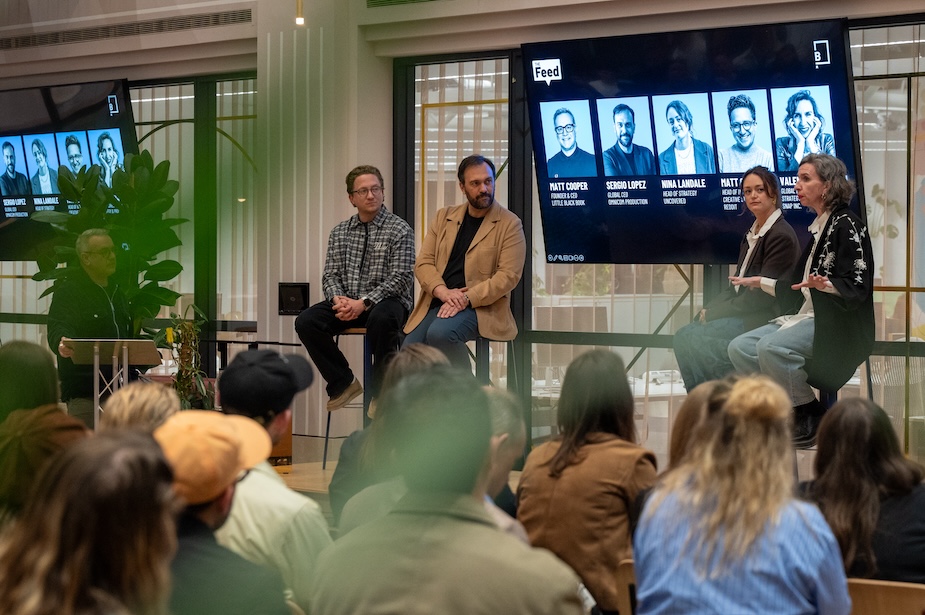
When it comes to how this work is made – in-house, or with production and agency partners – Sergio noted “it’s a different way of engaging”. He went on to say, “At a time where brands need to engage with consumers, television feels like a grand event” whereas what’s needed, and what’s happening already, is “not the big thing that you do on a birthday or the thing that you do on Christmas. It's the day-to-day.” This of course has an impact on the traditional production model and its timelines, rendering it not fit for purpose.
At Nina’s agency, the approach is semi-in-house with the brand team “so that we feel like one unit” as opposed to the slightly more traditional client/agency relationship. A great benefit is speed, an essential when responding to social trends, alongside the understanding that “you're working towards the same goal” because “what gets the best success in social – because you need to be as fast as you possibly can – is to create an idea and get that live on the feed in order to drive impact.”
Ultimately, when it comes to making work for social, “nothing is linear anymore, everything is fluid,” summarised Valentina.
Social work is all about tapping into and serving communities around brands but Matthew was quick to point that there’s a misconception it’s the brands that have created and fostered the communities whereas on a platform on Reddit, the community arises first, organically, and is fostered by fans and moderators. “The conversations feel very organic and there aren't any manufactured moments. Brands do come to us very frequently and say, ‘How can we get involved or how can we pay moderators? Are they the same as influencers? Absolutely not. I'll clear that up,” he said definitively. It’s a point of pride for Reddit as is ensuring the “conversation remains on the topic, and there are no material motives at play.”
What’s most interesting to him about social right now is “that the ideas that you're looking for have probably already been created by the communities you want to listen to.” Valentina expanded on this, highlighting the difference between being in a broadcast situation like a feed versus a closed space where the only option for “the one who wants to advertise is really to get into the conversation in a relevant way. And it's a completely different paradigm of engaging.”
Nina gave a perfect example of listening to a community of fans. “We made a piece of creative for KFC where the community were actually asking us to do this mad trend called ‘Oiling Up’, where you essentially just cover yourself in cooking oil, and they kept asking,” she recalled laughing. They delivered what the fans essentially begged for and it paid off; the social-first work went viral and went on to win TikTok’s Greatest Creative of the Year. To Nina, it’s all about “how you show up in the right ways based on that data because [the community] will reciprocate if they feel heard.”
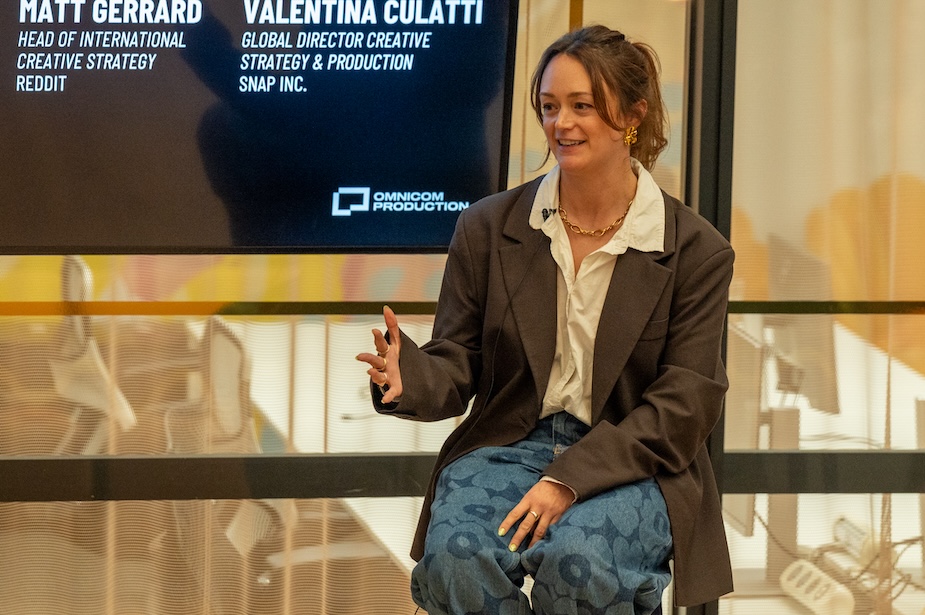
The conversation finished with a discussion about trends – how much brands need to pay attention to them to stay relevant and whether trend-chasing is the right strategy at all. “Trends at their heart are an indicator that people are resonating and engaging with something. So I think that they're really important. I believe creatively what we have to make sure we do every time is continue to find that point of difference,” Nina said.
Valentina agreed and said that short-term trends are good to capitalise on. “We can really do some very good reactive activations that showcase our pulse of the community.” But thinking online-only is limiting and there’s a need to “get connected to the real world”.
“Trends are fun, but they're fleeting,” Matthew stated, “momentary and reactionary.” While they can and should be part of how a brand shows up, it’s more constructive to think about long-term brand development. “That's the foundation of how brands are built. It's what you do repeatedly over time. Trends, when you make it into a broader strategy, absolutely do play a part. It can't just be a one-and-done thing. What's your rhythm? How are you going to find that rhythm, learn the rhythm of your brand over time? That's the challenge, obviously,” he reflected.
Sergio noted that we went through a cultural shift not too long ago with consumers wanting brands to behave more like people, showcase their personalities, and act in accordance to stated values. “When we talk about trends, what it’s really leading to is some brands’ soul-searching moment which is, ‘Based on my personality, how would I engage with this moment?’ Because at the end of the day, it's a conversation that is happening,” Sergio said.
Brands need a solid idea of who they are first and to act on trends in accordance. Not every trend or conversation is the right one to be a part of. “I think that’s okay. The way it's been happening in the last few years, it was just chasing the comments or chasing exposure. We have seen, for example, luxury brands doing things that they normally wouldn’t and crashing their brand,” he added with a caution.
AI of course crept into the conversation and Matthew wanted brands to think about brand building once more. “Brands fall somewhat in the risk of applying SEO-level thinking to AI discoverability. And there is no silver bullet. It's the brand building thing all over again. You do consistent, great ideas that connect with the attitudes and behaviors of the audience that get them talking at scale. That is the way you get it.” And as far as AI itself goes, Reddit is in a unique position, per Matthew, where it has over 20 years of conversation data that LLMs are being trained on, “What we're saying is that artificial intelligence is nothing without actual intelligence because it needs to be refreshed with lived experiences. It needs to be refreshed with modern up-to-date content. Our position on it is, until a machine can go off for a holiday and fall in love and enjoy a bottle of wine, then we're still in the business of speaking to people.”
Nina drew attention to consumers’ sensitivity towards the use of AI, “So I think there's a real opportunity for brands to actually choose to create for real and use the craft. That's a benefit that we'll get back and that authenticity is starting to actually be incredibly valued by consumers. When we partner with a creator over a piece of AI content, that creator content performs really well. And there's a sentence in the comment section about, thank you X brand for not just using AI again,” she said.
Valentina concluded on an essential point around responsibility and AI saying that the industry needs to think about “the output [being] as good as the input” because it’ll be used to train models. “We really need to be aware of it, embrace it, and then try to make it better with some ethics driving us.”