


How Canadian Brands Can Cut Through World Cup Marketing Deluge


With the 2026 FIFA World Cup set to kick off this week, Canadians are bracing for the impact of the beautiful game making its way to the country like never before. Stadiums – assuming people can actually afford tickets – will be packed. TVs will be tuned in. And watch parties will congregate, filled with everyone from casual fans to the die-hards eagerly supporting their favourite nations upon the biggest stage. In short, soccer isn’t going anywhere for the next couple of weeks.
Similarly imminent are the ads that come with the world’s biggest tournament. Whether they’re official partners or simply seeking to capitalise on the moment, brands and agencies from across the country have worked hard over the past months to secure space, seeking to stand out in the rare moments where what’s on the field isn’t the primary focus. This, like the game itself, will be competitive, hotly-contested, where only the most prepared marketers triumph.
But what does it take to actually do this? What can onlookers expect from this year, and what factors will distinguish these offerings from the rest of the crowd? These are questions which LBB’s Jordan Won Neufeldt had, so she sat down with experts from across the country, to learn what Canadian World Cup advertising done right looks like.
Hussein Rumaithi
Creative director at McKinney Canada

Every four years, we witness a predictable race of massive budgets: giant corporations whipping out their chequebooks to sign global superstars, resulting in glossy, mass-appeal campaigns. Desperate to offend no one, these campaigns strip the sport of its true spirit, treating the tournament like a sterile corporate property. They cater to the ‘plastic fans’ – the casual tourists who show up every four years, mispronounce player names, and crowd out the stadiums and local pubs.
But the smartest brands know that you win by owning the subculture. Whether you are a local challenger brand or a global sponsor with a bottomless media budget, the rule remains the same: you must respect the true, unpolished nature of the sport. Look at adidas’s recent ‘Backyard Legends’ work. It had the massive budget and the global superstars, but it didn’t place them in a pristine, sterilised arena. It rooted the campaign in the concrete pitches, the local cages, and the nostalgia of playing as kids until the streetlights came on. It felt like a throwback to the ‘Joga Bonito’ heyday, and the social reaction proved it. By respecting the culture and tapping into the truths that real fans resonate deeply with, it created work that lives well beyond the brief World Cup window.
To cut through, brands must anchor their work in these realities. Strategically, that means taking the side of the tribal gatekeepers – the lifelong, weekend-in-and-weekend-out supporters who feel their sport is being hijacked. It means communicating in hyper-coded inside jokes that the four-year tourists will never understand. It means embracing the absolute madness of real fandom. True football culture is not pristine; it is built on deep, irrational anxieties. It is the psychological agony of wearing unwashed lucky socks for a month, or the terrifying superstition that leaving the room during a penalty kick will jinx the team.
When you stop acting like a corporate monolith begging for mass approval, and start reflecting the raw, uncomfortable truths of the die-hard fan, you earn genuine, long-term loyalty (soccer fans know a thing or two about loyalty) that lasts long after the final whistle. More importantly, you get more eyeballs than you paid for. You get unfair attention.
David Tremblay
Managing director at Zulu Alpha Kilo

The biggest misconception about the World Cup is that it's a marketing opportunity. It's not. It's a cultural moment first, and the potential to create marketing opportunities second.
The brands that will be remembered coming out of the World Cup won't be the ones shouting the loudest. They'll be the ones that understand what soccer means to people. Community. Identity. Belonging. Ritual. The World Cup is one of the few events left that brings entire cities, cultures and generations together around a shared passion. That's what brands should be paying attention to.
The conversations we're having with our client partners are less about how to ‘activate’ the tournament, and more about how to contribute to it. How do you create something that fans would genuinely miss if it didn't exist? That's a much more interesting challenge than where a logo should appear.
For Destination BC, an official promotional partner of the FIFA World Cup 2026, that thinking led to ‘Home Pitch’. Rather than tell visitors how beautiful British Columbia is, we built a 12,000-square-foot immersive experience that lets them experience it for themselves. At the centre is a five-a-side soccer pitch surrounded by a panoramic sphere of LED screens that transport fans through six iconic destinations and routes across the province. Alongside Vancouver Whitecaps skills sessions, soccer challenges, and First Nations programming, visitors move through a living showcase of British Columbia's landscapes, culture and spirit. Soccer becomes the invitation. Exploration and discovery become the outcome.
The same thinking applies to brands that aren't official partners. The goal should be to find an authentic role within the culture surrounding the event. The World Cup isn't just about what happens on the pitch. It's about the entire experience, from travel, hospitality, and food to community, watch parties and shared memories. That's where brands can earn relevance.
The brands that win won't be the ones borrowing attention from the World Cup. They'll be the ones adding something worth paying attention to in the first place.
Chris Desjardins & Shannon Robinson
SVP, managing director, sports and entertainment & AVP, brand experience, sports and entertainment at Publicis Canada

The World Cup in Canada represents far more than a sponsorship opportunity. It will be one of the most significant cultural moments this country has ever experienced, and the brands that win will be the ones bold enough to rethink how they show up within it.
From a sponsorship perspective, we are seeing a major shift away from traditional visibility models toward integrated programmes that create genuine relevance. Rights alone are no longer enough. The brands that will stand out are the ones building platforms that connect authentically to fan passion, community, and identity in ways that feel additive to the experience rather than interruptive.
At the same time, experiential has become one of the most powerful tools brands have to bring those sponsorship strategies to life. Fans do not just want to watch the World Cup. They want to participate in it, share it, and feel part of something larger. The most effective brands will create experiences that fuel emotion, fandom, content creation, social conversation, and earned media simultaneously.
What makes this moment particularly unique in Canada is the diversity of fandom itself. Canada’s major cities each represent distinct football cultures and communities. The opportunity for brands is not to create one broad national campaign, but to design experiences and storytelling that feel locally connected, while still scaling nationally.
For brands that are not official partners, there is still enormous opportunity. Some of the most impactful programmes may come from brands activating adjacent soccer and football partnerships, tapping into host city energy, and finding authentic ways to participate in the fandom surrounding the tournament. Relevance will matter more than rights ownership. The brands that succeed will be the ones that deeply understand fan behaviours and contribute meaningful value to the overall experience in ways that feel natural, timely, and connected to the excitement happening across the country.
Ultimately, the World Cup will redefine what modern sponsorship and brand experience looks like in Canada. The brands that win will be the ones that stop thinking about campaigns and start thinking about participation.
Trent Thompson
Executive creative director at Cossette

While brands who’ve outlaid the extravagant and prohibitive-for-many-sponsorship fee have crafted their cinematic and hallmark-player laden films; while they’ve all laid the groundwork to execute their ornate activations and execute on their multi-tiered media plans, it’s the brands watching from the stands that I’ll be looking out for. Those sneaky brands who steal their unfair share of the spotlight with work that doesn’t mention the beautiful game, but… alludes to it.
The player portraits adorning all the OOH in the city will blend. The events will attract the masses, but will they drive the action they’re meant to? The films will inspire and invigorate, but they may not break through (though I’m sure some will manage).
The work we’ll be talking about (and likely awarding) after the stands come down and the crowds go home will be the work that plays outside the rules. Work like the Air Transat OOH from Courage. It appeals to our sense of adventure and our financial sense, rather than the tropes of the game. This work speaks to those in the city who aren’t here for the matches. In fact, it speaks to those in the city who literally don’t want to be here for the matches. It’s smart, insightful, timely and memorable.
On the other hand, I just saw an OOH board for a certain bank, trying to steal some shine from the tournament. But unlike the Courage work, it’s vague, general and doesn’t connect. Brands like Air Transat will find their way into the conversation (in fact, they already have). Others will spend the time and money only to get lost in the noise.
Joanna Leong
SVP at North Strategic

As the World Cup approaches, the brands that will stand out in Canada will be those that move beyond presence and find meaningful ways to participate in culture.
At a strategic level, the key question we are asking with clients is simple: ‘What is the brand’s authentic role in this moment?’. This is particularly important for brands that are not official sponsors. Relevance cannot be forced. It has to be earned through a credible presence across communities, platforms and fan touchpoints.
We are seeing a clear shift toward fan-first thinking. Brands are building connection through creator-led storytelling, real-time content that reflects match driven moments, and experiences that bring them closer to how fans live and celebrate the game. This includes localised activations, city-based watch parties, and storytelling that reflects the diversity of fan culture across Canada.
For non partner brands, the opportunity lies in building adjacency rather than ownership. The most effective work will come from brands that understand how to engage through cultural storytelling, talent, and community-driven experiences that tap into the energy of the tournament without overreaching.
Ultimately, memorability will not be defined by rights, but by relevance. The brands that succeed will be those that insert themselves into the conversation in a way that feels natural, timely, and additive to the fan experience.
Nipun Goomer
VP of account service at Angry Butterfly

There is an electric, slightly chaotic energy humming through Canadian agency corridors right now. We are standing on the edge of a massive cultural pivot. A country’s casual affection for soccer has officially erupted into an absolute, multi-generational obsession. But if you look past the initial hype, the brand landscape looks surprisingly fractured. We are navigating an official sponsorship gap, forcing agencies to orchestrate a delicate dance between hyper-aggressive agile marketing and heightened boardroom caution.
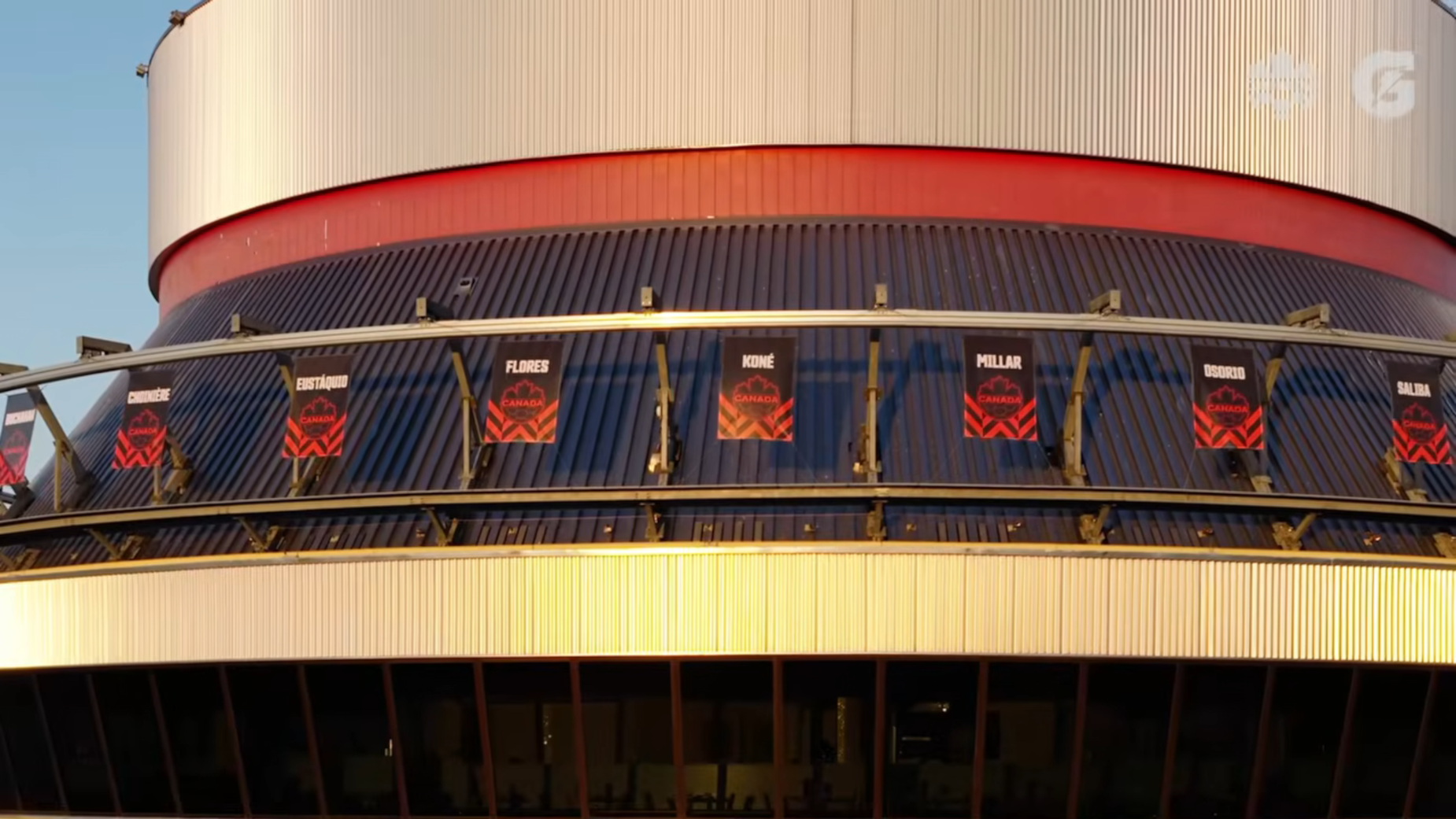
The execution hitting the streets right now is a pure masterclass in scale and agility. On the official side, it’s all about sheer capital and spectacle. BMO is executing a massive physical transit takeover, to completely own the fan journey to the Toronto Stadium. At the same time, Canada Soccer turned the Toronto skyline into a giant roster sheet, displaying the squad selections directly onto the CN Tower right after a primetime TSN special. And to bypass the host-city bias entirely, brands (including GE, Uber Eats and Michelob ULTRA) are partnering with Soccer Canada to launch ‘Canada Soccer House’ fan hubs all the way out in Halifax with live match screenings and interactive podcast studios.
Yet, behind closed doors, the conversation gets real. A lot of clients are quietly adopting a ‘wait-and-watch’ stance. The growing geopolitical and sporting friction with our neighbours down south has fundamentally changed the risk calculation. It’s a tension heavily aggravated by Canada’s traditional media landscape. When political tension rises, conservative brands naturally retreat to the safer, less controversial shores of hockey and baseball. Mainstream attention is guaranteed there, and brand safety is baked in.
For the agile, unofficial players, that hesitation is an invitation to innovate. Brands are hacking consumer pain points instead of buying logos. Look at Air Transat’s tactical campaign directly comparing the astronomical cost of a single stadium ticket to the price of an actual flight to the playing countries.
The work that eventually cuts through won’t rely on corporate posturing. It will be the work that honours the universal, emotional truth of the Canadian fan. Don’t buy into the noise. Build for the diverse, passionate community holding the collective breath of a nation.
Jeff MacEachern
Chief creative officer at Arrivals + Departures
To really stick in people's minds, Canadian brands should be ditching generic, expensive TV commercials. Soccer fans here are unique; they’re cheering for Canada, but often their ancestral homelands too, so a one-size-fits-all ad just falls flat.
Instead, they should look to get hyper-local in host cities like Toronto and Vancouver. We’re putting brands right where fans hang out – on transit, at local pubs, and watch parties – and pairing that with quick, funny social posts that react to the games in real time. It’s all about being part of the actual, live conversation.
Behind the scenes, we stopped treating the World Cup as just another sports event to buy ad space in. It’s a massive, historic cultural moment. The big question is how to make people truly care without relying on lazy soccer clichés. We’re looking to understand who these fans actually are, and what the game means to them. Are they die-hard purists, casual viewers here for the social hype, or fans balancing split loyalties between Canada and their homeland? By figuring out what drives their specific passion, we can connect with who they are as people, not just where they happen to be sitting.
For clients who aren't official sponsors, the goal is joining the hype without getting sued. Because FIFA heavily protects its logos and stadium areas, we help non-sponsors lean into the broad, unbranded spirit of Canadian soccer culture instead. We’re avoiding the corporate red tape by focusing on the fans, rather than the tournament itself. By tapping into national pride and local humour, these brands can easily join the conversation and win over fans without ever touching a protected logo.
Meghan O’Neill
Creative director at Critical Mass

In the lead up to the World Cup, there’s going to be so much conversation and ad noise. To break through, especially on a more local scale, we build our strategy off the simple truth that sport brings people together. The best way for brands to be part of the conversation is to help fans amplify their fandom and connect, rather than getting between them and their beloved sport and trying to talk at them.
That’s how we approached the recent U Sports Final 8 Championship in Canada. We did a deep dive into the audience and the basketball community in the host city of Calgary, getting to know exactly how they act as fans. Our 'Homecourts Advantage' campaign used AR to help Calgary’s basketball community turn the backboards they played on every day into billboards of support for their home team: the Dinos. By enabling and amplifying their fandom, rather than asking them to change their behaviour, we created audience connection on an impossibly small budget – and stood out in the lead up to the tournament.
Then, we used that activation to identify courts in need of new nets or backboards and showed up to fix them, investing in our audience. By amplifying and supporting real fans, we left a lasting impression with the community that brands generally can’t achieve with a splashy sponsorship or linear TV buy. That’s our strategy for any brand trying to get in on the World Cup excitement in non-traditional ways: understand your audience, invest in the fans, and show up for them authentically. Then, you can’t lose.
Joseph Bonnici
Chief creative officer at Tadiem

When we look at our client partners, it’s not really about the tournament. It’s about the fandom. Hundreds of thousands of fans are going to descend on Toronto and Vancouver, and realise there is a party for every single nation playing. That is unique to Canada.
So we commissioned a poll for OneMethod’s client, FanDuel Canada, that showed 43% of Canadian football fans plan to support more than one team. While not surprising – there are 8.3 million newcomers in Canada with connections to over 200 countries – it is truly unique and certainly worth celebrating.
That’s why we created The ‘Dual Fan Scarf’ for FanDuel. It’s a limited-edition collection of football scarves designed for Canadian fans who support both Canada and another country. It makes the brand not just part of the conversation, but an active participant in the excitement. And I think that’s what the best ideas will do. They won’t just talk about the games, they will be a part of it.
Amine Rais
Group strategy director at Ogilvy Canada
Soccer is Canada’s most-played sport. Nearly one million Canadians are registered players. More people play it than hockey, and it is the number one choice for kids. Yet, look at our advertising, and you would never know it. We are nowhere near giving soccer the place we have given hockey for 40 years, or the place it holds in the advertising of football nations.
A World Cup is the ultimate cultural playground for brands. No sport gives you more to work with: countries, rivalries, belonging, pride, style, ritual, escape, hope, and memory. Any brand in any category can find its place inside the game, as long as its role is clear enough to mean something. And this edition makes the moment harder to ignore than ever. Three co-hosts in the middle of a trade war, war being waged across countries, countries hosting for the first time – the list goes on. In a media landscape where shared attention is almost impossible to manufacture, a World Cup this charged does not come around often.
A few brands are already getting it right. Without a FIFA logo in sight, Air Transat compared inflated match-ticket prices to the cost of actually flying to those countries. FanDuel turned the fact that 43% of Canadian fans support more than one team into something you could wear. Neither had the rights, but both found a real way into the tournament.
But the defining Canadian soccer ad has not been made yet. The one that treats this sport the way it deserves, and the way football nations have always treated it. Canada in 2026 is US soccer in 1993. Whoever gets there first will not just run a good campaign. They will have made the ad that defines the sport's place in this country.
Paulo Salamao
Founder and CEO of King Ursa

The biggest mistake brands can make around the World Cup is believing the opportunity is football. The opportunity is attention.
Every four years, the World Cup creates one of the few remaining moments where millions of people are paying attention to the same thing, at the same time. Most brands immediately jump to, ‘How do we get into the conversation? How do we convert that into sales?’. The better questions are, ‘What role can we credibly play in it?’ and ‘What role will it play in our bigger plan?’.
The brands that will be remembered are not the ones producing football-themed creative. They are the ones using the tournament as a backdrop to tell a larger story about identity, belonging, rivalry, celebration, optimism, or national pride. Stories rooted in human tensions, with football serving as the stage.
For official sponsors, the challenge is often avoiding predictability. Rights alone do not create relevance. The most effective sponsors use their access to create experiences, participation, and stories that people actively want to engage with.
For non-sponsors, the opportunity is often greater than they think. Consumers do not keep score of sponsorship rights. They remember ideas. The smartest brands focus less on the event itself, and more on the cultural behaviours surrounding it. The gatherings, rituals, superstitions, watch parties, workplace debates, family traditions, and emotional highs and lows create far more creative territory than the tournament logo ever could.
The strategic discussions we’re seeing increasingly revolve around cultural relevance, rather than media presence. Brands are asking how they can contribute something meaningful to the moment, rather than simply borrow attention from it.
The reality is that most World Cup advertising will be forgotten within weeks. The work that lasts understands a simple principle: people remember how a brand made them feel, not how closely it associated itself with a sporting event.
One thing hasn’t changed: impressions don’t win. Memories do.
Martin Beauvais & Christian Mathieu
Partners at Open Creative

The mistake many brands make is assuming the World Cup is just about soccer. But for fans, it’s always been a cultural moment.
As Canada prepares to host the tournament for the first time, brands have an opportunity to contribute in ways that feel relevant and memorable. The most effective work won’t revolve around matches, scores, or sponsorship assets. It’ll come from the stories, emotions, and shared experiences that define this moment.
The conversation shifts from rights to relevance. In a moment that’s capturing the world’s attention, how does a brand stand out? How does it contribute something meaningful to fans? Courage’s Air Transat campaign is a strong example. By juxtaposing soaring World Cup ticket prices with the cost of travelling to international destinations, the brand demonstrated its value proposition in a way that felt both timely and relevant.
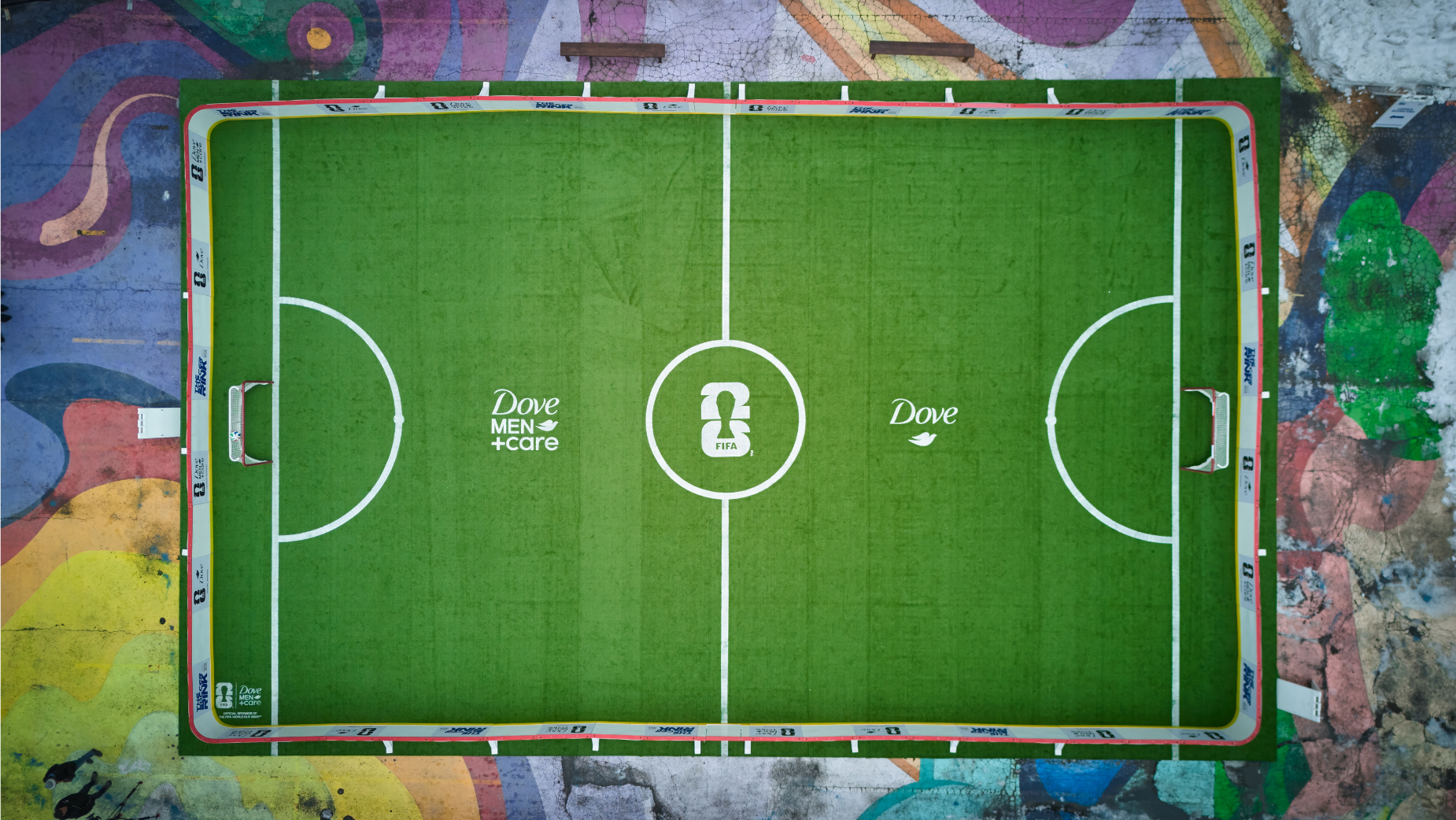
The World Cup is also one of the few global events that rewards local specificity. International campaigns will be everywhere, but the work people remember often feels deeply rooted in place. Dove Men+Care’s ‘The Soccer Rink’ activation, marking the official 100-day countdown to FIFA World Cup 26, successfully translated a global tournament into a distinctly local experience.
Local relevance also means recognising the communities that have lived and breathed football long before Canada stepped into the global spotlight. Lay’s ‘Fan of the Match’ campaign does exactly that, giving supporters the kind of recognition typically reserved for players on the pitch. As the brand put it, “Fan of the Match is our way of saying those people deserve to be celebrated too”.
In the end, the brands that win won’t be the ones shouting “World Cup” the loudest. They’ll be the ones adding something meaningful to the fan experience.
Vika Khinevich
Media manager at DAC Canada

For brands looking to cut through during a moment as culturally charged as the World Cup, memorability comes from the connection between media strategy and creative execution. The two can’t operate in silos. Media teams need to understand the moments, places, and behaviours where fan attention is peaking, while creative teams need the agility to respond with messaging that feels timely, contextual, and genuinely additive to the experience.
Digital channels will play a major role, because they allow brands to adapt quickly as the tournament unfolds. Digital out-of-home, in particular, has a strong opportunity to shine, combining broad reach with more precise controls such as dayparting, and contextual messaging delivered through dynamic creative optimisation and location-based triggers. From there, brands can extend the experience through digital media, using tactics like geofencing and retargeting to build frequency and serve more tailored creative based on where audiences are engaging.
For brands that aren’t official partners, the opportunity is not to force themselves into the event, but to understand where the wider conversation is happening. Fan culture extends far beyond the stadium or the broadcast. It lives in social content, online communities, user-generated moments, local activations, and the everyday rituals around watching the game. The agency’s role is to map those behaviours, identify the most relevant opportunities for the brand’s audience, and build a connected media and creative ecosystem that adds to the fan experience rather than interrupts it.
The most memorable campaigns will be the ones that feel integrated into the energy of the moment: locally-relevant, fast-moving, context-aware, and consistent enough to build recognition across multiple touchpoints.
Kevin McHugh & Kirk Cavell
Chief strategy officers at dentsu Canada & dentsu Media

Achieving true memorability during the World Cup isn't about buying real estate next to the pitch; it’s about understanding where the cultural gravity of the tournament actually sits, and following it wherever it goes. The brands that cut through will treat the tournament not as a static sports buy, but as a living, breathing entertainment ecosystem that gives brands the opportunity to tap into fandom and be at the forefront of cultural moments as they happen.
From a creative standpoint, standard 'soccer-themed' ads will instantly become background noise. Relative to the general population, soccer fans are significantly more interested in celebrating culture, valuing brands that recognise their cultures, values and heritage. Memorability requires tapping into the raw emotion, local humour, and distinct fan subcultures that make Canada's relationship with the game unique. The goal is to build ideas with high 'social currency' – unskippable content that fans inherently want to share, parody, and talk about long after the final whistle blows.
The instinct is to chase the game. But the game is already spoken for. Broadcast deals are already locked, host-city OOH has been sold out (Astral has indicated this is the first time downtown Vancouver OOH has sold out in nearly three decades), and official partner categories have been long claimed. Media's job now is to plan for everything around it.
The FIFA 2026 media story isn't about who bought the most tonnage. Those commitments were made years ago. The real competition is who planned for the unplannable. Only 37% of Canadian live sports viewers watch exclusively on linear TV. The other 63% will also be watching on platforms where inventory wasn't locked in long ago.
Brands with a strong strategic approach to the FIFA timing will be the ones that will win in making a lasting impression for Canadians. It’s about being reactive to the unplanned moments that make sense, and tying it to the fan rituals that exist outside the ‘sponsordom’. Transit patterns, watch-party moments, the emotional sentiment of a host city – none of those belong to an official partner.
For non-sponsors, you don't need official rights to belong in the conversation, but you must respect the strict legal boundaries and avoid forced 'ambush' clichés. Instead of mirroring official sponsors, we help non-partner brands intercept the periphery of the game. We look at the parallel consumer behaviours around the match: the viewing rituals, the hosting habits, the transit commutes, and the emotional highs and lows of the host cities. By owning the fan culture rather than the game itself, non-sponsors can achieve authentic, highly relevant breakthroughs.
Andrew MacPhee & Jeremiah McNama
Executive creative directors at TBWA\Canada
With the tournament approaching, one of the biggest opportunities for brands in Canada is recognising that this is bigger than sport. It’s a cultural event that will reshape the atmosphere and energy of entire cities. Fans won’t experience it in just one place, so brands can’t show up in just one place either.
For brands that aren’t official tournament sponsors, the challenge is finding a role in the conversation that feels authentic and culturally relevant. You can’t simply attach yourself to the hype. You need a legitimate connection to the sport, and a clear point of view on how you want to participate.
For BMO, that credibility already existed. The brand has supported soccer in Canada for more than two decades, from grassroots programmes to the professional level, and is the Official Bank of Canada Soccer. BMO Field – where tournament matches will be played – will be temporarily renamed Toronto Stadium for the competition, though for many Canadian fans, the venue remains synonymous with the BMO brand. BMO also has a long-standing association with Canada Soccer star Alphonso Davies, further strengthening its connection to the culture and future of the game in Canada.
That foundation and connection to the sport gave us permission to think beyond traditional sponsorship models and focus instead on bringing soccer culture into the places where fans already live, work, commute, gather, and consume media. Rather than treating the tournament as a media opportunity, we approached the city itself as the canvas, while also thinking nationally about how the brand could show up consistently across every major fan touchpoint.
BMO’s work, rolling out over the next couple of weeks, is designed to feel visible, participatory, and woven into the energy already building across Toronto and beyond.
Alongside city-wide activations, the campaign also includes a national TV and online video campaign featuring The BMO Guy, played by actor and comedian Lamorne Morris, alongside Alphonso Davies, in a series of comedic spots that blend soccer culture, fandom, and banking. (In Quebec, the BMO employee is played by Montreal actor Noémie Yelle).
The ambition wasn’t simply to advertise around the tournament, but to help make Toronto and the broader soccer culture-building across Canada feel part of the experience.
Jonathan Longworth
Partner and chief operating officer at ONE23WEST
Most marketers will work on one World Cup in their career. Maybe two. Organisations are investing heavily in this moment, and that’s not a reason to play it safe. It’s a reason to be more intentional than you’ve ever been, because there is no next campaign where you get to refine your approach. You get one window, and then it closes.
Too many brands will use that window to simply attach themselves to the tournament. Run a soccer-themed spot, tap into the excitement, and call it a ‘World Cup campaign’. It may get noticed. But when the tournament is over, those brands are right back where they started, because the connection was never really theirs.
Over the past year we worked with six organisations across the tourism, grocery, energy, and gaming sectors, all approaching the same tournament for very different strategic reasons. Not one of those briefs started with the World Cup. Every single one started with the brand. The question we kept coming back to wasn’t, ‘How does this organisation show up in this moment?’. It was, ‘Where does this event naturally strengthen what they already stand for?’. That shift in starting point shaped everything that followed.
When that connection is real and not manufactured for a six-week window, the work goes beyond a campaign. It becomes part of what the brand is, not just something the brand did. And it gets felt across the organisation, not just in the marketing department. People rally around it and carry it with pride. And for something that won’t land in your backyard again for a very long time, that’s the difference between a moment in your organisation’s history, and a soccer ad that ran in June.
Steve Miller
Partner and executive creative director at FUSE Create
We've partnered with Ricola for over a decade now across North America. And while we know it’s more than just a cough drop, most consumers don't. Ricola positions itself as an everyday voice lozenge, providing soothing relief for dry, strained, even hoarse voices – not just a remedy you reach for when you're sick.
So, with the World Cup coming to the US and Canada, a strategic opportunity presented itself: millions of cheering fans, screaming their voices raw, at exactly the moment the brand was built for. And with that, we realised the creative unlock was staring us right in the face.
The most iconic cheer in football is the ‘Olé, olé, olé’ stadium chant, and with a single letter change, Ricola becomes the chant: ‘Ricolé’. No other lozenge brand could claim that moment as authentically, or as inherently. We pitched the idea to the client, and they loved it.
From there, we built out a simple OOH and social media campaign featuring fans with painted faces captured in mid-cheer, plus a guerrilla sampling initiative placed in high-traffic fan zones, bringing the brand to life where it matters most: in the middle of the roar.
This idea was brought to our client unprompted. No brief. They welcome that kind of thinking, which we appreciate, particularly when we’re trying to join a cultural conversation. And this was one of those moments: a timely insight, a natural usage occasion, and a once-in-a-generation moment Ricola couldn't just participate in, but own.
Michael Murray
Co-founder and chief creative officer at Berners Bowie Lee

Canada has some great agencies. But we don’t have great budgets or globally-famous football stars. Then again, who needs a badly-acted cameo from Beckham or Thierry Henry when you have smart thinkers?
I love Courage’s Air Transit work that compares the price of travelling to a country to the price of seeing its team at the World Cup. It's sharp, insightful and witty. (Oh, and those little touches of art direction are just magic). Air Transat managed to enter the conversation without spending World Cup sponsorship budgets. It's a reminder of the value that good agencies offer in a world of AI snake-oil salesbros.
Canadians are unique in that many of us have grown up supporting the teams of countries where we emigrated from or our parents were born, because no one ever expected the Canadian team to actually be good. That tension is captured beautifully in FanDuel's ‘Duel Fan’ campaign.
As many football fans know, dual scarfs are already a thing. I am a huge football fan, and truthfully, I hate dual scarfs for club fans, but what I love is that FanDuel took that familiar piece of culture and turned it into something distinctly Canadian: a symbol of divided loyalties at a moment when, for the first time, many fans are being asked to choose between their heritage and their home team.
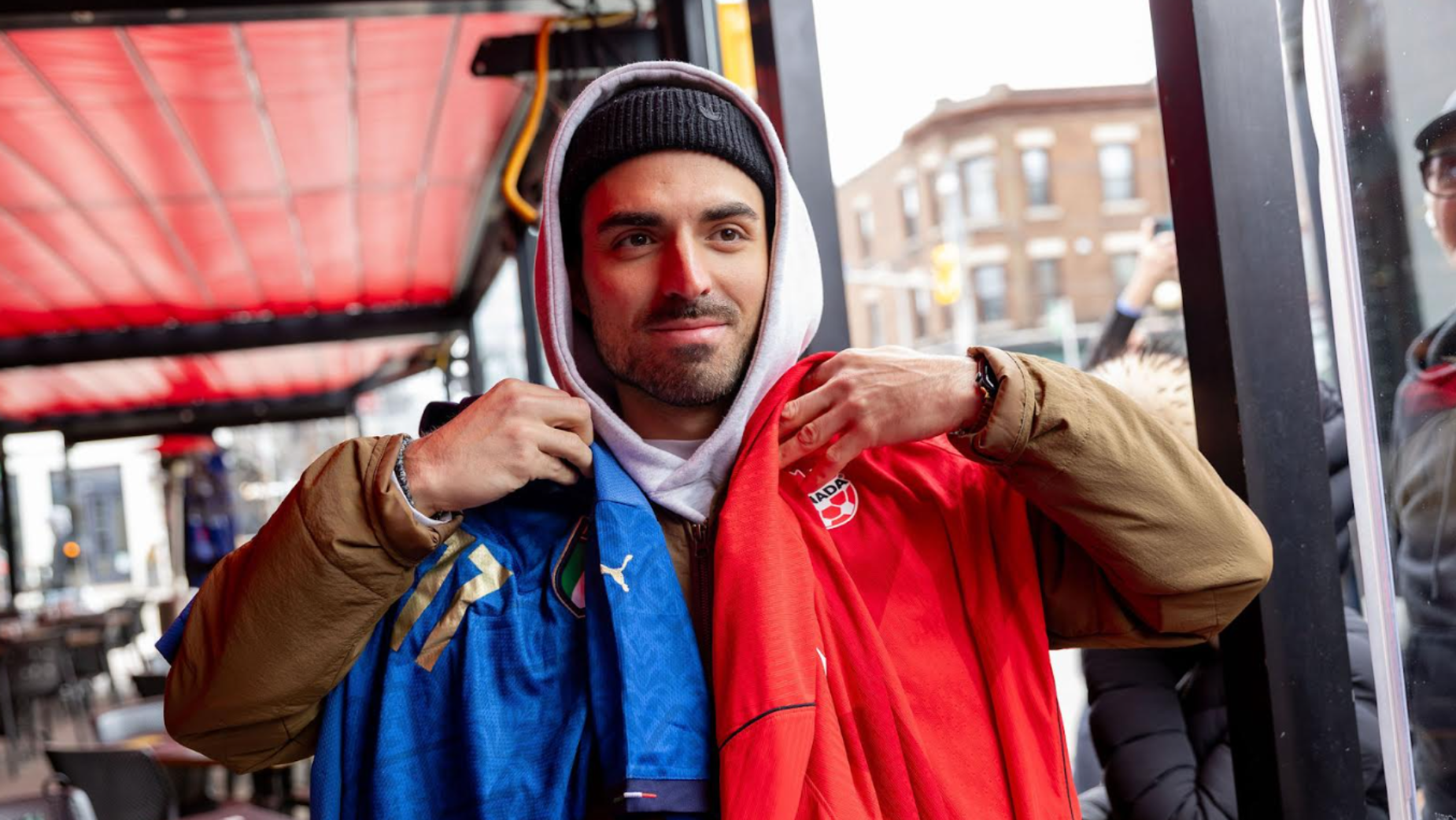
I also loved Canada Soccer’s idea where you could swap an Italian jersey for a Canadian one. It’s so simple and has that sticky magic that makes an idea so exciting.
Lastly, I don’t think we have seen the best work from Canada yet. I fully expect to see some amazing real-time reaction work that jumps on micro moments and builds mental availability.
At the start, I mentioned TV ads. If there is a missed opportunity for Canada’s marketers, it’s here. The ads I have seen feel clichéd and predictable, with little insight, imagination or lateral thinking. And given the viewing figures for the games, the cost of being dull is likely to be high.
Jordan Cohen & Mark Holden
Creative directors at Diamond

We want to see work that doesn't treat the World Cup as a sports moment, but a total cultural takeover. Something that reorganises attention, behaviour, and public life for this fixed window.
That distinction matters, because the official sponsor conversation is already ‘solved’, so to speak. Brands with the badge, the budget, and kind of the same brief. The more interesting creative problem is the brand that has no right to be in the room, but shows up anyway and owns it.
Ambush marketing gets talked about like it's a stunt category. It's not. The real question is, ‘How do you make something so culturally precise – so tonally correct – that the audience doesn't care whether you paid for the moment, they just remember you were there?’. That requires restraint. Strategic restraint. You can't be loud about it. You have to be right about it.
The World Cup landing in Canada changes the calculus too. The spillage outside FIFA's walls is where the real creative territory lives. Commutes reorganised around kickoffs, workplaces quietly shifting their days, a country deciding whether it stays an observer or finally becomes a participant. Global sponsors can't touch that. They're speaking to 48 countries at once. A smart, local brand can speak to this one.
The brands willing to take those risks. The agencies smart enough to frame it correctly. Those are the ones worth watching. And Doritos. Can't wait to see what Doritos does.
Rob Vena
Chief creative officer at Feast

The World Cup in Canada isn’t just hype around the game. It’s one of those moments where sport becomes culture, and culture becomes something brands actually have to respect if they want to be part of it.
From an advertising standpoint, the opportunity is about showing up where people are both physically and emotionally. Canadians aren’t just watching matches; they’re living in multiple emotional lanes at once. They’re cheering for Canada, but they’re also backing the countries they or their families come from. That overlap is where the real attention is. If you show up in a way that feels like a natural extension of how people are already reacting, you have a chance to become part of the conversation.
For non-sponsors especially, you can’t try to force relevance. Find the cultural truths that already exist and reflect them back. The brands that will land are those that understand the complexity of this shared experience unfolding in real time across the country.
There’s also something very specific to Canada here. Multiculturalism isn’t a talking point – it’s the lens everything is viewed through. That creates a very different kind of World Cup audience. One household can celebrate three different teams, and switch between them without contradiction. This is Canada. This is what unites us.
Vanessa Côté
Group account director at No Fixed Address

Let’s be real for a second, the World Cup hitting Canadian soil isn't just a big deal; it’s a cultural movement. And naturally, every brand is going to want a piece of the conversation. But not every brand is going to have the same firing power. (And they don’t need to, because it’s less about the investment, and more about the impact).
Whether a brand is investing millions as an official partner, or looking for a clever way in from the sidelines, you have to find a unique way into the room that holds true to who you are. The second a brand tries to hijack a cultural moment, audiences smell the BS. It feels disingenuous, intrusive, and frankly, lazy.
The formula is simple. It’s about putting the moment first, and letting the brand organically follow.
Our job isn’t to overshadow the event; it’s to enhance it. That is exactly the balance we’ve unlocked with Chicken Farmers of Canada. We’re embedding ourselves into the genuine highs and lows of the tournament without acting like a corporate chaperone. Yes, the branding is there, but it’s secondary to the raw emotion of the game and the community living it. Instead of shouting from the sidelines, we’re celebrating in the stands. By being intentional, staying true to our core, and letting the excitement breathe, we’re proving that memorable work isn't just about the size of the badge. It’s about having the insight to show up authentically and make the moment count.
Ryan Lacquement
Group strategy director at Sid Lee

One of my colleagues is a soccer-crazed accounts person. Great accounts person, even better human, but picks terrible soccer teams to support. After returning from Mexico city in April, he bemoaned the lack of World Cup-related advertising in Toronto. But, the moment the calendar flipped to June, he began getting his wish. Unfortunately though, it looks like most marketers are checking off ‘current-sports-event marketing’ boxes. We’re seeing a flood of generic soccer language, random player cameos, and leaning heavily on the crutch of an official sponsor logo, rather than great ideas.
The official sponsors were predictably out first and doing things of note. Michelob Ultra is showing the power of scale with its domination in-and-around Exhibition Station. VISA is being helpful with its TTC ads that inform visitors they can pay their fare with their VISA card. Meanwhile adidas has created a go-to destination with an experiential pop-up at STACKT Market.
Smart agencies and clients looking to join in and win amongst low-level soccer puns and invasion of street team activations will leverage similar tactics while having discussed two things. Firstly, what aspect of our brand, product(s) and/or category can we leverage to make ourselves relevant within the culture of the moment? And, secondly, how do we break away from the ordinary to make it stand out with excellent craft?
But, the smartest are already having conversations about what’s next.
Lavana Pauk
Strategy director at Junction59

Don't try to embed yourself in the tournament. You’ll get ignored. Expand the aperture. The culture, the travel, the ambition, the emotion. Find the overlap point that's genuinely yours to own. The World Cup is just the reason to say it louder.
Shane Ogilvie
Co-founder and chief creative officer at The Garden
The World Cup is one of those moments where every brand suddenly decides it has a relationship with sport. Most don’t.
The more interesting conversations I’ve been having lately have nothing to do with sponsorships. They’re about whether a brand has any credible reason to participate at all.
A lot of marketers still see events like the World Cup as media opportunities. They assume that because millions of people are paying attention, all they need to do is show up. But showing up is the easy part.
For official sponsors, there’s often a temptation to lean on the rights package. The logo, the assets, the access. Those things can buy visibility, but they don’t automatically create relevance. Being allowed to talk about the World Cup isn’t the same thing as having something worth saying.
For brands without official rights, the brief is usually more interesting. The biggest mistake is trying to look like a sponsor when you’re not one. The smarter play is finding a role in the behaviours that surround the tournament. People will be gathering in bars, hosting watch parties, arguing with friends, skipping meetings, celebrating wins, and sulking after losses. That’s where the opportunity is. Not by attaching your logo to the game, but by finding a role for your brand within the experience surrounding it.
So, whether a brand has official rights or none at all, the challenge doesn’t really change. Attention won’t be the problem. The question is whether your brand gives people a reason to remember it once it’s over.
The biggest risk for brands isn’t missing the World Cup. It’s looking exactly like everyone else who just showed up.
Neil Blewett
Creative director at Anomaly Toronto

The World Cup will have no shortage of attention. The challenge is giving people something they'll remember. Every brand will be trying to tap into the excitement around the tournament, so the challenge isn't visibility; it's finding an idea that feels native to how fans experience the moment.
The conversations Anomaly is having are less about media plans and sponsorship activations, and more about consumer participation. What role can our brands play? What can they create, enable, or celebrate that adds something to the fan experience? We've already seen this thinking come to life through our global work, like Visa's ‘Tap In’ campaign, which turns one of the brand's most recognisable behaviours into a fan-first World Cup experience. Rather than simply showing up around the tournament, it gives consumers a role to play.
That's especially important in Canada, where the World Cup will be expressed through many different communities, cultures, and identities. Brands that understand those nuances can create experiences that feel local, personal, and culturally relevant. Our partners at Lay's’ recent FIFA World Cup-inspired flavour launch is one example, celebrating the diversity of Canadian fandom through food and culture.
Our partners at Gatorade are taking a different approach, leveraging a partnership with Canada Soccer and national team star Tajon Buchanan to connect the tournament to performance, preparation, and the next generation of Canadian players. Together, these programmes show there isn't a single way to participate in the World Cup – only opportunities to find an authentic role within it.
Ferrero's ‘GO ALL IN’ platform is another great example. While it's a US-focused campaign, it's being led out of Anomaly Toronto – proof that some of the most interesting ideas aren't constrained by geography. By partnering with Tom Brady, the ‘GO ALL IN’ campaign creates a bridge between American football and fútbol, inviting consumers who may be new to the global game but deeply connected to North America's biggest sport. It's a smart way to expand the conversation beyond traditional soccer fans and bring new audiences into the tournament through a cultural GOAT they already know.
The brands that stand out won't necessarily be the ones with the biggest presence. They'll be the ones that understand the difference between showing up around the moment and becoming part of it.
Anyone got tickets for me?
Jef Moore
Executive creative director at Mosaic

As Canada prepares for the World Cup, brands are recognising that the opportunity extends far beyond official sponsorships or the tournament grounds themselves. Some of the most effective activations will come from brands finding ways to become part of the broader cultural atmosphere surrounding the event.
One of the biggest strategic shifts we’re seeing is a focus on experiences over traditional advertising. Rather than trying to interrupt the moment, brands are looking for ways to contribute to it, creating spaces, experiences and utilities that enhance how fans gather, celebrate and participate throughout the city.
For many brands, that means activating beyond the official fan festival footprint and speaking to a broader audience that wants to be part of the energy surrounding the tournament, even if they’re not die-hard football fans. Successful activations are leaning into specific emotional territories tied to each brand. LEGO is focusing on joy and play through large-scale physical experiences, while Casamigos is building social spaces centred on friendship and connection. Other brands are identifying opportunities to engage younger audiences or create entirely new viewing experiences.
What will separate memorable work from forgettable work is a willingness to move beyond conventional sponsorship thinking. The brands that succeed will be the ones willing to ‘colour outside the lines’ with ideas that feel culturally relevant, useful and shareable.
The operational side is equally important. Unlike a typical weekend activation, World Cup programming can stretch across an entire month. That changes everything, from production planning and weather durability to how experiences serve both visitors and local residents over time.
Ultimately, the brands that resonate most will be the ones that understand the World Cup is not just a sporting event. It’s a city-wide cultural moment, and people want to feel part of it.
Jack Latulippe
Chief creative officer at Havas Creative Canada

This is the year where Canada isn’t watching from the sidelines. We’re hosting, we’re participating, and we’re doing it in a time where questions about identity, belonging and national confidence are incredibly relevant. I think that creates tremendous opportunity to go far beyond traditional sports marketing.
One of the challenges for brands is that the World Cup will be a very commercially crowded moment for Canada. Every brand wants to claim passion, fandom, unity and national pride. But very few will have the ‘right’ to own these conversations. So, it will be the ones doing it with authenticity and as a natural extension of their marketing efforts who will win in the space and be remembered. It goes back to knowing what you stand for as a brand, and how you show up in the world. And your agency should always help with that.
For non-World Cup partners, the brands and agencies have historically tried to find the loopholes and go around sponsorship restrictions. But I think today, the smarter approach is to find the adjacent cultural conversations and tap into them. (‘Watch party’ culture, newcomers finding community through sports, city pride, evolution of Canada’s love for football, etc.). These spaces are usually less crowded and create more genuine connections. That’s where agencies should be bringing their clients.
And the World Cup is a big global show. But the Canadian work that will be the most effective will likely be rooted in something much smaller and more human. That’s probably where the brand value will be created: in what the game unlocks, rather than the game itself.
Julien Bissuel
CEO at 72andSunny Toronto

What is interesting about Canada is that soccer is a part of our cultural fabric. Soccer fandom here is fragmented but mosaic, in that fans are passionate about other national teams in addition to our own. This presents a unique challenge for brands to navigate that duality – supporting Canada’s national team while acknowledging Canadians’ deep-rooted ties to teams like France, Italy, or England, for example.
Our ‘Bandwagon’ work for Lay’s with Will Ferrell is exactly the spirit: facilitating and amplifying the fan experience by getting them on the bandwagon. Soccer is the number one played sport in Canada, and everyone is also celebrating the fandom of the sport and the excitement of being a host country for the first time. Brands are realising that the love for soccer is here, and that they can go all-in to reach fans.
The cost to become an official sponsor is expensive, so local brands, specifically, are trying to figure out a way to hack this and win on the second screen. They can do this by tapping into the soccer culture through hosting watch parties or curating activations, and by acknowledging the barriers that fans will encounter when attending or watching the World Cup games.
Robbie Percy
Executive creative director at Wieden+Kennedy Toronto

World Cup advertising is usually so focused on elite athleticism and the intensity of competition around the actual games. But, for a brand like McDonald’s, its connection to the game isn’t about what happens on the pitch; it’s about what happens after.
So, while McDonald’s still featured a roster of superstars, it actually just treated them like McDonald’s fans and showed that no matter how much of a legend you are, everyone has a McDonald’s order. It’s basically the ultimate ‘They’re Just Like Us’, which was always my favourite part of Us Weekly.
Some of my favourite work always comes from brands that aren’t official sponsors. I loved the simplicity of the Air Transat work that compared the price of World Cup tickets to see various teams with the price of flights to those countries. So simple, so good.
Karen Pearce
Partner and general manager, Vancouver at Rethink

With the world’s eyes on North America for FIFA, we saw an opportunity to bring Destination Canada’s 'Canada, naturally' platform to life through an unmanufactured brand experience.
We aren’t an official tournament sponsor, but we absolutely own the ultimate backdrop. By launching 'Natural Watch Parties', an opportunity to experience the beautiful game in the most beautiful places in Canada, we're cutting through traditional sponsorship noise to engage both domestic and international travellers.
Amy Badun
Head of strategy at GUT Toronto

The World Cup is coming to Canada. And with it, the most predictable mistake in marketing. The trap is obvious: the event is massive, so the idea should be too. A celebrity. An anthem. A campaign designed to stretch across markets and audiences. It's an instinct that shows up every time a cultural moment gets big enough. The bigger the stage, the bigger we think the idea needs to be.
But, big moments have a funny effect on marketing. They flatten it. Everyone starts drawing from the same playbook. The same symbols. The same emotional territory. The same assumptions about what a World Cup campaign should look like.
So, the moment gets bigger, the work tends to get broader. But broader is rarely more memorable.
The mistake is assuming scale is the opportunity. The World Cup already guarantees scale. What it doesn't guarantee is distinction.
That's why the bigger the cultural moment, the smaller your idea should be. Not smaller in ambition - but smaller in focus. Because the most interesting opportunities often aren't found in the event itself. They're found in the small ways the event reshapes everyday life. Meetings move. Alarms get set early. Group chats that haven't buzzed in years suddenly spring back to life. Entire days start revolving around a match taking place thousands of kilometres away.
Those details may seem small. That's precisely the point. Especially for non-sponsors, the temptation will be to compensate for a lack of official rights by going broader, louder and more spectacular.
That's the wrong play. Your job isn't to make the World Cup bigger. I think FIFA has that covered.
Your job is to notice the thing everyone else overlooked. The thing that's too small to make the headlines, but memorable enough to make the work.
Rafik Belmesk
Partner and head of strategy at Courage
This is an incredibly difficult time to earn attention. The event is already loud, emotional and commercially overcrowded, so unless a brand has a very good commercial reason to show up, maybe it shouldn’t.
I think the real danger is chasing borrowed attention where you manage to get noticed, but none of that actually accrues to the brand or the business. Not having rights forces you to be sharper. You can’t rely on logos, assets or borrowed excitement. You have to find a point of view that earns you a place in the conversation.
The brief can’t be, 'How do we look like we belong?'. It has to be 'What can we say or do that only this brand could credibly bring to the conversation?'. The strongest work in that sense tends to be timely and unmistakably ownable.


