Step Back to Stand Up: Why Surrendering Control Is the Key to Comedy


In a world plagued by economic and social instability, audiences are craving the release of a good laugh - but the industry’s tendency to micromanage and seek refuge in the reassuring comfort of algorithmic predictability is getting in the way and ruining the punchline.
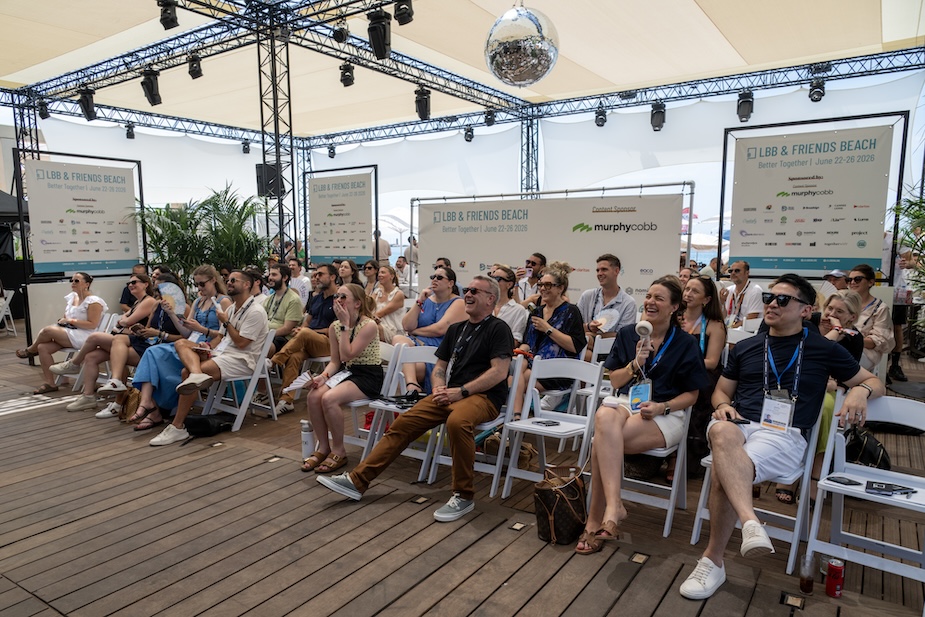
Speaking at the LBB & Friends Beach, an international panel of top creatives shared a showcase of off-kilter comedy that’s resonating with audiences and award judges alike. They revealed that the key to this wonderfully weird humour is trust in talent and learning to let go.
Peter Khoury, regional CCO of Omnicom Advertising Asia, was on stage to talk about BBDO Bangkok’s ‘Death of a Salesman’ for Five Star Chicken. He warned clients that they risked wasting money on ineffective work if they fail to commit to the bit.
Above: Five Star Chicken 'Death of a Salesman'
“Now, doing predictable work is the risk because you don't get noticed,” he said, arguing that shareability and watchability skyrockets when the creative is unexpected - and that counts double for comedy. “I just think it has so much more traction. It's making the neurons in your brain fire differently. So you're pausing to go, ‘what the fuck am I actually looking at?’ And the memory structures are way more embedded when you do that.”
Taylor Erin, ECD at Local Produce, Instacart’s inhouse agency, was on stage to talk about the US brand’s bombastically silly Spike Jonze-directed Super Bowl spot ‘Bananas’. She argued that audiences are intrigued by work that subverts expectations: “I think that's really intoxicating, now when things are very predictable. Everybody is copying each other and I think when someone breaks from the mould, that's when people really pay attention and want to share it.”
Above: Instacart 'Bananas'
When it comes to absurdist comedy, though, it can be hard to convince clients to jump on board. Each of the speakers revealed different approaches to convincing them to loosen up. According to Taylor, trying to get deep and strategic about explaining why something is funny can often be a losing battle. Instead she was able to use the fact that ‘Bananas’ has a “simple brand message” and an undeniably catchy earworm to direct attention away from the minutiae of comedy and towards the central idea, and talk about what this idea was able to do for the brand.
Long-term relationships rooted in trust are also crucial. “This tie-in for Five Star Chicken is not the first. It is in a series of many ads and a lot of trust that has been built over time,” said Peter.
That trust was also present in VML’s relationship with their client at Oreo. ‘Oreo Cows’ is a partially-improvised deadpan mockumentary about a farmer and his surprising herd of cows that look like bovine Oreos.
Above: Oreo 'Oreo Cows'
According to Manuel Borde, global CCO at VML Commerce, who was joined on stage by Luis Madruga Enríquez, VML’s Mexico CCO, they also had a secret weapon when it came to selling in the idea. These outlandish cows are, in fact, entirely real.
“The pitch was: show them a picture. And the answers to the questions of disbelief were the same: ‘no, it's not AI. No, we didn't just go and paint a cow. No, we’re not asking you to bioengineer a cow cookie. It's an actual cow that exists, and we need to sell a story around it’,” said Manuel.
This idea of trust and unpredictability doesn’t just apply to clients working with their agencies. Creative leaders also need to first make sure they’ve got the right talent and collaborators on board and to give them the space to work their magic.
And that’s particularly true of working with directors. Tomás Ostiglia, ECD at LOLA, shared Axe’s recent global World Cup campaign, a series of international snapshots of footy fans looking very silly. It was directed by duo Lionel Goldstein and Tomás said the key to its success was to create something authentic that would connect with audiences.
Above: Axe 'Wiener'
“I used to be the guy that was behind the directors, making their life miserable and trying to put my vision over them,” he said. “If you give freedom and let them be themselves with the idea, you will have a better result… You need to let go at some point.”
At Instacart, the team didn’t have a choice in the matter. Their Super Bowl campaign was directed by Spike Jonze, who has final approval built into his contracts.
“If any of you guys have worked with Spike, you know that when he signs on, he gets edit approval. And what that means is you really need to hand the keys over to him and he will create an entire universe. He really makes the calls,” said Taylor, who explained that Jonze’s strong back catalogue made it somewhat easier to go with decisions that might feel weird in the moment.
“In this case, we were forced to trust him because that was part of the deal, which I actually think is really nice, because you have to be brave,” said Taylor. “It's a great hack to bravery.”
In Thailand, the best comedy directors really do call the shots too. As Peter explained, the top talent is booked up for months in advance, so agencies often bring them onboard before they even have an idea or script because they know they’re going to need a strong comedic talent.
It’s not just directors that can elevate a comedic idea if given the freedom. According to Luis and Manuel, about half of the 'Oreo Cows' script was improvised as its cast of first-time actors brought their authentic instincts to the story.
For creatives struggling with the pressure to make their work a little less weird and a lot more conventional, the panel advised them to be resilient and persistent. If a client isn’t ready to let go and fully embrace silliness and the absurd, that trust may develop over time with each subsequent job.
But, as Taylor pointed out, clients shouldn’t allow their fear to lead them to work that fails to make and impact.
“Usually when a client or a brand is saying, ‘Please make it more normal’, it's because they're scared… The most reckless thing that you can do is make an ignorable ad. That’s just burning your money.”