


Ben Woolf on Making Samsung’s Christmas Film Feel Human While Using AI


Samsung’s Christmas films are known for their cinematic ambition, but for director Ben Woolf, the challenge this year was restraint. Tasked with showcasing the brand’s Galaxy tablet and its AI Drawing Assist tools, Ben decided to approach the brief by putting human storytelling first, rooting the campaign in performance, family dynamics and a child’s inner world.
Of course, the film needed to highlight the in-built AI feature that turns simple sketches or photos into detailed, artistic images, but Ben used the technology as a narrative catalyst, as a way of getting the six-year-old girl to process change, express her imagination and reconnect with those around her.
Talking with LBB’s Olivia Atkins, Ben unpacks how casting, pacing and tone helped keep the film grounded, why imagination at six is “serious, not cute,” and how the magic of Christmas lands best when it’s earned.
LBB> What was the brief from Samsung, and how did you interpret it creatively?
Ben> Samsung’s brief was to make a Christmas film with real emotional impact that also showcased the Galaxy tablet AI Drawing Assist, which turns a hand-drawn sketch into a rendered image. They wanted it to play as a proper mini-drama in cinema, but also land online for people watching on their phones.
Creatively, I was excited by the tension in that. It felt like the chance to make something grounded, classic and human, anchored in performance but featuring a genuinely cutting-edge product. My approach was to lean hard into the story and treat the tech as a plot point, not a product demo. The goal was a truthful, relatable drama first — a child arriving in a new home, feeling displaced, using imagination to process change. The AI then becomes the catalyst that helps her express herself and reconnect with her family.
Ultimately, I felt it would be most interesting – and effective – to show generative AI integrating into family life organically, rather than getting caught up in explaining the mechanics of the feature.
LBB> Talk us through your casting decisions. Did you have a clear sense from the outset of what you were looking for — and did you know immediately when you’d found the right actors?
Ben> From the outset, I knew the film would stand or fall on the casting – especially the hero girl (Laura). The performance needed to feel real and believable. In casting children – particularly on a commercial – it’s a balancing act: you want freshness and authenticity but you also need an actor who can deliver the emotional beats on camera with some consistency.
For Laura, I wasn’t looking for big acting moments — I was looking for a kid who felt like a real child across lots of small emotional beats. When we found the right actor, it was pretty immediate – it didn’t feel like she was deliberately showing how hard she was acting. It felt real and present.
For Grandad (and the rest of the family), the challenge was to find a family unit that exuded warmth without sentimentality – to create a family unit that felt lived-in, recognisable and quietly funny. We used the fact that Laura's real-life mother was also an actor and cast her as Laura’s on-screen mother, which helped to give an immediate, real family dynamic. Mainly, I wanted the relationships to have texture and avoid sliding into sugary Christmas cliché.
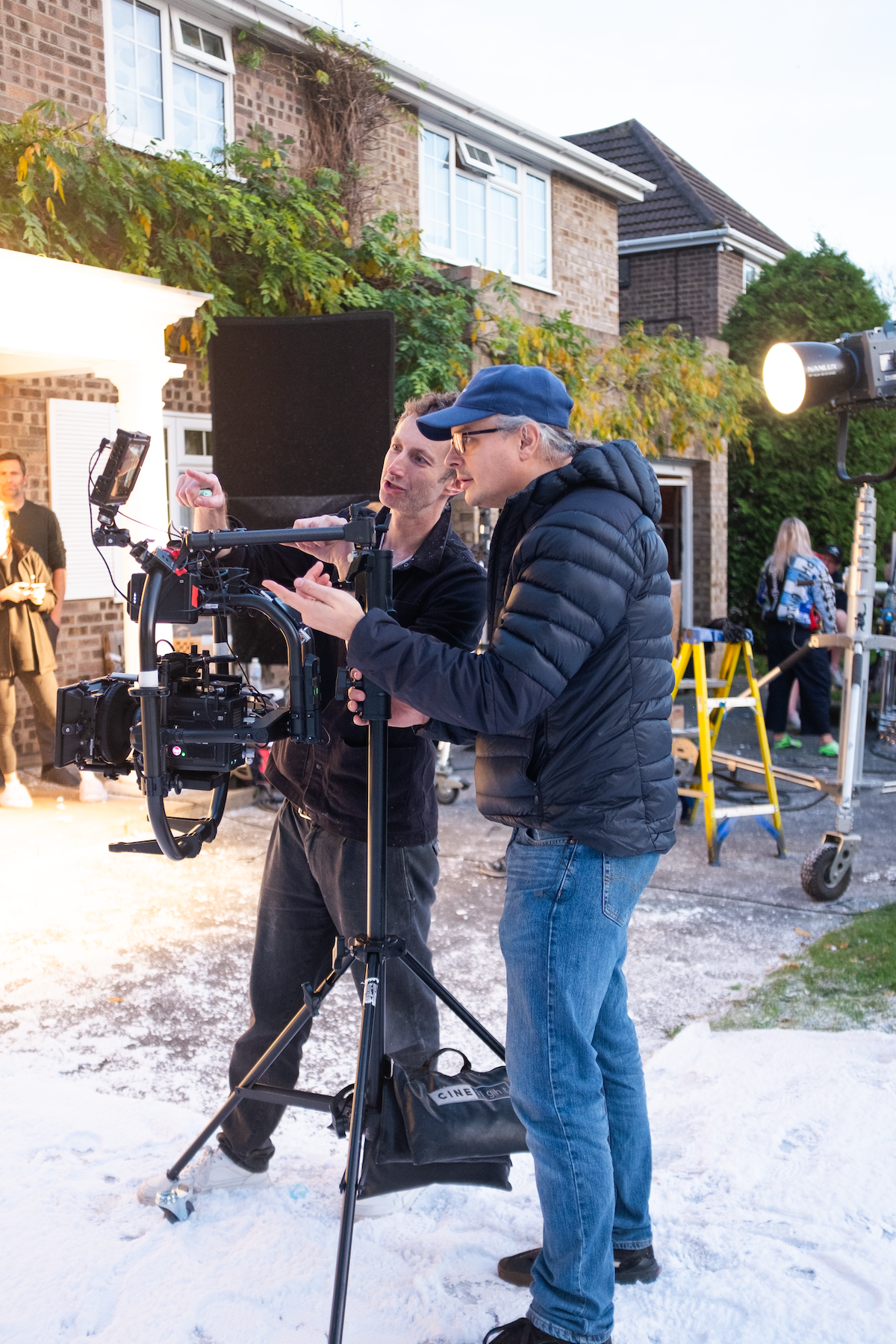
LBB> How did you work with Laura to draw out a performance that feels authentic, natural and emotionally truthful, especially given that she was a child?
Ben> With kids (and, actually, with most actors), my aim is to keep my direction simple, active, and unintimidating. I want to create and maintain a bubble on set where the actors don’t feel observed or judged – where they have the space to try stuff out and play.
Broadly, my aim is always to give concrete, playable notes – actions, objectives, games — and avoid direction like ‘look sad’. That said, commercials are precise and sometimes I know I’ll need a specific beat for the edit — a look, a reaction, a smile. When I needed to, I tried to be straightforward and clear about what we needed, while still leaving Laura the space to do it her own way.
We did manage to fit in some rehearsal during prep. The actor playing Laura, though, was fantastic and it was important not to rehearse the spontaneity out of her performance. The main thing from my point of view was just to focus on creating the right conditions: a calm set, tight shot selection and protecting her energy by limiting takes so the emotion stayed real.
LBB> The film integrates Samsung’s Galaxy AI into a domestic, emotional setting. How did you strike the balance between showcasing the technology and making it feel like a natural part of family life?
Ben> I approached the tech as something a real family might actually use: a Grandad helping a kid make something special, rather than a glossy product feature. The product beat is definitely there but it’s intended to be motivated emotionally. It arrives at the narrative moment where Laura needs a nudge to reconnect with her family.
Visually, my aim was to keep the tablet looking premium but integrated. It’s part of the environment, not a hero object being overly showcased. I wanted the lighting to be natural and to shoot the product with a loose, observational feel to give a believable, organic look. It was important to me that it felt like overall it was a story that happened to involve a Samsung tablet. And that, if you took the tech out, it would still make sense emotionally.
LBB> Samsung’s research points to age six as a peak moment for imagination. How did that insight shape the tone, pacing or emotional focus of the story?
Ben> That insight shaped everything from the treatment onward. At six, imagination is serious, not cute. It’s how kids make sense of the world. That insight pushed me to find a tone that treats Laura’s internal world with a bit of weight. Milo (the imaginary friend) isn’t played as a gag or a fantasy flourish: he’s a real companion on her journey.
Pacing-wise, it gave me the confidence to prioritise building little moments and then letting them breathe. Laura’s imagination should feel like it has concreteness. It also made me feel certain that we should make sure her story arc stayed simple and direct. If we’d overcomplicated it, we’d have given up some of the clarity and purity of that six year old imagination.

LBB> Set against a Christmas backdrop that often leans toward spectacle, how did you ensure the film stayed grounded, warmth and with a sense of wonder?
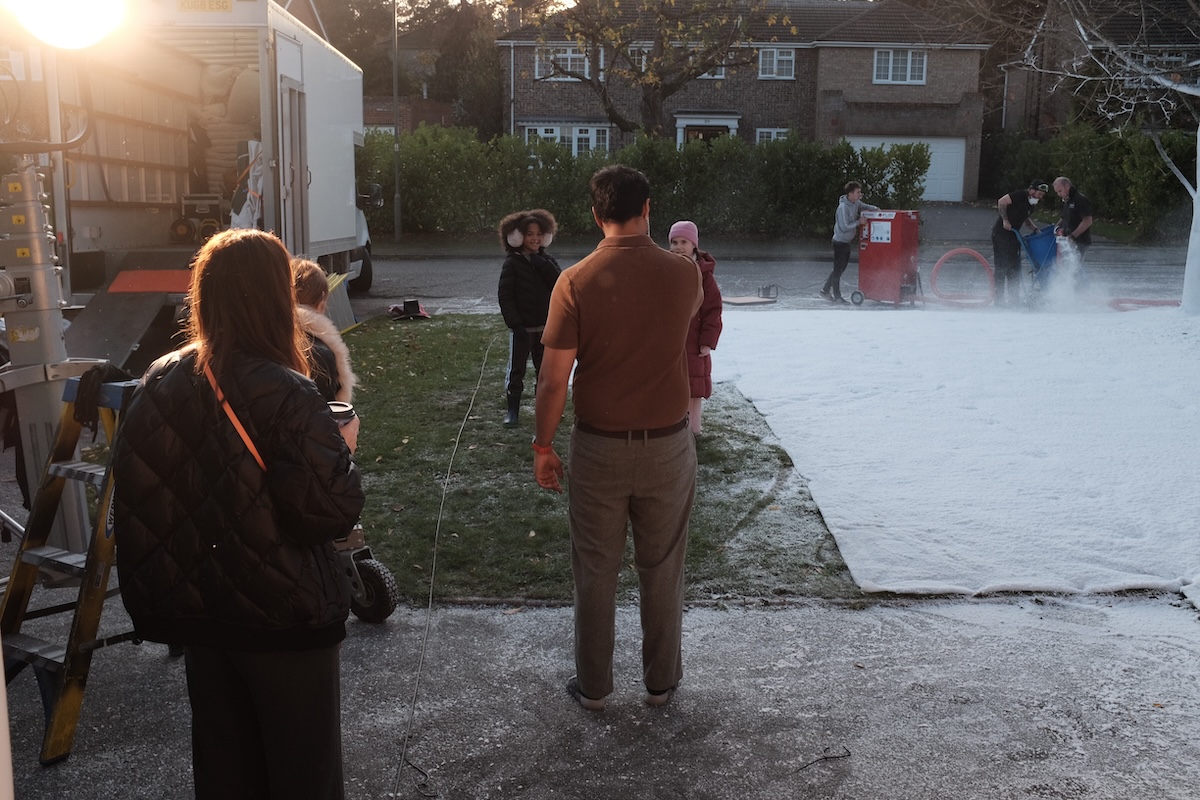
Ben> I absolutely wanted it to feel Christmassy but to focus on the performances rather than the decoration. The aim was to land a Christmas vibe – in production design and in lighting – that builds unobtrusively throughout the story. I wanted it to arrive effortlessly and heighten the story – rather than just take over as spectacle.
Visually, we started with a fairly cold, daylit, realistic palette and transitioned through the story to a look that is warmer, cosier and more festive. Wonder is most effective when it’s grounded in reality – if everything had been heightened from the start, the magic would have had nowhere to go.


