


Are Ad Remakes Ever A Good Idea?


With marketing budgets under pressure, brands are turning to a familiar strategy: the remake. Much like Hollywood reboots, iconic advertising campaigns are being revived to tap into nostalgia and cultural memory. Is the idea to save money while maintaining impact? Coca-Cola recently brought back its ‘Share a Coke’ campaign, PG Tips reintroduced its beloved Monkey character, and Levi’s revisited ‘Laundrette’ once more, now starring Beyoncé as part of her ‘Cowboy Carter Tour’. Brands seem to be banking on these being more than just ads and on functioning like cultural touchpoints. By revisiting them, brands aim to reignite emotional connections without the cost of building something new from scratch.
But are brand campaign remakes always the smart move? Do they offer creative efficiency or risk feeling tired? And, most importantly, do consumers care? Hollywood properties can rely on a few factors when rebooting IP, with nostalgia leading the way. A remake of a bellowed film or a TV show can bring comfort through familiarity or be a way for a parent to introduce a piece of media they loved to their children. Does the same go for ads? LBB’s Zhenya Tsenzharyk put this question to industry experts to see when an ad or a campaign remake makes sense and when it’s just the safe option.
Considering consistency
Joe Smith, strategy partner at AMV BBDO, first notes that “in general, brands are too quick to move away from successful and effective platforms, endlines or vehicles,” and it’s a problem because, in his words, “consistency has, um, consistently been proven to be a significant factor in marketing effectiveness.” He’s seen over and over how the industry gets “bored long before these things ‘wear out’ in the real world” which could be hurting brands’ business goals.
If we look at advertising reboots from the angle of consistency, then it can start to seem like a sound business strategy. Leonie Gates-Sumner, head of creative at Kantar UK, cites a statistic showing “brands with consistent perceptions grew their brand values +111% more than expected over the last 20 years.” This tells us that “remakes, when done well, can be a really effective way to take advantage of that impact.” To work in new market conditions “the best remakes tap into existing emotional memory structures and, by evoking feelings like nostalgia and joy, reinforce positive brand associations – but as with all ads, the brand needs to be at the heart of the story, to benefit from the power of those emotions,” Leonie adds.
“Creatives hate doing something that’s been done before,” says Ben Perez Usher, creative director, FCB London. “It means we can’t show how stupendously, groundbreakingly forward-thinking we are (and we are, promise).” He, too, wants to remind all the ideas people “that us advertising types get tired of things much quicker than consumers. They love a little familiarity. Because when the world feels more uncertain, seeing something we recognise is comforting.”
Still, when it comes to “remaking, rerunning or reinterpreting ads” it’s “a more nuanced topic,” according to Joe. “Some ads could undoubtedly be re-run in their original form and be effective today. Whilst others haven’t aged as gracefully and would fall short of cultural shifts or regulatory tightening since their first airing. Some would likely be successful again if remade for the modern contexts, sensibilities and aspect ratios.”
Harshvardhan Sahni, UK senior strategist at Momentum Worldwide, likewise sees a space for remakes in the ad landscape, with a heavy caveat. “Remakes work when they reignite both memory and meaning. The best campaigns aren’t just remembered, they’re felt. A reboot only works if the original had real emotional equity and the return feels culturally alive."
Abigail Olivas, head of strategy at No Single Individual, wants anyone considering the remake route to first ask a few important questions to see whether “the original insight still holds.” It's strategy’s job to stress-test that, according Abigail because “it’s not enough that a campaign was iconic.” The questions Abigail would ask are, “What tension was it originally built on? Is that tension still relevant today?” She adds, “it’s just as important: ensuring the core idea doesn’t carry forward an outdated narrative or trope that should stay in the past.”
It’s a sentiment Jenn Kittmer, group strategy director at Forsman & Bodenfors Canada, supports. In Jenn’s view, the brief needs to be interrogated to land on why a remake is the most relevant response. “What’s changed in the world, in the brand, or in the audience that is shaping this story, and making it worth retelling now? If you can answer that, remake away. If you can’t, you’re probably just playing it safe. And in our business, safe usually means forgettable,” Jenn adds.
“Remakes work when they’re more remix than rerun,” says Trevor Lindroos, global strategy director at Ogilvy UK. In his assessment, “today’s marketing landscape is more of a mosh pit than a museum. You can't just put the old record on and expect everyone to dance. You need to chop it up, add a new beat, and layer in new meaning.” A remake, if done smartly, evolves “the original to meet today’s cultural and commercial realities. Safe ones simply reheat yesterday’s success and hope it still tastes good,” Trevor adds.
For Ben, a remake isn’t the easy, lazy or safe option. It’s a creative and strategic challenge to get right in “striking the balance between what made [the originals] great when they first came out, and what needs to evolve for a modern audience. Too little change and it feels stale. Too much and it becomes unrecognisable.”
A sunnier view comes from Matt Buttrick, head of brand strategy at Bountiful Cow, who finds remakes to be "part of popular culture," adding, "when done right, can be great fun, impactful and lucrative." He highlights the 'Spiderman' franchise in particular. "There are claims that in order to maintain its rights, Sony has a contractual obligation to produce new 'Spiderman' content every few years. Basically, the same story, character arcs, and villains yet hugely enjoyable all the same. It’s like meeting an old friend again, wrapped up in warm predictability and just enough of a twist."
Nostalgia: a marketing strategy?
Looking around at the entertainment landscape it’s easy to conclude that nostalgia is the strategy underpinning most decisions across mainstream media. Remake after remake across TV and cinema or a new version/extension of a franchise, like HBO’s upcoming ‘Harry Potter’ series; vintage and retro pop sounds dominating music; and fashion recycling trends and aesthetics faster than before judging by all the Y2K and 2010s looks. But nostalgia isn’t enough, many of our experts agree.
Jenn borrows a metaphor from the music industry to highlight how “many ad remakes fall flat because they act like top-40 covers: rehashing a hit, chasing easy attention, and hoping familiarity and nostalgia does the heavy lifting. The best ones behave more like samples: lifting a familiar ‘hook’, then flipping it to say something fresh.”
“If we consider advertising as an entertainment category, at least in part, then it’s interesting to look at the lessons from music and film. Cover songs and film remakes are most successful when they bring something new to the table,” says Joe of a new flavour, perspective or style a remake, cover, or a remix can add. For Joe, the best examples of this are “Amy Whitehouse’s ‘Valerie’ or Jeff Buckley’s ‘Hallelujah'; De Palma’s ‘Scarface’ or Soderbergh’s ‘Ocean’s 11’. You don’t need to know the original versions to appreciate them, which I think is a good rule for advertisers to consider if remaking or reinterpreting an original ad.”
Still, even when the ‘hook’ or the insight at the core of a past successful idea holds, “nostalgia can’t do all the heavy lifting,” cautions Abigail. “A strong revival doesn’t rely on recognition alone, it has to stand on its own. The work should resonate whether or not someone remembers the original. A great reboot doesn’t just nod to the past, it earns its place in the present. And if the nostalgia lands too? That’s icing on the cake. Remakes can be creatively efficient, but only when they’re not treated like shortcuts.” For Trevor there’s a real danger in “confusing memory with meaning,” a move that’s too easy to make in the moment and regret later when audiences don’t respond in the intended manner or, worse, don’t respond at all. “If the world has moved on and your remake hasn’t, you’re not building a brand – you’re just playing greatest hits to an empty dance floor. The smartest brands know: honour the past, but remix for the present, or risk becoming your own tribute act,” he adds.
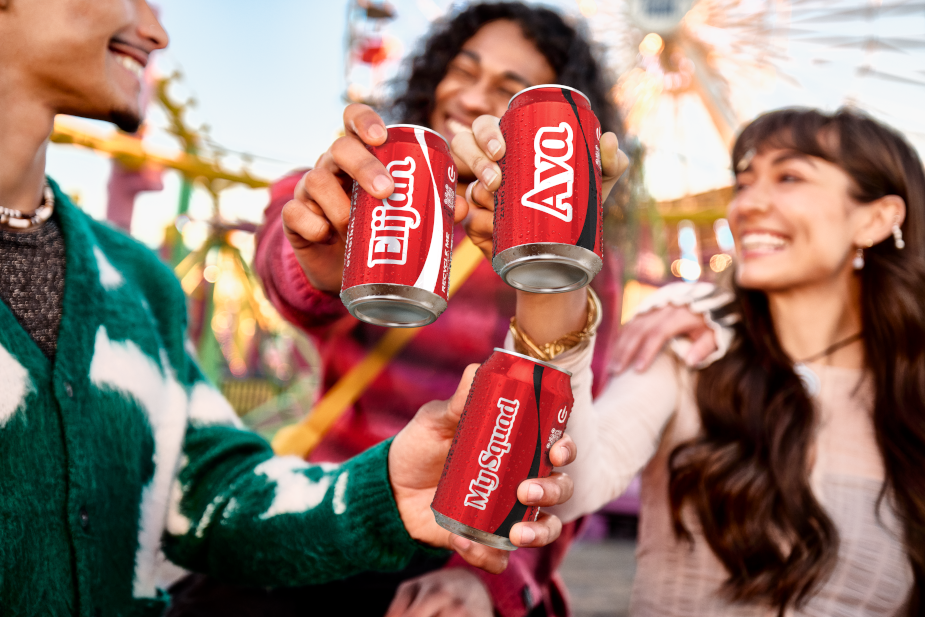
The ‘Share a Coke’ campaign was an example of the kind of sweet-sounding remix Trevor has in mind because “it didn’t just reprint names; it re-tapped the joy of personalisation in a social media age.” Harshvardhan is a fan too saying the campaign “didn’t just reappear, it evolved. New names. New tech. New cultural relevance. That’s not recycling; that’s stewardship.”
The remix strategy also appeals to Matt and he says that he loves "a smart remake or at least a remix." He asks, "Why wouldn’t you want to harness past glories when ‘the ads were better than the programmes’. KFC have re-flirted with ‘Finger Lickin’ Good’, still a great embodiment of what makes KFC so moreish. While Morrisons revived the utter gift that was ‘More Reasons to Shop At Morrisons’. Cultural and economic factors to one side, a good idea is a good idea. And just like a boy that is gifted arachnoid powers, it’s worth a repeat."
To Harshvardhan, too often remakes are nothing more than shortcuts and a brand “assuming the world cares as much as it once did. If it lacks modern context, it doesn’t connect, it congeals. It doesn’t stir emotion, it gathers dust.”
“So ask,” Harshvardhan continues, “Does it still move people? Does it still fit the moment? Does it offer new ways to connect?” If the answer is no then it may be a way to practice “risk aversion wrapped in sentiment,” one of the most fitting descriptions of nostalgia’s deployment in the industry today.
“Nostalgia can’t be left to do all the heavy lifting in sparking that emotive connection,” states Leonie. “If the remake isn’t relevant to today’s culture, it risks falling flat.” A remake that worked well in her eyes, after a refresh, was Budweiser's covid-era campaign. “When recreating its ‘Wassup’ ad during covid, Budweiser made a line switch from ‘watching the game, having a Bud’ to ‘in quarantine, having a Bud’. It’s a simple change, but a great example of how to harness that power of consistency, while still drawing on the current cultural moment to reignite the power of a past ad.”
Trevor highlights a few ‘remakes’ that worked like PG Tips’ Monkey as it “didn’t just reappear but evolved with the times” adding that “Hellmann’s didn’t recycle an old tag-line, they upcycled it with fresh humour and meaning.” Jenn is a fan of Old Spice bringing back the OG campaign hero, Isaiah Mustafa, in a relaunch of the ‘Smell Like Your Own Man, Man’ campaign. Crucially, he “wasn’t trotted out just for recognition; the bravado and elaborate metaphors of the original campaign became the foil to launch a product line of subtler, understated scents. It didn’t replay a hit, but rather remixed the hit with new meaning.”
AMV BBDO’s ‘Dancing Can’ ad for Guinness paid homage to 1995’s ‘Dancing Man’ in using a similar spirit and the same music track but, Joe notes, “updated for a new era and a new product (Nitrosurge).” It worked because “the ad gave a knowing and affectionate nod to the brand’s past but was also designed to work on its own terms, for the next generation of Guinness drinkers.”
Why has the industry found itself in a moment when investing in the old appears to be the better business move than forging ahead with something new? Gen Kobayashi, UK group chief strategy officer at M+C Saatchi Group, offers a perspective, but first he quotes the American poet and singer, Gil Scott-Heron, who once said, “Americans want to go back as far as they can, even if it turns out to be only last week. Not to face now or the future, but to face backwards.”
“This comment was in relation to the upheaval that the US was experiencing during the early ‘80s; stagflation recession, the Cold War and proxy wars with both Afghanistan and Iraq at once,” Gen explains. “Scott-Heron’s comment summed up the truth that when times are difficult, people feel safety in the comfort of the past. ‘Rosy retrospection’ as behavioural scientists would call it.” To Gen, it’s then not a surprise that “Oasis and Pulp have become the soundtrack to this summer and we are seeing a succession of major box office release remakes from ‘Dune’ to ‘Scream’ and, as the director of Jurassic World’ Rebirth’ said, “it’s more karaoke than innovation.” So, it’s no wonder brands experiment with remakes and remixes of old favourites.”
Yet Gen’s diagnosis doesn’t necessarily spell a bleak prognosis when asked whether the strategy works. He turns to a 2022 study by the Journal of Consumer Research saying “nostalgia-driven marketing can boost purchase intention by up to 50%.” The takeaway may well be “that ‘karaoke creative strategy’ could well pay back.”
It’s an outlook likewise shared by Ben, who sees a space where new ideas can coexist with older ones, when executed smartly. For starters, “maybe rather than looking at it as a ‘remake’, we should be more creatively sustainable and ‘recycle’,” Ben says. “Let’s take what has been proven to work, put it through the strategic and creative crusher, and bring it out reimagined. Bright, shiny and ready to be used again.”
It’s a pragmatic approach though I have but one parting thought to share for consideration: if we don’t invest in new, bold ideas now, what will the industry be remaking, remixing, or recycling in the future?


