


‘Light Hearted’ Is About Grief, “Made with Just the Right Amount of AI”


‘Light Hearted’, a new short film from director Sye Allen, is a poignant look at what happens to life once it has been touched by grief. Joy, a widow, has her own routine in place. It’s a quiet life with the absence of her husband in the room felt from moment to moment, even while warm afternoon light floods the room. One day, Joy – portrayed by Gillian Wright – receives a strange, unexpected delivery. It’s a piece of technology with the ability to project a version of a departed loved one into the room, like a hologram that can speak and interact but has no material form. It’s a facsimile of a life now gone, providing some comfort while exposing how technology will likely alienate too in its aim to ‘fix’ grief or remove the sensation from us altogether.
There’s a touch of technopessimism in the satirical way Sye exposes the limits of technology designed to replicate consciousness, to make us believe that a digital replica is ever as good as the person we want it to imitate. Not only does the technology glitch but it comes with ads too, interrupting moments of intimacy with badly timed upgrade offers. It’s funny and feels prescient too, much like the ‘Be Right Back’ episode of ‘Black Mirror’, as adoption of AI becomes widespread while AI companies try to work out how to monetise it with ads and to monopolise our attention even further.
“As AI platforms continue on their bold, selfless mission to create a more ‘democratised’ and ‘sustainable’ creative future for us all (cough, cough), I wanted to make this little ditty as a gentle reminder: the quickest, most celebrated solutions aren’t necessarily the healthiest. Sometimes the answer’s found in the struggle, in the mess, the mistakes, and the very human act of working things out the hard way,” he comments.
This film is a first foray into longer-form content for Sye. He says he found inspiration in Grant Naylor sci-fi novel, ‘Infinity Welcomes Careful Drivers’, and the way it “imagines the afterlife as something with its own admin,” Sye says, plus the nascent ‘grief tech’ promising to help us keep the dead alive.
The film is “made with just the right amount of AI,” in Sye’s own words and his stance on the technology is nuanced, cautious, and considered. In many ways the technology “has arrived faster than our ethics, faster than our contracts, and faster than the stories we tell ourselves about what creativity is,” he states, worrying about what happens after we remove friction from most experiences and let tech take over the elements that make us human.
Speaking with LBB’s Zhenya Tsenzharyk, Sye discusses his creative process, satirising tech companies’ relentless pursuit of attention, and the particular, limited way he used AI while putting a personal believe about it into practice – that “AI can become a power tool that serves artists, or a power grab that replaces them.”
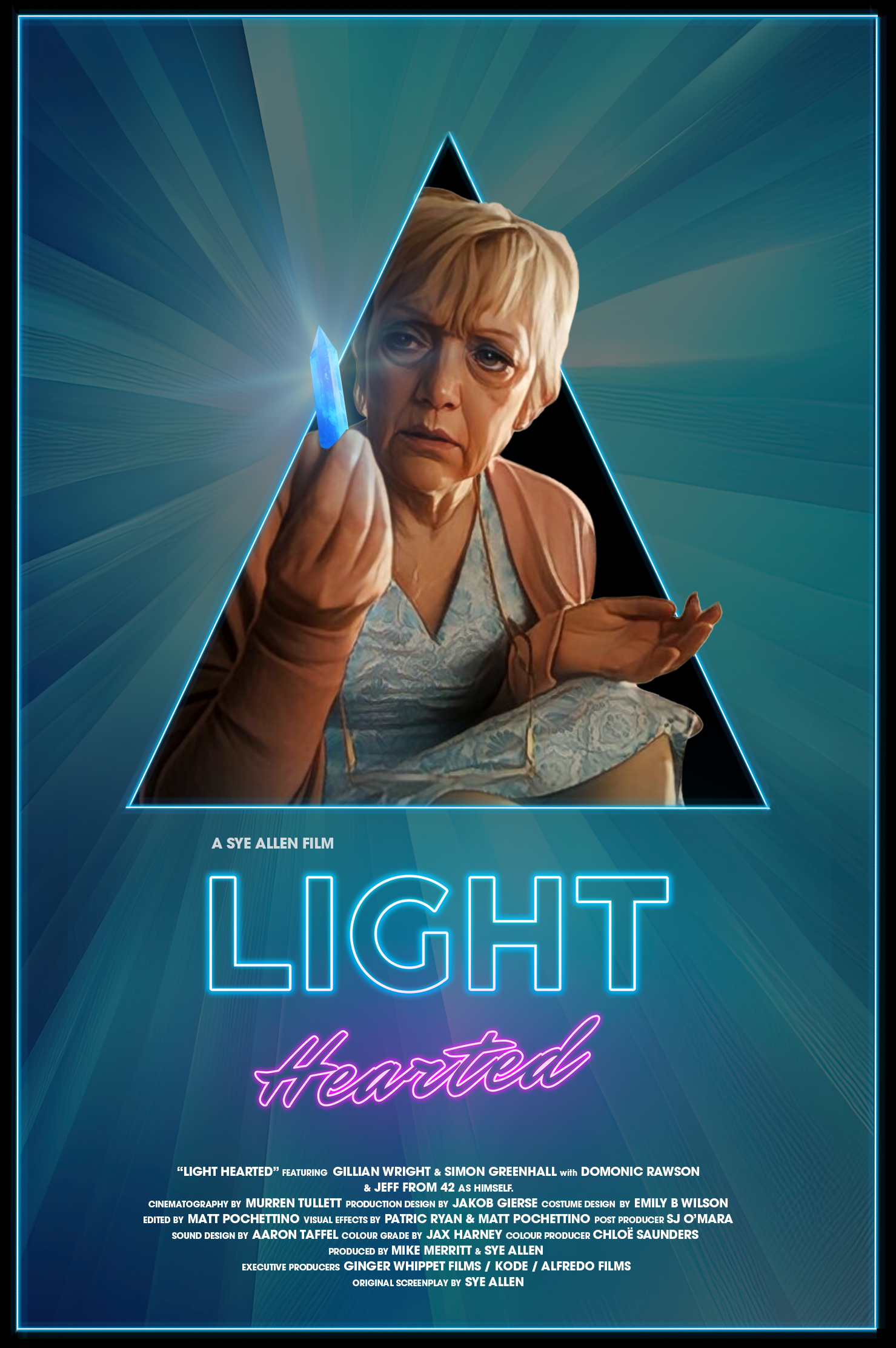
LBB> Tell us a little bit about how you conceptualised the idea for your short film. When did you first start working on it?
Sye> I first wrote ‘Light Hearted’ a couple of years ago, sparked by an old Grant Naylor sci-fi novel, ‘Infinity Welcomes Careful Drivers’. There’s a passage that imagines the afterlife as something with its own admin which made me chuckle. Around the same time, I was reading a lot about grief tech and the growing promise of “reimagining” the people we’ve lost through digital replicas and simulations.
That Christmas, watching my parents fall into a familiar squabble, I began to see both the absurdity and the poignancy of trying to bring someone back. The thought that lodged itself in my mind was pretty simple: imagine going to all that trouble to revivify your father, only to be yelled at for misplacing the remote. That collision, between the miraculous and the mundane became the engine of the film, and ‘holoClive’ was born!
LBB> What came first, the visuals or the narrative? Is this how you typically like to work?
Sye> The narrative came first, in the sense that it began as an idea I kept returning to and sketching around. Longer-form storytelling is still relatively new territory for me, but I naturally work by playing with an initial concept and gradually building the story from there.
That said, I can’t help but see images as I write. The visual language arrives alongside the narrative, and by the time I reach the end of a draft I usually have a clear sense of how I want it to look and feel, the tone, the texture, the rhythm.
For this film in particular, I was drawn to the comedy of contrast, staging a futuristic premise in an outdated, almost stubbornly familiar setting. That collision of worlds, advanced technology meeting the painfully mundane, became part of the humour and, for me, part of the film’s identity.
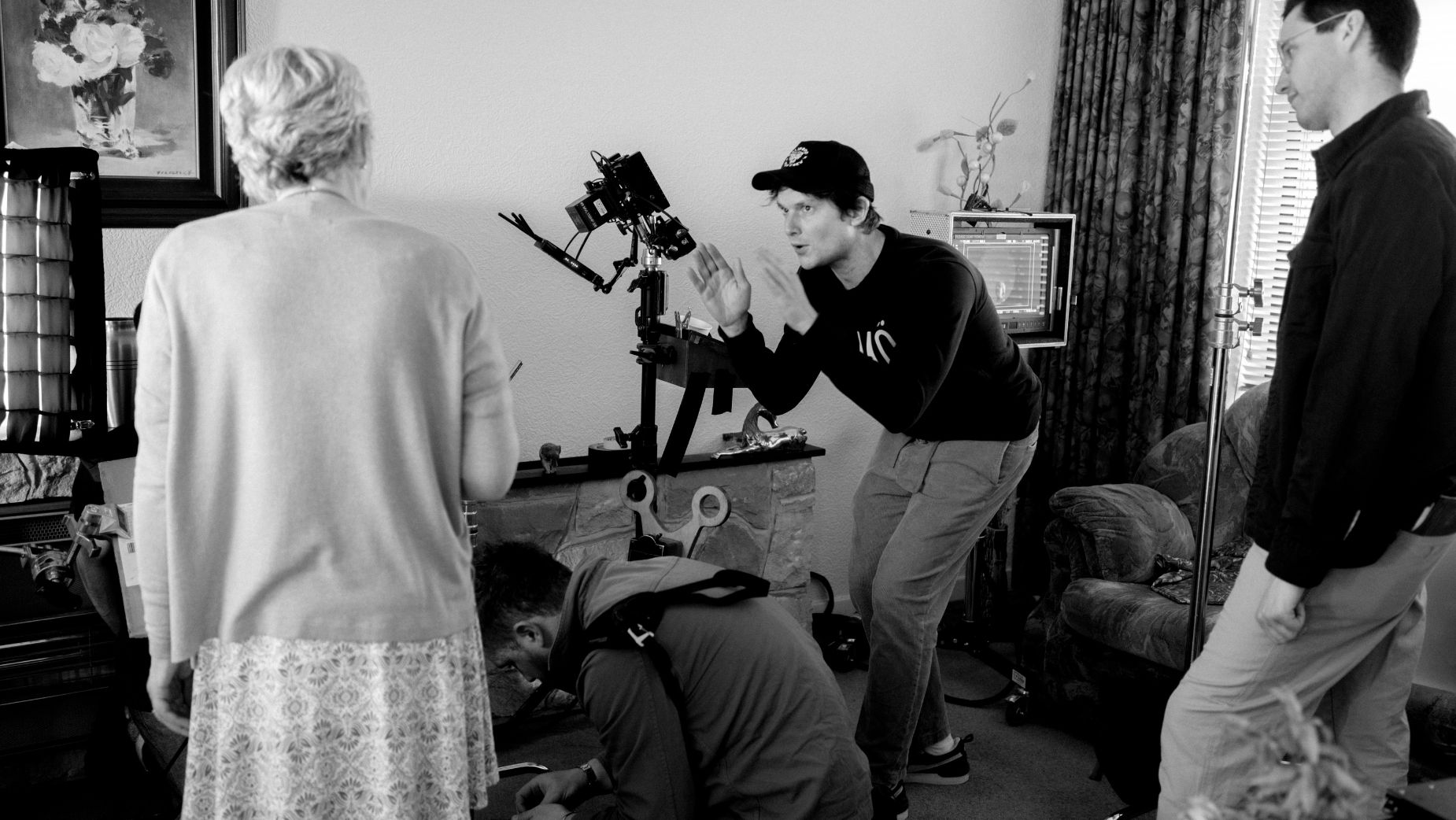
LBB> The film takes a satirical approach to how tech may help us process grief in the future and the outcome is less than ideal and a little dystopian. Talk us through what you want to say with the way you've depicted technology.
Sye> It seems like we moved pretty quickly from an age of grind to an age of optimisation, where we outsource more and more of our lives to AI in the name of saving time and reducing friction. The film comes from a nagging scepticism about that promise. Firstly, are we actually using the time we gain in any meaningful way, or are we just filling it with more noise and input? Secondly, even when the outsourcing works, is it genuinely good for us? Convenience isn't the same thing as care. Just because something is easier doesn't mean it is better.
I remember seeing a prompt on the Eurostar suggesting you put your phone away and ask a local for directions. It is a small example, but it points to something important: the friction we are so eager to remove is often where we practice patience, connection, and humility. If you apply that logic to the most fundamental experiences we have, death and grief, the stakes become much higher. If technology offers us a way to bypass mourning, to smooth out the pain, or to keep someone present so we never have to accept their absence, then something vital gets interrupted.
In the film, that is where the dystopia creeps in. The technology is seductive because it appears compassionate, but it ultimately dilutes the very process it claims to support. Grief shouldn’t be optimised away. It is not meant to be efficient, tidy, or easy. It is difficult because it is real, and because it is the way we metabolise love and loss. If we outsource that work, we risk losing not only the pain, but the meaning.
LBB> You poke gentle fun at advertising too. Do you think that ads are invading personal moments?
Sye> Honestly, it’s more the relentless pursuit of our attention by tech companies. It feels like they won’t rest until we’re wired in 24/7. It’s not even the ads, really, it’s the engagement machine underneath them, the algorithm designed to keep you reaching for the next hit. It’s genuinely clever, and that’s what’s so unsettling about it.
I catch myself picking up my phone for no reason at all, even when I’m sitting with people I care about, and I hate that reflex. It’s like the technology has trained a little twitch into us, and the scariest part is how normal it’s become.
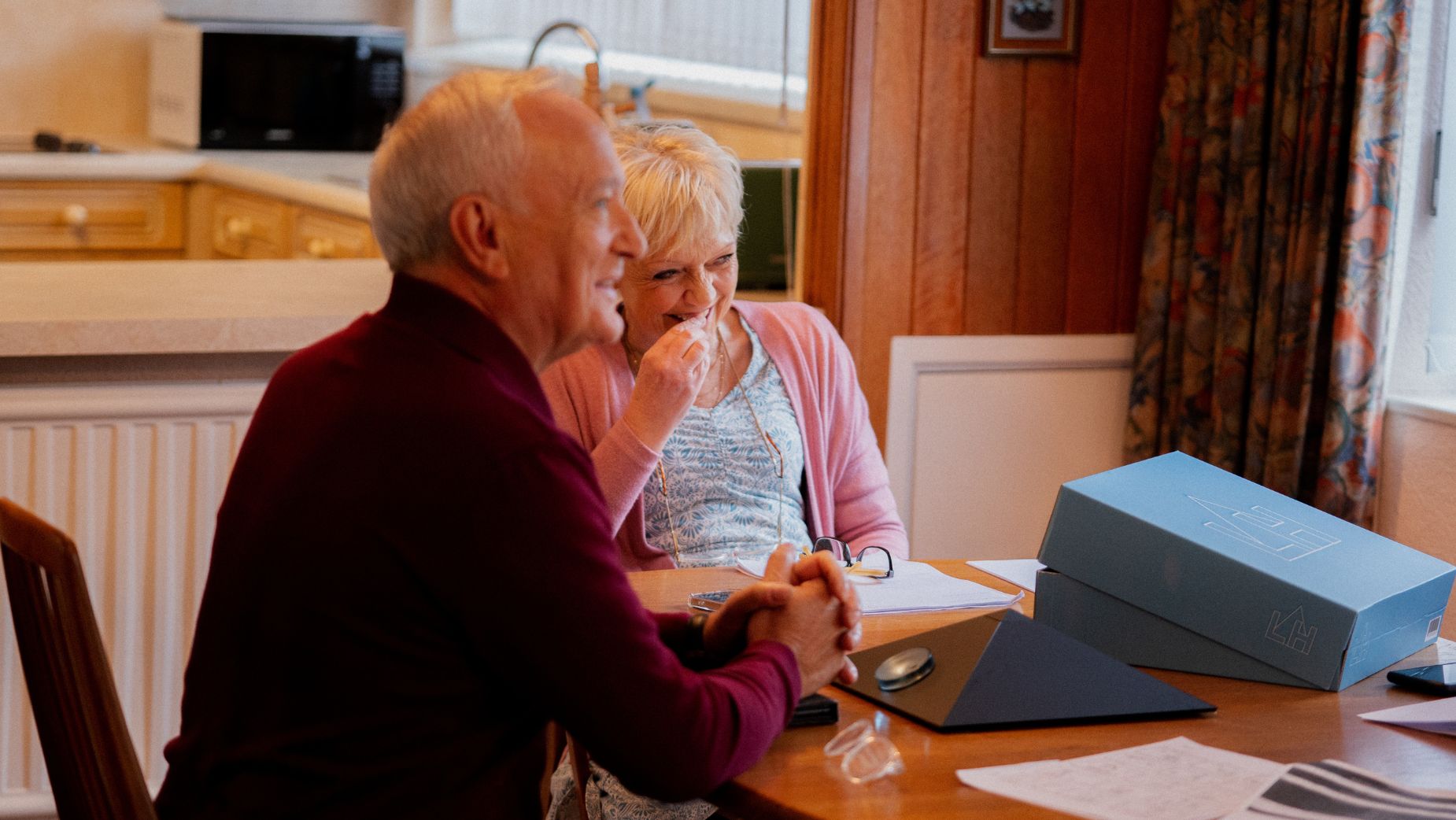
LBB> You cast Gillian Wright in the lead role. What made her the right pick?
Sye> She’s an amazing person, she has just the right balance of vulnerability and strength. I think she’s so underrated as an actor and would love to see her expand her career PE. (Post ‘East Enders’).
LBB> You said that the film was made 'with the right amount of AI' - can you expand on that?
Sye> Apologies in advance for the serious answer but… It already feels oddly passé to talk about AI in filmmaking, which is exactly why we have to. The technology has arrived faster than our ethics, faster than our contracts, and faster than the stories we tell ourselves about what creativity is.
Film is a collective art form, held together by human skill and human trust, by thousands of taste-based decisions that come from lived experience rather than prediction. That ecosystem is worth protecting, because if it is hollowed out we do not just change workflows, we change who gets to make work at all.
A lot of the current AI push is not really about artistic possibility. It is about speed, cost, and control. It treats craft as ‘friction’ and labour as something to be optimised away, and that logic will keep moving upstream until what remains is an efficient imitation of cinema, glossy on the surface and culturally thinner underneath.
We used AI in one place, and in a strictly practical way: to automate parts of the hologram keyframing. It helped with a repetitive technical process, but it did not make creative decisions for us. The look, the timing, the emotion, and the meaning of the hologram were still shaped by human judgement, shot by shot.
The prophetic bit is simple. This is a fork in the road. AI can become a power tool that serves artists, or a power grab that replaces them. The future of filmmaking will be decided less by what the technology can do, and more by what we choose to defend.
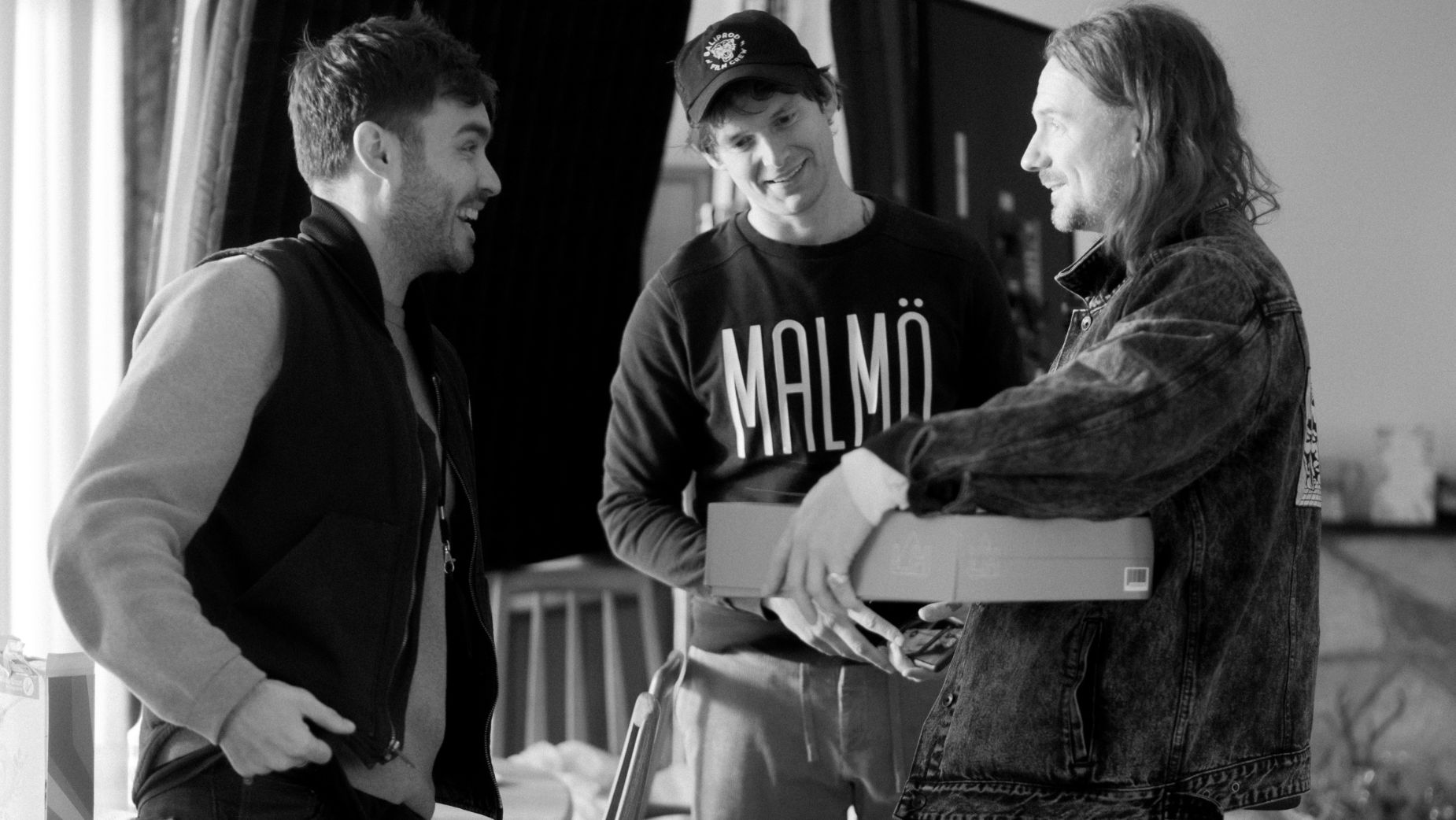
LBB> What do you want audiences to take away from the film?
Sye> I hope it leaves people feeling a bit kinder towards themselves. We live in a world where everything has a ‘hack’, or a ‘fix’, and grief is one of the few things that refuses to cooperate. Sometimes the healthiest thing you can do is nothing heroic at all, just sit with the feeling, let it be messy, let it take its time. No shortcuts, no optimisation, no “thanks, I’m cured”. Just the slow, annoying, necessary bit.
LBB> Is there anything you would do differently if you could make the film again?
Sye> If I made it again, I’d be very tempted to flip it and let Joy fully weaponise holoClive. I love the idea of her switching him on at precisely the worst possible moments for her own entertainment. Mid book club. Mid steamy moment with Jeff from 42!


