LEGO and Nike Design Customisable Playground Encouraging Active Play


Inspired by the insight that kids naturally view movement and play as one and the same, LEGO teamed up with Nike to reimagine what a playground could be.
The result came to life at Baoshan No.2 Central Primary School in Shanghai, where students were encouraged to experience sports the way they build with LEGO — by creating their own routes, experimenting freely, and turning even a short 10-minute break into a world of play.
In this interview with LBB’s Sunna Coleman, Guo Jun, creative at LEGO China’s in-house creative agency, OLA (Our LEGO Agency), discusses the endless possibilities of kids’ imaginations and how the collaboration inspires movement and creative play.
LBB> Tell us a little bit about the insights gained from the ‘Build the Change’ workshop that inspired the playground campaign.
Guo> Build the Change is really about listening to kids — not just pretending to. It gives them the chance to use their creativity to tackle real challenges with LEGO bricks.
This time, inspired by the Playful City Challenge theme of World Play Day in June, we asked them to imagine how their school playground could become a more playful place. And the responses blew us away.
Some kids wanted swings and climbing stations to make their ten-minute breaks more fun. Others designed skateparks, tiny botanical gardens, or even parkour zones. A few went completely wild — like turning the entire playground into a swimming pool, or sliding down from the upper floors of the school on giant poles or slides.
What we learned was simple but powerful: children’s ideas and needs for a small playground go far beyond anything we could have imagined. The insight that “kids don’t just want to play, they want to shape the world around them” shined through and naturally became the foundation of this project.
LBB> What made Nike the right partner for this initiative?
Guo> This summer, LEGO and Nike kicked off a global multi-year partnership with a series of immersive experiences and co-branded products designed to inspire kids everywhere to embrace both active and creative play. And this playground in a Shanghai primary school is one of the very first chapters of that collaboration.
Nike brings a deep passion for sport and movement, and LEGO brings the creativity to make it fun. Put those two together, and you get a space where kids don’t even realise they’re exercising — they’re just playing, imagining, and burning energy at the same time.
LBB> How did LEGO’s vision of creativity merge with Nike’s Move to Zero programme values?
Guo> This is actually Nike’s 50th sustainable playground, created through Move to Zero — an initiative that turns old, recycled shoes into new surfaces using Nike Grind technology. It’s about building spaces that are good for both people and the planet.
And creativity is exactly what LEGO does best. From the very beginning, we collected kids’ ideas through LEGO builds and naturally integrated that familiar process of building and reconfiguring into the playground design. The result is a space where sustainability meets imagination — transforming a recycled field into a place for creative, active play.
LBB> Can you tell us about the different elements and zones of the playground?
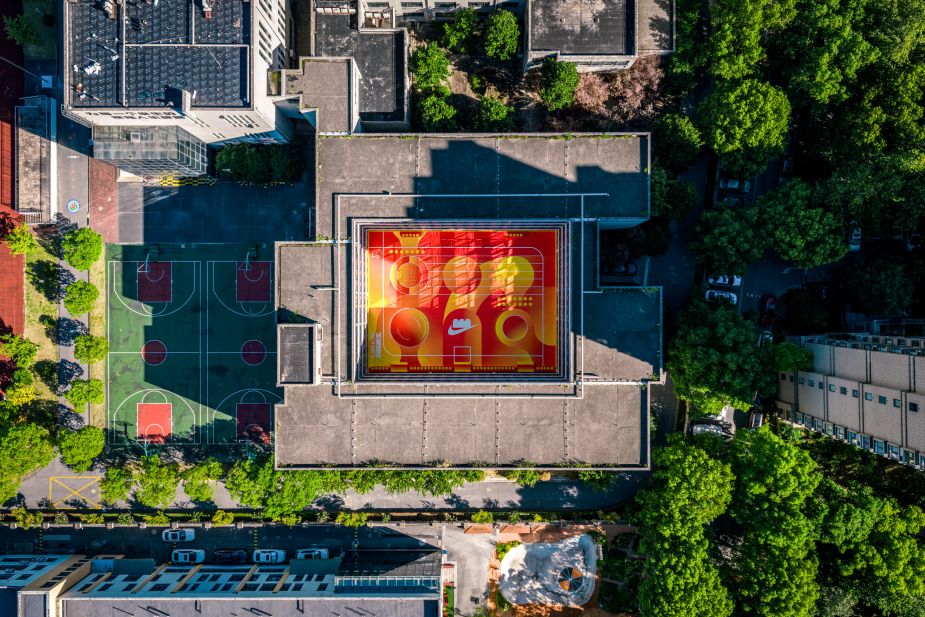
Guo> The playground covers about 550 square meters, and its design takes inspiration from LEGO’s most iconic feature — the brick’s studs. These have been reimagined as six dynamic activity zones, each with its own function and character. Within those zones are more than ten smaller areas focused on movement, creativity, and free play, all designed to make the most of a short recess break.
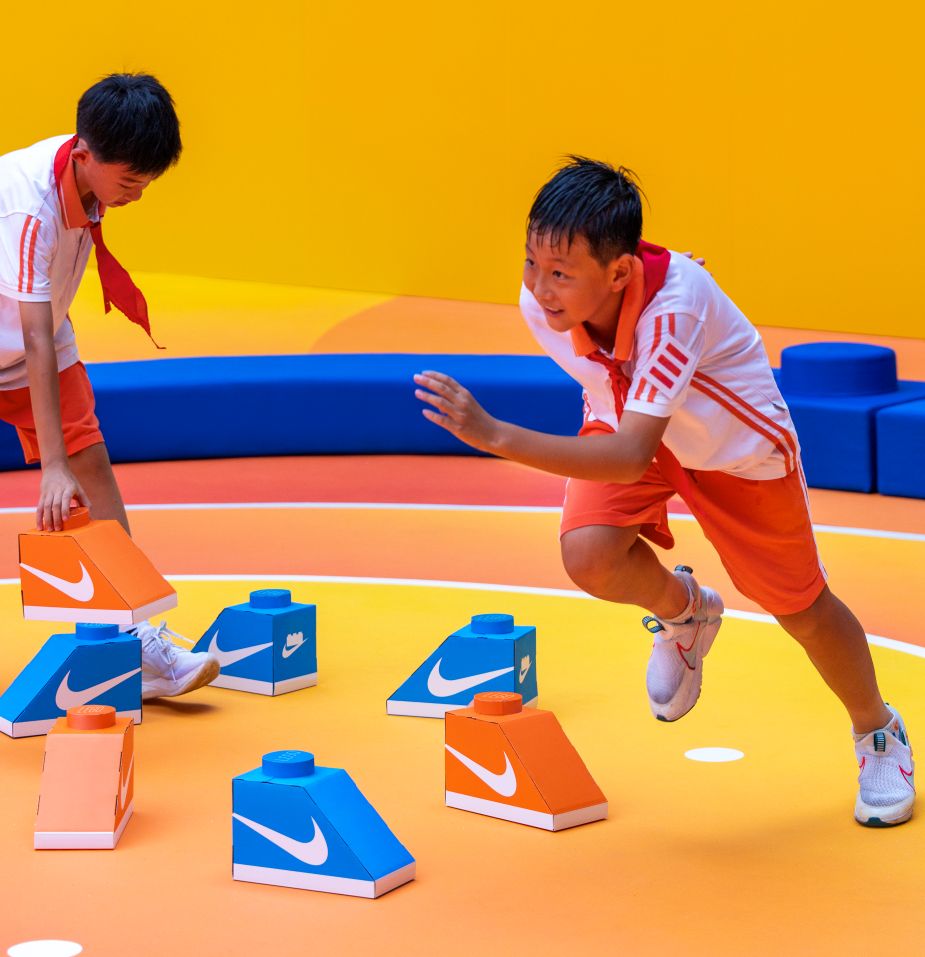
We also created a set of oversized, modular ‘sport bricks’ that kids can move, stack, and reconfigure to build their own play routes. One day it might be an obstacle course, the next a climbing challenge — and we’re sure they’ll invent games we’d never have thought of ourselves.
LBB> Were there any surprising insights that came out of working across two very different brands?
Guo> Honestly, it felt like working with a partner in crime from day one. When we first pitched the idea of making exercise more playful, the Nike team said, “Go for it — that’s exactly why we love working with LEGO.” That kind of trust and shared mindset made the collaboration not only easier, but way more fun.
LBB> What were some of the biggest challenges faced during the project and what solutions were found?
Guo> The toughest part was narrowing down the mountain of ideas from the kids. They had so many creative suggestions, but we only had a limited amount of space — and plenty of safety considerations, especially since the playground is surrounded by glass.
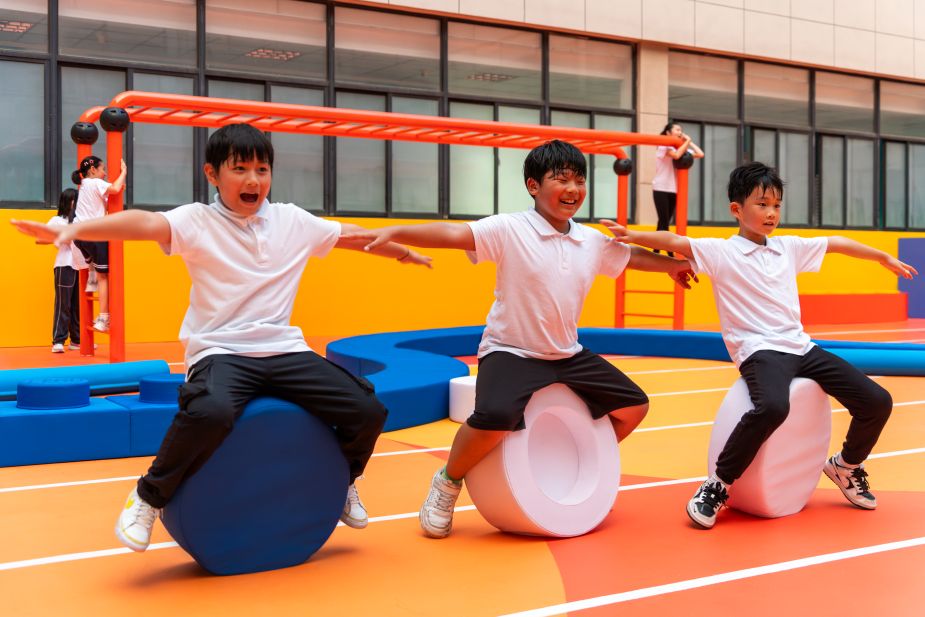
After a few rounds of design, we went back to what LEGO does best: building. If kids have countless ideas, why not let them build those ideas themselves? So we created a modular system they could reconfigure to match their imagination. Now the playground can transform endlessly — it’s never the same space twice.
LBB> What was the reaction from the students at Baoshan No.2 Central Primary School when they first experienced the playground? And what feedback did you receive?
Guo> The principal told us it’s now the most popular spot in the entire school — clearly even more loved than the traditional sports fields. One student said they felt like a LEGO minifigure and that “exercise now feels like playing.” That was exactly the kind of feedback we were hoping for.
LBB> What are you most proud of on this project?
Guo> We’ve given around 1,400 kids a space where they can move, play, and be creative on their own terms. And it proves something we’ve always believed — LEGO bricks can build far more than toys. They can build opportunities, confidence, and curiosity.
I’m also excited to go back and see how the kids use it next. I’m sure they’ll surprise us with completely new ways to play.
LBB> How do you hope this project changes the way schools think about recess and physical activity?
Guo> Ten minutes might not sound like a lot, but it’s an important part of the school day for kids to move and recharge. The Ministry of Education is extending recess to 15 minutes and encouraging two hours of daily physical activity, which is a great step — but we also need to make those minutes count.
If spaces like this can help kids see movement as something fun, something they want to do — then we’ve done our job.
LBB> Anything else we should know?
Guo> Here’s a little easter egg: if you look at the playground from above, you’ll see that it’s actually shaped like a 2x3 LEGO brick. We pretty much placed a 550-square-meter LEGO piece right in the middle of a school campus — and yes, we’re pretty proud of that.