


Heated Rivalry and the Myth of the 'Niche' LGBTQIA2S+ Audience


Image credit: Crave
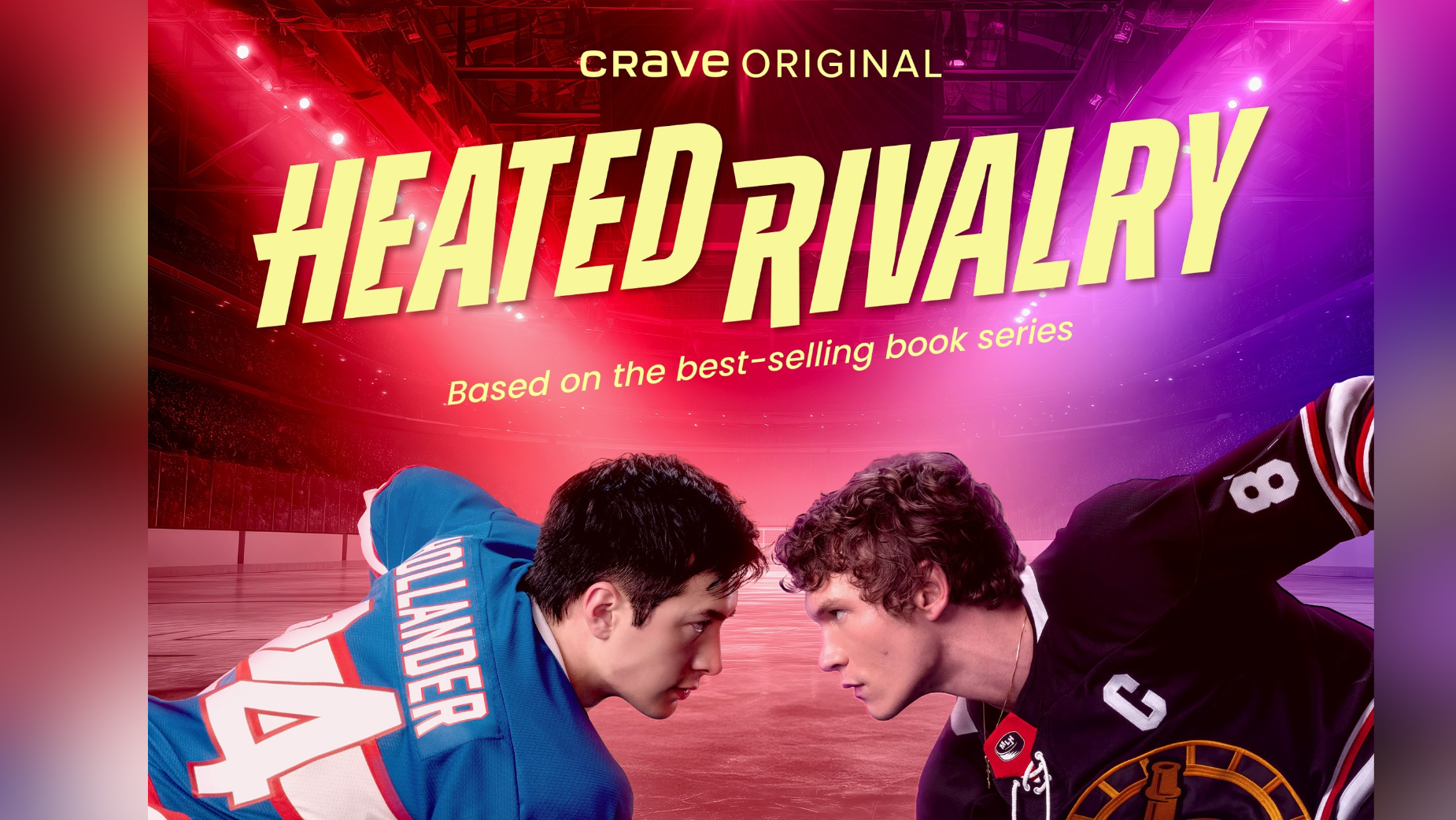
If you live in North America – be it rural Idaho or downtown Toronto – the ‘Heated Rivalry’ hype has been hard to miss. Based on the gay sports romance novel by Canadian author Rachel Reid, and brought to screens by Canadian streaming service Crave (Bell Media), the show has hit the big time, and quickly.
Viewers were in a frenzy at the end of 2025, as they eagerly awaited each new episode. In fact, according to The New York Times, “by the week of Dec. 26, when the season’s sixth and final episode was released, time spent streaming the show was up more than tenfold, eclipsing 324 million minutes.”
For fans, it is the gift that keeps on giving, with stars Connor Storrie and Hudson Williams well and truly dominating the cultural zeitgeist. Officially ‘The New Internet It Boys’, the pair have appeared on what feels like every major talk show and podcast, hosted an award at the Golden Globes, and, most recently, carried the Olympic torch as part of the 2026 Milan Cortina Winter Games.
Noting that the immense popularity of ‘Heated Rivalry’ and its cast has felt like a surprise to many, I was curious to see if industry folks were as surprised to learn that the show had struck a chord. Rallying a cohort of agency and production insiders, I ask: what does the series’ whirlwind success tell us about what audiences actually want – versus what platforms think is ‘safe’ to make? And what should this success teach creators and brands about the real appetite for queer-led storytelling in 2026?
Shining a Light on Untold Stories
Once my algorithm caught wind of the fact I had watched the show, I was engulfed in the ‘Heated Rivalry’ hype machine. For weeks, my feed has been flooded with Shane Hollander and Ilya Rosanov lore, as well as a seemingly infinite loop of press coverage and interviews.
After reading that star (and fellow Vancouverite) Hudson Williams had “always believed” in ‘Heated Rivalry’ (crediting the “Emmy’s quality scripts”), I was curious to explore what others in the industry might have initially thought about the IP. And, moreover, what they think has specifically resonated with so many people.
I decided to talk first to Jonathan King, head of growth at US-based creative agency Quality Meats, about this.
“‘Heated Rivalry’ taps into the age-old tenet of advertising – tension gets attention,” he tells me. “These types of narratives are not commonplace in mainstream culture, and the show depicts a different, yet authentic model of love. This story strays from societal standards, and is one that’s not as frequently told, and for that reason there’s inherent talk-value and virality.”
He’s definitely onto something here. While virality may be a universal aspiration for many content creators in 2026, there is never going to be a one-size-fits-all formula. And in this case, as Jonathan points out, it was the marginalised nature of the ‘Heated Rivalry’ narrative that piqued viewers’ interest.
Although the treatment for a new “gay Canada-based sports romance drama” could have been deemed too ‘niche’ for mainstream success, more culturally-astute producers would have likely been reminded of the old James Joyce adage, "In the particular is contained the universal”. Because, despite the show’s synopsis, the potency of this creative IP centres around a sidelined story of tender, enduring love that people of all sexual and gender orientations empathise with.
Having personally observed the show’s resonance, Marla Moore, creative director and head of strategy at BUCK, is keen to share her opinion.
“I believe the appeal hinges around how this show highlights something that society has downplayed for generations, and still actively rails against in online echo chambers: emotionally available men,” she says. “Despite the online forums and cringe-worthy podcasts that extoll ‘alpha male’ mentality and lambast ‘simp’ behaviour, this show’s overwhelming success demonstrates today’s reality: that most people crave the closeness that only emotional vulnerability fulfills.”
This acute assertion touches on my own suspicions about the show; that it represents a lived reality instead of a political or cultural agenda and, as a result, audiences have shown up for it. The studios, agencies and production companies willing to embrace these types narratives, will quite rightly reap the rewards.
Marla adds, “I can only hope that US streamers and media leaders are taking notes, and recognise that stories like these are less risky than rewarding.”
Neighbours, But Not the Same
Marla’s point about US streamers feels particularly relevant in light of recent claims by François Arnaud, another lead actor in the show, who revealed ‘Heated Rivalry’ could not have been made in America.
"It was set up at a big [US] streamer before, and they had so many notes and so many thoughts on what that show could be that Jacob Tierney (director) decided to leave them and get it made in Canada,” he said during an appearance on CBS Mornings.
A significant revelation, this insight provides a look behind the curtain at how the neighbouring countries appear to be moving in opposite directions, and what this means for the entertainment sector.
By now, Canada is well known for producing original IP that embraces LGBTQIA2S+
experiences (popular examples include ‘Schitt's Creek’, ‘I Killed My Mother’, and ‘Wayward’), with ‘Heated Rivalry’ the latest in a long list of shows demonstrating open-mindedness and creative courage.
From his base in Vancouver, Jared Gill, strategy director at ONE23WEST, weighs in on this. “What ‘Heated Rivalry’ exposes isn’t a lack of audience appetite, but a lack of institutional courage, especially in America,” he says. “Legacy institutions and streamers are more afraid of a tweet from the president than putting out the product that people want.”
Sitting at the intersection of culture, business, and creativity, Jared understands that in reality, audiences – especially younger ones – have an acute eye for what’s ‘real’.
“Across LGBTQIA2S+ rights and other progressive and geopolitical causes, the data consistently shows that the majority of people are far more open, values-driven, and culturally progressive than the platforms built to serve them,” he says. “‘Heated Rivalry’ didn’t succeed despite being unapologetically queer and sexually honest; it succeeded because audiences were already there. Corporate decision-making just puts more weight on boardroom blowback and outdated perspectives.”
From her vantage point over in LA, Marla echoes this sentiment.
“While US streamers may have been nervous about a show that centres around homosexuality, audiences are clearly ready for it,” she points out. “Because this show isn’t just about sex; at its core, it’s a beautiful love story that creates space for men in a traditionally machismo arena to be vulnerable and emotional with one another. That isn’t something that solely appeals to a LGBTQIA2S+ audience, it’s something that transcends sexuality to resonate with a wide variety of people at a deeply human level.”
No Time to Play it Safe
Given how moving the show has proven, it’s no surprise that many strong reactions have been sparked across its audience. So, what can and should the success of ‘Heated Rivalry’ teach creators and brands about the real appetite for queer-led storytelling in 2026?
Kaitlin Doherty, the founder and president of The Local Collective (TLC) in Toronto, seems like the perfect person to ask.
“Brands and creators have to make a choice. Do they want consistency, or do they want growth?” she questions. “Big growth requires letting go of rigid playbooks and performance myths. It requires trusting the human side of creativity, even when it feels uncomfortable.”
This idea of there being power in leaning into the uncomfortable rings true. Whether it’s A24’s pseudo-marketing meeting starring Timothee Chalamet or Netflix’ psychological crime drama Adolescence, 2025 gave us plenty of examples of how, when entertainment rooted in real human truth, the discomfort is justified… and sometimes even crucial. Playing it safe might get the message across, but it often also breeds indifference.
Everyone is trying to dissect the core ingredients of this winning recipe, and as Kaitlin points out, this is usually the case. “The obsession with cracking a ‘creative formula’ isn’t new,” she says. “It has always been a short-term money-saver. Conservative work delivers predictable, steady returns. Then something breaks the formula completely. A story, a tone, a bold narrative that would be rejected by most boardrooms. The results are outsized. Everyone points at it, dissects it, and tries to copy it. A new formula is born. The cycle repeats.”
However, she adds that this long-standing system is also why so many brands quietly stall over time. “Copy-cat strategies can protect consistency in the short term, but as sameness takes hold, sales soften and brand value erodes,” she points out. “When everything feels interchangeable, nothing commands a premium. We even see this in influencer content – it can easily become a commodity instead of something people genuinely value.”
It would seem, then, that the smartest thing marketers can do right now is be honest about the results they actually want.
“Turning a business around, driving significant sales growth or shifting culture – those outcomes demand marketers partner with agencies willing to challenge formulas,” Kaitlin continues. “When that creative ambition is paired with a strong media framework and marketing plan, you actually gain more control over success than you might think. What can appear as risky becomes a lot more predictable and delivers more consistent growth for the brand.”
Taking risks also comes highly recommended by Sunny Sattari, head of production at BUCK.
“The message to the platforms is loud and clear: stop showing only the ‘safe’ parts,” she asserts. “Safety doesn't build a story; vulnerability does.”
A seasoned producer, Sunny explains that platforms think they’re being ‘safe’ by sticking to sanitised, traditional tropes. “They assume they know what we want, but as Jacob Tierney recently pointed out, society has a habit of not listening to women. Even when we speak up, our interests are often dismissed or sidelined as niche. Tierney proved that if you actually give us what we’ve been asking for, we won't just watch it – we’ll live in it. We want more stories that aren't afraid to break our hearts. Because that’s the only way they’re ever going to stay with us.”
In other words, ‘Heated Rivalry’ doesn’t succeed by playing to appetite alone. It succeeds by honouring emotional truth. And that distinction matters, because its impact in 2026 signals a deeper shift in what audiences are truly responding to.
“The success of ‘Heated Rivalry’ in 2026 should be a wake-up call for every creator and brand,” Sunny states. “It proves that the ‘real appetite’ isn't just for ‘porn with a story’, but for stories that shred your heart, punch you in the gut, and force characters to be emotionally naked, not just physically naked.”
All of which brings us back to the central miscalculation at the heart of so many commissioning and marketing decisions: the belief that audiences only connect with what mirrors them exactly, rather than what reveals something true about being human.
Quality Meats’ Jonathan King sums it up best. “As we assess content and storytelling, the learning is that the masses can be moved by providing glimpses into the untold stories around us.”


