Sushi Hub Banks on Jingle in Hunt For $1bn Valuation: “Radio Has Always Been Theatre of the Mind”


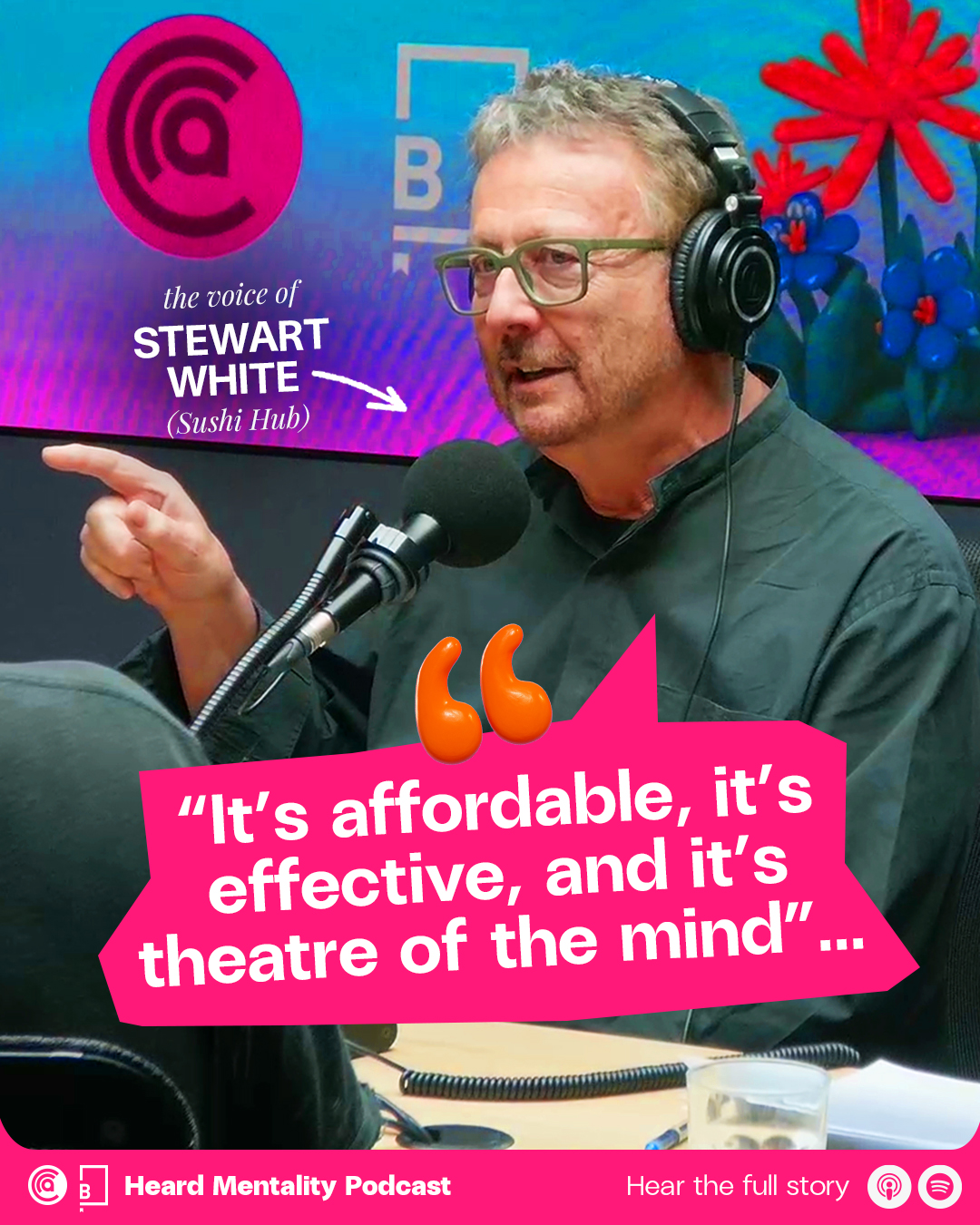
Sushi Hub’s renowned jingle has helped the brand grow “exponentially” from 50 to 200 stores to become Australia’s biggest sushi chain. As it chases a $1 billion valuation, the brand’s CMO intends to maintain its investment in audio, the “affordable” channel which drives effectiveness and “does give you cut through.”
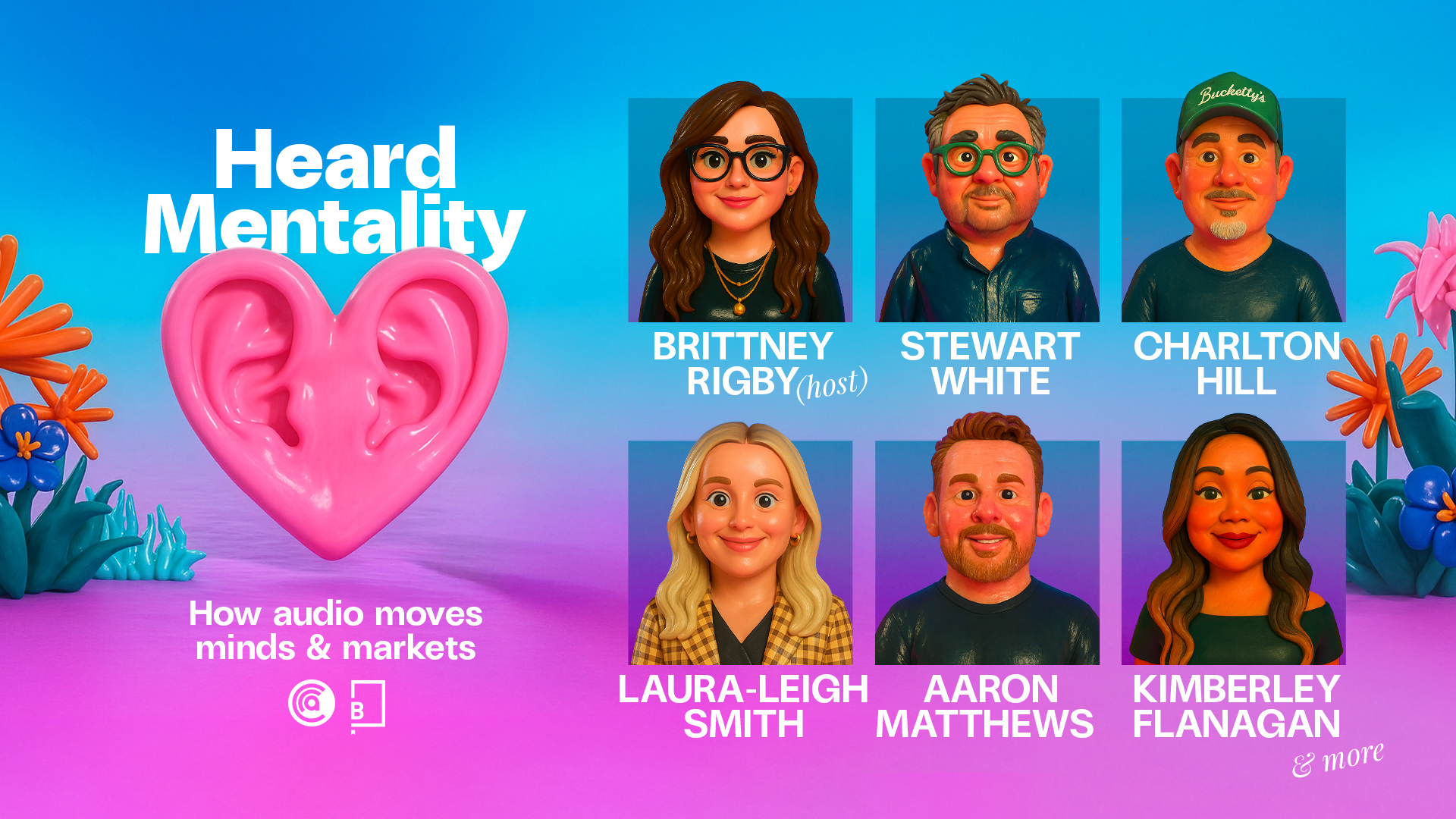
“Radio has always been theatre of the mind,” marketer Stewart White said, speaking on the inaugural episode of Heard Mentality, a new podcast series from local radio industry body Commercial Radio & Audio (CRA) and Little Black Book.
The 19-year-old business debuted the catchy tune -- “it’s certainly got pester power” -- a decade ago, when it had 50 restaurants. “It was at that stage where there was enough traction” to justify the investment because the brand had built adequate physical availability, he explained.
Ten years on, and Sushi Hub will have 200 stores across Australia by the end of the year. It has a presence across all states and territories, and is growing in the regions. It has only ever closed two stores, 55% of which are franchised. Last year, it posted over $200 million in sales, but CEO Raymond Chen told the Australian Financial Review he has rejected private equity offers because he wants to achieve unicorn status (when a startup becomes valued at $1 billion) before he considers selling a stake.
The business is built on freshness, which is what the jingle promotes: “So fresh, so good, so eat now.” Stewart noted the full 30 second song is built in 7 second increments. The repetition within the song itself works -- as soon as it starts, “the kids are already burst[ing] into song, he said -- and that repetition plays out in the media buy too. “It does come down to frequency.”
The jingle’s success has shaped how the brand shows up in other channels. Sushi Hub has created animations to support the jingle visually, and developed characters and collectible figurines. The quick service restaurant (QSR) brand has a presence at events like Sydney’s Easter Show and the Adelaide Show, and hosts workshops in shopping centres. “This is not just a piece of sushi,” Stewart said.
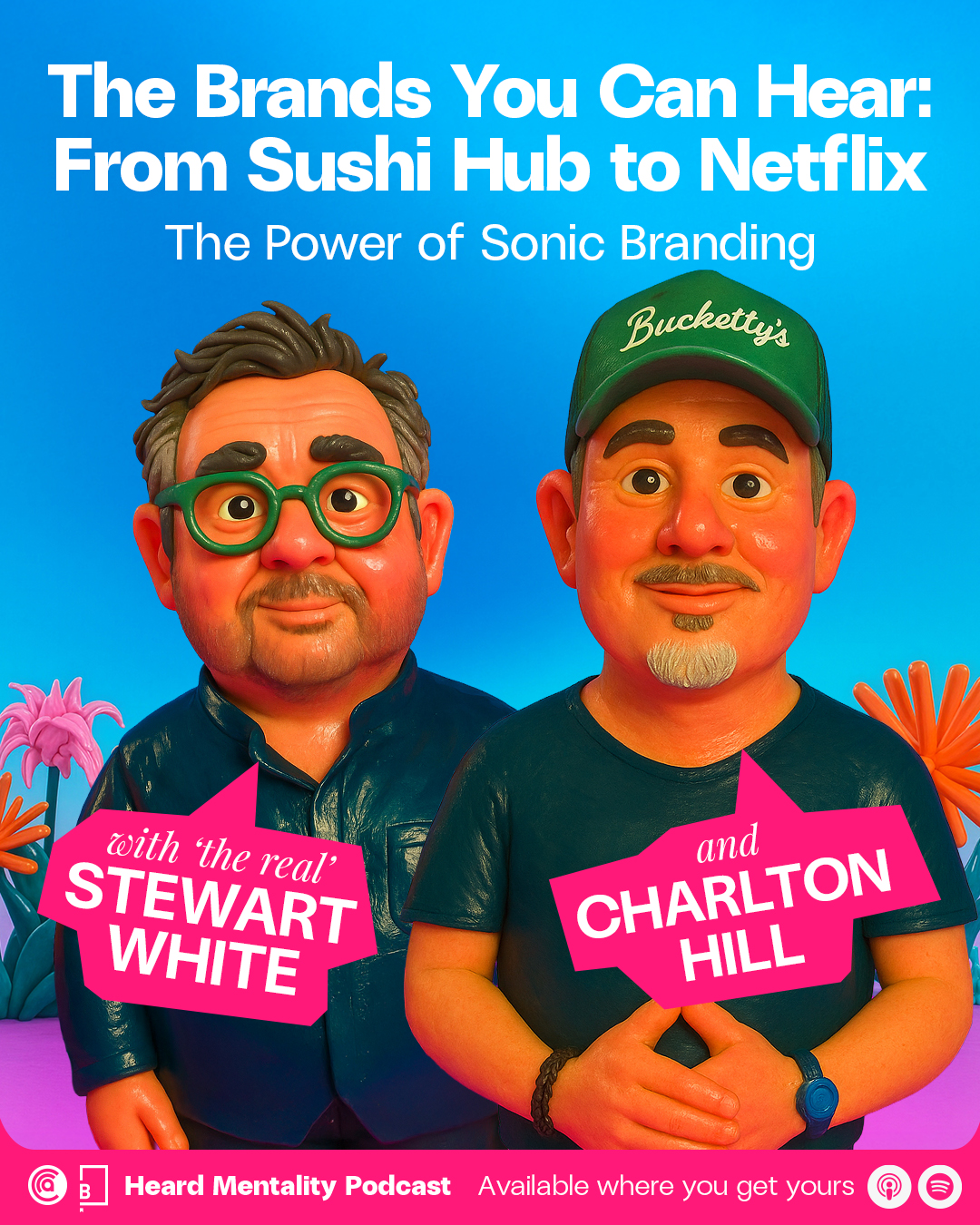
Heard Mentality was created by CRA, in partnership with LBB, to spotlight how audio moves minds and markets. In the first episode, Stewart was joined by Charlton Hill, a singer, songwriter, actor, and sonic branding expert. The music and sound business he co-founded, Uncanny Valley, has worked with the likes of the Sydney Opera House, ABC, and Fox Sports. A brand’s sonic identity “runs a lot deeper in terms of their [customers’] recall, the way they feel about the brand,” he said.
Brands should re-embrace the Aussie accent and local music as part of their audio strategy, Charlton argued. At their best, jingles and stings become cultural, in addition to commercial, artefacts. He remembered the social currency of the McDonald’s Big Mac chant from the 1980s -- "two all-beef patties, special sauce, lettuce, cheese, pickles, onions on a sesame seed bun.” Any kid who recited it was a “legend on the school bus,” Charlton quipped. (Last year, the brand revitalised the chant in Australia.)

Other jingles of that era, like Vegemite’s ‘Happy Little Vegemites’ and Aeroplane Jelly’s ‘I Like Aeroplane Jelly’, shaped Australia’s culture and national identity. That’s less common now due to the “globalisation of sound”, marketing budget pressures resulting in more global adaptations, and cultural homogenisation,” Charlton suggested.
“You probably have to work harder now to do something which is definably Australian,” he said, “but I think we should continue to try really hard, and it starts with local music, live music, all the things that are really important to a culture. If we know what our sound is and our feel is, then we can start to play with some of those ideas or tropes again because they feel like the modern version of what was happening in the 80s and 90s.
“I hear American accents on Australian radio and I don't actually know why ... Youth culture is so fascinated with what's coming out of LA or the States. But some of those small decisions when it comes to owning an accent, owning elements of our culture, and then imbuing marketeering with it, I think it's just as important as a TV show or a film or a hit song.”
He recently returned from a month travelling in the US, which forced him to ask, ‘What does Australia sound like?’ Too often, that question still invokes “dangerous animals and the Irwins.” Brands’ audio opportunity lies in creating, honouring, and investing in sounds that show off the depth and breadth of Australia’s culture.
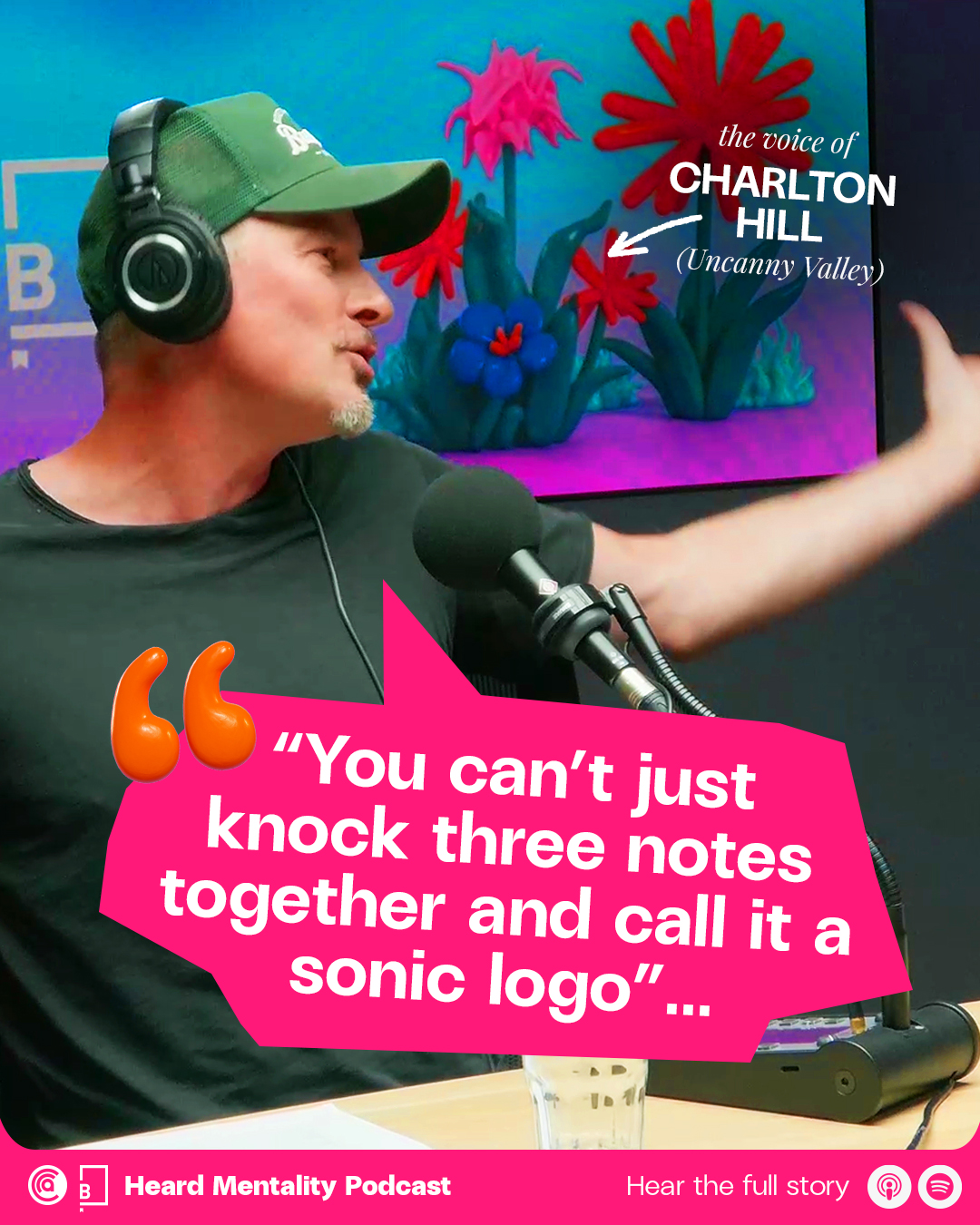
He noted some brands will also “attempt to have a sonic brand, but then not follow through with the repetition required. Maybe it's not used in the right way. It's also getting quite saturated out there as well in terms of just, 'Hey, let's knock three notes together and whack it on the end of our brand'. That's not going to cut it.”
The musician is also confused by brands that fail to invest in their audio strategy across the long-term, or implement a strategy incongruous with their other channels.
“They're saying one thing in print and visually, but then trying to achieve something else and the music's not carrying through on that,” Charlton said.
“Sometimes you'll get a change of a creative department and they'll come in and just go, 'Oh, I don't like that song. We're not going to use that song anymore'. And you're going, 'Well hang on, is it a bad song?'
“I'd recommend you shouldn't stray from the sonic palette of something for a long time because you're assuming that someone has that motif in their mind ... it takes quite a while for something to be synonymous with a brand.”
--
Heard Mentality is a new podcast series, brought to you by CRA and LBB. You can listen to the first episode with Stewart and Charlton right here.
If you're a brand looking to connect with Australians, there's no better place than Aussie radio and audio. It reaches more than 15 million people every week and truly is where brands are heard. Head to cra.au to get started.