


This School Experiment Inspired a got2b Campaign Challenging Japan’s Hair Colour Norms


After inspiration struck I&S BBDO group creative director, Ryuma Kodaka, during a school project with his son, he had to take the idea to his client. What if your choice of hair colour could help you stay cool in the scorching heat?
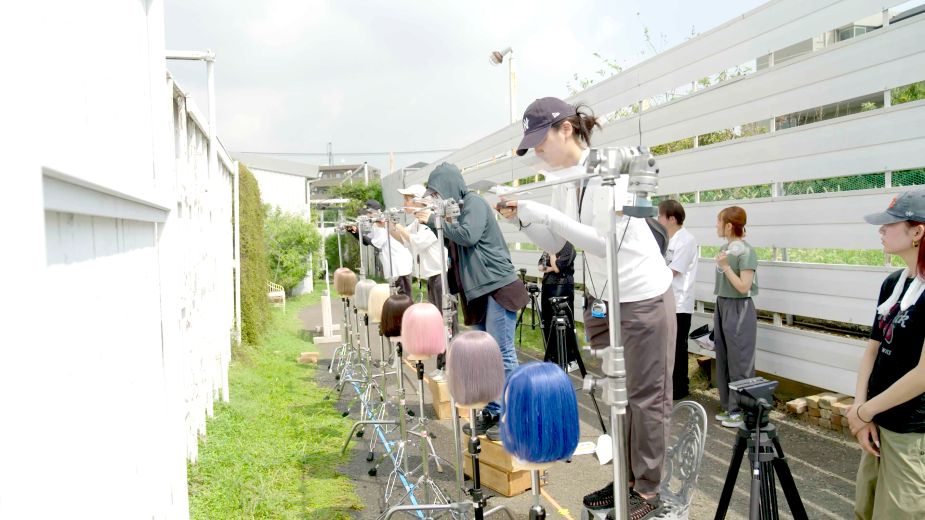
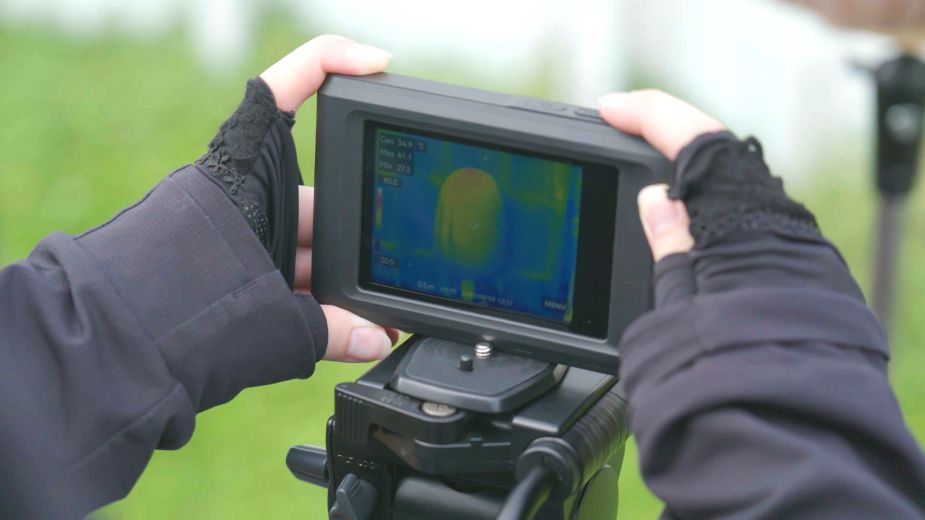
To find out, Ryuma’s team and got2b put on an experiment of their own, placing human hair wigs dyed with the brand’s products (black, blonde, silver, lavender, milk tea, and pink) in an outdoor environment of 36.4°C. The research demonstrated a clear trend: lighter hair colours consistently suppress surface temperature increases, with the temperature gap widening over time under continuous solar exposure.
The results proved Ryuma right, and the brand discovered a new way to market its hair dyes as a real-world solution to Japan’s severe heatwaves.
To find out more, LBB’s Sunna Coleman speaks with Ryuma who dives into the details of the experiment, the moment inspiration hit, and the cultural challenge of promoting high-tone hair colour within Japanese society.
LBB> Tell us about what sparked the idea for the ‘Cool Color’ campaign.
Ryuma> Do you remember the elementary school experiment where you use a magnifying glass to focus sunlight onto a piece of black paper? I was doing that experiment with my son, who was in elementary school at the time, and I instinctively warned him, “Don't point it at your hair.”
That was the moment I started to wonder whether there might be a relationship between Japanese people's black hair and the intense summer sun.
LBB> This is a very different route for a hair dye brand. Did it get approved straight away or was there some convincing to do to take this creative risk?
Ryuma> Yes, and I really respect the client for making the bold decision to embrace this idea. The whole campaign idea actually began as a proactive proposal from our team where we presented the hypothesis that the same heat-absorption phenomenon seen in different colours might also apply to different hair colors. The client found the idea immediately intriguing.
Coincidentally, a pitch for the got2b business was coming up at the time. Our team was invited to take part, and after competing against other agencies, this idea emerged as the winning concept, and ultimately became the campaign.
LBB> Were there any cultural sensitivities around encouraging lighter hair colours that you had to navigate?
Ryuma> Yes, absolutely. One important cultural factor in Japan is the strong pressure to conform. Many people feel psychological pressure about standing out from others. Even if someone wants to dye their hair as a form of self-expression or fashion, a dramatic change in hair colour is still often associated with being rebellious or irresponsible. That perception remains surprisingly strong in Japan today.
This campaign was designed to challenge that mindset. By introducing heat protection as a new functional benefit of hair colour, we wanted to give young people who want high-tone hair another reason beyond fashion – a practical justification for choosing lighter hair colours.
LBB> Which hair colours were involved in the testing and how was the experiment designed/set up to achieve the most accurate results?
Ryuma> With guidance from the client's R&D team, we designed the experiment to maximise accuracy. We selected hair colours that are actually sold under the got2b brand. The experiments were conducted using human-hair wigs coloured with got2b products.
Measurements were taken at four different times of day: 11:00 am, 12:00 pm, 1:00 pm, and 2:00 pm – and multiple measurement points were averaged to minimise variation. The tests were conducted in the presence of both the client team and their R&D specialists.
Experiment overview:
- Timing: September 2025
- Outdoor conditions: 36.4°C, 60% humidity
- Measurement time: 1:00 pm
- Method: One black-haired wig, one pre-bleached wig, and six wigs dyed with our products were placed outdoors in 36.4°C heat with 60% humidity. Hair surface temperatures were measured at 25 different points on each wig after 3, 10, and 20 minutes, and the average values were calculated for each wig.
LBB> How many times did you experiment on the hair colours to receive the end results and what was the test day/s like?
Ryuma> Using the experimental design described above, we repeated the tests four times throughout the day at different time slots. The experiments took place during extreme summer heat, with temperatures exceeding 36°C (97°F).
Our measurement team worked tirelessly under the blazing sun, drenched in sweat as they carefully collected the data. I'm incredibly grateful for their dedication.
LBB> Were you surprised by any of the results?
Ryuma> Firstly, I was amazed that the results confirmed our hypothesis so clearly – that hair colour alone could produce measurable differences in temperature.
As for the colours themselves, we expected bleach blonde, being closest to white, to show the greatest temperature difference compared with black hair. What we didn't expect was that pink hair would perform almost as well. We were all fascinated by this unexpected finding.
LBB> What were some of the creative and strategic challenges on this project?
Ryuma> There were two major challenges. The first was the cultural barrier I mentioned earlier: overcoming society's perception of high-tone hair colours. The second was the challenge facing the self-colour category itself. Compared with visiting a salon, many consumers perceive at-home hair colouring as time-consuming or troublesome.
We believe ‘Cool Color’ has the potential to overcome both obstacles.
Moving forward, together with our client, we're developing initiatives that build on our research findings and give consumers even stronger reasons to embrace ‘Cool Color’.
LBB> What reaction have you had from the campaign so far?
Ryuma> Japan's peak summer season is still ahead of us, so our main focus now is monitoring public response and sales performance over the coming months.
LBB> Are there any plans to take the campaign to further markets?
Ryuma> At this point, there are no plans to launch the campaign outside Japan.
However, heat-related illnesses caused by rising global temperatures are becoming a worldwide issue. We believe there may be potential to expand this idea to other countries and regions, especially where many people naturally have black hair.
LBB> If this campaign inspires a new category of "functional beauty," what's the next everyday product you'd love to rethink?
Ryuma> The key takeaway from this project is that even without developing a completely new product, simply changing your perspective can uncover entirely new consumer benefits.
More importantly, those new benefits can also contribute to solving real social issues.
To me, that means there is still tremendous untapped potential – not only in everyday consumer products but across many different categories.
I'm really passionate about continuing to use the power of creativity to generate ideas that create positive social impact.


