


Zak Harney Displays the “Colourful Side of the North East” In His BBC Pilot ‘Doppelgänger’


Zak Harney’s pilot ‘Doppelgänger’ was developed through BBC Writers’ Long Story Short, a new commissioning initiative designed to support and champion emerging UK writing and directing voices — as an investment in the short-form format. Released over the weekend as part of a slate of ambitious shorts for BBC iPlayer and BBC Three, the films are conceived not just as standalone pieces, but as projects that might continue unfolding if audiences lean in.
Zak’s creative was produced by Candle & Bell and made entirely in the North East, ‘Doppelgänger’ paired playwright Alison Carr’s darkly comic script with Zak’s character-led, visually playful approach, using the uncanny premise of meeting your exact double to explore identity, rivalry and self-worth. In doing so, it quietly resists the familiar visual grammar of North East stories on screen, offering something warmer, funnier and more off-kilter.
For Zak, the pilot marks both a first BBC commission and a statement of intent. Here, he speaks with LBB’s Olivia Atkins about discovering the project through a chance Instagram post, collaborating closely with Alison, breaking short-film rules in service of scale, and why it’s so important to tell these kinds of working-class stories now.
Watch the full episode and others from the initiative here.
LBB> At what stage did you come on board 'Long Story Short' and what first drew you to this particular script?
Zak> My first exposure to 'Doppelgänger' (and the Long Story Short cohort) was actually via Instagram. I was tagged in a post which Candle and Bell had put up, looking for a “North East director, with short film experience and awards at XYZ” festivals. About a dozen people had tagged me in that post, so it must’ve gotten the producer's attention, because I managed to get an interview.
I was sent the script after that and fell in love with it. It was so refreshing to read something that was set in the North East with a contemporary setting and a comedic tone, rather than the bleak realism we so often see. The larger than life characters that Alison had created are the Geordies I know! I immediately saw the story as an opportunity to create a world which we don’t normally see on screen. The colourful side of the North East! I then poured my heart into a pitch which outlined how I wanted to approach making the film.
About a week later I had an initial meeting with Alison, which I think in hindsight was to make sure she didn’t hate me. And then after a lot of crossing my fingers and waiting, Maria Caruana Galizia (producer) called me to let me know that I would officially be joining the 'Doppelgänger' team.
LBB> How closely and collaboratively did you work with Alison throughout the process?
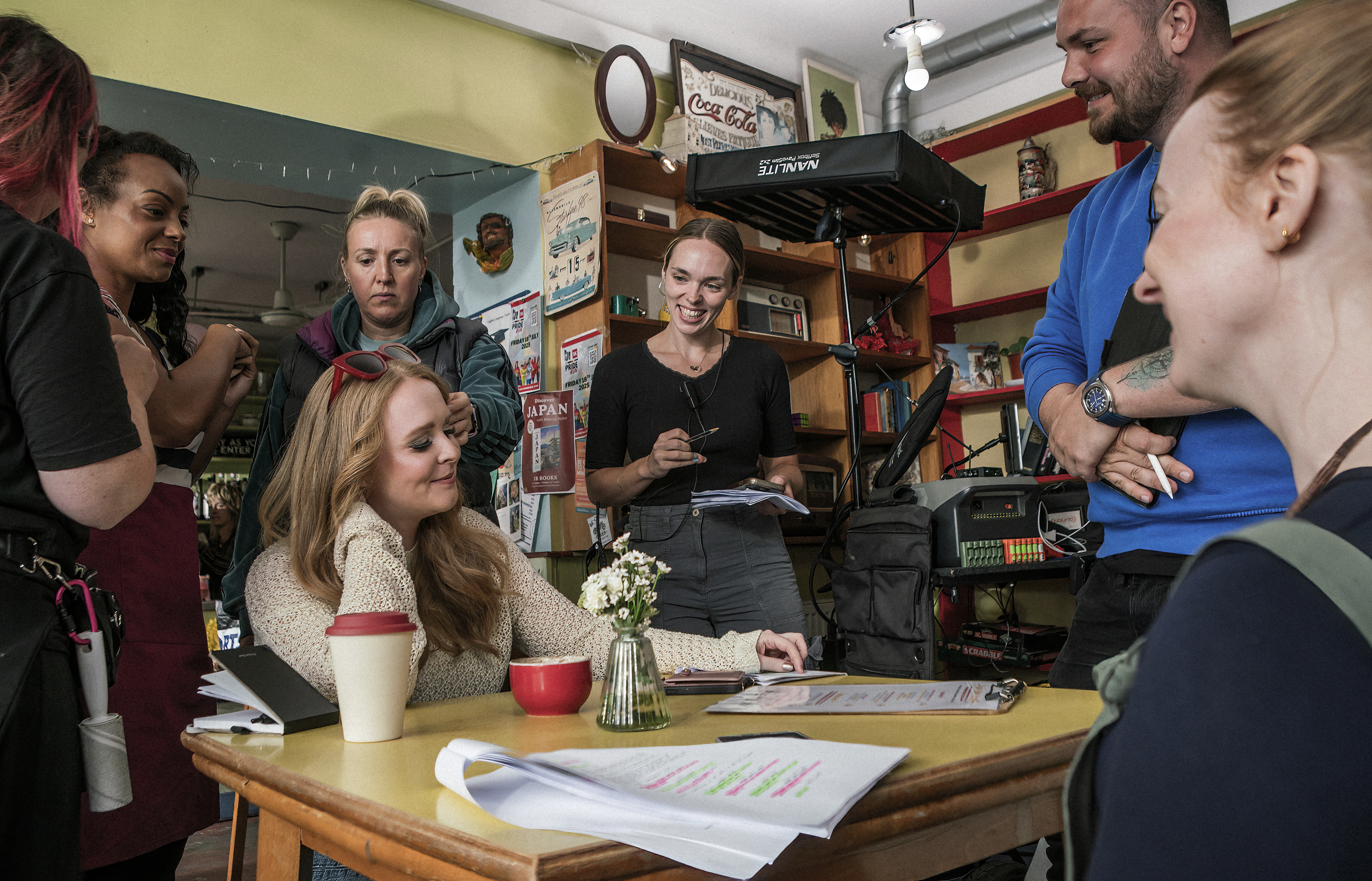
Zak> Working with Alison was a real treat! She is such an accomplished playwright and an absolute institution of North East theatre, so it was mildly intimidating coming in. We would have meetings at Northern Stage and everybody there wanted to come and pay their respects to Alison! The script was 90% locked when I came on board, so it was a case of shaping it and finessing the script to get the most out of every scene. I think my short film experience came in useful in that process because I was aware of how important it is to establish our tone immediately and elevate certain scenes. For example, our opening scene on paper could have been something plucked from a beautiful drama, and we added some more whimsical moments where the balloon has a life of its own and embarks on this journey across Newcastle! This thrusts the audiences into a heightened world with a slightly off-kilter tone, so they know what they’re in for for the rest of the film. There were also a few flashback scenes that had been removed between drafts at one point, but once Alison and I put our heads together with the Candle & Bell team, we realised that it was these moments that made the film so unique! So they worked their way back into the script.
LBB> Comedy can be deceptively difficult to land, especially in a short-form pilot — how did you approach finding the right balance?
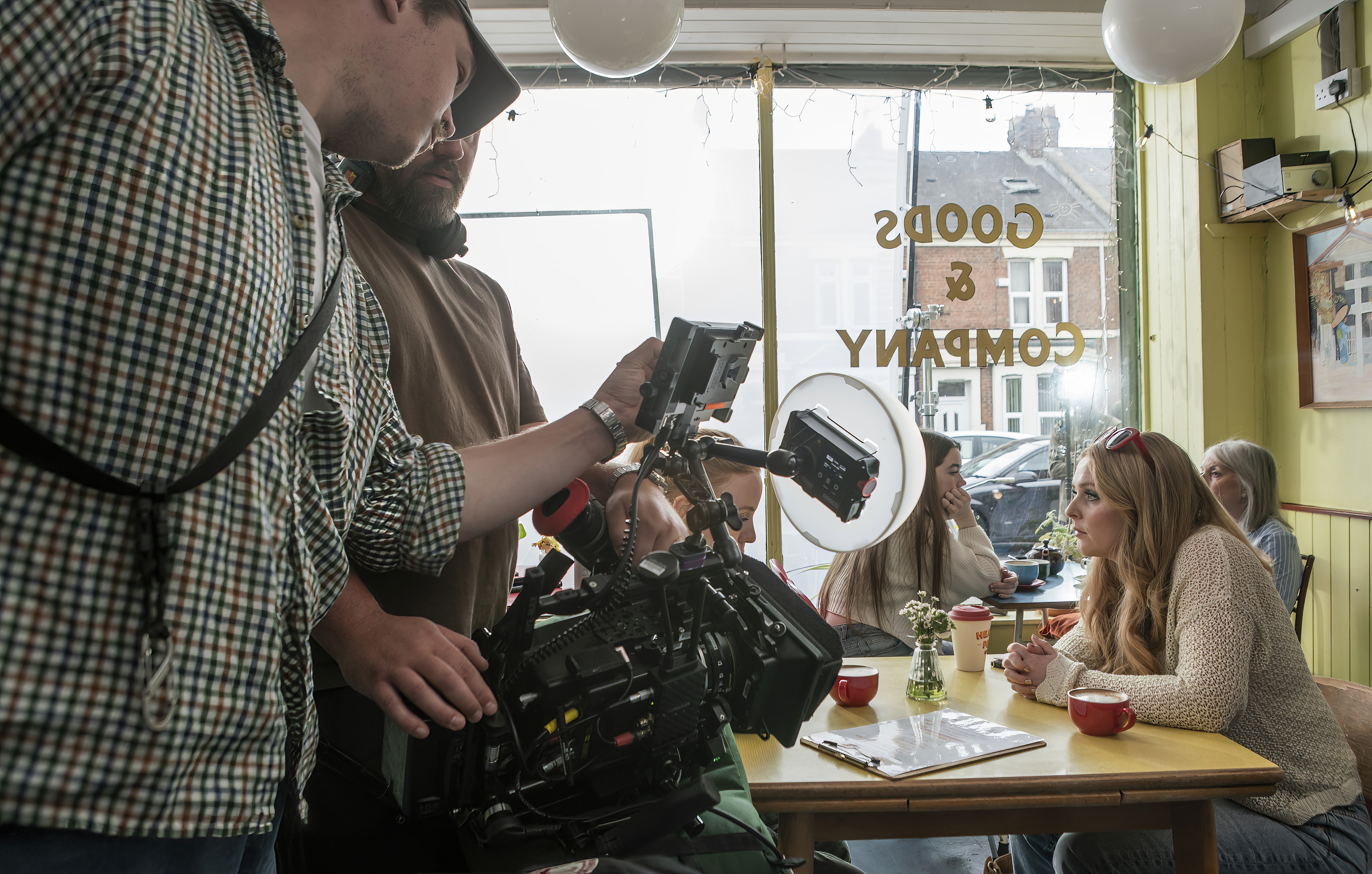
Zak> I think across my commercial and narrative work, comedy is a wheelhouse where I feel most confident. I know that we can bring the comedic sensibilities in how we capture the scenes or transition between them or even in the edit. The most important thing with a darker comedy like 'Doppelgänger', particularly when exploring themes like trauma and self worth, is ensuring that we also lean into the dramatic moments too. In one of my earliest conversations with Sarah Balfour, our amazing lead, I mentioned that we wanted to play the drama for what it is; the stakes are high for these characters! And she really delivered in her performance. There are some emotional scenes towards the end of the film and these needed to be earnt, which means even in the comedic moments or cutaways, the rivalry between the characters is bitter and truthful.
LBB> This film had to function as a standalone piece while also feeling like it could live as part of something bigger — what were the main creative challenges in making it feel series-ready within a short runtime?
Zak> We were very conscious that the film had to feel complete in itself, but also like you’d just stumbled into the middle of a world that already existed. To do that, we deliberately broke a lot of the usual rules of short filmmaking. We shot across a large number of locations, worked with child actors, built substantial sets, and embraced sequences that were technically ambitious and VFX-heavy. On paper, those are all things you’re often encouraged to avoid in shorts, but for us, going big was essential to making the story feel expansive rather than contained.
The challenge was making sure that scale never tipped into excess. Every creative choice had to serve character and theme, not spectacle for its own sake. We wanted the film to feel like an episode lifted from an existing BBC Three show! Something already in motion, with history and momentum beyond the frame. That ambition was only possible because producers Maria and Zahra (Zomorrodian) fully backed the vision and trusted us to push the form. Their support allowed us to build a world that feels lived-in and ongoing, while still delivering a story that lands emotionally within a short runtime.
LBB> Can you talk about your casting decisions and whether you had a clear idea of the kinds of actors you wanted from the outset?
Zak> Casting was probably the single biggest creative decision we made across the entire production. We had two Josies in two timelines who not only needed to look the same, but have two entirely different personalities that were instantly recognisable; a casting nightmare. On top of that, so many of the supporting characters are parents or mirrors to the Josies, so we knew we had to find our Josie first and build everything else outwards from her. From the outset, it was important that our lead came from the North East; the story is so rooted in that place and we championed local actors and we wanted someone who instinctively understood its rhythms and tone.
We considered casting twins, but that immediately narrows the field of actors you can choose from and potentially the talent. For adult Josie, we made the decision to have one actor play both roles, which was technically ambitious but creatively exciting for me. Once we found Sarah, everything clicked. She was perfect for the role, and her experience on shows like, 'Dead Canny' meant she already understood the demands of VFX-heavy work, eyelines, and split-screen performance. She could switch between the two Josies effortlessly. Not just in voice, but her physicality, to the point where even her body language tells you who you’re watching.
A huge amount of that illusion was also down to our hair and make-up designer, Laura Tallentire, and costume designer, Maddy Williamson, who did extraordinary work subtly shaping two distinct characters. I spoke a lot about creating a silhouette for each character that would be recognisable and their choices were so precise that audiences have genuinely assumed we cast twins. One thing I felt strongly about was not asking Sarah to perform opposite a tennis ball or empty space. We brought in Harriet Perkins as our Josie body double, and she did the often thankless job of playing opposite Sarah on set, which elevated every performance and gave the scenes real emotional weight. Every time the camera cuts between the pair, that was a speedy change for Sarah and Harriet!
For the younger Josies, we somehow struck gold with Lola and Layla Todd. From the moment I watched their tapes, I knew they were exactly right. Despite it being their first on-screen acting experience, they were incredibly professional and instinctive. I still remember the first take they did on set; I looked around at the crew and we all had the same reaction “Wow!”. I honestly can’t wait to see what they do next. If anybody wants a Geordie 'Parent Trap' reboot, we’ve found just the twins!
LBB> What excites you most about the pilot reaching audiences on BBC iPlayer and BBC Three, and what do you hope viewers take away from it?
Zak> This film has arrived at exactly the right moment for me. It feels like a culmination of everything I’ve been working towards so far in my career, while also being in many ways a spiritual predecessor to the kinds of stories I want to keep telling bold, character-driven North East stories that are fun, surprising, and emotionally honest. Having 'Doppelgänger' reach audiences on BBC iPlayer and BBC Three is incredibly exciting because those platforms are where these stories can feel most at home and most accessible to the communities they’re rooted in. It’s also a huge landmark in my career so far!
At its core, 'Doppelgänger' reflects my wider filmmaking philosophy, hiding complexity inside accessibility. I’m drawn to serious subjects told through entertaining frameworks. It’s basically a kind of Trojan horse approach, where audiences are pulled in by humour, genre or energy, and only later realise what the film is really asking of them. I’ve been living with this film for the best part of a year now, so more than anything, I’m just excited for people to finally see it. I got into filmmaking to tell working-class stories and to make people smile, and I hope audiences come away feeling both entertained and unexpectedly moved.
The North East is so often portrayed through a lens of bleak realism, and while hardship is absolutely part of the landscape, it’s far from the whole story. There’s a resilience, humour and warmth in working-class communities here that rarely makes it to screen. Shows like 'Smoggies Queens' have started to scratch that itch, showcasing North East talent in a fun way and we wanted to add to that and present Newcastle as a vibrant, character-rich world rather than a grey backdrop. Hopefully people watch 'Doppelgänger' and are left wanting more Geordie stories like it!
LBB> Finally, do you see scope for this world or these characters to be developed further, and how has this project shaped the kinds of comedy work you’re keen to pursue next?
Zak> Honestly, I’d love to explore this world further. The ending of the film feels deliberately finite because of the short-form format, but that was a structural decision rather than a creative limitation. There’s absolutely scope to see more of these characters if audiences respond to them. Throughout the film we hint at years of rivalry, petty victories and one-upmanship between the two Josies. That shared history feels incredibly rich territory for longer-form storytelling. A series could live in that space — tracking how these characters orbit, collide and attempt to outgrow each other, while still being tethered by the same coincidence.
More broadly, this project has really clarified the kind of comedy work I want to pursue next. I’m drawn to comedy that’s rooted in character; where we can find the funny because something is recognisably human. 'Doppelgänger' has reinforced my interest in heightened worlds that are grounded in working-class reality, where humour coexists with grief, resentment and love. It’s the world I grew up in and know! Ultimately, the next step depends on audiences showing there’s an appetite for these kinds of stories being told in and about the North East. If that appetite is there, I’d love to keep telling these kinds of stories.


