


Flesh, Wood, Vacuum Tubes and the Vinyl Revolution: Why Voodoo Hack Sound Is a Rebellion Against the AI Algorithm


Standing in the skeletal frame of a room that will soon shape sound, surrounded by exposed timber studs, dangling insulation and the raw dust of construction, screen composer Ben is building a fortress. This isn’t just a fortress against outside noise; it’s a fortress protecting the human soul of creativity from an encroaching digital tide. As the music world wrestles with the sudden, overwhelming rise of automated AI generation, Ben is doubling down on the physical, the unpredictable and the beautifully flawed.
These are founders who have been through the mill, outlasted the trends, earned the scars of the old. They carry a rare mix of old-school grit and new-world vision. They aren’t guessing what comes next. They’re forging it.
The Soul in the Drywall: The Love vs the 'Go' Button
Looking at the raw structure of the room, you can see the literal foundation of what Ben is trying to capture. In a world where software can instantly spit out ten perfect variations of a sound track at the click of a button, building a physical space from scratch requires a defiant level of discipline.
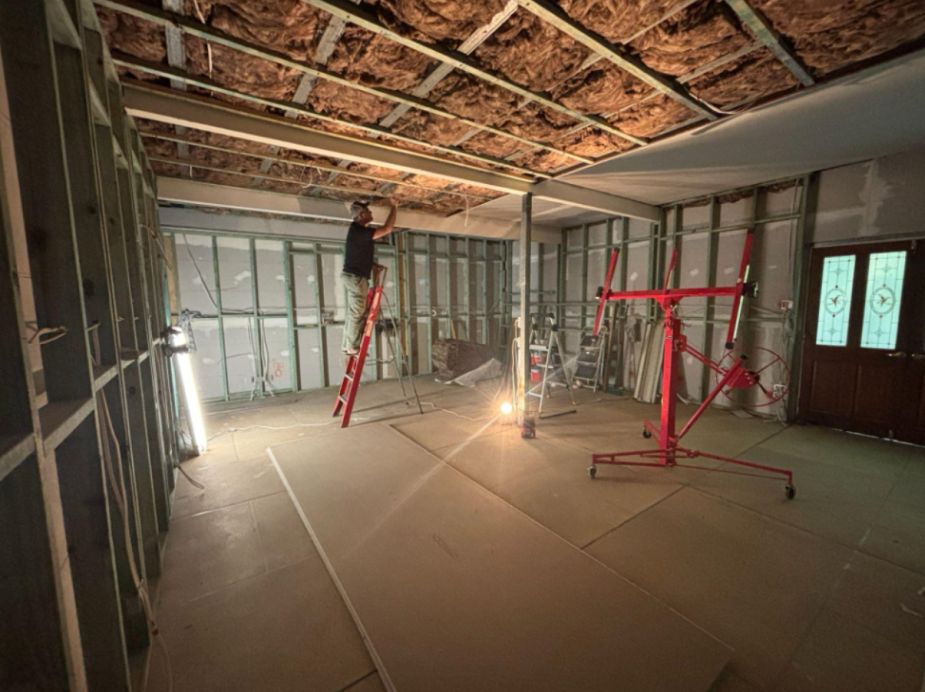
For Ben, the sudden ease of automated software doesn't threaten his workflow; it entirely misses the point of why humans make art in the first place.
"It’s the love that doesn’t get translated," Ben says, adjusting a framing beam. "The joy we get out of creating something from nothing. People really enjoy creating music and sound; they love making decisions based on storytelling and emotion. As screen composers, that is exactly what translates into a soundtrack."
In Ben’s eyes, the flaw of the machine isn't its lack of technical skill; it's its lack of stakes.
"We get to choose what the end result is. With automated music generation, you just get what you get once you click ‘GO.’ You don’t have any control over nuance, real emotion, or the timing of the storytelling hitting those crucial parts of a film to guide the viewer through the journey. You have to go with something eventually, or you’ll never finish anything! We have limitless options in the digital realm, but it still comes down to taste."
Wires, Valves and Smashing VU Meters
Walk into the corner of the workspace, past the red drywall lifts and stacks of acoustic insulation and you start to understand the sonic philosophy guiding this build. This isn't a room designed to shrink into a laptop screen.
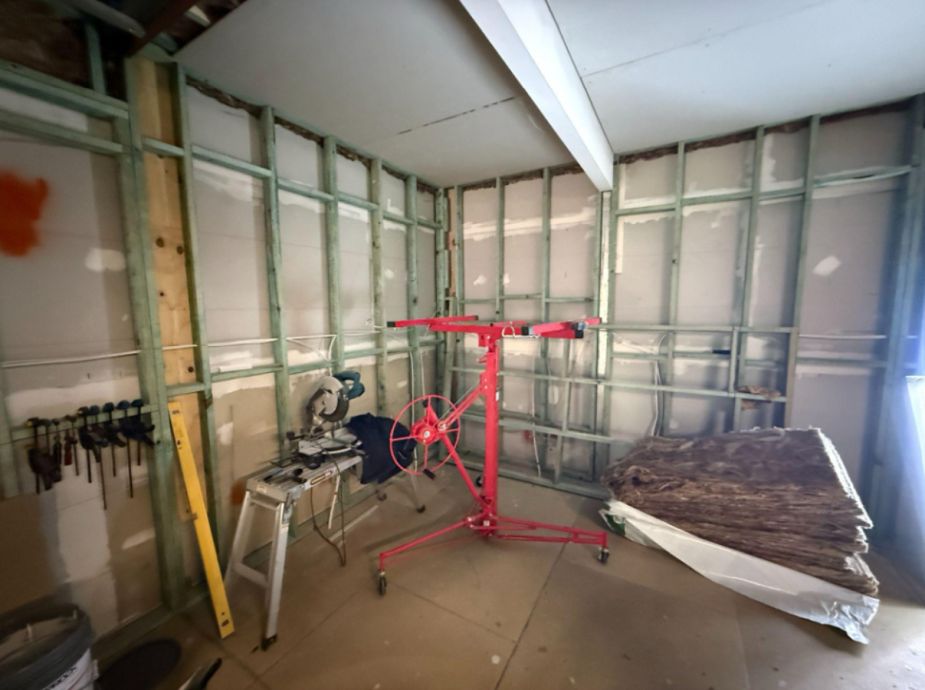
Contrary to what tech evangelists might think, Ben’s new layout isn't shrinking its footprint to accommodate automated assistants. In fact, AI didn't even make it onto the blueprint.
"This studio build really has nothing at all to do with AI and everything to do with the joy of creating sound using real stuff," Ben explains. "In saying that, I love my DAW and my soft synths just as much. But being able to run those out through a screaming VOX AC15 guitar amp, into a tube microphone and back into a classic vintage NEVE 1073 preamp? That is really what we’re after here. If you’ve ever listened to Justice, I rest my case."
Ben is explicitly designing a space meant for physical impact, a sanctuary for tactile control and happy accidents.
"I am building a space for me and other people to hit things. To use microphones to pick up real vibrations, twist the gain on a vintage mic preamp and push it that little bit too far. It's about choosing which mic and preamp suit which voice or instrument and smashing it through an analogue compressor so hard that the needle is almost snapping in the VU meter."
"I hate to say it again, but it comes down to being able to choose and decide what sounds you want for yourself. I'm not relying on a robot to generate a somewhat random piece of music where you don’t get to choose how much of the gain knob you get to wind in, or what flavour of vintage harmonic distortion you can get from a piece of hardware built with valves, wires and transistors."
The No-Computer Counter-Revolution
Ben’s philosophy isn't just a byproduct of his thirty years of commercial and cinematic context; it’s a living, breathing approach to sound that is already skipping a generation. The boundary line where machine efficiency stops and the human ear takes over isn't just his boundary, it's being adopted by the youth.
"It’s all about the human ear in the end," Ben says. "Even if you’re generating AI music, it’s still up to your ear to determine whether you like it or not, or whether it sounds good. But what's truly amazing is that people are actively moving back into making electronic music entirely without computers."
He points to his son’s setup, Jet, as the perfect example of this hardware-driven counter-revolution:
- The Workflow: An 808-style drum machine, a Roland TR6S drum machine, a TR303-style synth/sequencer, an Akai MPC sampler, a Moog-style synth, a turntable, a mixing desk, a 1073-style vintage stereo preamp and a Korg Micro vocoder.
- The Brain: All run entirely by a HAPAX hardware sequencer.
- The Catch: Absolutely no computer.
"The music coming out of that room is incredible," Ben beams. "It's all done in real-time by making choices and decisions on the fly, using nothing but his ear to create."
The 'Intangible Magic' Family
While the studio's technical backend will be a seamless hybrid feeding vintage analogue front-ends directly into modern UAD conversion technology the true 'magic' of the room relies entirely on an eclectic, deeply personal family of instruments.
When the drywall is up and the acoustic treatments are set, the room will be brought alive by Ben’s permanent collection of legacy gear:
- The Heavy Hitters: A 1972 Mini Moog Model D, a 1968 Hohner D6 Clavinet, a 1968 Fender Precision Bass and a 1978 Music Man Stingray Bass.
- The Amplifiers and Strings: A Gretsch White Falcon, a VOX AC15, a Martin acoustic guitar, a ukulele and a guitarlele.
- The Oddities and Textures: Custom cigar box guitars, a drum kit, maracas, a kalimba, tambourines and a beautiful little Italian 1950s fan-driven reed ‘Busillachio’ organ.
"As well of course every new sound-generating little toy that I get in the future," Ben laughs. "I apologise to any of my wonderful instrument family members I may have forgotten."
The Vinyl Revolution of Human Creativity
Ben holds no real malice toward the automated future. He sees it clearly for what it is: a tool for utility, not for the soul.
"I don’t think there’s anything wrong with AI music generation if that's what you want to do. It works for accountants and that’s a lot of the game these days. But I’m certainly not going to let it take away the joy I get from creating and telling stories with music. It does worry me a bit that some creatives are totally fine using it and then high-fiving each other at how 'super creative' they are while trying to win creative awards but like I said, that’s the game, it’s not going away and I’m not gonna cry about it."
Instead, Ben looks at the bare studs of his rising studio and sees a premium future. Just like digital streaming inadvertently saved the vinyl record, the automation of art will inevitably validate the raw, messy reality of human effort.
"Human creativity is like vinyl now. Eventually, everyone will want it again. They’ll be extolling the virtues of these flesh-covered creatures who hit and bang things made of wood and metal; creatures sending electrical currents through glowing tubes on old-fashioned-looking devices with big coloured knobs. We'll be screaming like banshees with our own voices into ribbon microphones and all the while, finding so much genuine joy in the process that we almost overdose on dopamine."
As the final cables connect, Ben isn’t just opening a studio, he’s setting a new standard. At Voodoo Hack Sound, the philosophy is clear: AI offers convenience, but there is no shortcut for the soul. When the screen goes dark, the real work begins one physical, imperfect, human-made sound at a time.


