


Uncommon Stockholm Celebrates 2nd Birthday, Builds for What's Next


Above: Max Hultberg, Björn Ståhlprepare, Mia Berggren, and Maximilian Weigl
Uncommon Stockholm’s new studio space is bustling on the day I visit. Work of all kinds is underway, from project prep to party prep; both are creative in their own way.
Located in Stockholm's bohemian Södermalm neighbourhood, the space is thoughtfully designed. Dark wooden furniture is complemented with warm fabrics and textures; evocative art and black and white team photos adorn the walls. A mix of daylight and the soft glow of lamps illuminate what at first appears to be a large, open-plan studio but actually has a number of cleverly positioned private rooms.
A brand new addition recently arrived at the office, a D&AD Yellow Pencil in Animation for the team’s work with Supercell on Clash Royale's ‘Hero Balloon’. It joins the other impressive trophies on the sideboard, including ones from the Clios, Guldägget, FAB Awards and The One Show, that the studio has earned in just two years after its founding. Helmed by co-founders Mia Berggren (CEO), Björn Ståhl (CCO), Max Hultberg (ECD), and Maximilian Weigl (CSO, and global strategy partner, Uncommon London), the studio has achieved 195% year-on-year growth, while delivering world-class work and bringing a renewed creative jolt to the region.
On the eve of the studio's second birthday party, I sit down with Mia, Max, and Maximilian – in a room with views of the river – to reflect on what the team has achieved to date and what it means for the future.
Mia attributes a large part of the success to the studio’s founding client, video game studio Supercell, and the work the two have done together. “We started with a brave client that understood who we are and what we want to do,” she says. That foundation provided the confidence and financial stability needed to press on.
Of course, Uncommon’s established reputation and presence helped the Stockholm studio too. “We reap the benefits of that,” adds Max. “When we started, I was surprised that people in the industry were just happy that Uncommon was coming to Sweden. We had a lot of support, people were actually rooting for us early on.”
“It felt a bit like clients were waiting for a slightly more European door to open,” Maximilian says of the appetite for an outfit like theirs in the region. “There were a couple of interesting briefs going around then and clients gave us a shot,” he recalls.
At the time, the Scandinavian and global industry mood wasn’t great. “Most agencies were letting people go or closing, so I think for us to start something new, there was a lot of energy in that,” Mia says. Crucially, the studio wasn’t looking to take local agencies’ clients, she adds, “we always had a global starting point of view”. Max also felt, from the beginning, that the studio had a specific role to play, “being an international agency from the Nordics”. He adds, “That helped energise the purpose of what we're building.”
The new studio space is a celebration of how much the team has achieved and an investment in future ambitions. “We want to make sure we're dynamic and flexible and not just growing for growth's sake; we want to be realistic and relevant in how we do it,” says Mia. Now felt like the right time for the move because, in Mia’s words, it took the team about 18 months to really understand who they are, “what is the flavour of Uncommon that we bring from a Stockholm perspective, who do we want to be, what are we building for?”
A lot of different spaces and areas were considered before the team landed on this one. Mia was nearly swayed by an office she calls “extremely posh” but she realised it didn’t reflect the opportunities and ambitions of the team. “We want to be able to build stuff on the floor, if we want to try something out or paint, we should be able to do that,” she says.
“It’s too big for us,” Maximilian offers, an aspect that really excites him, “which means we're building for whatever's going to be next.” While the Uncommon team occupies the impeccable decorated upstairs space, downstairs is unoccupied and has been home to freelancers. “We don’t yet know what we’re going to do with it, meaning, whatever's next, we'll have space for it. We can try something out, we can experiment.”
All the other places the team saw felt “done”, says Maximilian; the Södermalm studio is a deliberate work-in-progress, a space for the team to grow into and shape, providing inspiration and motivation for their ambitions.
The Uncommon brand is known for a particular philosophy and commitment to creativity, often crystallised in the statement, ‘building brands that people in the real world actually wish existed’. The challenge for the Stockholm studio is to continue that legacy while building its own culture and approach to the work, which it has the freedom to do.
Trying to define what that looks like is not easy but Maximilian can see the common features in the studio’s work to date, plus the team’s attitude toward getting it done. “There's a certain type of boundlessness. And then once the space is explored, it's incredibly pure,” he says. He draws attention to the tension between going anywhere with an idea and then rallying around one once it has been found – to “refine, refine, refine” – because, he explains, “when you've created the space for the idea, you protect it at all costs.”
Maximilian tries to conclude “the idea is…” before Max finishes his sentence, “... is the process”. Everyone nods in agreement.
“If everybody's aligned on the end goal and the idea is actually the process, then it all works out in the end,” adds Max. Maximilian clarifies, “If we were all here to make yet another TV ad, then the process is probably the idea.”
The non-prescriptive nature of the process Max and Maximilian enthuse about is inherent to Uncommon, perhaps it’s even the defining characteristic of why the Uncommon brand has succeeded so much. “I don't think anyone at Uncommon would like it if there was a template or structure for everything,” Mia says.
That also goes for the kinds of clients and briefs the Stockholm studio wants to work with. Mia notes that they look for whether there’s a “problem to solve or a moment of change”, adding, “The main thing [is], if there’s an ask to maintain something or update something, it's not really us. It's not Uncommon at all.” She asserts with confidence, “We want to be able to make a change. Then, exactly what kind of brand or where they are in their journey doesn't really matter either.”
What gets the team excited isn’t a particular type of company or the chance to make a certain kind of work – remember, arriving with a pre-conceived solution is the antithesis of the Uncommon philosophy – it’s “the willingness to have different conversations and ask different questions,” Maximilian says, giving an example of a recent chemistry meeting. “The client just asked a different question and we hadn't thought about [the challenge] that way. So, naturally, we want to work with these guys.”
That energy can be distilled into one expansive, ambitious question, per Maximilian: “Can we make things that get real people that are in the real world excited?”
Creative integrity is high on the agenda for everyone at Uncommon Stockholm. The team is selective about the kind of clients they work with, a privilege of their economic situation, and due to the fact that “when you are a small team and you're starting up, your time becomes very valuable,” Max explains. In addition, most of the leaders are also involved in “almost every project”, adds Maximilian, “which means we have to be quite ruthless with what we say yes to.”
One of the studio’s defining projects has been Lil Wayne’s exclusive virtual halftime show inside ‘Clash Royale’. It pulled 50 million in-game views in its first 24 hours – it was a viral, culturally resonant hit. It also served as a big lesson about the team’s ambition and what they can achieve. “We always want to make something that's bigger than the category,” states Max. “We aim high, obviously, and ask how we can have a bigger purpose or [create] a bigger platform, or reach a new audience.”
Maximilian calls this work a testament to the relationship with the client, because it “technically wasn’t a brief” in the traditional sense. The studio has a lot of ongoing work with Clash Royale yet “this specific brief sort of came as an add-on,” he says, “and then because of them understanding the value of an interesting idea and taking the game into adjacent places in culture, they said, ‘let's totally do this’.”
That work is indicative of how the studio generally approaches its client relationships. It’s the same philosophy behind Clash Royale’s biggest breakthrough moment, launched for Valentine’s Day 2025, which helped the game win back lapsed players. “The [Supercell] CEO credited that campaign as the turnaround moment,” adds Maximilian.
An elegant lesson emerged to apply to all future work. “You just need to treat this as your own business,” he summarises, “and bringing the game, product or service into spheres outside themselves is a great way to create fame and conversation.”
We’re back to the idea of boundlessness and the feeling that the team can go anywhere at the ideation stage. Max is clear that it can be “quite difficult to have a pivot moment”, unless the team feels empowered to suggest one. “You need an environment where you're open to that completely new direction and actually evaluate if maybe that is a better thing to do,” Max adds, with a statement, “I think we're quite good at that.” Giving everyone a voice is one way the team achieves this. Seniority matters – someone has to make the final call and take responsibility – but everyone is welcome to contribute ideas; personal experience matters and a great idea is celebrated for being a great idea, no matter who it comes from.
Regardless of an idea’s origin, or how unconventional it may seem, alignment with the client is crucial to ensure it sees the light of day. Launching a 9V battery flavour of crisps for the Paulig Group does appear zany, for example, but it addressed the brand’s objectives perfectly: to make a splash in a crowded market and get people talking about the snack. The client couldn’t say no and the team delivered on the objectives. “If it's not solving a business problem, it's not a good idea,” Mia states, and Max adds, “It’s not being weird for weirdness’s sake.”
The team doesn't spend too much time dwelling on the past and, at the time of my visit, they’re gearing up to launch a local campaign for KFC based on the insight that Swedes don’t like sharing food and will go to great lengths to prevent from doing so. The campaign film is sensory in the extreme with hyper-close-ups of tongues, sneezes, and fingers poking chicken. It’s all a little bit too much in the best way, capturing perfectly why KFC isn’t for sharing – and the team has enjoyed spotting the work in Stockholm’s streets and subway.
The next big project is with the Aramis Group, which Maximilian calls “proper pan-European work”; a French-led client with markets in Spain, Italy, France, Benelux and Austria. The team is tasked with taking Aramis Group’s mission of selling refurbished cars and reframing it, via a new creative platform, to challenge biases and how people “find, buy and hopefully then also see their next car.”
With our conversation drawing to a close – and the team slowly shifting into a celebratory, party mode – I have to ask what the studio’s ambitions are over the next few years: creatively, culturally, commercially. Maximilian’s vision is in two halves. One is about finessing their process and how they get things done. The second is daring. “We want to make work that makes our competitors’ CFOs jealous,” he says. “For those CFOs to be asking, ‘why is our marketing department not making that kind of work’, commercially speaking.”
The mystery of the future appeals to Max, who says, “Part of the charm is not knowing what you want to make but being ready for whatever challenge comes.” He knows they’re ready for the unknown thanks to the foundation the team has built and the ongoing collaboration with the London office.
Mia wants the studio to continue being authentic, speaking to culture or, as she phrases it, being “part of conversations that people don't understand that we’ve been part of.” She offers the example of building a museum, explaining, “Whatever it might be, we want to create something that is worthy of a conversation around the dinner table without you initiating it. And I think that kind of work requires that you are brave and finding the things in culture that are worthy of conversation.”
“The one thing we really have is our work,” reflects Maximilian, “because nobody sees your processes, nobody sees your organisation and structure. All people talk about is the work you put out, and that's therefore the only thing that people can evaluate when deciding if they want to work with you.”
“If we always put creativity first, culture is going to come, commercial is going to come. The moment you start off with finance or process or whatever else and not put creativity first, then you're a bit screwed,” Mia adds, cementing creativity as the studio’s guiding principle.
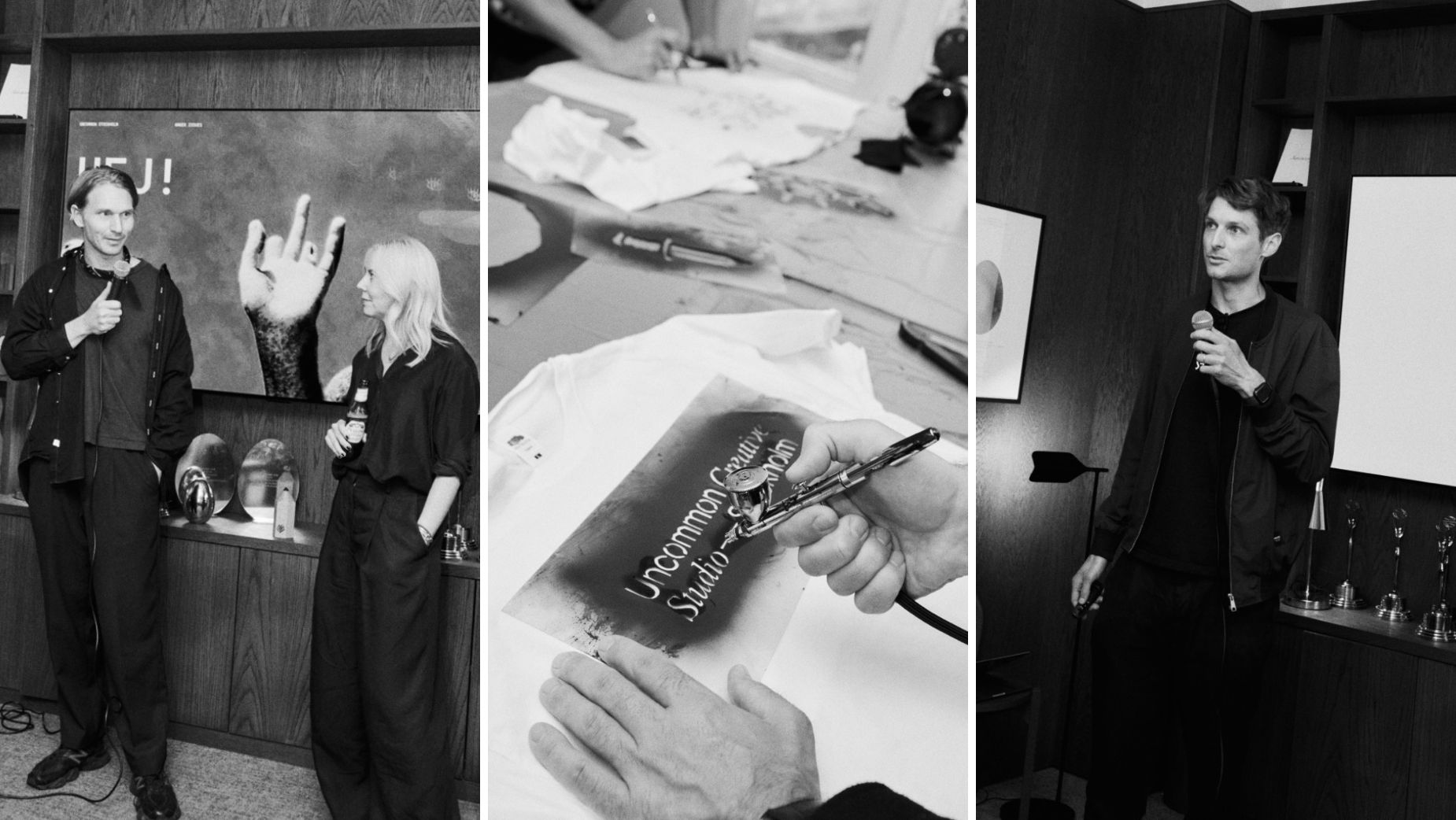
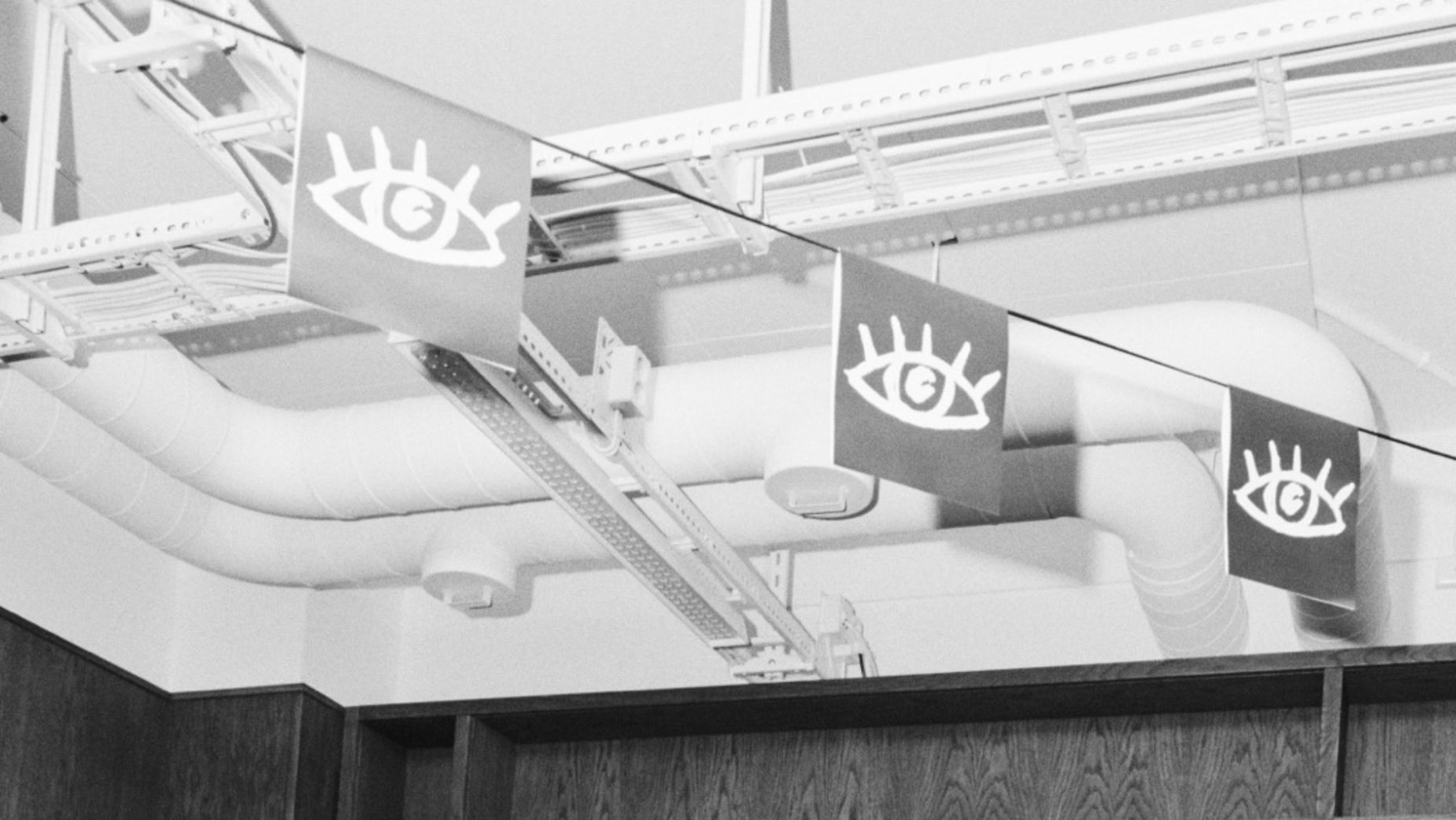
As the working day draws to a close, the office’s mood lightens further. There’s Uncommon-branded bunting adorning the ceiling (“We promise it’s not always there!” I’m assured) and glasses line up on the kitchen counter, ready for toasts. Soon the room is full of clients, colleagues and friends ready to celebrate everything Uncommon Stockholm has achieved in two years, the space the team is planning to thoughtfully grow into, and all that’s yet to come.
With that, Mia offers a final reflection. “I don't think we're 100% there. I think we are doing great, amazing, actually. [But] we also have bigger ambitions. Two years in, I'm really proud of the work we've done. Growth comes with extremely hard work, but there's more to do.”


