


“Transparency Isn’t Optional”: What’s the Chat on OpenAI’s Ad Testing News?


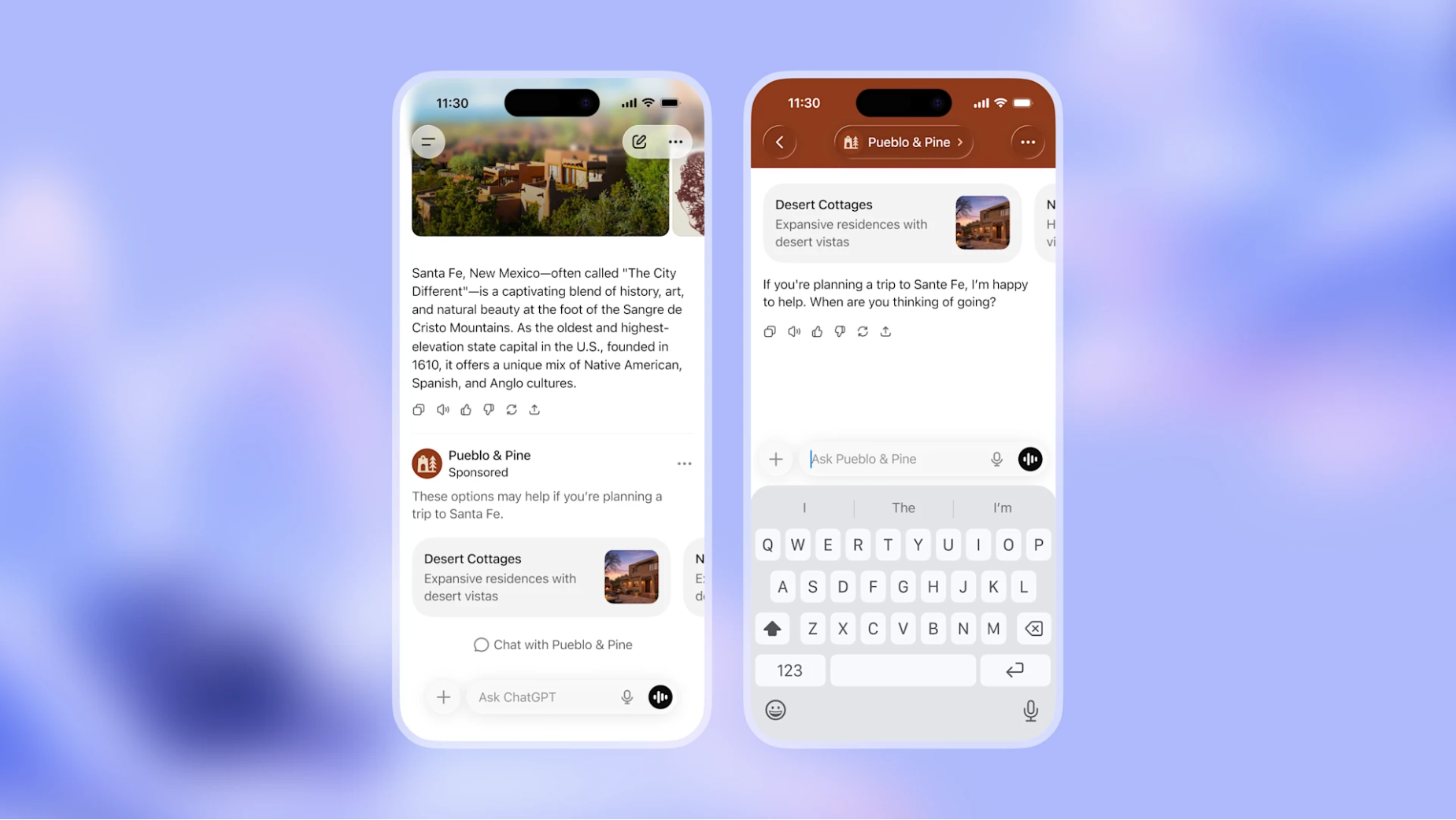
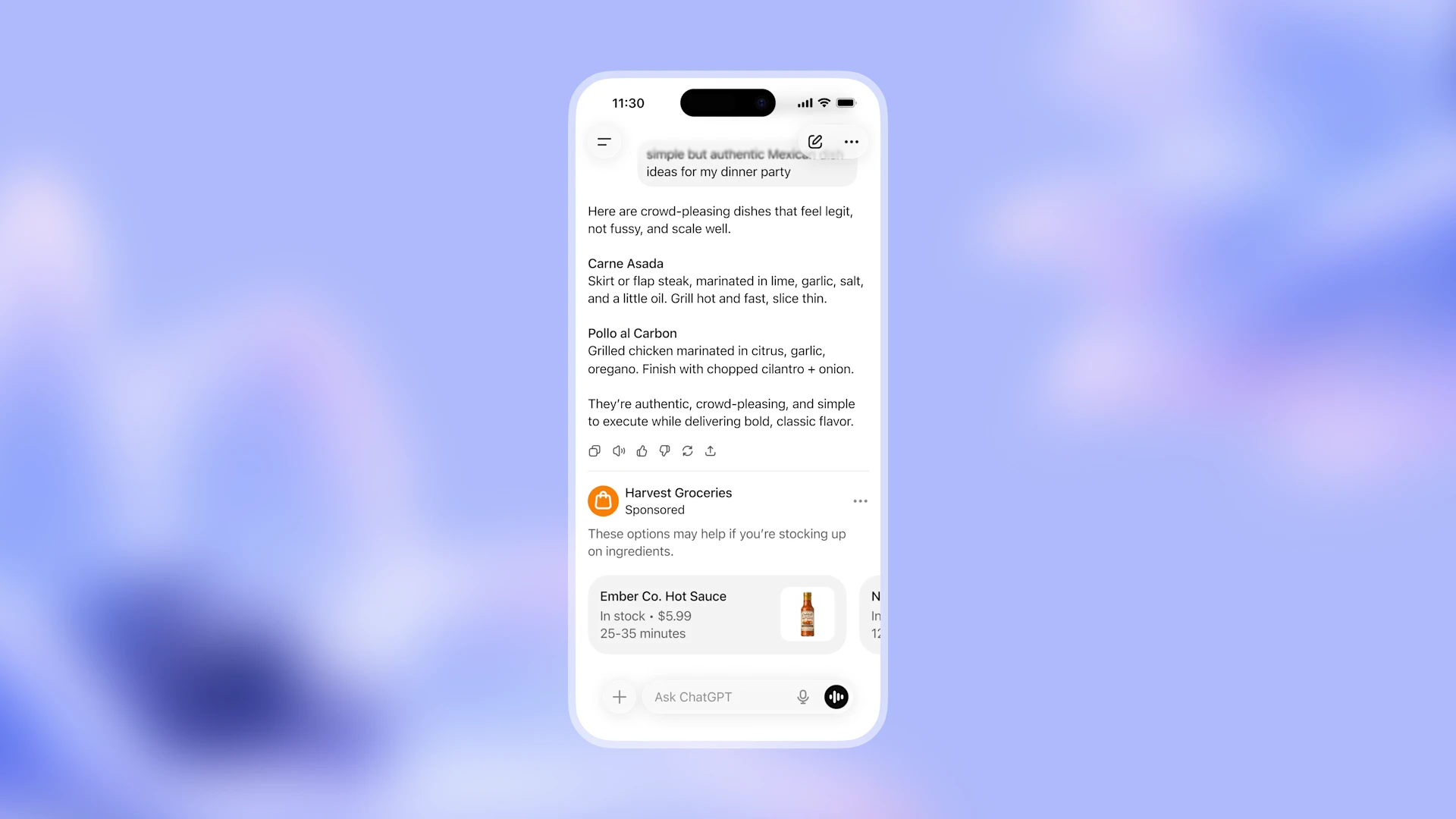
It was only a matter of time before OpenAI lobbed advertising into ChatGPT, and this month the AI behemoth revealed that it would start testing imminently. Along with the announcement came a set of principles, a mock up of what ads might look like in the feed and some hints at what the safety guardrails might be, and details around how it plans to predict user ages . In terms of messaging, its big play was around trust. The ads will be tested on the free version of ChatGPT and the newly-announced ‘light’ paid tier, ChatGPT Go.
It’s still early days, but media, strategy and AI experts will be watching the testing roll out closely so they can help clients navigate the opportunities and potential pitfalls. With that in mind, we reached out to insiders around the world to find out what has stood out to them and what in particular they’ll be paying attention to.
“The critical metric to watch isn't click-through rate, but trust”
Sam Kaestner, director of UX Design, RAPP
We are witnessing the transition of generative AI from magic to utility, where monetisation is inevitable, and trust becomes a key differentiator. For the industry, the critical metric to watch isn't click-through rate, but trust.
The most preferable future here isn't a banner ad, but a move towards integrating, and monetising more steps of the user journey. If OpenAI can treat ads as tools, like helping a user book a flight rather than just seeing an airline banner, then they preserve or even enhance the experience. However, there is a real risk of creating a bifurcation of truth, where paid tiers offer pure answers and free tiers offer sponsored answers, which will quickly erode user trust. As these tests roll out, I’ll be watching to see if the UI can maintain a clear wall between the inference engine and the ad engine. If the lines blur, the platform’s perceived neutrality collapses.
“Beyond financial KPIs, there's a human cost to getting this wrong”
Melissa Daniels, head of innovation, TBWA Asia and Singapore
The announcement was inevitable. Every platform that reaches meaningful scale eventually turns to advertising - Facebook set the precedent. The real question isn't whether ads appear in conversational AI, but how transparently they show up and whether they enhance or undermine the user's conversation.
In an environment already grappling with AI hallucination, misinformation, and overly agreeable LLMs, transparency isn't optional - it's foundational. OpenAI emphasises trust and safeguards, but how it will implement this remains unclear. There are enough cautionary tales across tech to warrant a healthy dose of scepticism.
I'm watching how users behave and respond - to placement, frequency, personalisation, and perceived value. The real power (and risk) here is how deeply AI knows you. ChatGPT doesn't just track clicks, it understands your context, your tone, your needs in real time. That creates personalisation potential far beyond anything we've seen but also raises serious questions about manipulation and consent. The open question is whether paid placements reinforce trust, accelerate fatigue, or cross lines we haven't even drawn yet.
From a creative and ethical standpoint, the brief must shift from persuasion to utility. If brands enter AI conversations uninvited, the responsibility is on us to be helpful, not invasive, or purely sales driven. That places new accountability on agencies and brands to be context-aware, restrained, and genuinely useful. Beyond financial KPIs, there's a human cost to getting this wrong, and a responsibility to set the right precedent now.
“A bold but unfinished leap”
Jack Cantwell, global head of digital, data & technology, Carat, and Bram Meuleman, global head of strategy, Carat
OpenAI’s move into advertising feels like a bold but unfinished leap. Its principles (answer independence, privacy, choice, long‑term value) are exactly what users want, even if they challenge the way brands are used to operating. But the first iteration of ads feels surprisingly plain, and the experience doesn’t yet live up to OpenAI’s own promise of connection, nuance and enrichment.
Still, this is genuinely new advertising territory: a rare chance to shape a model that doesn’t rely on intrusive data harvesting or attention fracking. Early brands that experiment now will build the muscle memory to capitalise as the platform matures. OpenAI’s ad offering may be imperfect today, but it opens the door to a new era of AI‑native, consumer‑centric effectiveness.
“The opportunity (and challenge) to define what “good” advertising looks like”
Eleanor Haeg, business lead, client partner, GALE
It’s not surprising to see ChatGPT begin testing ads - once a product reaches this level of scale and daily utility, monetisation is the inevitable next step.
What stands out is the opportunity (and challenge) to define what ‘good’ advertising looks like in a conversational environment: ads must be clearly labeled, genuinely useful, and designed to preserve trust, not interrupt it.
From our work ‘hacking’ organic brand presence inside LLMs where SEO-style tactics can measurably improve visibility, I’m particularly interested in how paid and organic will complement each other. Done well, this could unlock more immersive, controlled brand experiences than traditional search. As tests roll out, I’ll be watching transparency, targeting/privacy guardrails, measurement, and attribution standards, and whether ads meaningfully change answer quality or user experience.
“Avoid ‘shiny object’ syndrome”
Tory Lariar, SVP, head of search, Monks
We have a few strategic hunches about what the rollout of ChatGPT ads will look like: we expect industries like D2C, retail and travel to be emphasised. They have high-intent data feeds that are easily mapped to AI queries, making them a common first testing ground for answer engines. Also, from prior comments by OpenAI’s leadership, we expect them to follow the Perplexity model of capping ads to one per answer, though we anticipate a more performance-oriented product than we’ve seen elsewhere.
It will be critical for brands to keep their target audience in the cross hairs, to avoid ‘shiny object’ syndrome. Based on OpenAI usage data, the free users who will be served ads are going to skew very young. If a brand fits best with older audiences, or the ultra-tech-savvy who are likely on premium plans, this phase of the ad offering might not be impactful for your business.
“This will start to reshape our approach to performance marketing”
Bijal Shah, search director APAC, M+C Saatchi Performance
What stood out on OpenAI’s announcement was the emphasis on building trust early: with transparent labels, separation from organic responses, and a focus on keeping the experience of higher-tier paid users ad-free.
It wouldn’t be surprising if the consumers react adversely at first to the introduction of ads. After all, there’s a particular way in which users interact with AI platforms versus the old search engines.
But the bigger signal here is what this means for intent‑driven advertising. With 800 million weekly users, ChatGPT becomes a new place for ads based on high‑intent queries. This will start to reshape our approach to performance marketing, but, at this stage, we can’t ignore the gaps: there’s no inventory access yet, no learnings, and plenty of unknowns around how personalisation data will evolve. And Google’s scale and supremacy can’t be discarded from this equation.
A real impact will be seen if and when user behaviour significantly shifts towards querying AI platforms rather than search engines, and that’s where brands will need to learn a whole new game.
We’re watching the start of this LLM ad era closely. As tests start, we’ll be paying attention to ad relevance and how CPCs rise. We know brands will be eager to start, and rightly so. There’s an opportunity here for those who decide to move to test ahead of the competition.
“Advertisers will need to evolve the measurement approach”
Joe Harbisher, performance lead, media, dentsu Singapore
While the announcement of ads coming to ChatGPT was exciting and inevitable, there are still many unanswered questions on how this will play out for marketers. There would need to be clarity around the types of ad formats, targeting mechanics, and the buying interface, all of which will be crucial in understanding the true capabilities and to plan test campaigns. Advertisers should expect early-stage experimentation and limitations on aspects such as reporting and first party data integration.
One thing we know for sure, is that advertisers will need to evolve the measurement approach. We expect to see an impact on attribution and the overall purchase journey as ChatGPT will act as both an influencer in the research journey and a direct point of conversion with the introduction of ads.
Ads were expected to be a last resort for ChatGPT, with user experience intended as a top priority. Time will tell how seamlessly they can integrate ads into the platform without compromising the product.
“Once brands and advertisers have trust in the new platform, then the real test begins.”
Stephen Chambers, associate media director, VML
OpenAI’s announcement last week didn’t give much new info to advertisers beyond the familiar refrain of ‘we’ll soon begin testing ad formats’, but the expansion of ChatGPT Go to all ChatGPT markets obviously does a lot for expanding access to the benefits that AI-powered search can offer. This also stresses the importance that OpenAI upholds and enhances its commitment to protecting user data. Growing user trust will also help brands in trusting ChatGPT Go as a potential ad platform, even if privacy considerations may limit how granular we can get.
But with ChatGPT ads being in such a nascent stage, it will be fascinating to see even the broad data that comes to light (or doesn’t) around Go’s subscriber base in the US. Will there be any demographic trends? What will they search for? What industries will this speak to? If we can identify the audiences that use ChatGPT Go in their digital search journey, that will help advertisers understand if there is potential as a viable paid media partner. Once brands and advertisers have trust in the new platform, then the real test begins.
“What stands out is the strong focus on trust”
Tayyab Mahmud, director of paid media operations (MENA), Assembly
From a media perspective, this announcement is less about why ads are coming to ChatGPT and more about how thoughtfully OpenAI is attempting to introduce them. What stands out is the strong focus on trust, controlled placement, and protecting the core value of the product. That is refreshing compared to how ads have often been added to new platforms in the past.
For marketers, the immediate questions are practical. How will audiences be defined? What level of targeting will be available? What measurement will we have access to as these tests roll out? The promise of bringing discovery and purchase closer together in an AI-driven environment is compelling, but performance will ultimately decide whether brands invest.
What I will be watching most closely is how optimisation works in practice, and whether advertisers can drive real results without damaging the user experience that made ChatGPT valuable in the first place.
“Even with safeguards in place, users may be skeptical”
Nick Wineland, director of performance marketing, Manifest
The real question raised by OpenAI’s announcement is what will happen to trust. Chat based search is popular because people believe the answers are helpful and unbiased. As paid placements enter the experience, that confidence is going to be tested, especially when users are sharing highly personal, high intent information. Even with safeguards in place, users may be skeptical about whether results appear because they are most relevant or because the algorithm is skewing toward paid content.
That said, this also presents a meaningful opportunity. As long as OpenAI is clear about how and why ads appear, keeps paid and organic content distinct, and prioritises the user experience, most searchers already know how to navigate a blended paid and organic environment. Done well, ads can add value, feel useful, and reinforce credibility rather than undermine it.
“If it’s free, you’re the product. In the generative era, that trade off gets darker.”
Kevin Wassong, founder of mktg.ai
The reality is OpenAI needs to drive revenue. Its valuation is outsized, and they have to put ad models to the test to survive.
But the moment ads enter the AI experience, something fundamental breaks. Not a business model, it's trust. There’s an unspoken contract between a user and a machine: give me clarity, not a pitch. The second a chatbot optimises for sponsors instead of truth, it stops being a tool and starts acting like a lobbyist with a friendly UX.
In tech, this line has been around forever: if it’s free, you’re the product. In the generative era, that trade off gets darker. This isn’t just about data anymore, it’s about judgment. If an AI’s ‘best answer’ is determined by who paid the most, then the ‘I’ in AI doesn’t stand for intelligence. It stands for influence.
And influence is corrosive. Valuable, but corrosive.
AI has exactly one real asset: trust. Spend that asset on ad revenue and you don’t build a companion, you build a billboard. One that sounds smarter but quietly steers you somewhere else. And in the end, consumers may simply not care. But brands should.


