


The CDB Diet Explained: How the Daily Bread Food Bank Is Pushing for an Improved Canada Disability Benefit


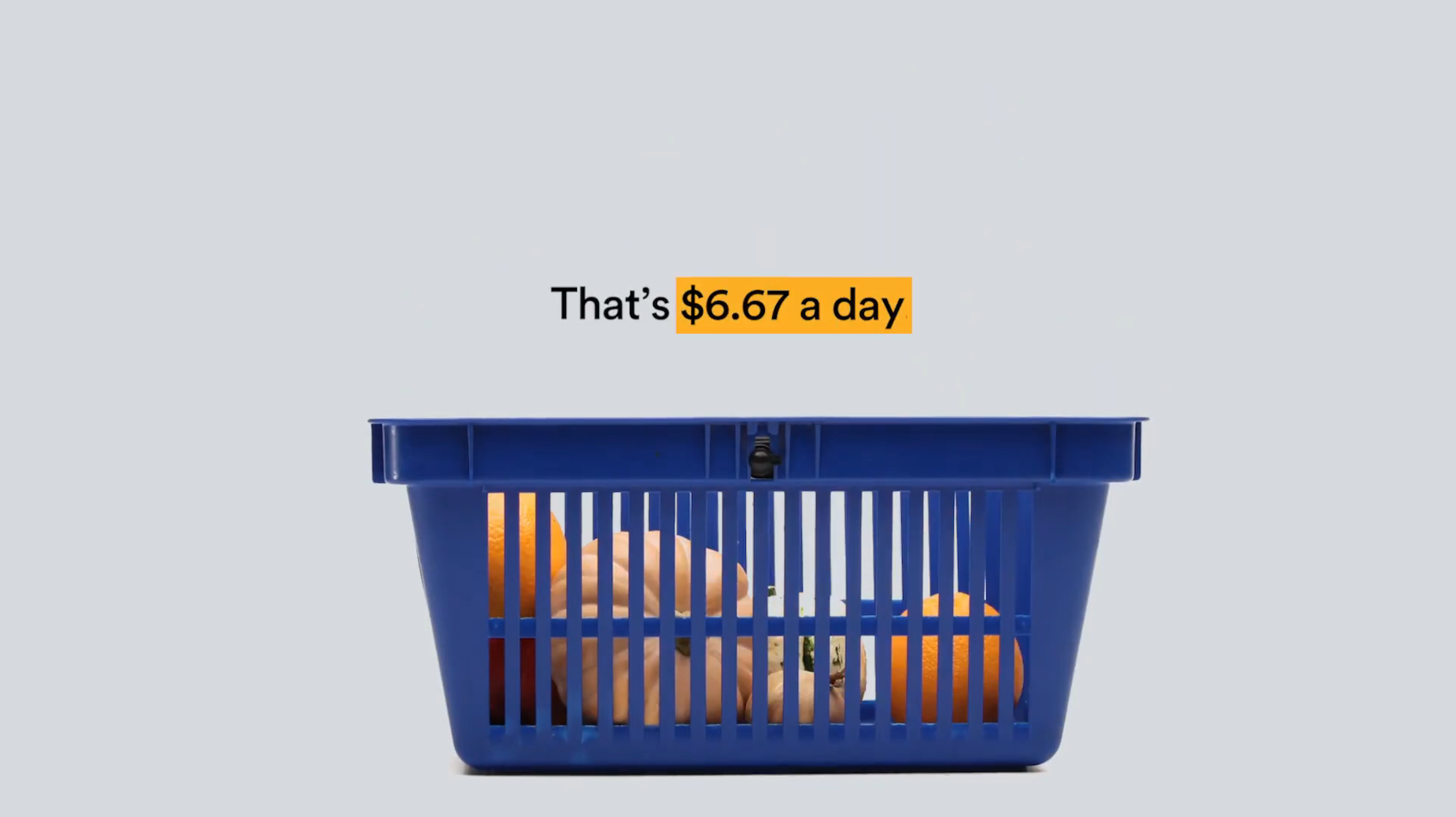
Over the past week, social media users tuned into the food and fitness spaces may have seen influencers touting a brand new fad, known as the ‘CDB Diet’. Centred around simplicity and minimalism, it only follows one rule: eat whatever you want… provided you stay within a $200 (CAD) monthly budget, or $6.67 a day.
If this sounds excessive, that’s entirely the point. As of September 16th, it’s been revealed that this is an endeavour from the Daily Bread Food Bank, alongside a coalition of organisations, in partnership with creative agencies Leo Toronto and Leo Design. Intended to leverage the ridiculousness of new diet trends, the difficulty of this challenge successfully highlights how $200 per month from the Canada Disability Benefit (the titular ‘CDB’) is simply inadequate for supplementing food costs, let alone living expenses.
“While the Canada Disability Benefit is a critical step forward in reducing food insecurity and poverty among adults with disabilities in Canada, it still falls painfully short,” explains Daily Bread’s CEO, Neil Hetherington. “People with disabilities are twice as likely to experience poverty and financial insecurity. Meanwhile, food prices are rising faster than general inflation, adding even more strain on households already struggling to cover basic needs.”
Indeed, the statistics paint a gloomy picture. According to combined research from the organisation and agency, in Canada, 1.5 million people with disabilities (aged 15 years and above) are living in poverty. Meanwhile, in Toronto, one in four food bank clients has a disability, and one in ten relies solely on the Ontario Disability Support Program (ODSP) to survive. Exacerbated by the fact that the ODSP provides a maximum of $1,408 per month – well below Toronto’s poverty line of $2,444 – and it quickly becomes clear that these rates do not go particularly far, especially when factoring in other essential costs, such as medication and housing.
“As we continue to feed the immediate need, we firmly believe in advocating for long-term solutions,” Neil adds. “We were happy to see the passage of the Canada Disability Act in 2023; however, there remains the opportunity to increase its funding dramatically to ensure the act realises its goal of getting people out of poverty. That’s when we saw the opportunity and joined the disability community to push for a fully-funded Canada Disability Benefit in the lead up to the federal budget 2024. And, now, by repositioning the benefit as a ‘trendy diet’, everyone can understand how difficult it is for the Canadians living with a disability to afford food and other basic needs.”
The Power of a Non-Traditional PSA
While the shock factor of this approach is evident, a great deal of additional research, planning and creativity went into bringing this initiative to life. Dividing the campaign into two parts – the rollout and the PSA – according to Leo Toronto executive creative director Kohl Forsberg, was all about ensuring each aspect achieved the desired effect in market.
Specifically, for part one, much of the creative approach was motivated by research from the agency’s own 2025 HumanKind Study, such as the way in which financial strain is shaping everyday choices. Serving as a lens through which the issue could be framed – many without disabilities are already struggling to afford nutritious food as it is – from there, it was all about adapting this sentiment into the kind of content people consume every day, while further capitalising on the fact that unrealistic diets continually spark debate.
“While the idea breaks traditional PSA convention by design, to make the ‘CDB Diet’ feel legit, we took a pretty traditional approach to rolling it out: brand a company, create ads and assets promoting it, and then engage influencers for support,” he says. “As for the influencers, major kudos to them for taking part. They have their own brands to worry about, and there are risks to them doing something built to enrage their followers. But, they agreed that any temporary backlash was worth it for this important cause.”
This would prove imperative. In the runup to the reveal, responses rapidly veered into the territory of shock, confusion and outrage. Centred around how impossible and unhealthy it is to eat with such a limited budget, comment sections quickly filled with people debating strategies and concluding that this was yet another unreasonable diet.
Moreover, the two agencies also launched a fake CDB brand, boasting its own social presence, out-of-home advertising, and website. All assets which, as of the reveal, now drive to FundTheBenefit.ca/cdb-diet – a website where visitors can sign a petition calling for the Canada Disability Benefit to be increased – at launch, it was all about maintaining the idea of this being a real trend.

“While the ‘CDB Diet’ isn’t real, we still had to build the brand from the ground up in a way that felt real,” Kohl emphasises. “It needed to be in line with the stuff people are used to seeing – those other diets and health companies we so often get hit with on social media. So, to bring it to life, we did an audit of how those companies look, the promises they make, the way they talk, and put all our work through that lens.”
As for the PSA portion, the ECD is excited to reveal that already, there’s been a noticeable shift in the conversation, with engagement and petition signature numbers rising by the hour. Testament to the merit of the creative approach, and the insight backing the campaign, for him, it serves to highlight the power of fully uniting behind meaningful intentions.
“It definitely required a lot of bravery and teeth-gritting to watch this diet receive negative comments online in the first phase, even if that was the intention,” Kohl admits. “Those days before the reveal, we just had to remind ourselves that that was exactly the kind of conversation we set out to start. But, the metric of success will be getting a piece of government legislature changed to help real people who need it now. Until we’ve done it, we need to be sure we’re continuing to do everything we possibly can.”
A Real Difference?
With federal parliament having reconvened on September 15th and continuing to the end of the month, per Kohl’s point, there’s a lot of questions right now about whether enough petition signatures will be obtained to pressure the government into increasing the Canada Disability Benefit.
In the eyes of Neil, a best-case scenario would be nobody in the country having to choose between paying rent, buying food, or affording medication. Especially at a time when the government’s own financial forecasts aren’t overly optimistic (of the 1.5 million Canadians with disabilities living in poverty, only 600,000 will qualify for the benefit, and just 25,000 are expected to be lifted out of poverty by 2034-2035), he hopes the data and lived experience driving this campaign is enough to make a real difference.
“Daily Bread’s mission is to end hunger in our city, and this concept underscores the impossible choices many people living on social assistance such as the Canada Disability Benefit are forced to make every day,” he says. “Since 1983, we’ve provided more than 90% of emergency food through 205 programmes across Toronto, witnessing firsthand the challenges people with disabilities face in meeting their basic needs. While this campaign takes a more disruptive creative approach than some of our other work, it’s consistent with our brand: drawing attention to the realities of food insecurity and poverty, and pushing for meaningful change so that no one has to rely on a food bank.”
One way or another, however, the CEO is proud of how the ‘CDB Diet’ has sparked its intended outrage, and started a national conversation with food insecurity and poverty at the centre. Explaining that it’s always harder to do something that doesn’t follow a traditional approach – especially when it comes to balancing “spicy creativity” and serious subject matter – he hopes this will inspire Canadians to get involved and make a difference, regardless of whether this issue earns government attention immediately.
“There are many ways to get involved,” he concludes. “But, to start, please go to fundthebenefit.ca, send a letter demanding change to your elected officials, get informed about this issue, and share the information you’ve learned.”


