


Putting Employees First: Why Meaningful Internal Events Are a Key Piece of the Puzzle


There’s been a lot of talk across the past few years about working models, and whether the remote employment covid-19 necessitated was abandoned far too quickly. Specifically within adland, as agencies do everything from leaving it up to employees, to implementing hybrid systems, to mandating in-office presence, it’s clear that no objectively correct answer has been found. There’s pros and cons to each, and at the end of the day, it’s up to the individual company to justify its decision in the long run.
For Proof Experiences, this comes in the form of striving for a meaningful culture, ensuring employees feel a genuine sense of purpose, connection and belonging when they come in for work. And, a big part of the experiential agency’s success in this regard has come from the way it hosts work events. No, this doesn’t mean throwing together a token pizza party once per quarter and calling it a day, but planning an annual calendar with an array of offerings, with an understanding that diverse needs and interests warrant a diverse approach. A model that even has posed statistical benefits, it’s a system that’s continually being honed, and reflects the growing demand for companies to offer more than competitive pay in the modern age of hustle culture.
To learn more about all of this, and how Proof is striving to lead the way – both internally, but also for clients – LBB’s Jordan Won Neufeldt sat down with VP of conferences and events, Bibianna Taborda for a chat.
LBB> You’ve placed an emphasis on the fact that right now, internal events – and quality ones, at that – are more important than ever. Why is this the case, and what does this mean for Proof?
Bibianna> Going into work four to five days a week has not been the norm for an extended period of time, which means employers have to work a little harder to make the office a destination where people are excited to be once again. Because of this, events are an important way of achieving in-person connection and a feeling of community.
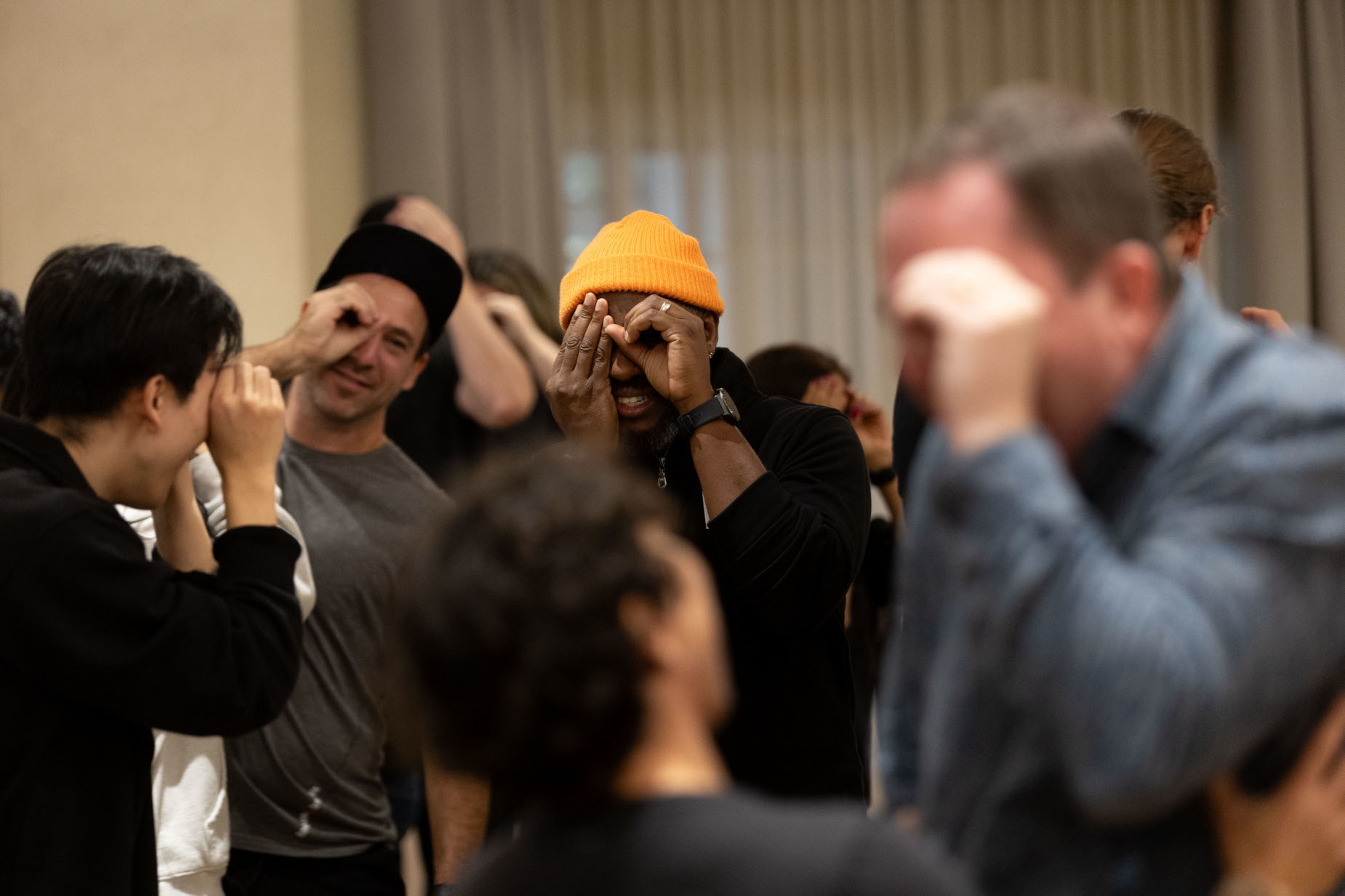
To assist in culture building, we like to plan with a term in mind: ‘Engineering Serendipity’. What does this mean? It’s the intentional design of moments that bring people together in meaningful ways. Rather than leaving connection to chance, we create shared experiences that spark interaction, build trust, and help employees discover common ground. These moments of connection don’t just feel good; they strengthen culture, collaboration, and a sense of belonging across organisations.
LBB> Tell us more about this! Broadly speaking, how should this demand influence the way companies plan for employee wellbeing?
Bibianna> To support employee wellbeing, companies should think about the below few things:
- Enhance connection and community. Use internal events to foster a sense of belonging, reducing feelings of isolation and rebuilding workplace relationships that may have changed during remote work periods.
- Promote mental and physical health. Incorporate wellness activities, workshops, and opportunities for employees to decompress and recharge during events, emphasising holistic wellbeing. This is important, as employees are looking to rebalance their work and home life, since their habits will have to change with time of commute etc.
- Create inclusive and diverse activities. Design events that cater to diverse employee needs and preferences, ensuring all feel valued and engaged.
- Balance frequency with purpose. While increasing the frequency of internal events can boost engagement, they should be meaningful rather than routine, focusing on quality and relevance to prevent burnout and event fatigue. This is extremely important to ensure budget is well spent and the company receives the most ROI for its investments
LBB> From your own experience, where should one begin when planning for an internal event? Are there specific checkboxes you always hope to tick off at Proof?
Bibianna> Ensure you have a good understanding of your audience. What makes them tick? What drives them? What skills and needs do they have to upgrade? This can be done by pre-event polling and surveys. Don’t be afraid to ask your people what they need and really listen, even when it’s not positive or what you wanted to hear.
After that, plan for the year… not just one event at a time. An individual event cannot be created to meet the needs of every single employee. This means that companies need to carefully curate a calendar of events that hit the diverse needs of employees. Also, don’t be afraid to try new events and formats. If something doesn’t work, just do it once (and also know that doing the same thing over and over again can also get boring and predictable).
Following each event, always ask for feedback. It doesn’t have to take a long time to collect – a few simple questions should suffice – and you can use these insights to tailor events that genuinely excite and motivate staff, increasing participation and positive wellbeing impacts.
In addition, outside of the post-event surveys, a company should be doing engagement surveys at least every six months to keep a pulse on how the employees are feeling.
LBB> How do design thinking and accessibility feature in your process? What does it take to make sure events truly land for everyone, and don’t feel like forced fun?
Bibianna> At Proof, we like to use the ‘Event Positing Quadrant’ (released by Julius Solaris) to help guide us when strategically coming up with an annual events calendar. To put it simply, there’s four main types of events you need to know about:
- Community Builders. (High connection and high experiences). Things like annual retreats and award ceremonies focus on belonging and memorable interactions.
- Transformers. (High content and high experiences). Things like quarterly town halls and annual sales conferences with impactful company updates and inspirational keynotes. One important thing about transformers – ensure they are transparent.
- Deal Makers. (High connection and high transactions). For example, if you are a company with different products to sell, create a tradeshow where employees can learn about the products so that they can better support each product and work with each other cohesively.
- Skill Builders. (High content and high transactions). Usually training, specifically including both personal and business growth. For example, a session learning how to be a more effective manager, versus a session on how to eat better.
Across all of these, don’t forget to ensure you take various learning styles into account!
LBB> If done well, what does it look like? Can you give us some examples, both from Proof, but also the industry at large?
Bibianna> Internally, some recent highlights include our monthly town halls and annual retreats, client and vendor lunch-and-learns, and training sessions. Recently, we also launched the ‘EXPY Awards’ to recognise and celebrate employees who best exemplify each of our five ‘PX Experience principles’ throughout the year.
We’ve also used these learnings to help our clients! When Intuit relocated its Toronto workforce downtown, we delivered an award-winning, 360-degree employee and brand experience that helped employees emotionally transition to the new location, while positioning Intuit at the heart of Canada’s tech ecosystem. This drove record engagement scores, stronger talent acquisition, and customer growth through immersive employee programs and a city-wide media presence.
Meanwhile, for Metro, we’ve served as a long-term strategic partner, orchestrating a year-round internal events ecosystem. From leadership store manager conferences and skill-building breakouts to internal community-driven celebrations and partner-led product experiences, these events consistently re-energise teams, build culture, strengthen partnerships, and align thousands of employees with Metro’s annual business goals.
LBB> Building on this, internally, have you seen tangible business advantages since placing an emphasis on quality internal events?
Bibianna> To quote our chief experience officer, Christine Ross, “Since we’ve started to design our own internal events with intention and based it in annual strategy versus one-offs, we’ve seen sustained engagement levels above 85%, and turnover rates consistently below industry benchmarks.”
Speaking more broadly, internal events designed with clear objectives can increase employee loyalty up to four times, based on several global employee engagement studies. Additionally, companies that consistently present internal engagement initiatives are proven to have higher productivity and lower turnover rates.
LBB> To this end, how do you know if an event worked? What are you always hoping to hear and achieve?
Bibianna> Creating an overall work culture takes effort, and the internal events strategy is just one piece of the larger puzzle. However, a company should usually hope to hear that employees feel like coming into work has a purpose, and that it adds to their work life (versus taking away).
Of course, while feedback is great, stats like high retention rate, high engagement rates and promotions from within are also all great indicators that an internal events strategy is working.
LBB> Finally, for other companies who might be questioning why they should spend on events, is there anything you’d like to say?
Bibianna> Internal events become reputational assets. Not only can a company tell a story and show it on their website and social media, but a strong reputation as an employer that cares about its workforce is a powerful magnet for talent. In fact, 86% of job seekers say they research company culture before applying, and 92% would consider changing jobs for an organisation with a better reputation (Glassdoor).
Additionally, remember that it’s much more expensive to recruit new employees versus retaining current ones. Not only that, but retaining employees ensures business continuity that has a real impact on a company’s ROI.
Nowadays, more and more top candidates aren’t just looking for competitive pay – they want inclusive cultures, growth opportunities, and environments that support work-life balance.


