


What OFFF Barcelona 2026 Reveals About the Future of Design


It's the creative festival every designer wants to attend at least once in their lifetime. OFFF Barcelona started in 2001 as the 'Online Flash Film Festival.' And although flash technology has long since died out, the OFFF festival keeps the name and is still a magnet for designers. A place of exchange and inspiration, with talks and workshops covering the entire spectrum of design disciplines: graphic design, branding, motion, sound, art, architecture, and more. The program is carefully curated; slots aren't sold, but speakers are specifically selected. That's why it almost felt like a badge of honour to be invited to take the stage there myself this year.
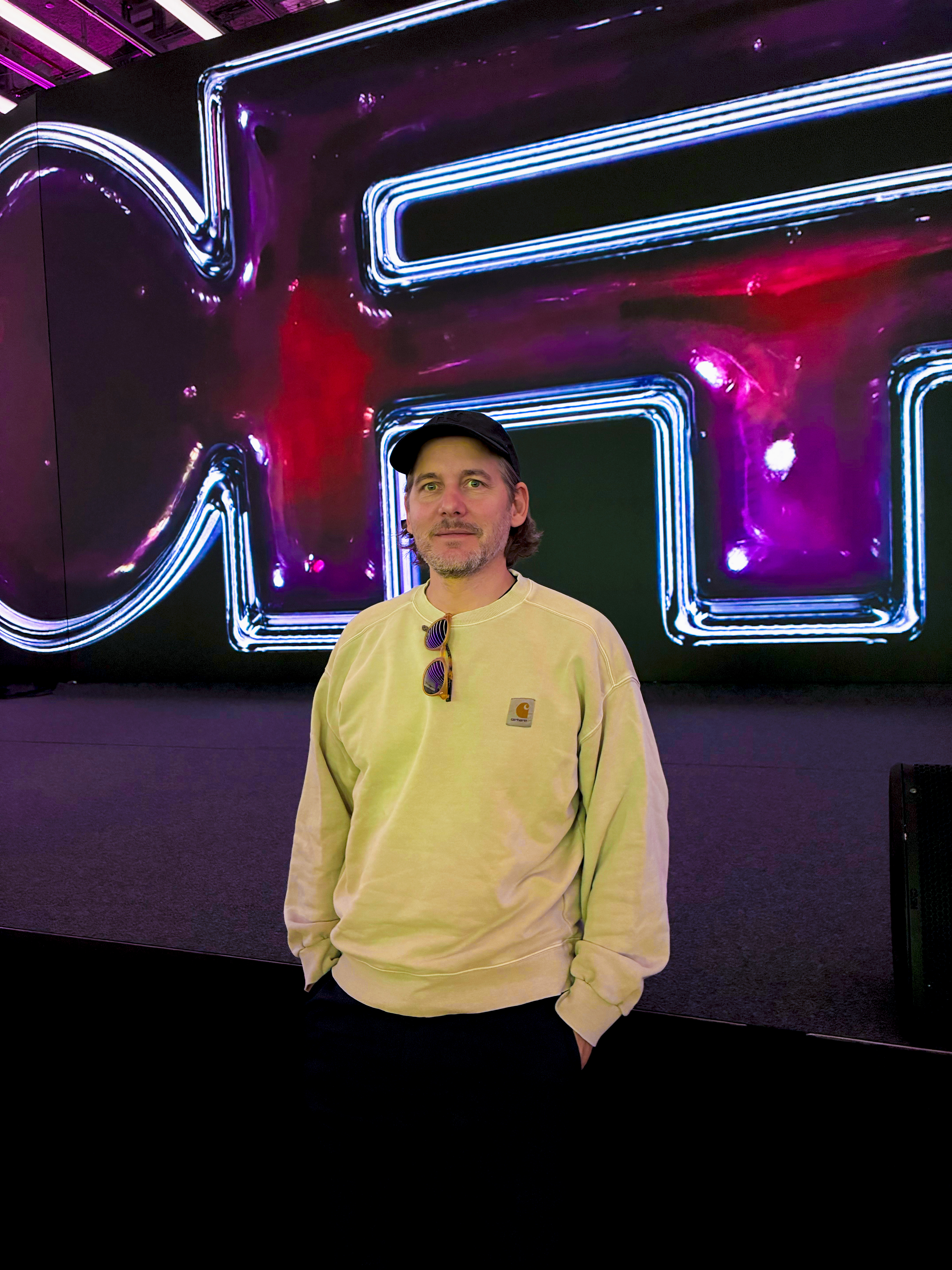
Felix Damerius, ECD at Peter Schmidt Group, spoke at this year’s OFFF festival
But that's not what this piece is about. Rather, it's about the trends I noticed over the three days of the festival. Because they kept cropping up in the presentations or were omnipresent in conversations.
1. Perfectionism is out
Many of this year's talks were united by an almost liberating idea: Perfection is no longer a goal – failure is part of the journey. So it belongs on centre stage, too! Instead of the rose coloured world of seamless processes, the speakers showcased all the things that went wrong in their work.
A prime example of this was Los York, whose project failed so spectacularly that the client said, 'You'll never work in this city again!' Could there be worse feedback for a designer? But never mind – after the initial shock comes the next stage of iteration. Mistakes, glitches, and imperfections aren't flaws, but an integral part of the creative process. And let's be honest: We all know that brutal setbacks happen from time to time – and that's why we can talk openly about them.
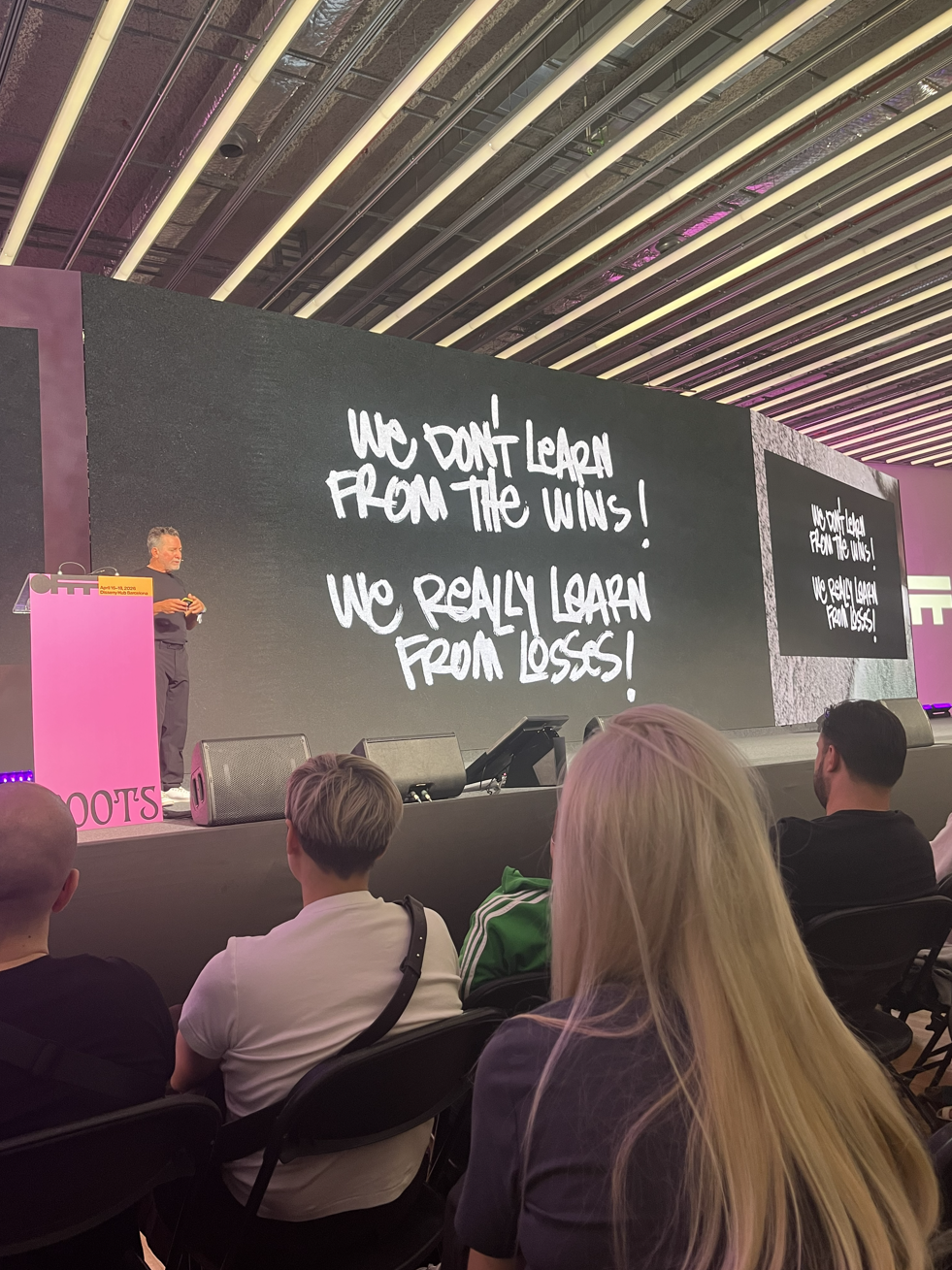
Los York started the presentation with flaws, not perfection
2. Personality matters
This goes hand in hand with the second major trend. Don't just show off your projects, show your personality! Intro, showreel, cases, three takeaways, and applause at the end – we've all seen thousands of presentations like that. At OFFF the organisers made a clear statement from the start: Don't show what's already on the website, show the stories behind it. For many speakers, these stories were very personal. For example, James Callahan spoke about his experience of suddenly becoming CEO of Future Deluxe and having to grapple with numbers and terms he hadn't even known before. Sure, lots of projects were highlighted as well. But they weren't presented without context.
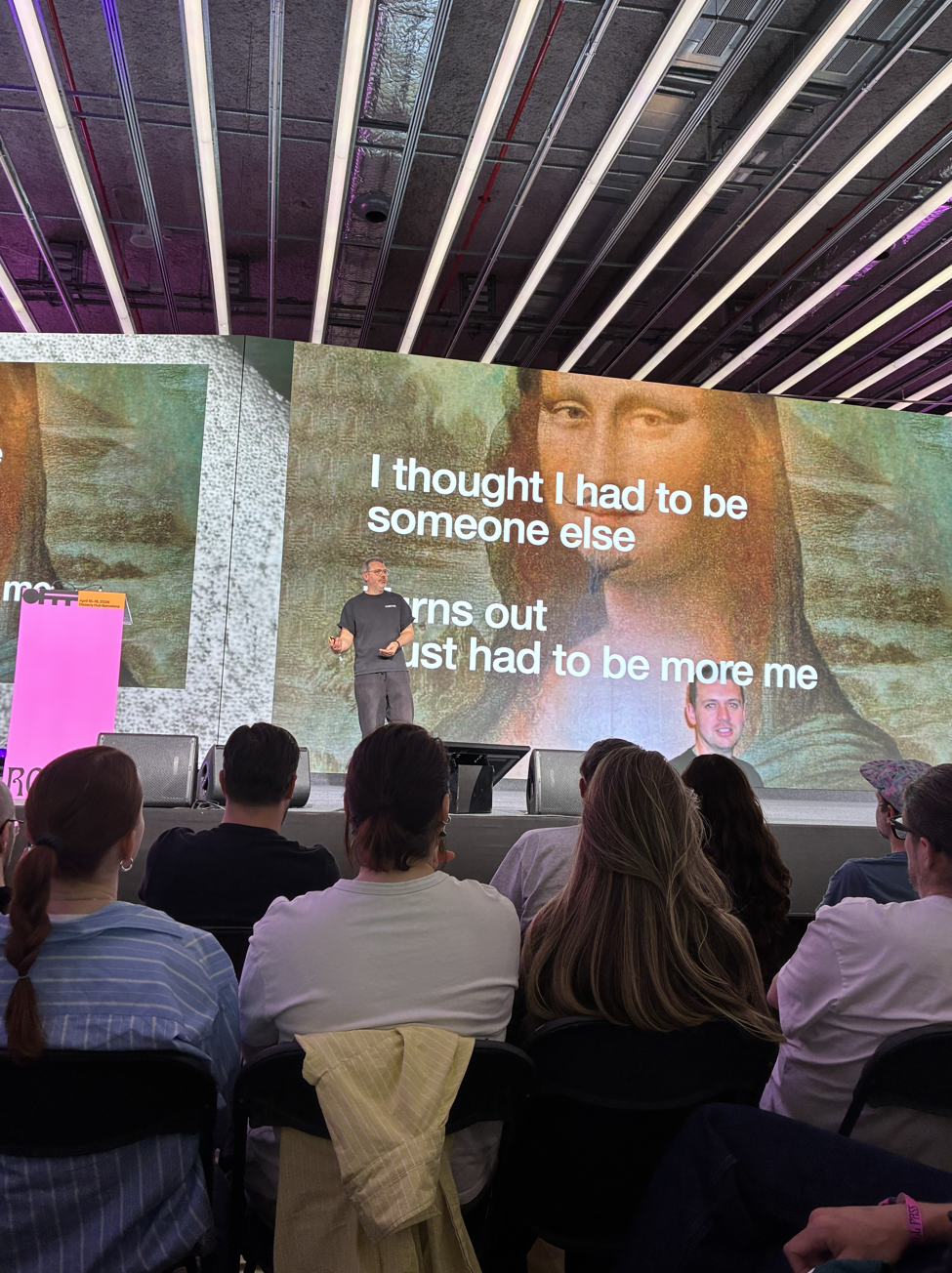
Can you wear a T-shirt when you're the CEO? Of course! James Callahan of Future Deluxe
3. Concepts and craftsmanship instead of prompts
Every movement gives rise to a counter-movement. So in the age of artificial intelligence, we no longer marvel at perfection that can be reproduced instantly in countless new variations, but instead find inspiration in the quirkiness of the handmade. Sketches, drawings, graffiti, and quickly scribbled process charts – I noticed that many presentations included these kinds of artistic translations of human ideas. In their presentation, Foreal asked the question, 'Who among you has drawn something with a pen in the last few days?' and to everyone's surprise, many in the room raised their hands! So yes, our world is digital and connected, but at the same time, analogue is more relevant than ever.
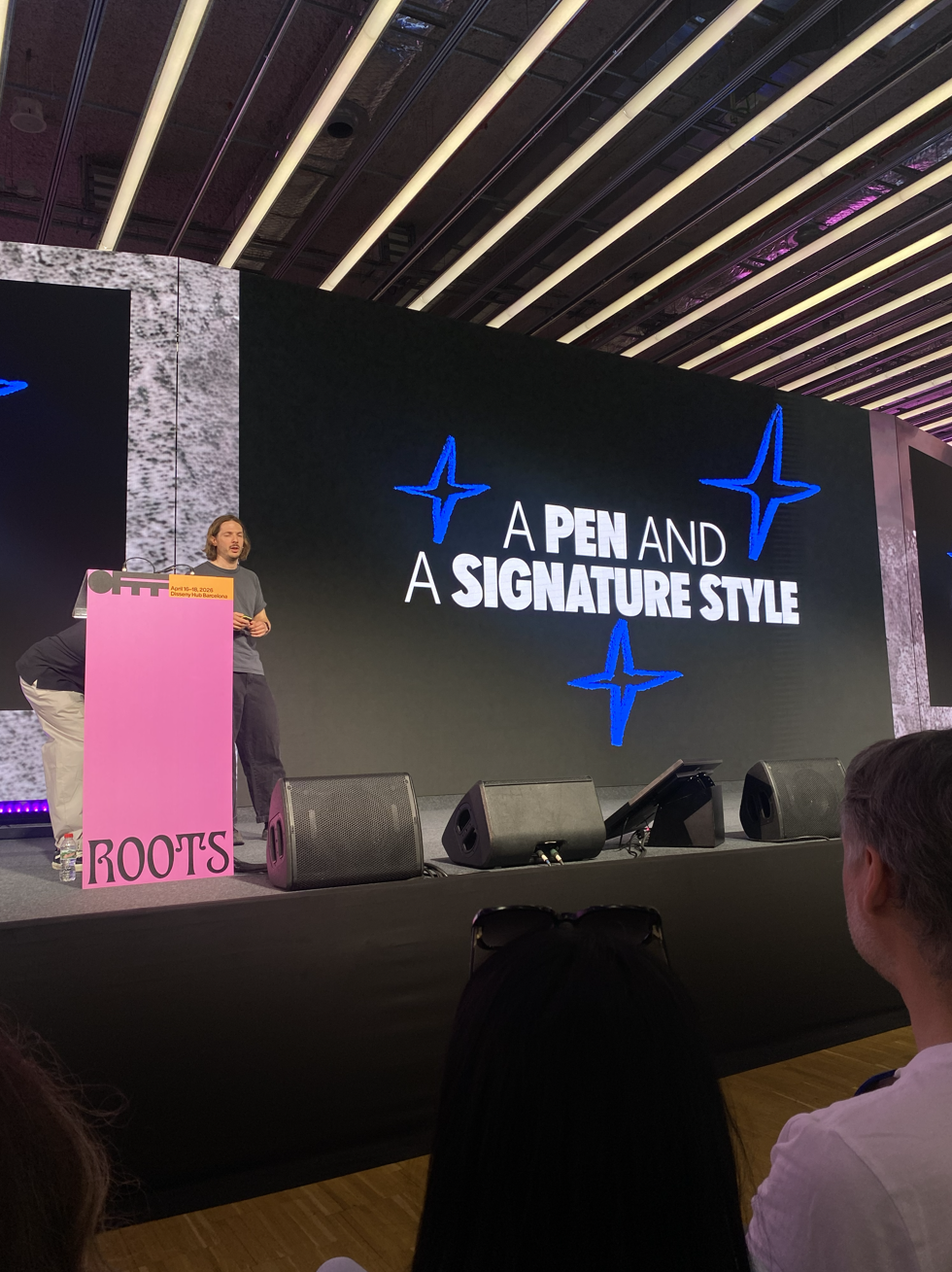
Foreal is known for impressive CGI illustrations. But even these start with a hand-drawn sketch
4. Design needs cultural meaning
Okay, this trend is almost obvious – after all, the theme of this year's OFFF was 'Cultured.' Right at the start of the festival, Nils Leonard from Uncommon explained how the campaign look for this year's motto came about. Designers from all over the world were invited to events – and, as is customary at such get-togethers, to food and drinks. Before the dishes went into the dishwasher, the designers took samples and grew bacterial cultures in Petri dishes. The results not only look spectacular in close-ups, they also tell a story: You, as a community, are part of the visual identity! This is how involvement replaces arbitrariness.
Click here to see the Instagram post
Admittedly, branding can't always be this experimental – but the idea remains valid nonetheless. Design needs a cultural sounding board. Whether it's everyday life, pop culture, or subculture, when design is anchored in culture, it becomes relevant to the respective target audience.
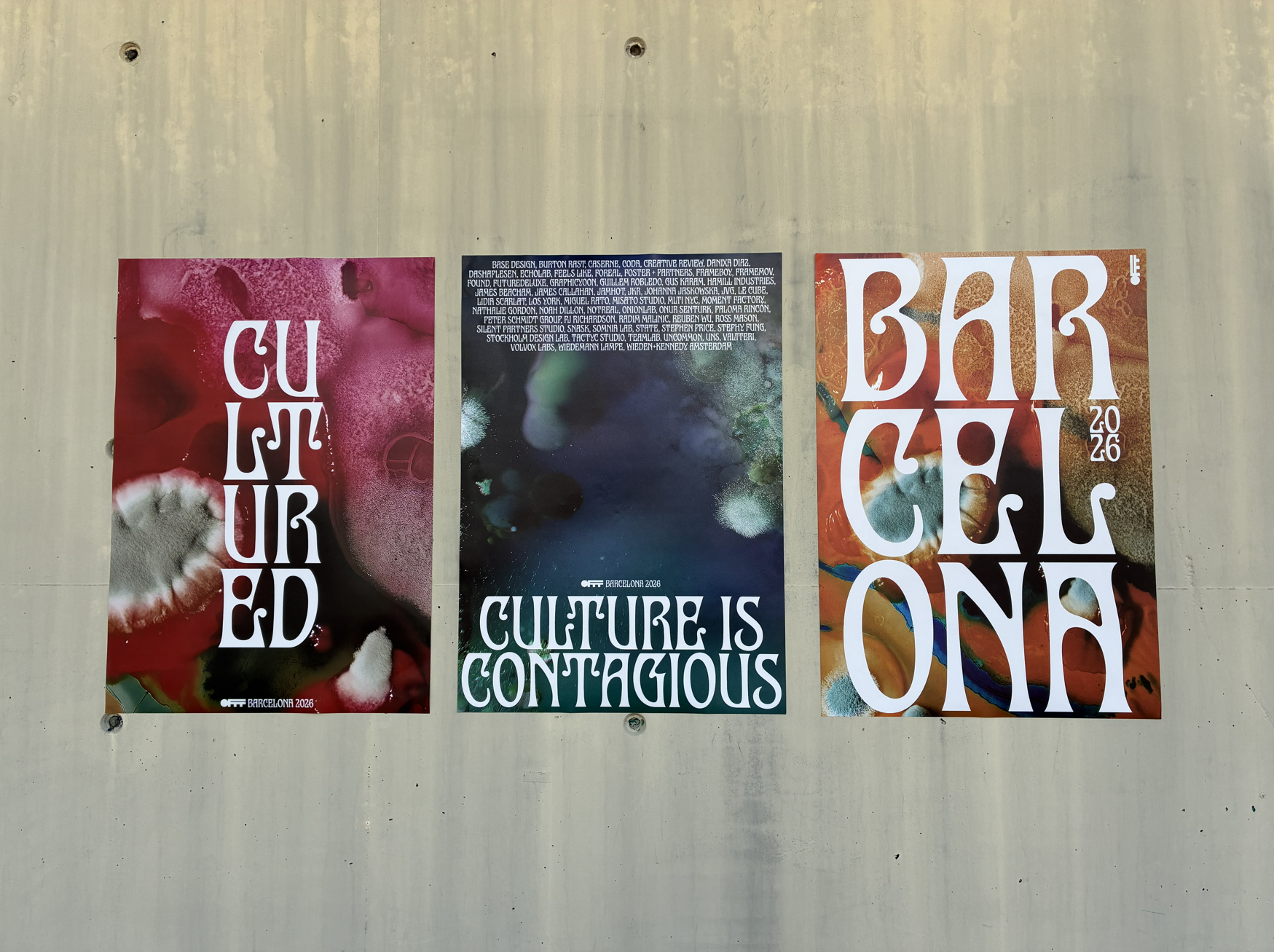
Not just bacteria – the visual identity of OFFF has a backstory
5. Tools don't replace attitude
Looking at Uncommon's Petri dish aesthetic, one could ask whether it couldn't have been created using an AI prompt, which would have saved a lot of work at the events and in the laboratory. Sure, that would have been technically possible – but the entire effect would have been only half as impressive. In the end, AI tools don't replace design concepts. They merely help bring them into existence.
Somehow it felt satisfying that our presentation at the end of OFFF shed light on this topic from a different angle. With 'Own Your Aura,' our CEO Lukas Cottrell and I demonstrated how brands can become unique by accessing aspects of the irrational and unmeasurable. The key to this, in turn, is the power of the human idea. One's personal attitude, approach, and imagination, and the rough edges that characterise us as individuals.
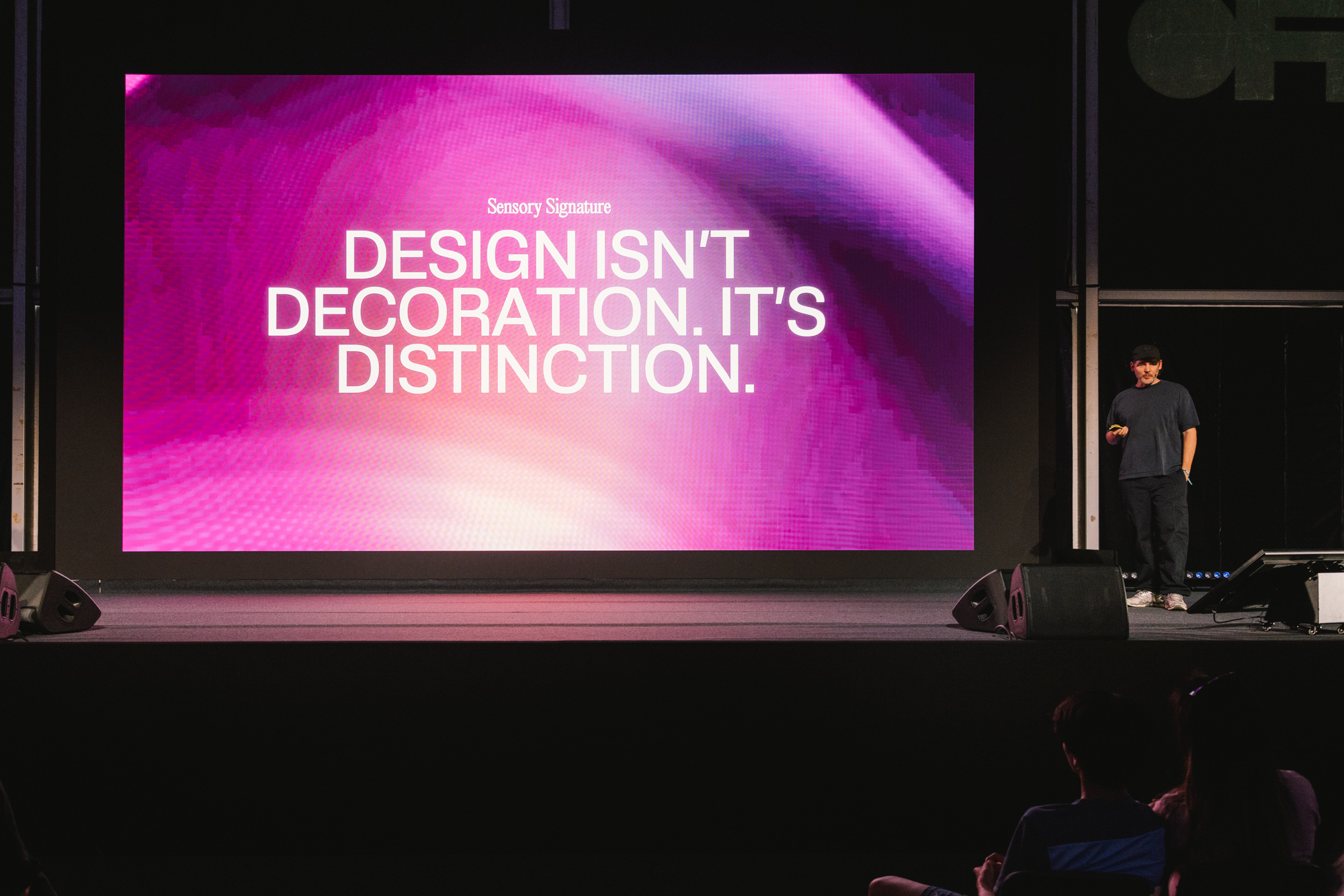
Brands that build an aura become unique. And often more valuable than their performance-driven competitors. Image source: Arnau Rovira
What particularly impressed me, apart from the program itself, was the openness that OFFF celebrated once again this year. In front of the venue, the Disseny Hub, visitors were greeted by booths filled with art and merchandise. In the evening, the building's exterior became a projection screen displaying the work of motion designers from all over the world. Both established artists and unknown designers were given the opportunity to present their projects on the huge concrete screen. There were also two screens showing what was happening on the stages inside throughout the day. That means people could view the presentations completely free of charge, without buying an admission ticket. It doesn't get any more inclusive than that – and again this year it triggered a familiar realisation in me: It feels absolutely right to be back in Barcelona again.
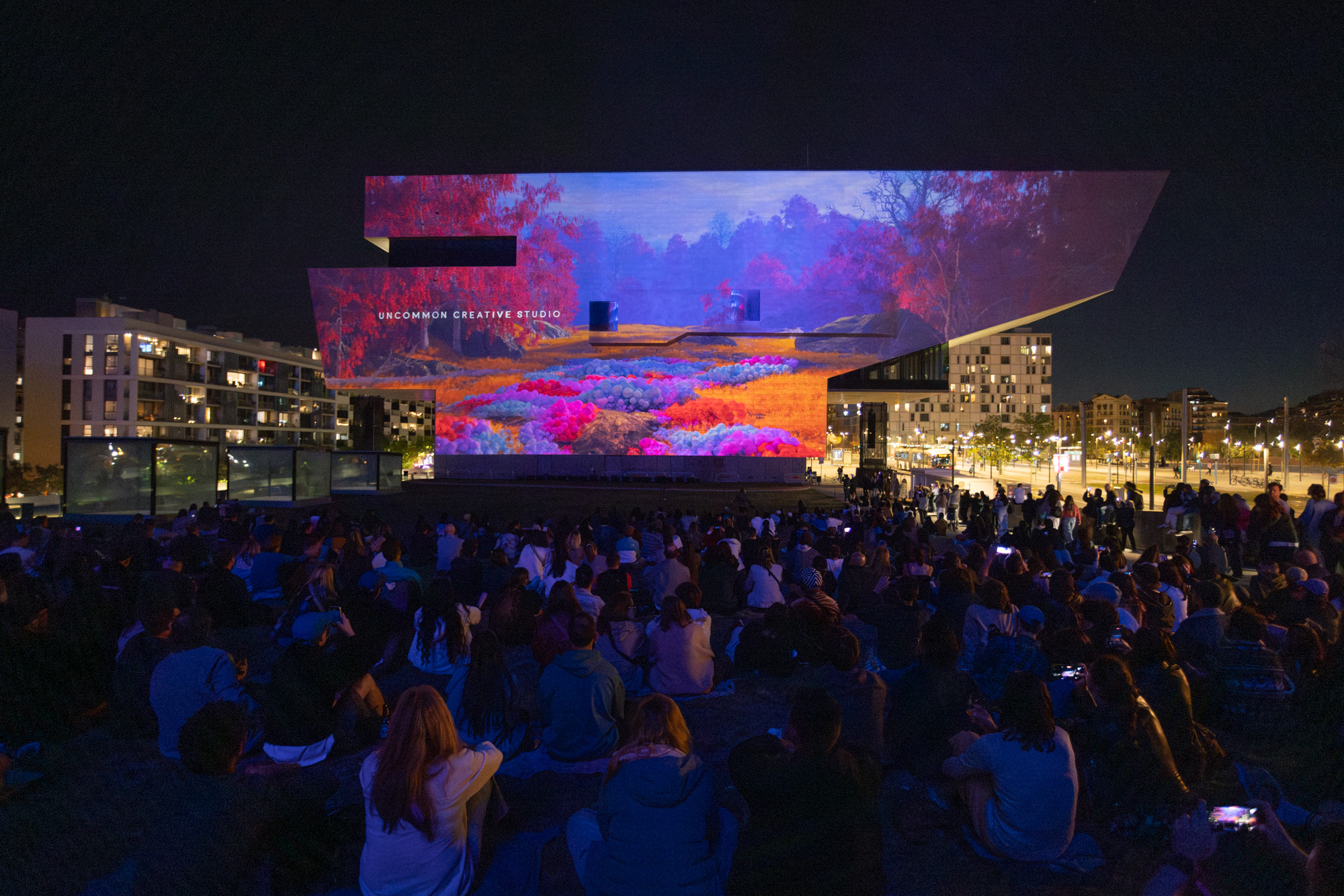
The outdoor screens enabled non-paying visitors to watch the presentations. Image source: Arnau Rovira


