


Looking Ahead: BUCK's 2026 Predictions


The future is unpredictable, except for when it’s a little predictable. Of course, we can’t say for sure everything that’s going to take the industry by storm in 2026, but we leaned on our tastemakers at BUCK to tell us what’s catching their eye. Take a peek into our crystal ball and read what we’re anticipating for the emerging trends of 2026.
1. Mascots, mascots, mascots!
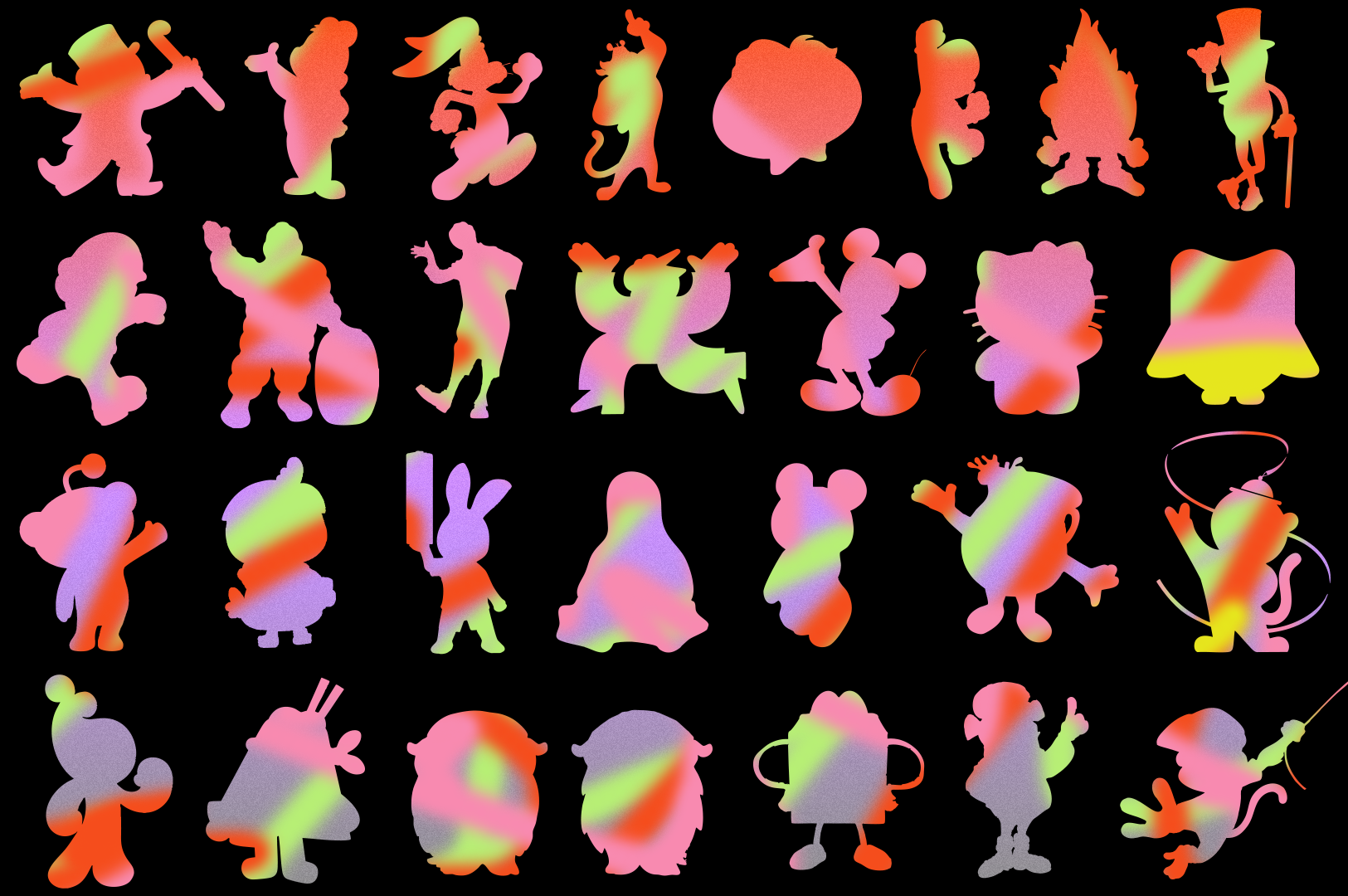
After years of the influencer taking over the role of brand spokesperson and the stale logo, we’re seeing a swing back towards the good ol’ fashioned mascot. Companies are centring their brand identities around characters, making them the emotional anchor of modern systems - flexible, expressive, and memorable.
Especially in the age of AI assistants, these characters inject personality into technology. With more mascots at the forefront, we’ll see more brands offer up their IP to platforms like Sora, giving users the opportunity to remix and play with these characters.
What BUCK’s saying:
“Mascots carry the energy and mantra of a community or brand while allowing for re-interpretation in the mind's eye of the consumer. It lets brands expand their presence without seeming intrusive. The mascot becomes almost an anti-brand - it’s more about emotional resonance than legacy stewardship.” - Gosha Kuznetsov, creative director.
“Mascots will be supercharged by AI, offering a way for brands to market themselves in a world of infinite content, as they can move through different surfaces and be easily remixed by end-users.” - Kevin Walker, chief creative officer.
2. The Human-Made Rebound
After a few years of AI tools taking centre stage as the new tech du jour, 2026 will see a swing back toward work that looks unmistakably human. Process will be front and centre - behind-the-scenes clips, hand-drawn frames, stop-motion details, imperfect materials, and anything that shows the craft rather than shying away from it.
We’re going to see this celebration of human craft and creativity everywhere across illustration, animation, typography, and design at large. Imperfection is the signal, not the flaw.
What BUCK’s saying:
“As things move faster, we’ll start to value what takes time again.” - Mandy Smith, creative director.
“It’s forcing us to rethink what craft really means when tools are getting faster and cheaper.” - Thomas Schmid, group creative director
“Visual artifacts that were inevitable, like low frame rates, painterly boil, and halftones, can now be deliberate creative signals. The audience gets it; they can feel the nods, the aesthetic decision-making.” - Alex Dingfelder, head of 3D.
3. Motion as Default
Motion-first identity has been growing for years, but 2026 is when it becomes the norm. Brands now design for a world of moving surfaces — apps, feeds, interfaces — where static logos and layouts simply won’t do.
This shift is reshaping full design systems, not just logos. Teams are building flexible systems with motion at their core, where clear principles replace rigid instructions, helping teams work faster across handcrafted, programmatic, or AI-assisted output.
Tools like Cavalry are leading the charge, scaling motion in smarter ways that allow brands to evolve what they have instead of rebuilding everything from zero.
What BUCK’s Saying:
“Static wordmarks are the new dinosaurs.” - Justin Cone, executive director of communications.
“Nothing vivifies a brand quite like making it move, and animation allows both stronger brand personality and clearer communication. We have yet to really see motion-centric branding emerge.” - Marla Moore, head of strategy.
4. Texture, Noise & Attitude
After years of hyper-smooth, ultra-clean design, creatives are embracing work that feels louder, rougher, and more expressive. It’s about breaking away from the sea of sameness that’s become even more saturated with the rise of AI.
Expect to see more bold type, high contrast, and maximalist, layered compositions where impact outweighs legibility. Across branding and motion, we’ll see more analog textures to disrupt that frictionless digital sheen.
What BUCK’s Saying:
“Neo-brutalism brings back personality through bold type, rough edges, high contrast, and a 'don't overthink it' vibe.” - Janice Ahn, creative director.
“Like the online creative space, visual maximalism mirrors what our digital brain looks like: overstimulated, layered, loud. Compositions packed with signals that feel meaningful but mostly serve as noise, decorative chaos masking minimal intent.” - Yker Moreno, creative director.
--
So there we are. We’re excited for the year ahead, exploring these shifts as they unfold and sharing what we learn along the way.
This was originally published on BUCK's Substack, Pencils Down.


_jpg.webp)


