


Inside the Jury Room: Why the German Jury Sent Through 6 Projects as Immortal Awards Finalists


The Immortal Awards 2025 kicked off with the German round of judging in Berlin last week, which took place at Innocean Berlin on Thursday, October 2nd.
The jury of top creative and production executives from all across Germany whittled down a shortlist of 23 to just six Finalists, which received German Finalist status and qualified for the regional European round of judging.
The six Finalists are:
- Berliner Philharmonie – The Philharmonic Prints (entered by Scholz & Friends)
- Billy Boy – CAMDOM (entered by Innocean Berlin)
- Herconomy – Breastmilk Money (entered by Serviceplan)
- Hornbach – No Project Without Drama (entered by Supreme Music)
- Mastercard – Life Donor Card (entered by MRM Frankfurt)
- Penny – Price Packs (entered by Serviceplan)
The jury was made up of:
- Jeannette Bohné, managing creative director, Serviceplan Berlin
- Juliane ‘Elli’ Ellrich, executive producer, Zauberberg Productions
- Thomas Heyen, partner and managing creative director, Jung von Matt Hamburg
- Christina Keller, chief strategy officer, DDB Germany Group
- Gabriel Mattar, chief creative officer,
- Innocean Berlin
- Jana Melzer, executive producer, SOUP FILM
- Michael Schachtner, chief creative officer DACH, Dentsu Creative Germany
- Christian ‘Kidde' Schuck, chief creative officer, M&C Saatchi Group Europe
- Inseeyah Stieldorf, executive creative director, Scholz & Friends
- Simona Suman, chief creative officer, VML Germany
To find out more about why these six campaigns are the perfect representation of German creativity in 2025, LBB's Aysun Bora caught up with the jurors for some exclusive jury room insights. And there is more -- Stay tuned for a video with the jury members at the end.
Hornbach – No Project Without Drama
(Submitted by Supreme Music)
For the full case study of this campaign, see here.
Jeannette Bohné, managing creative director, Serviceplan Berlin
“It's the fact that this is a brand that keeps improving itself that is impressive. Whenever you think, ‘Oh, fuck, why did they do something that is so great?’ and it makes you jealous, the next day they come back and they do something that is even greater and even better. It's the love for detail. It's the obsession of the creatives who work on it to do everything to an absolute level of perfection. It feels like and it looks like people who are committed to going above and beyond.”
Thomas Heyen, partner and managing creative director, Jung von Matt Hamburg
“It is not only a legendary German agency, but for decades now, the guys are doing a really, really great job. This year, they really took it a step further for their brand and their work. And I really think it's hilarious. I watched it a couple of times now, and you can always find something new within that film. So hats off.”
Michael Schachtner, chief creative officer DACH, Dentsu Creative Germany
“This one can go all the way, because it's a simple idea, but it's executed on the highest level.”
Christian ‘Kidde' Schuck, chief creative officer, M&C Saatchi Group Europe
“It has a lot of elements for something immortal. The insight is true and was true 30 years ago. And it will be true because it's very human inside. It’s showing the struggle and how struggling can be very rewarding afterwards. The execution is just very well done.”
Mastercard – Life Donor Card
(Submitted by MRM Frankfurt)
For the full case study of this campaign, see here.
Juliane ‘Elli’ Ellrich, executive producer, Zauberberg Productions
“MasterCard has basically transformed its credit card into an organ donor card. What makes this piece unique for the German market is that you still need an organ donor card to be an organ donor, which is different from other countries. Also, which card do you have with you? It is your credit card. The fact that MasterCard made it so that any bank can join in makes it not just a regional idea, but at least a national idea. And if you can get other international banks to join, I think that's a really, really global piece. It has the potential to grow.”
Michael Schachtner, chief creative officer DACH, Dentsu Creative Germany
“This is very in line with what Mastercard has been doing already, but it’s also incredibly relevant. It’s a big topic in Germany since you have to opt in. So it solves a problem, and it makes it easy for everyone.”
Billy Boy – CAMDOM
(Submitted by Innocean Berlin)
For the full case study of this campaign, see here.
Inseeyah Stieldorf, executive creative director, Scholz & Friends
“Billy Boy is really interesting to me because I think it's so important for a brand like that to stand up for values. Billy Boy sells sex at the end of the day, but they don't sell sex at any cost. And I think it's so important to come back to people and say, ‘Hey, consensual sex, sex that is beautiful and meaningful, and not just any sex.’ And so they're not just selling their product. They could sell more products by doing the opposite, but instead, they choose to stand up for their clientele and to stand up for people's rights and values.”
Christina Keller, chief strategy officer, DDB Germany Group
“What makes it very different and powerful for me is that it addresses a very contemporary insight that's really crucial for generation z. And all of our industry has so many issues connecting with this generation. Normally, we don't, because we do not really listen to them. If we want to connect with this generation, we need to really consider that sex and mobile phones are something that collide very closely together. And that there is a world out there that has changed radically, that makes a mobile phone a device that can break people and crash people because their sexuality and their intimacy are violated, and can ruin their reputation. This idea, whether we talk about the tech or the awareness piece, is something we need to do for this generation in order to make their lives better at this moment in time, in 2025. That's what absolutely makes this piece immortal. For me, it needed to be done.”
Penny – Price Packs
(Submitted by Serviceplan Germany)
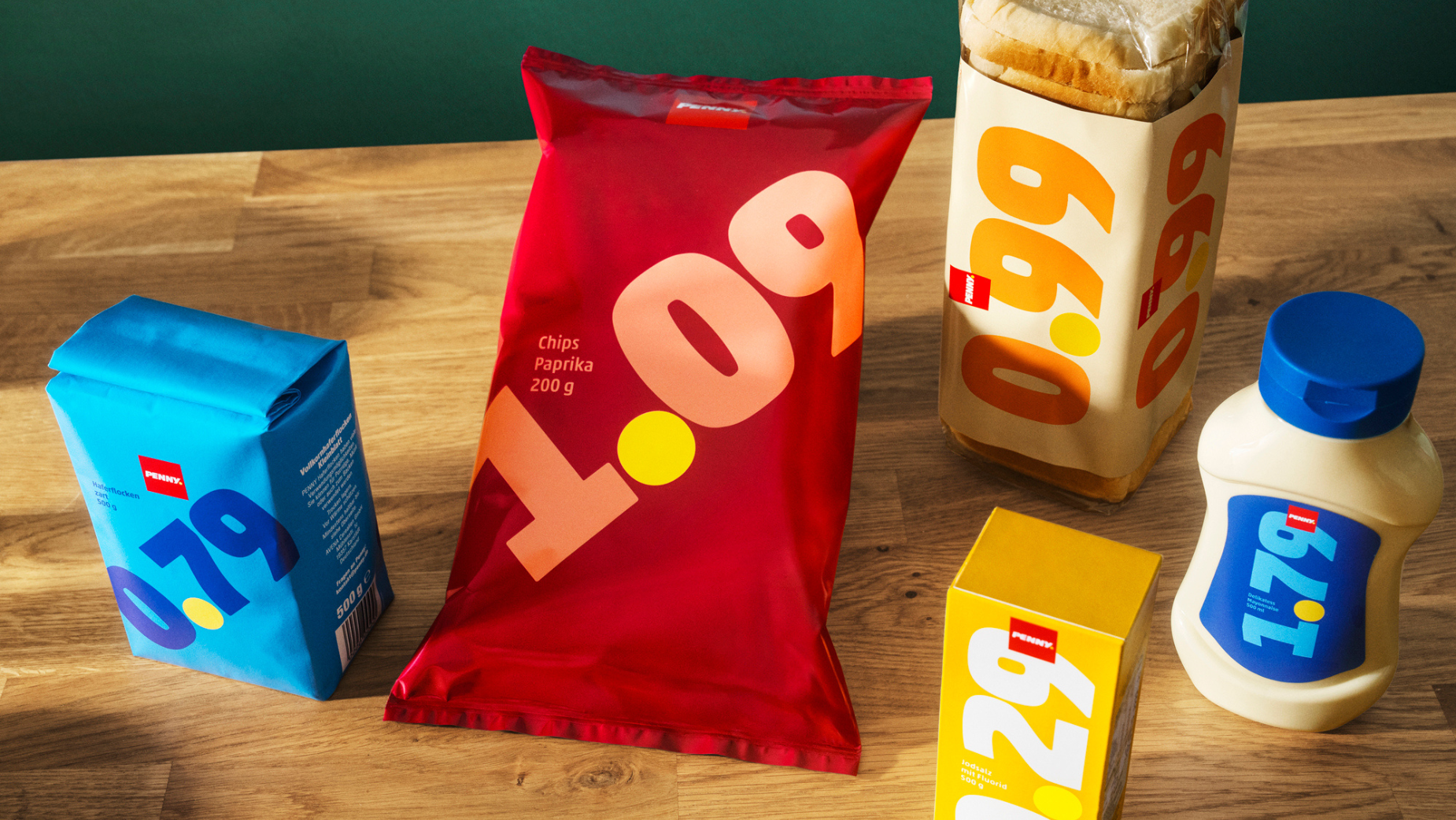
For the full case study of this campaign, see here.
Thomas Heyen, partner and managing creative director, Jung von Matt Hamburg
“The Price Packs from Penny have been really successful, not only in this award show, but also in the ones we've seen before, because they're really tackling a huge, huge issue right now. Not only in Germany, but globally, prices are rising, making a brand, giving that promise to their customers even more vital. I think that's one of the bravest ideas I've seen for a couple of years. Phenomenal.”
Inseeyah Stieldorf, executive creative director, Scholz & Friends
“For me, this campaign is all about giving back to the community. I think Penny is such a big institution, and it's always understood as a kind of cheap way to buy things. But this giving back to the community, to me, is something that really makes it stand out at a time when the economy is so unstable and people are really looking for ways to put their money in the right places. It creates trust for the brand, and I think that's really important.”
Herconomy – Breastmilk Money
(Submitted by Serviceplan Germany)
For the full case study of this campaign, see here.
Juliane ‘Elli’ Ellrich, executive producer, Zauberberg Productions
“Women's rights should be pushed wherever, especially in a climate as it is now, where we've got a real right-wing movement and shift. And then, if you have the chance to support women in a country where they are struggling with education and maintaining their household income, I think that's fantastic. That's something that deserves the spotlight, and it deserves to be up there. The idea in itself to do something is just worth noting and worth giving it a chance to make it on a global scale.”
Berliner Philharmonie – The Philharmonic Prints
(Submitted by Scholz & Friends)
For the full case study of this campaign, see here.
Jeannette Bohné, managing creative director, Serviceplan Berlin
“I was really intrigued by how much visuals can make you feel. The idea seems so simple that the design was made by the building itself. But I think there was a different layer, also of craft and of history and of storytelling. To me, it felt very emotional, because every crack in the substance, but also like the pressure the paper, the colour was put onto the material, on the stone, on the wood, it tells you the story of 60 years of art, and also when the building was being built in a very different Germany than it is today. To me, it was just fascinating to see simple prints that are so loaded with emotion and history, and that's what I really loved about it.”
Inseeyah Stieldorf, executive creative director, Scholz & Friends
“And the Berliner Philharmonic for me, it's just a beautiful piece of art. The Berlin Philharmonic stands for something big in Germany. It was there when the Wall was still standing. It was there when the wall fell, and it stood for bringing communities together back then. And 60 years later, it still is the beautiful piece of architecture that it was back then. I think the prints let it stand, let it speak to its heritage, its birthplace. And music is art. Art is music. I think that wraps it all up beautifully. The idea that the work can come from the building itself, I think, is amazing.”
Simona Suman, chief creative officer, VML Germany
“I think it's a mix of the simplicity and the emotion it can evoke through its simplicity. I really love that the campaign was as subdued and muted as other artists who let you do your own political thinking. I hope that people watching it will feel the same. The more I watched it, the more emotional it made me. So that's also a good comparison to art, because at first you might not take it all in, but you have to keep going back to it.”


