


Hyper-Personalisation: Where Commerce Meets Creativity


It’s no longer enough to slap a customer’s name on an email and call personalisation a day. Pushing something a customer has been casually browsing online isn’t personalisation – it’s a party trick. Referencing past purchases in the hope of a reorder can come off needy. These tactics aren’t impressing consumers in 2025. Poorly thought out ‘personalisation’ often leads to customers avoiding, unsubscribing, or worse, switching to another brand altogether.
Hoping to elicit strategic insights and actionable examples that explore how hyper-personalisation is evolving beyond basic data usage to become a creative and emotional driver in commerce, LBB’s April Summers asks industry leaders: how are brands using hyper-personalisation to transform commerce into a more emotional customer experience, and what innovations lie ahead?
Bobby Stephens, US retail and consumer products lead, Deloitte Digital
According to our research, brands that embed personalisation into their core strategy have increased by 50% since 2022. This evolution is fuelled by the fusion of AI, behavioural data, and narrative design.
In practice, hyper-personalisation manifests across industries: dynamic websites that reorganise based on user behaviour, real-time content tailored to emotional and contextual signals, and mobile experiences offering rewards and suggestions that align with individual habits and needs. Loyalty programmes that respond to life stages, interests, and intent are no longer innovations – they’re becoming the baseline.
Looking ahead, generative AI and spatial computing are paving the next frontier. We believe that creative AI will soon enable brands to generate individualised campaign assets at scale, while AR-powered tools will personalise physical-digital experiences – such as visualising purchases in real-world settings – based on user data and preferences.
Brands that creatively harness data to deliver real, human-centred experiences will unlock loyalty, trust, and long-term growth.
Adriano Lombardi, SVP, executive creative director of commerce at Momentum Worldwide
AI isn’t the future of hyper-personalisation; it’s the enabler. The real power still lies with people. As experts, we craft the emotional logic behind the data, defining the framework and setting the variables. But the biggest challenge isn’t tech, it’s trust. The deeper the personalisation, the more we need the consumer to open the door. And that only happens when we earn it, not when we automate it.
Trust gives us access. And once we’re in, persuasion becomes the key to meaningful transactions, whether we’re meeting consumers in a stadium, on a shelf, or somewhere in between. Every moment we design, from experience to commerce, should create impact, build the brand, and connect in ways that move people to act.
That’s where the CTA mindset becomes essential: Culture, Transaction, Amplification. Start with cultural relevance, lead into engagement, turn actions into transactions, and amplify across touchpoints. When these elements work together, personalisation becomes not just precise, but powerful.
Leah Sand, chief engagement officer, VML Worldwide
Brands that are pulling ahead right now aren't just automating personalised experiences; they're orchestrating empathy at scale. They're using networks of intelligent agents that work together across the entire content value chain – systems that remember, anticipate, and adapt with context and nuance. Think Spotify, where multiple specialised agents analyse everything from listening patterns to the acoustic qualities of songs, sharing context to create experiences that evolve with consumers' tastes and even their daily context. It's not just a smart recommendation; it's an ecosystem that understands the emotional journey of music discovery. That's the emotional scale.
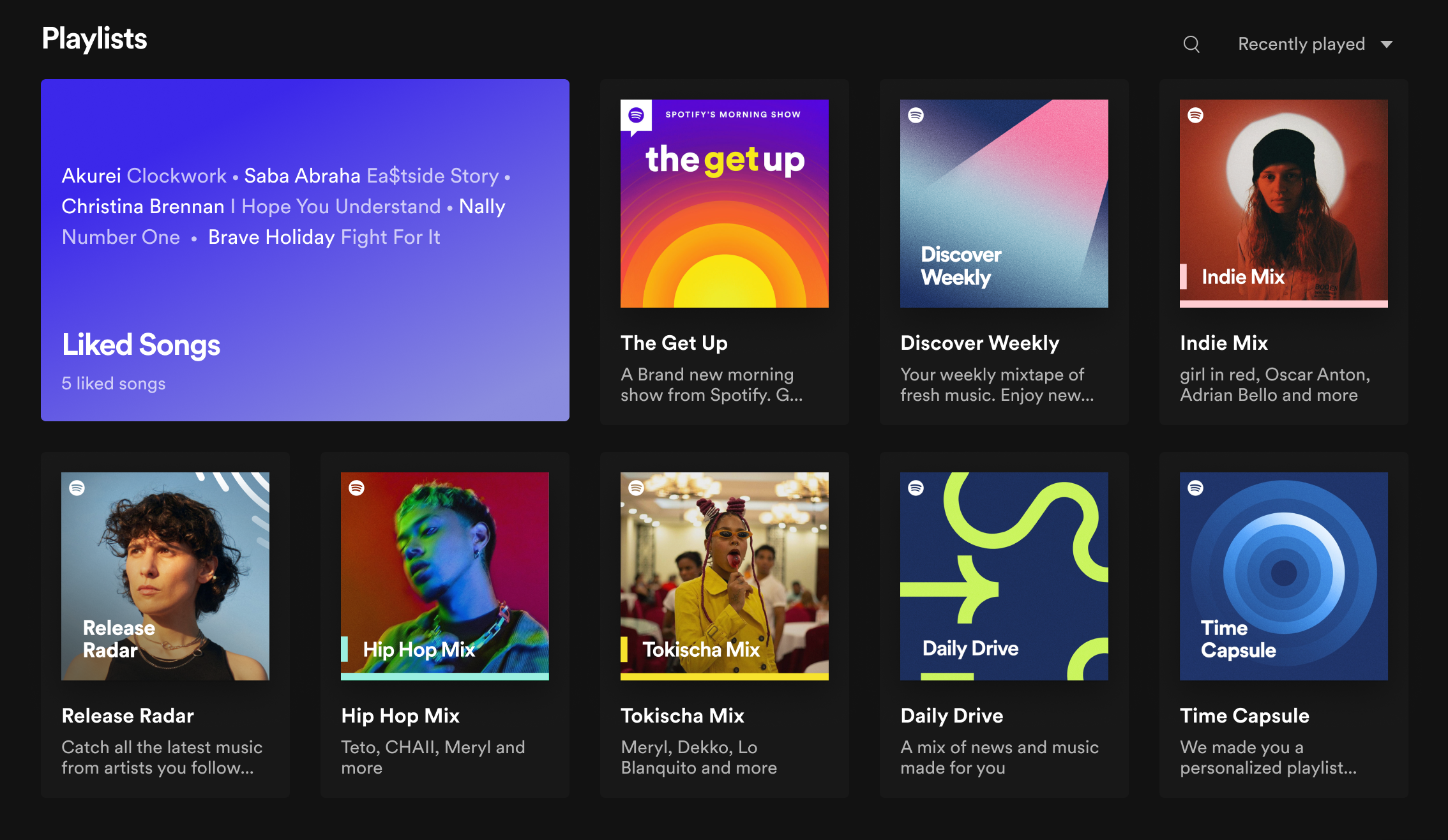
Image credit: Spotify newsroom
At VML, we’re letting human creativity set the vision while agentic systems handle the complexity. We're building what we call 'the new creative assembly line" which is not made of people doing repetitive tasks, but of agents working in sync, constantly learning and adapting. This isn't theoretical; it's happening now. One global CPG brand we work with transformed their product configurator from a features checklist into a dynamic narrative engine, connecting product attributes to lifestyle moments that matter to each customer. The result wasn't just conversion uplift; it was emotional resonance that deepened customer loyalty.
What's next? We're already building empathetic personalisation agents that adjust tone and narrative based on emotional cues, detecting frustration or delight through behavioural patterns, and responding in kind. Multimodal experiences that flow across voice, text, and visual seamlessly, adapting to how consumers prefer to engage in different contexts. And collaborative creation networks where AI doesn't just serve customers but partners with them to design products and experiences that anticipate needs they haven't even articulated yet.
The point is: personalisation isn't just a hopeful outcome anymore. Hyper-personalisation is the intelligent orchestration system itself. Every moment is a learning experience. Every interaction is a chance to connect or disconnect. And the brands winning the future will be the ones bold enough to rebuild how they work, not just how they market. So, the question we must ask ourselves as marketers now is: will we shape that future, or wait for it to shape us?
Ahmed Musa, head of digital at Cheil UK
At Cheil, our version of hyper-personalisation is where commerce meets creativity. It’s about using data not just to inform marketing, but to inspire moments that feel intuitive, personal and emotionally resonant. We begin with a single question: Who is this person, right now? And how can we serve them at this moment?
To balance creativity with data, we blend data science and storytelling. AI helps us decode signals and predict intent, but creativity ensures what we deliver feels human and meaningful. That might mean a dynamic video that changes in real-time based on someone’s behaviour, or a retail experience shaped by weather, location, and past purchases. These aren’t just personalised touchpoints - they’re adaptive brand stories.
We also ground everything in consented data – from first-party signals to zero-party insights – allowing us to build richer profiles and deliver relevance without overstepping. Tools like Salesforce Einstein and Adobe’s generative platforms allow us to scale these ideas, but the real differentiator is mindset: we don’t just build campaigns anymore. We build systems that learn, adapt, and respond.
Looking ahead, the brands that will lead aren’t the ones with the most data, but the ones with the most empathy. Hyper-personalisation will increasingly be defined by AI-driven loyalty, voice-led journeys, and experiences that respect attention while rewarding curiosity. The future won’t be won by those who chase clicks, but by those who create meaning, memory, and momentum in every interaction.
Harri Narhi, UX Designer at Imagination
It’s 2025, distraction is everywhere. In between cataclysmic news cycles and infinite social media feeds, the ability to hold someone’s attention is becoming harder by the day.
For years, companies have relied on traditional audience segmentation that takes into account broad categories, such as geography (user location), device type (mobile, desktop) and subscription status (paying or non-paying). This static model of applying data into broad groupings allowed brands to gather invaluable customer data over time, uncovering exactly how each user behaves. Hyper-personalisation takes it one step further, incorporating a user’s past interactions, browsing history, trends and inferred intent to create individualised experiences in real-time.
Imagination had this in mind when partnering with Visa for the 2022 FIFA World Cup in Qatar, where we created a fan activation that blended art, sport and technology. In a purpose-built arena, fans faced off against each other in four minute football games (3v3, 4v4 or 5v5) whilst running around an LED floor fitted with tracking technology, which recorded each player’s specific movement, ball position, passes, skill moves and goals.
An artwork algorithm then processed the tracking data and produced flowing, real-time visualisations as the moves happened. One standout moment of brilliance from each individual game – a one-of-its-kind combination of speed, direction and skill – was then exported as a dynamic digital artwork, ready to be minted as an NFT.
Each piece of artwork was as unique as the data that generated it, and visitors left with a uniquely personalised, original souvenir of their experience, which they could keep, share or even sell online as NFTs – the ultimate stamp of authenticity. The power of the experience enabled Visa to create a truly authentic connection between its money movement message and football. Most of all, fans loved it, with 120,000 visits during the 4-week event.
Lucy Halley, executive head of strategy, Havas helia
Hyper-personalisation is helping brands deliver on their promises, making every touchpoint feel as authentic and relevant as the advertising that first caught a customer’s eye. Done well, it turns commerce into connection, blending data, technology and creativity to ensure customers feel recognised and understood.
The results can be transformative: McKinsey reports companies excelling at personalisation generate 40% more revenue, while hyper-personalised campaigns can lift conversion rates by 60%. With over 70% of consumers expecting personalisation, the stakes are high for brands who want to keep their promises.
But there’s a tipping point. Delivering hyper-personalisation at scale is resource-intensive, demanding costly AI, data integration, and specialised skillsets. Beyond a certain level, complexity, operational burden, and regulatory pressures can outweigh commercial benefits. Over-personalisation can even backfire, making customers feel ‘creeped out’ and eroding trust — the very thing personalisation aims to build.
For brands, the opportunity lies in balance: using hyper-personalisation as a bridge between promise and experience, without letting complexity undermine the trust and returns it’s meant to deliver.
Andrea Cook, CEO at JAM CRM
Hyper-personalisation, as we see it, is a misnomer for what the market really needs: individualisation. Traditional personalisation uses surface-level signals (like names or broad segments) to approximate relevance. But consumers today can spot the difference between ‘this is just for me’ and ‘this is for someone like me.’
Individualisation fuses real time data, automation, and creativity to deliver engagements that are uniquely tailored (not obviously assembled for a segment).
Our work with Lexus and Toyota demonstrates how we took CRM from fragmented to fiercely individualised.
By aligning 11 business units and mapping the full customer lifecycle, we now deliver 8 million journey variations and over 1 million creative versions every single week.
The result? Smarter performance, stronger loyalty, and real gains in lifetime value.
Ben Essen, global chief strategy officer, Iris
The problem with a lot of personalisation is that it focuses on targeting the ‘individual’, using identity characteristics like someone’s name. But the fact is that people aren’t static individuals. They are fluid and ever-changing, with their needs flexing depending on context. The version of me that shows up at work in the morning is different to the one at home that evening. Most needs and interests exist only in the moment – meaning personalised marketing is forever out of date.
The opportunity for hyper-personalisation is ultimately about bringing context into the equation. Not just who are you targeting, but when and where. What’s the vibe? As contextual data can be layered onto classic personalisation, it’s possible to create not just relevant messages, but creative that feels right for the moment.
A lot of this opportunity is down to the blurring of lines between different areas of marketing: particularly the coming together of search and social. As search moves into platforms like TikTok, the opportunity grows to target specific queries and needs but also deliver rich, culture-first content.
The most interesting applications are the ones enabling personalisation of experience, not just messaging. Look at what GHD is doing with its AI-powered CurlFinder tool that provides salon-grade hair recommendations via a digital platform. Like most best practice solutions, this isn’t off-the-shelf, but custom-built using multiple GPT models. The result is not just a better experience, but an easier way to collect first-party data.
But there are so many interesting off-the-shelf options out there too. Platforms like Nibbles, which allows brands to incorporate AI-powered negotiation into their ecommerce. What better way of delivering a personalised pricing experience than to let your customers ‘haggle’ with you over price?
Nick Myers, chief strategy officer, OLIVER
I confess an allergic reaction to hyper-personalisation. It’s like calling someone ‘very unique’, a linguistic inflation which adds little substance. Most brands still struggle with basic personalisation fundamentals, making ‘hyper’ more aspiration than achievement.
Let’s focus on objectives, not buzzwords. Personalisation matters only when it builds connection, adds value, and creates impact. Effective personalisation delivers truly individualised experiences consistently across touchpoints, based on unique preferences and behaviours.
Our Pets at Home Valentine’s campaign exemplifies this approach. We created hundreds of personalised love songs featuring owners’ and pets’ names, delivered via email with remarkable efficiency. These weren’t mere marketing communications but genuine moments of connection that moved recipients emotionally.
For Barclays, our Pencil Pro platform enabled contextual creative that adapted to individual circumstances, fostering meaningful conversations about Barclaycard usage – not through algorithmic wizardry but thoughtful relevance respecting both context and need.
Our effectiveness comes from combining our embedded in-house model with our proprietary Gen AI platform. This is not theoretical personalisation but practical reality, delivering meaningful individual conversations between brands and customers. By working in-house with the clients, our creative minds can work side-by-side with the data architects and operational teams who actually engineer these experiences, helping us get to practical solutions faster.
Perhaps we should abandon ‘hyperpersonalisation’ linguistics and focus on what matters: communications that address people as individuals, with relevance and respect. True personalisation isn’t measured by its prefix but by its impact.
Read more LBB Editorial stories here


