


Fellow LA on Bringing Outsider Energy to Golfing


‘Create a golf commercial, but not a conventional one’. This was essentially the brief handed to Fellow LA as the production company was tasked with creating a launch film for L.A.B Golf’s new VZN putter. Instead of shots of the club in action and being constructed, the outline from agency Taco Truck Creative called for “something unexpected”.
The request resonated, and both the studio and director Marcelo Petrella looked to the brand itself – which stands out as somewhat of an outsider within the golfing category – recognising that the campaign needed to speak to that same innovative, energetic spirit.
Treating the commercial, titled ‘A Lot Easier’, as more of a brand film than traditional product launch, the production company opted for a collage-style approach to weave a visual tapestry depicting the innovation, personality and craftsmanship behind the putter. Combining digital and 16mm filming with photography, the film is non-linear in style, showing the ongoing connection between the initial design, the manufacturing process, and the club in action, ensuring that the result felt anything but conventional, yet innately human.
Speaking to LBB’s Abi Lightfoot, Marcelo unpacks how the commercial evolved from the initial brief to final film, and shares why adopting a “culture of experimentation” was instrumental in breaking away from the established language and tropes of golf advertising.
LBB> What was the brief for this campaign, and how did you initially respond?
Marcelo> The brief from Taco Truck Creative was actually very open in the right way. It needed to introduce the new VZN putter and communicate two pretty technical ideas: ‘Lie Angle Balance’, and L.A.B. Golf’s new alignment technology. But, it was very clear that it didn’t want a conventional golf commercial. The team’s words were essentially, ‘we’ve seen golfers putting, and we’ve seen putters being built a million times. Give us something unexpected’.
That immediately resonated with us, because L.A.B. itself is a bit of an outsider in the category. It’s challenged some very established ideas about how a putter should work, so it felt like the filmmaking should have that same spirit. We approached it less like a traditional product launch, and more like a brand film. Something energetic, non-linear and visually surprising, but still rooted in the engineering and thinking behind the product.
LBB> How did Fellow shape the campaign’s creative direction to ensure it aligned with both the brand’s mission and what the broader golf community really wanted to see?
Marcelo> One thing we responded to very quickly was that L.A.B. has a lot of personality. There’s serious engineering behind the product, but the brand doesn’t present itself in an overly serious or precious way. We wanted the film to have that same balance.
Golfers are also pretty sophisticated when it comes to equipment. They don’t just want to be told something is better. They want to understand why. So, rather than creating a glossy beauty piece, we wanted to give people glimpses into the thinking, experimentation, craftsmanship and testing behind the putter.
The challenge was making all of that entertaining. That’s where the collage approach came from. It allowed us to move between engineering, manufacturing, people and actual play, without turning the film into a technical explanation. The technology is there, but you experience it rather than being lectured about it.
LBB> How important was it to truly understand the product, from how it was developed to its capabilities, to launch the VZN as something for the golf community to take note of?
Marcelo> It was essential. Before the shoot, we spent a lot of time understanding not only what the VZN does, but how L.A.B. arrived there. The design process, the alignment studies, how the putters are built and balanced, how they test them, all of it.
Once you understand how much of the product is about alignment, balance and eliminating unwanted rotation, those ideas start becoming part of the filmmaking language itself.
It also allowed us to avoid simply illustrating the voiceover. We could make visual connections that came from the product rather than from some generic idea of golf. This audience knows the game and knows the equipment, so there had to be something real underneath the visual experimentation.
LBB> The process involved developing a layered visual language. Can you tell us more about creating this, and how it helped to shape the final creative direction?
Marcelo> We knew pretty early that we didn’t want the film to live in one photographic language. The VZN had gone through this iterative process of drawing, designing, machining, testing and refining, so it made sense for the film to feel layered in a similar way.
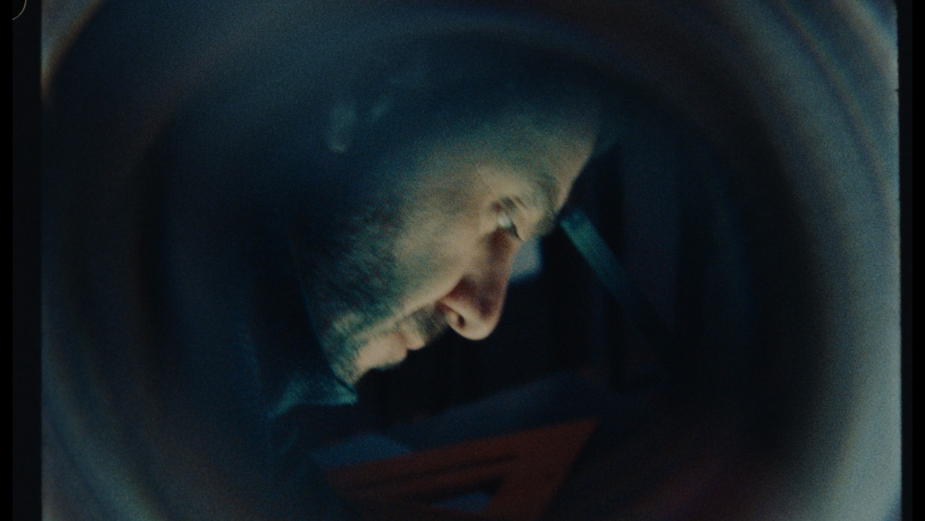
We mixed digital cinema, 16mm and still photography, along with lenses and perspectives that had very different characteristics. Probe lenses, the swirly bokeh of a Petzval lens, top-down imagery, POVs through the putter itself. Each gave us another way of looking at the product and the thinking behind it.
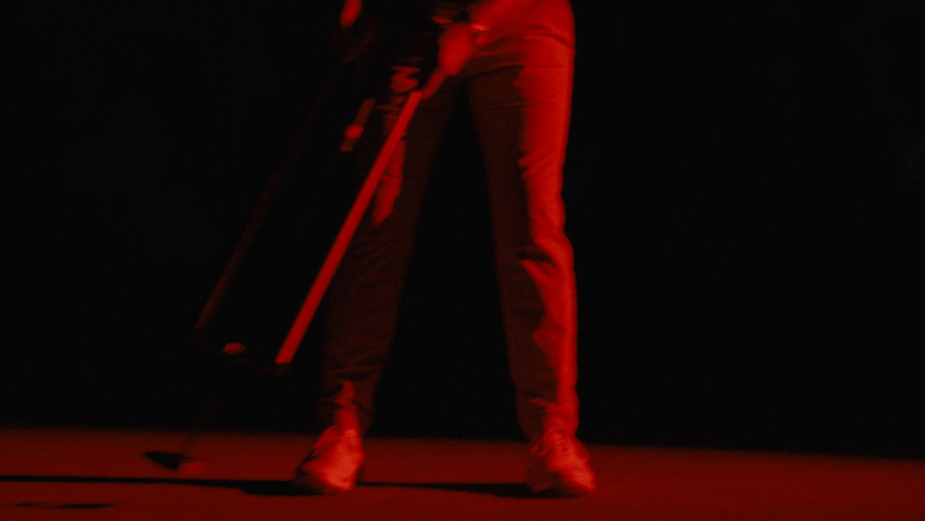
The projection work came later. It wasn’t in the original treatment. We started developing it during pre-production as a way to visualise the scan of a putting stroke and make that data feel physical rather than graphic. It honestly came together pretty last minute on the shoot, but it gave us some of my favourite images in the film.
That mix became the language of the spot. Some moments are precise and controlled, others tactile and spontaneous, and the edit lets all those formats and perspectives collide.
LBB> How did you integrate footage of the VZN putter in use on the green, inside the design studios, and in the workshop into the final film? What creative approach did you opt to take, and why?
Marcelo> We deliberately avoided organising the film chronologically. It isn’t: first the putter is designed, then it’s manufactured, then someone plays with it. Instead, all of those environments coexist. We can go from a sketch to a machined surface to a putting stroke and back into the workshop within seconds. Match cuts, movement, shapes and alignment lines connect those spaces rather than geography or chronology.
That allowed the film to feel like one continuous thought about the product. The golfer on the green isn’t separate from the person designing or building the putter. You’re constantly seeing the relationship between those things.
It also let us contrast very controlled, almost graphic product imagery with looser human moments. That contrast became a big part of the film’s personality.
LBB> What were some of the key technical choices you made throughout the production process that helped drive the campaign's success and enhance the look and feel of the final spot?
Marcelo> A big one was not relying on a single camera system or technique. We moved between digital cinema, 16mm and still photography because each gave us a different texture and way into the product.
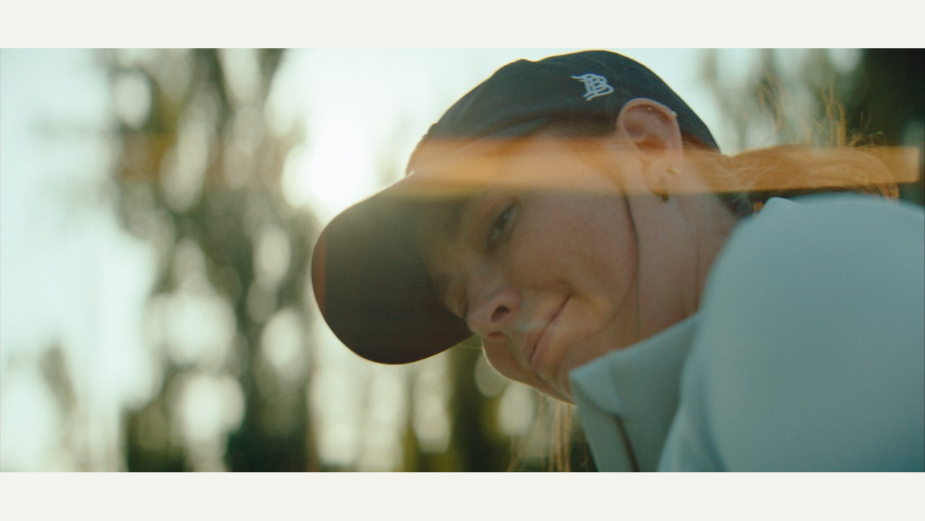
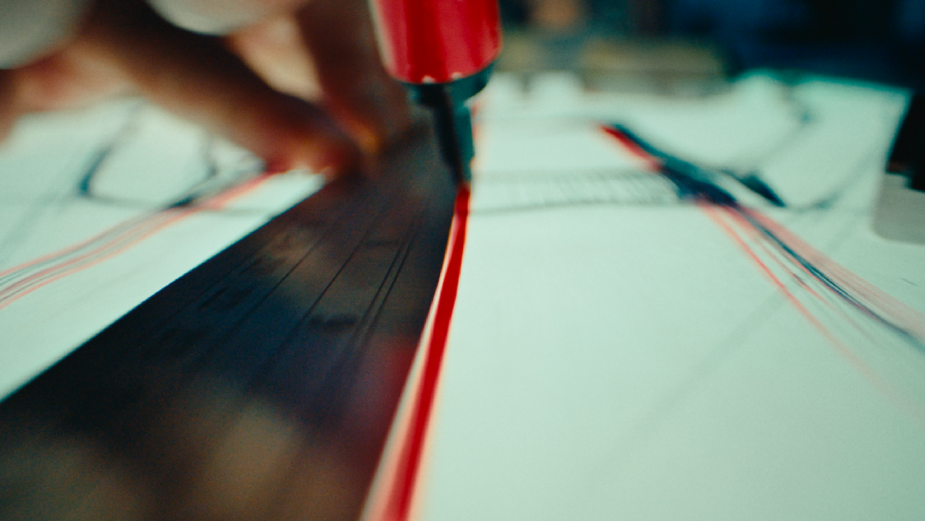
Lens choice was equally important. Probe lenses let us get incredibly close to the materials, machining and alignment details. On some of the footage on the green, we used a Petzval lens, which gave us this beautiful swirly bokeh and a more expressive, almost dreamlike quality. We also shot with anamorphic lenses, which introduced yet another aspect ratio and visual texture into the collage. All of these choices helped keep shifting the viewer’s perspective and made a putter, ultimately a fairly small and simple object, feel surprising on screen.
We also tried to do as much as possible practically and in-camera. The projection sequence is probably the best example. We could have created it entirely in post, but projecting onto the golfer and putting surface gave it an imperfection and dimensionality that was much more interesting.
A lot of those decisions came down to balancing precision and accident. The product is extremely engineered, but we didn’t want the film to feel sterile.
LBB> What part did the edit play in telling the story of VZN's product development journey?
Marcelo> The edit was really where the film was built.
We went into the shoot with a lot of specific shots and transitions in mind, but deliberately left room to discover things once we got to L.A.B. We came back with all these different formats, processes, textures and moments, and editorial became about finding connections between them.
We used match cuts, repetition, movement and in-camera transitions to jump between different stages of the product’s journey. The voiceover sometimes gave us a jumping-off point, but we tried not to illustrate it literally. If the script talks about something twisting or turning, for example, the frame might perform that idea instead of simply showing a putter twisting.
In a way, the edit mirrored the development of the product itself. Assembling, testing, repeating and refining until all those fragments became one cohesive thing.
LBB> What were your primary considerations when you initially set out to make a film that stood apart from everything else in the category, and do you feel you were successful in this ambition?
Marcelo> The first thing was not being different just for the sake of being different. Whatever visual language we came up with had to feel true to L.A.B. and the VZN.
The brand is unconventional, the product is unconventional, and there’s a real culture of experimentation behind it. So we asked ourselves what happens if the filmmaking behaves the same way. If we experiment with formats, perspectives, transitions and ways of visualising the technology instead of falling back on the established language of golf advertising.
At the same time, it still had to make you want to pick up the putter and use it. There’s engineering and precision in the film, but there also had to be curiosity, energy and fun.
I think we got there. To me, the biggest success is that it feels specifically like L.A.B. It doesn’t feel like a golf commercial where you could swap out the logo at the end and suddenly it belongs to somebody else. That was really important to us.
LBB> What are you most proud of about this campaign, and why?
Marcelo> Probably that all the craft still feels connected to the idea.
There are a lot of techniques in the film. Different formats, lenses, projections, transitions, sound design. It could easily have turned into a collection of cool shots. But I think it holds together because those choices keep coming back to the same ideas of alignment, balance, experimentation, and making putting easier.
I’m also proud that we made something visually ambitious without losing the human quality of L.A.B. You see the hands making the putter, the people behind it, the experimentation, and then someone actually enjoying it on the green.
That’s probably what I like most about the finished piece. You get a sense not only of what the VZN looks like or what it does, but of the people and thinking that went into making it. And hopefully you have some fun watching it too.


