


Why Craft Matters with Active Theory


Digital experiences once thrived on novelty. A new framework landed, a fresh visual trick circulated, and for a moment the web felt full of possibility again. But that era has settled. Patterns have repeated themselves enough times that the unexpected now feels oddly predictable. The genuine thrill of discovery demands more than technology alone.
WebGL sits directly inside that shift. It used to be the easiest way to impress clients and users alike, but that’s no longer the case. Its real power lies in how it helps shape experiences that feel alive, expressive, and intentional.
“The web doesn’t need more noise. It needs intention. Technology is only interesting when it helps someone feel something.” said Louis Ansa, executive creator director and Active Theory.
At Active Theory, this idea shaped this month’s Craft Matters conversation, where the focus was not on using WebGL more often, but on using it more deliberately and with purpose.
Here are some of the key themes that emerged.
Intentionality Trumps Novelty
As tools for 3D and motion interaction have become widely accessible, surface-level uses of WebGL have lost their potency. What once felt impressive now blends into the background of the modern web. When WebGL appears merely as decoration, it becomes noise rather than adding meaning.
The opportunity instead lies in treating WebGL as part of a broader expressive system. Its purpose is to carry narrative clarity and emotional nuance that gives shape to an idea in a way no other medium can.
“If the work doesn’t communicate, it doesn’t matter how complex it is. Purpose is the only thing that gives technology value and creativity.”
Surprise no longer comes from using 3D for its own sake. It comes from how intentionally it is woven into the experience.
Why WebGL Still Matters
Despite shifts in the industry, WebGL remains essential because it offers something traditional front-end tools struggle to match: performance and freedom.
“WebGL gives us room to think more like designers again. It removes the walls and lets us shape the experience from the inside out.” said Luigi De Rosa, interactive director at Active Theory.
Performance
WebGL compresses complexity into real-time. It enables heavy particle systems, multi-video compositions, and intricate visual systems to run fluidly. When an idea requires density or dynamism, WebGL makes it possible without compromising responsiveness.
Freedom
The DOM brings structure. WebGL brings space. It gives full control over composition and pixel behaviour, allowing textures to blend, type to distort, and atmospheres to emerge. It aligns design and engineering on a single canvas instead of forcing one to work around the other.
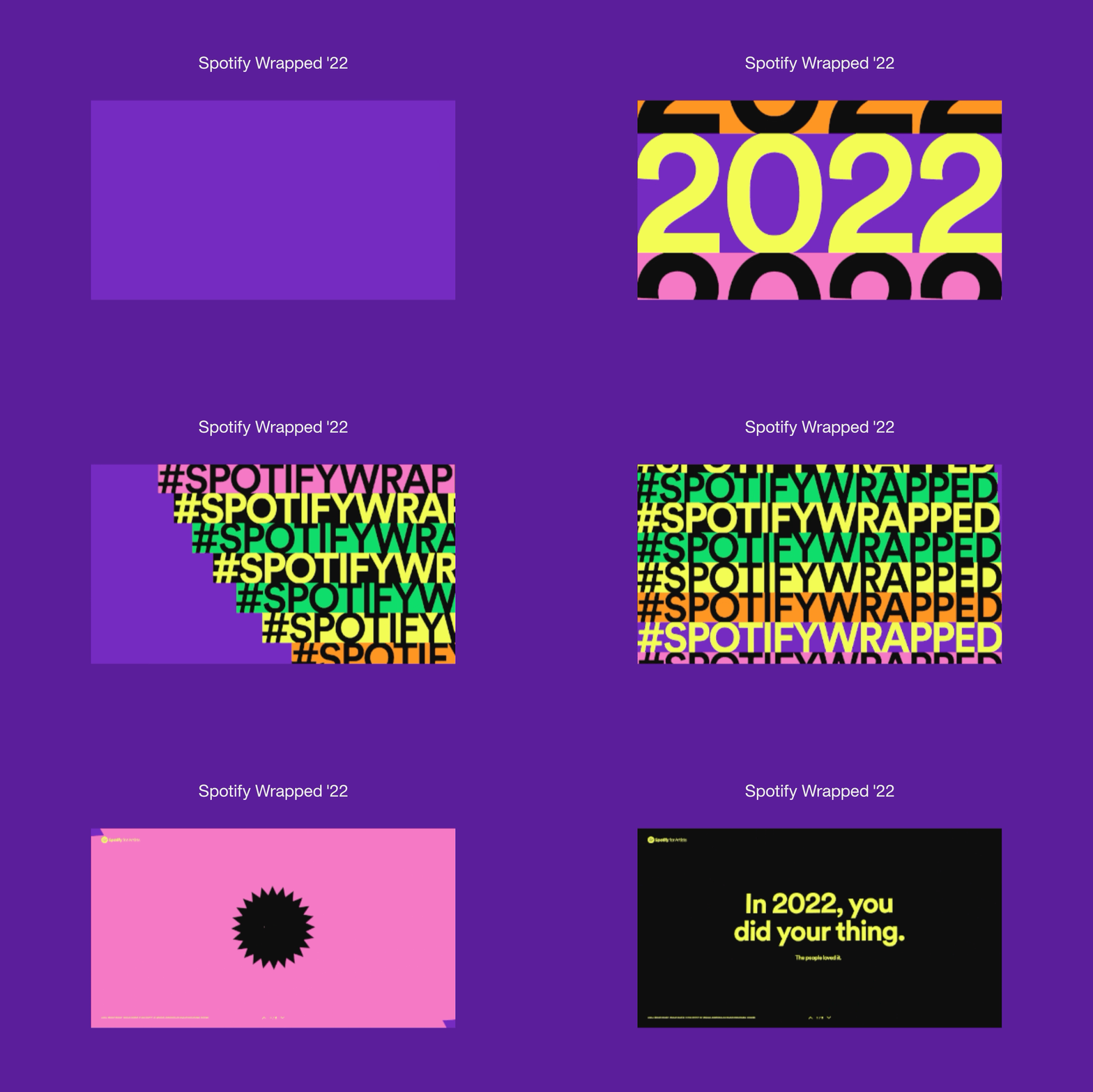
That sense of creative openness is what keeps the medium relevant. WebGL expands what an experience can feel like, not just what it can show.
WebGL Should Deepen Emotion, Interactivity, or Intent
The essential question in any WebGL project is deceptively simple: Why is this in WebGL at all?
Without a clear answer, WebGL can quickly become clutter. Passive camera movements or static 3D objects often frustrate more than they impress and provide value. People instinctively expect something spatial to respond. When it doesn’t, the moment falls flat.
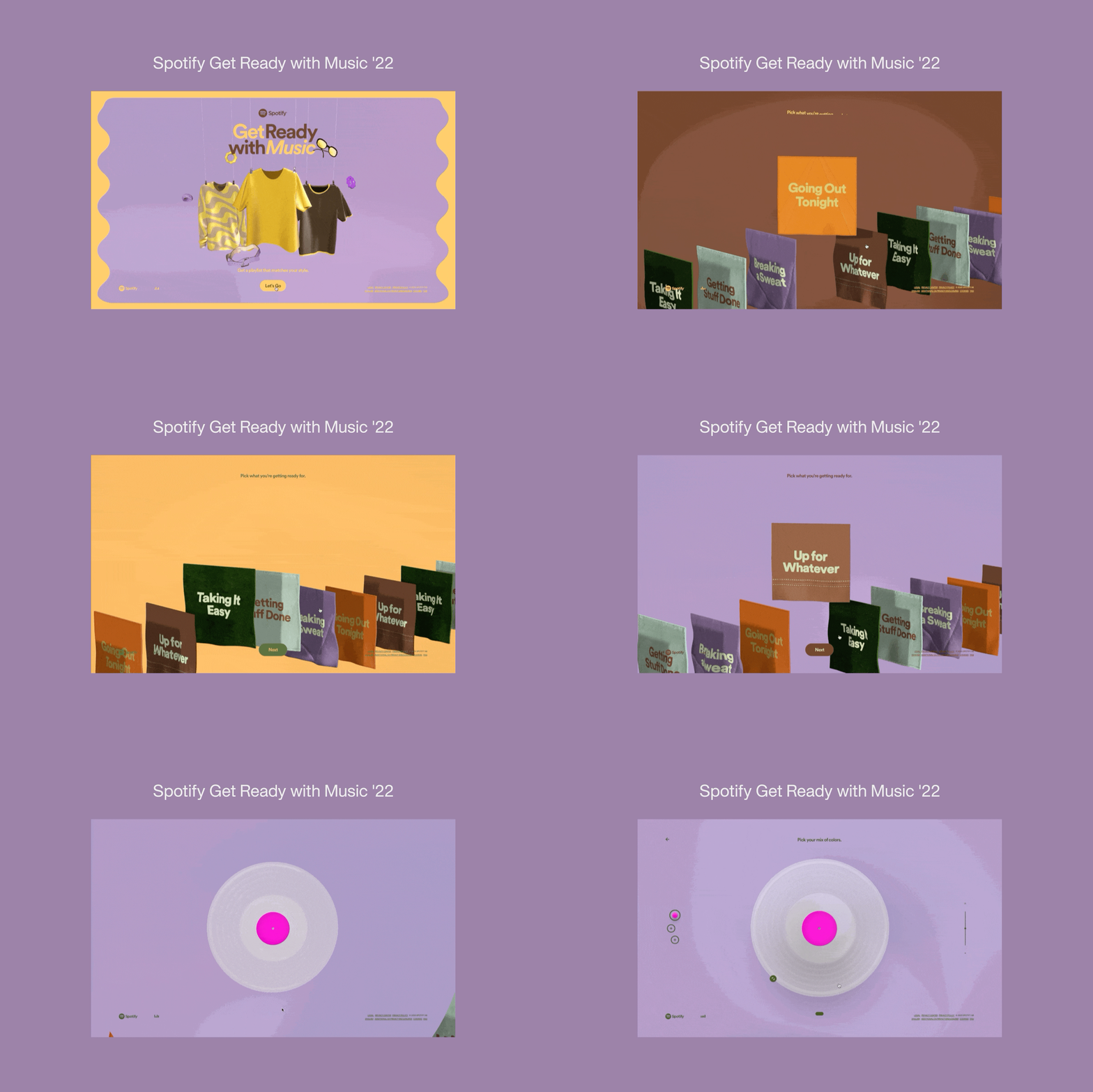
WebGL wins when it deepens user involvement. When it creates a moment of discovery, shapes narrative pacing, or allows a design to breathe in a way static assets cannot, it earns its place. If a render or a video tells the same story more effectively, that’s the smarter choice.
Finding Solutions Within Constraints
At Active Theory, we believe style is what endures. And often, style and inventiveness is a product of constraint.
Limitations can be catalysts. Fog instead of textures. Light instead of detail. Strong silhouettes instead of intricate modelling. These choices aren’t compromises, but design decisions that create a fingerprint on the work.
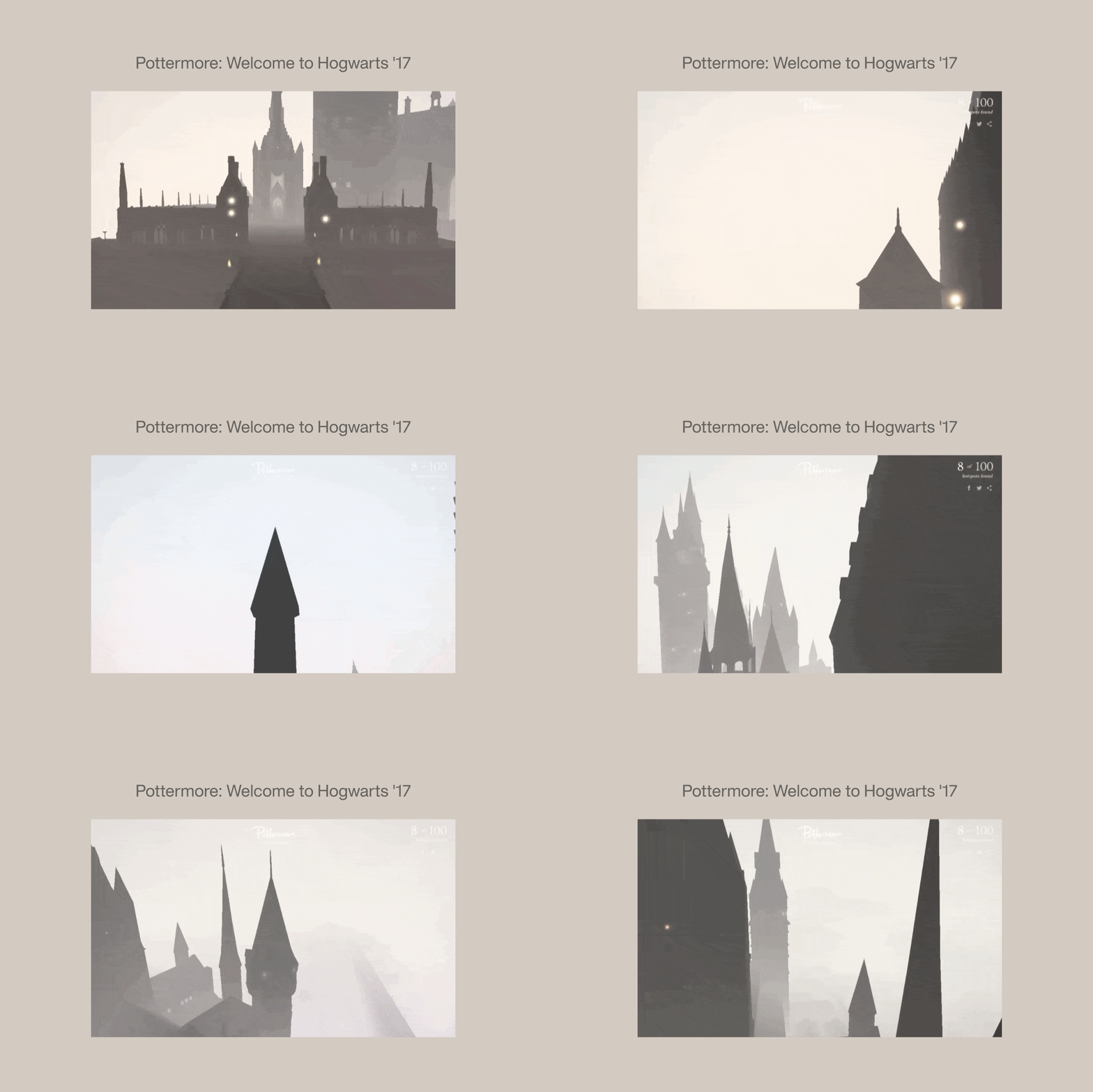
Projects like Welcome to Hogwarts are a clear demonstration of how atmospheric lighting and minimal texturing can create a world that feels intentional and distinct without demanding heavy pipelines.
Users respond to coherence and mood, not merely to the technology beneath it.
Favour Distinctive Style Over Fleeting Realism
Realistic rendering ages as quickly as the hardware that supports it. What once was state-of-the-art will likely feel dated a few years from now (perhaps even sooner). Stylized work, on the other hand, defines its own rules. It has its own timeline. It resists comparison and remains relevant even as trends evolve.
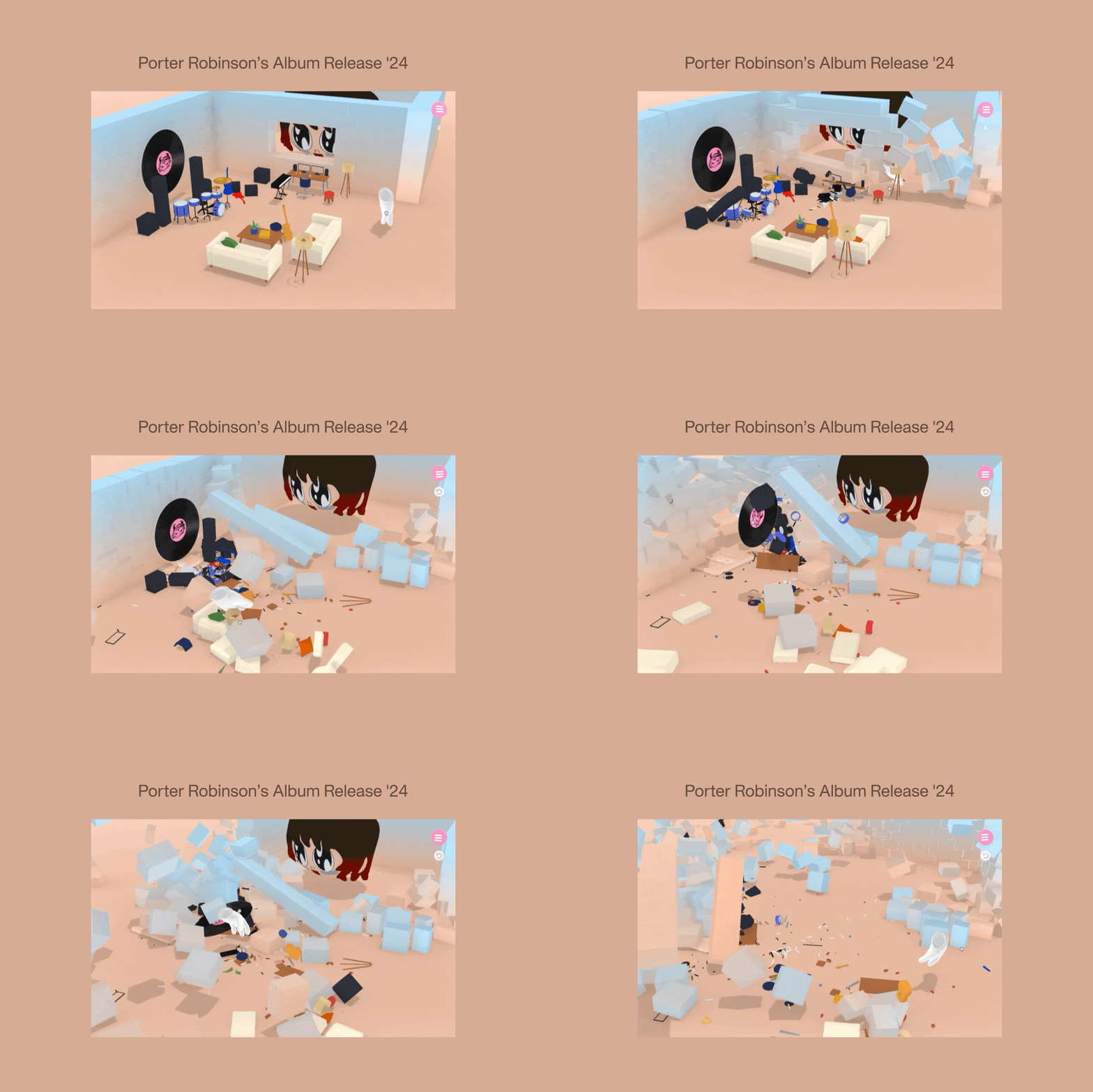
Porter Robinson’s 2024 Album Release is a clear example of this approach in practice.
Longevity comes from distinctiveness, not fidelity.
The Power of the Unexpected
The web remains one of the few mediums where surprise still feels possible. There is no onboarding curve, no installation process, no expectations. A simple tap, and the user is suddenly inside a crafted moment with its tone and logic of its own.
That immediacy is potent.
“There’s still something magical about the web. You open a link and you’re suddenly in a world you could never have expected.”
To support that magic, design and 3D need to operate as a unified system. When that integration is done well, the experience becomes coherent, intentional, and alive.
That, ultimately, is the power we hold as a studio.


