


Capturing Canadian Mental Health Struggles Through a Disorienting Maze


Anyone who has ever had to navigate mental health struggles, or seen someone going through it up close, likely has a deep and intimate understanding that taking it on alone sometimes just isn’t enough. Sure, ultimately, it falls on the individual to get themselves over the line in whatever journey they’re on, but that endeavour, for many, becomes a whole lot easier when real resources are provided along the way.
Unfortunately, even in a prosperous country like Canada, too often, help is inaccessible. Be it therapy locked behind steep prices, long waitlists, confusing referrals, or aggressively strict eligibility criteria, the quest to find support can truly feel like a hopeless undertaking, packed with dead ends at each and every turn.
This is something that research centre and mental health teaching hospital, the Centre for Addiction and Mental Health (CAMH), actively wants to change for people in need of its services. And, in order to simultaneously cut through donor fatigue and share with Canadians its desire to make a difference, it centred its latest fundraising campaign around highlighting the difficulty of receiving the necessary help.
Created by Mekanism Canada, the hero spot, ‘The Maze’, presents a visceral metaphor for the disorienting experience of seeking mental health care, while reminding viewers it shouldn’t be so challenging. An extension of CAMH’s record $600 million ‘No One Left Behind’ platform, it depicts a young man trapped in a maze, watching his options vanish every which way he looks. Aided by post-production work from Tantrum, it all comes together in visually-striking fashion, serving as a stark reminder that to change this reality, support is needed now, rather than later.
To learn more about how everything came together, LBB’s Jordan Won Neufeldt sat down with CAMH Foundation’s chief marketing officer, Sarah Chamberlin; the team from Mekanism: SVP, head of strategy Ian Barr, executive creative director Julie Nikolic, associate creative directors Ashley Babcock and Robyn Crummey, group account director Heather Mirynech; and Tantrum Studio's creative director, Dominik Bochenski, for a chat.
LBB> From the top, tell us about the decision to expand on the ‘No One Left Behind’ platform. What made now the right time to do it, how did it translate into the brief, and what immediate ideas came to mind?
Sarah> This campaign is one piece of a broader strategy. It’s designed to grab attention, spark conversation, and ensure CAMH stays on people’s radar in a crowded media and charitable landscape. It allows us to deploy, broadly, tools and resources that help people navigate the system – an important priority for us at CAMH. But it’s also complemented by more personal, targeted initiatives – like International Women’s Day, the Sunrise Challenge, and Men’s Mental Health Month – where we can connect more directly with specific audiences.
Our goal is to rally support from a broader group of Canadians across the country. CAMH is more than a hospital in downtown Toronto; our work impacts people nationwide, and even globally, through research, education, advocacy, and care. Canadians should know they have a role to play in improving access to mental health care. Philanthropy and donations are critical. They allow us to make progress faster, so that people don’t have to wait and struggle to get the care they deserve.
Overall, it reflects our broader branding approach: using mass campaigns to build awareness and credibility, while also engaging Canadians personally through podcasts, creators, and community partnerships. Together, this ecosystem keeps CAMH relevant and impactful well beyond 2025.
Ian> The goal was to create something emotionally resonant that would immediately grab attention and make Canadians feel like an essential part of transforming mental health care. The work needed to be personal, urgent, and focused on making change feel possible.
Before landing on the final concept, we explored different ways to make the problem tangible and emotionally resonant, to show that CAMH understands the struggle. While we floated different ways of representing this, like wandering through an overgrown forest or walking through dense fog, we quickly landed on the metaphor of the maze.
LBB> Specifically, where did the maze analogy come from? What made this the right way to cut through donor fatigue?
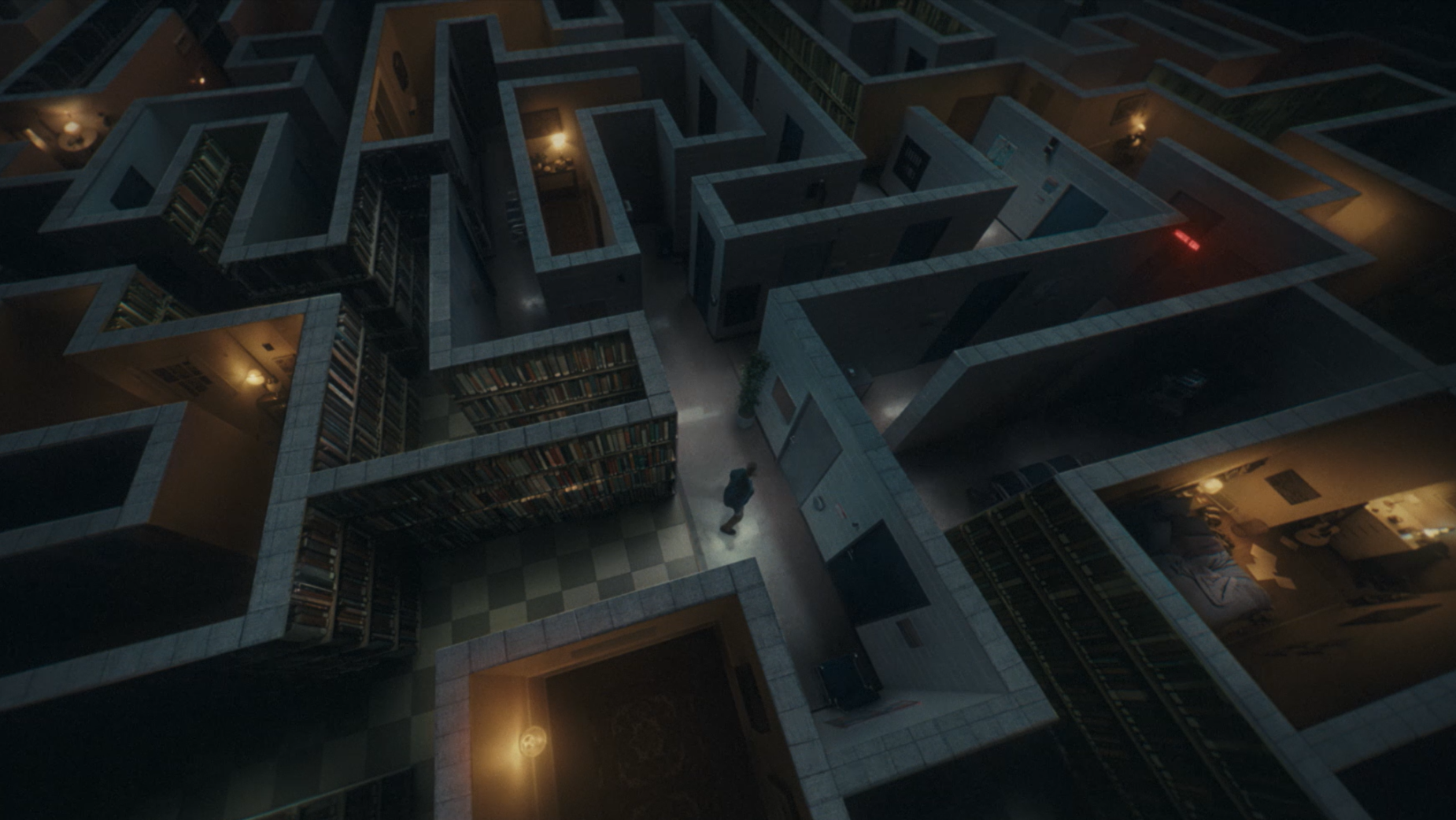
Julie> The maze perfectly represents the confusing, frustrating, and isolating journey people face, and captures the feeling of being lost and hitting dead ends. The maze also served as a visual representation of the need for a clear, accessible path – one donors could help create.
We started from a place of wanting to show that CAMH ‘gets’ it. The organisation knows how hard it can be, what barriers people are up against, and that things can’t stay like this. It felt like the right time to take a bold stance and let people know that while CAMH is part of the system, it doesn’t stand for the status quo, and is actively working to improve mental health care for all Canadians.
Sarah> The maze analogy also felt like the bold honesty we needed right now. In the past, we’ve leaned heavily into statistics or broad awareness messages. This time, we wanted to meet the individual experience head-on. It’s unsettling, but that’s the truth of what so many people face. By showing that reality, we help people feel seen and we highlight why our work matters. At a time when donor fatigue is real, and every charity is vying for attention, honesty and emotional resonance are what cut through.
LBB> From here, what was the writing process like? How did you work to capture the sensitivities of mental health in a visual fashion?
Ashley> The writing process was all about showing, not telling. There's no announcer voiceover or on-screen brand message until the very end. Instead, the narrative is carried entirely by the boy's experience navigating this environment. Phrases like ‘The next appointment is in six months’ make the viewer feel the struggle and desperation of trying to find help.
The script was intentionally written to validate those who’ve experienced the problem before offering a solution. Rather than immediately highlighting all the great work CAMH does, we put ourselves in the shoes of a parent or someone who has personally faced these barriers. By showing that CAMH deeply understands the problem, the campaign can credibly offer hope that change is possible with donor support.
LBB> As part of this, you brought on director Christopher Brown. What made him the right person for the job, and what was the collaboration like?
Robyn> Chris’ past work is full of highly-visual, emotive storytelling, which is what initially drew us to him. We needed someone who could bring this world to life in an impactful way. His enthusiasm was contagious from our very first call, and he immediately understood the vision for the creative.
Collaboration was key. We worked closely with Chris on how to best bring the ending to life, knowing we wanted to achieve a hopeful and community-focused conclusion. He came to the table with lots of solutions and was wonderful to work with. He truly got it from the start.
LBB> What was the shooting process like? Where did you film, how long did it take, and do you have any anecdotes from the experience?
Robyn> The campaign was shot over a single 14-hour shoot day, including photography capture. Finding a single location that offered all of the architectural differences for our first three environments was integral to capturing what we needed with the resources we had. So, we filmed the home, library, and hospital scenes at York University’s Glendon campus in three separate buildings, while the end scene was shot at the Richmond Hill Public Library.
The day was packed, but went very smoothly thanks to a well-oiled team and our young hero role actor who kept nailing take after take. We also had our VFX lead on set to ensure we were set up for success going into post-production.
Sarah> What stood out most was how personal this project became for everyone involved. From Chris, to the sound designers, to the voice actors, each person had a story – about themselves or someone they loved – that connected them to this work. Their passion and commitment elevated every detail of the campaign.
LBB> In particular, the shots of the actual maze, as well as the sequence where the light comes in, are some of the most standout elements of the spot. How did you bring these aspects to life?
Dominik> The maze environment was constructed by first shooting the hero talent from a high vantage point, simulating the angle and perspective of the maze. A base 3D model of the maze was then created, and the individual hallway details were generated using a combination of AI, 3D elements, and matte painting to produce variations that matched the aesthetic of the home, library, and hospital environments captured. Our VFX team generated countless iterations, followed by meticulous compositing and roto work to seamlessly integrate the live-action footage with the generated environments. This process allowed for the refinement of design details, lighting, and texture, ensuring the maze accurately reflected the rest of the spot's visual language.
As for the light, the foundation of that sequence began on set, where powerful practical lights were carefully positioned to illuminate both the people and the environment in a very deliberate way. Because many of those fixtures were visible in the frame, they later had to be painted out.
Beyond the live action, the physical location itself didn’t fully deliver what the story required, so we turned to a combination of AI-driven techniques and digital matte painting to augment and refine the space. A crucial part of this process was designing architectural pathways and openings that would feel natural, but also allowed beams of outdoor light to pour in. These aligned seamlessly with the practical lighting setup, creating the impression of real sunlight breaking through in a way that was both cinematic and story-driven.
LBB> This mixture of practical techniques and VFX sounds interesting! Can you tell us more about the post process?
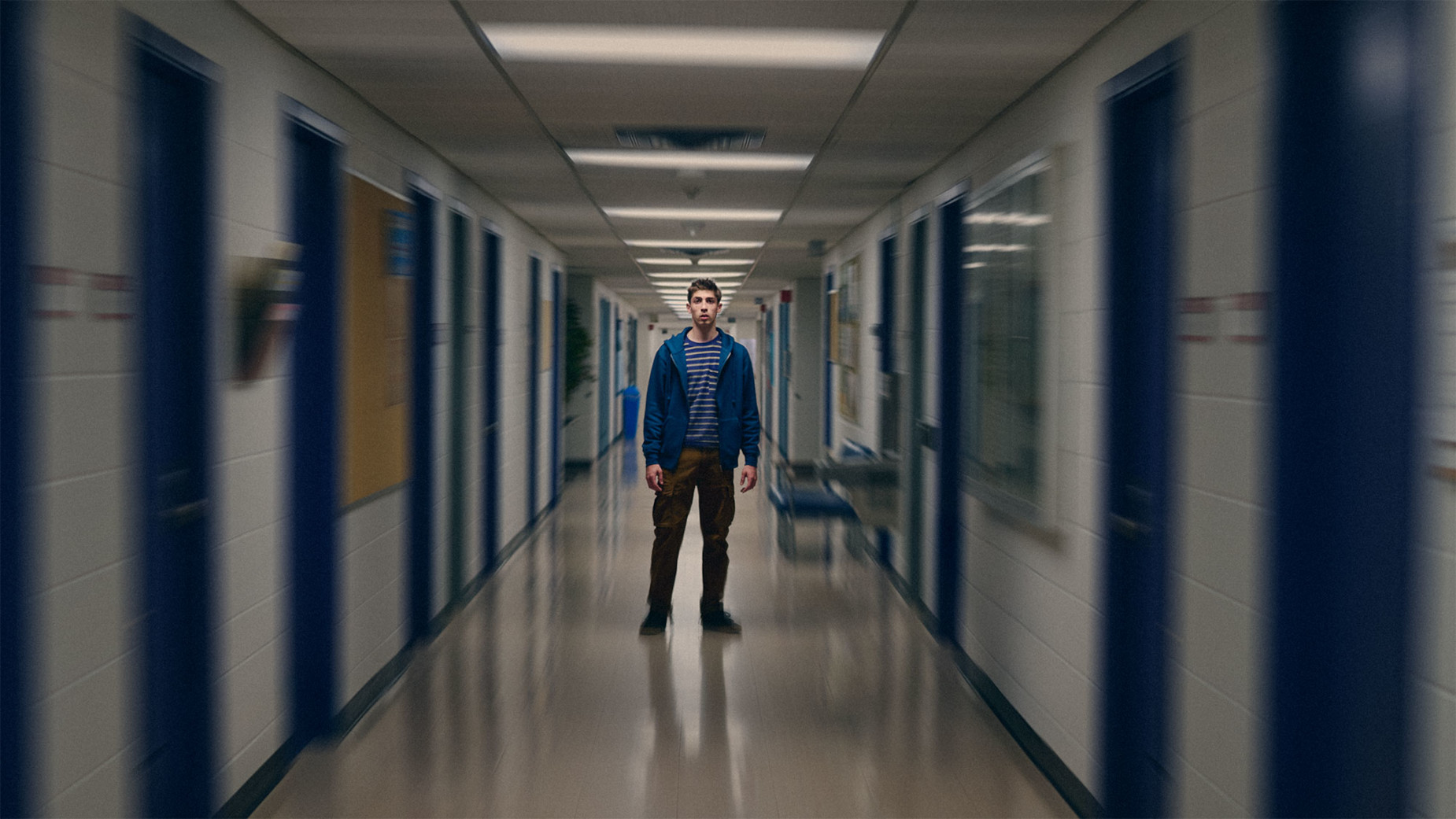
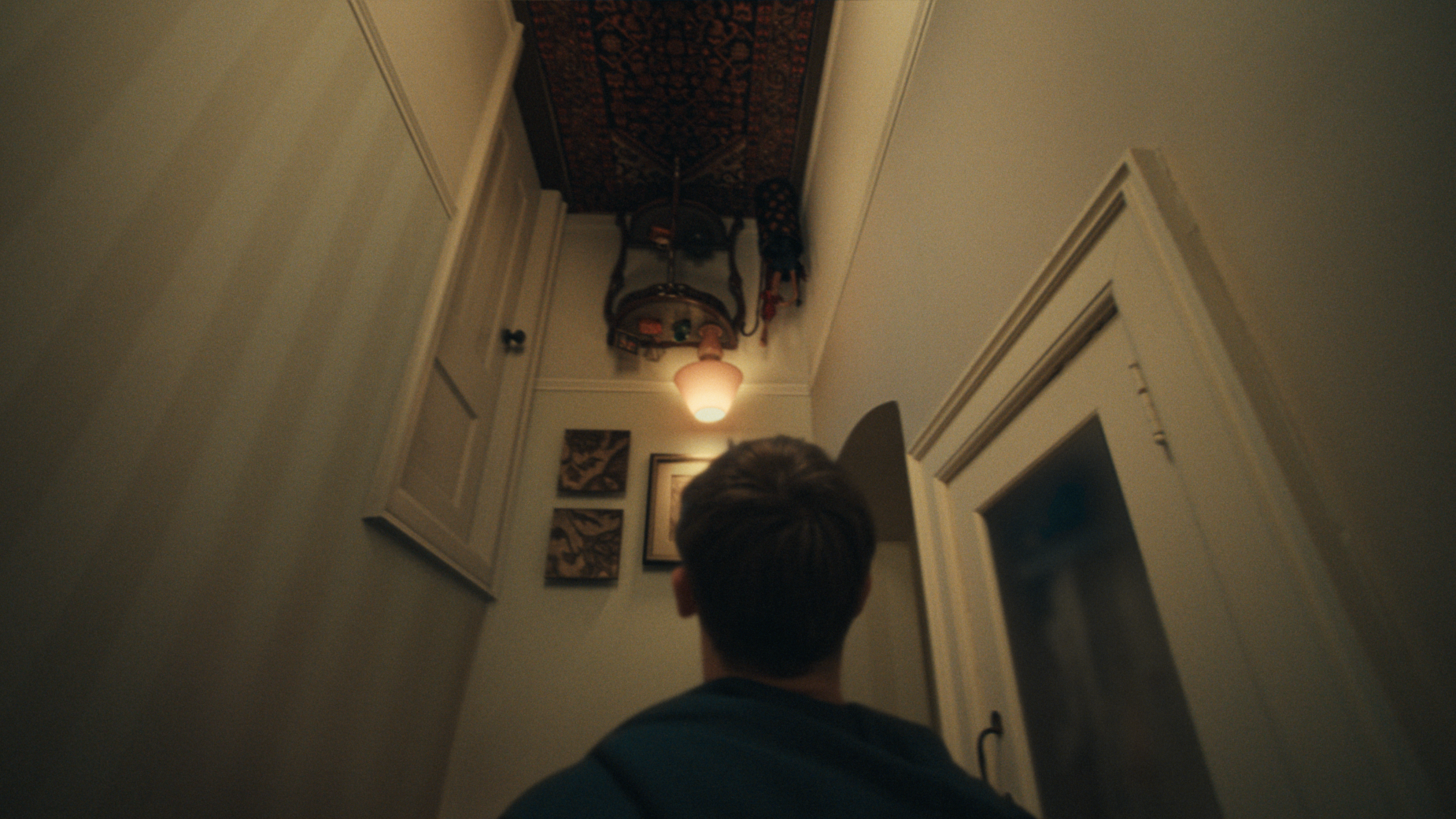
Dominik> The project involved several major VFX sequences – the upside-down hallway, the endless hallway, the maze, and the final location transformation – each requiring its own unique creative approach. From the outset, our goal was to preserve a sense of authenticity, favouring captured and generative methods over heavy CG execution wherever possible. For example, in developing the upside-down hallway, we initially explored using Gaussian splatting scans. However, the narrow dimensions of the set made it impossible to capture the necessary angles. Ultimately, we pivoted to a more traditional CG workflow, which involved full 3D modelling, tracking, lighting, and rendering.
Across all sequences, the success of the work ultimately came down to compositing. Our talented team of compositors brought together a wide variety of elements – practical, digital, and generative – and integrated them into seamless, cinematic shots that felt grounded while still delivering a sense of heightened visual storytelling.
LBB> Since launch, how have people responded to the work?
Heather> Even before the work went live, we saw powerful reactions from the CAMH staff, board members, production partners, and even voice talent, who were deeply moved by the script.
Now that the campaign is out, we're thrilled that it continues to resonate in the same way and is making people who have been through this experience feel both understood and hopeful that work is being done to improve mental health care.
Sarah> The response has been very positive. People are seeing themselves in the campaign, which is exactly what we hoped for. Interestingly, we’ve seen particularly strong reactions from men in their fifties, a demographic we don’t often reach in such a powerful way. Overall, the reaction has been stronger and more engaged than we’ve seen in past campaigns.
LBB> Finally, is there a part of this project you’re especially proud of?
Ashley> We're most proud of the emotional authenticity we were able to capture. Navigating the mental healthcare system can be a deeply frustrating and isolating experience, and we felt it was crucial to stay true to that reality. During the production, so many people involved shared that they were proud to be part of the project because they had been through it themselves, or with a loved one, and felt seen by the work. This personal connection validated that we were on the right track, and that the story we were telling was resonating.
Sarah> Two things. First, I’m proud of the work itself; it feels bold, different, and powerful. Second, I’m proud of the process. Every person who touched this campaign, from our team, to Mekanism, to the production crew, brought personal passion and commitment. That collective energy and belief in the cause is what made the work so strong.


