


Lost in Transcreation: Balancing Culture, Consistency and Speed


The art of transcreation is “the ultimate origami trick – to fold theory into familiarity.” That’s how Rik Grant, global head of language and cultural services at Tag, put it at a recent event hosted in the company’s London offices.
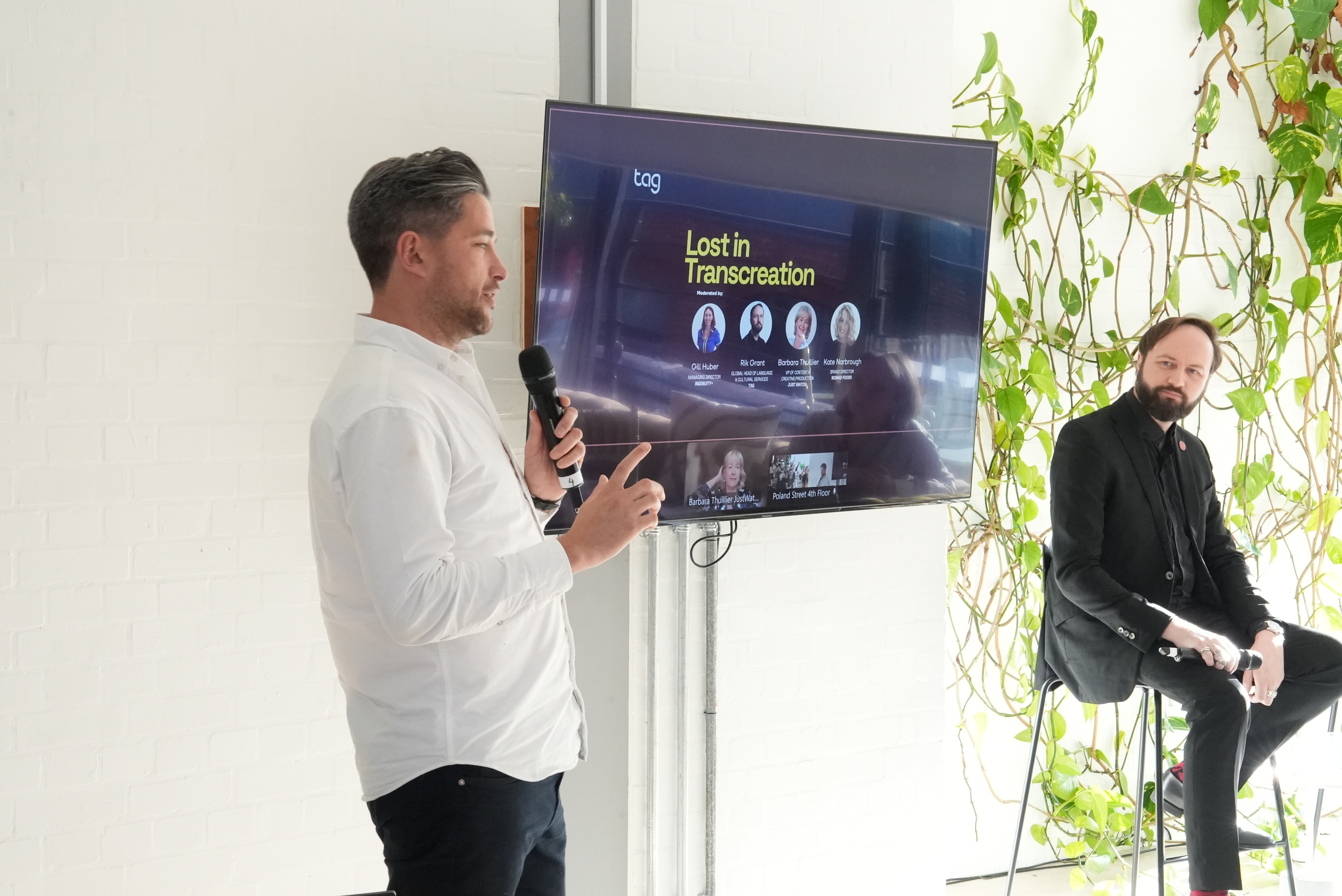
Titled ‘Lost in Transcreation: Are You Sure About That?’ and moderated by Gill Huber, managing director at Ingenuity, the panel explored how brands can adapt campaigns for global audiences without losing cultural authenticity or creative integrity. The line-up featured Rik Grant (global head of language and cultural services, Tag), Barbara Thuillier (VP of content and creative production, JustWatch), and Kate Narbrough (global brand director, Nomad Foods). Throughout the conversation, they examined the nuances between translation, localisation and transcreation, the role of technology and AI, and the growing importance of cultural consultation in global brand-building.
Setting the Scene
Opening the session, Robbie Pringle, growth director at Tag, illustrated the universality of communication with the story of “OK,” a term born from a deliberate 19th-century misspelling ("oll korrect") that went on to achieve global understanding. His point: even imperfect language can transmit meaning when cultural resonance is achieved – the same principle that underpins successful global advertising.
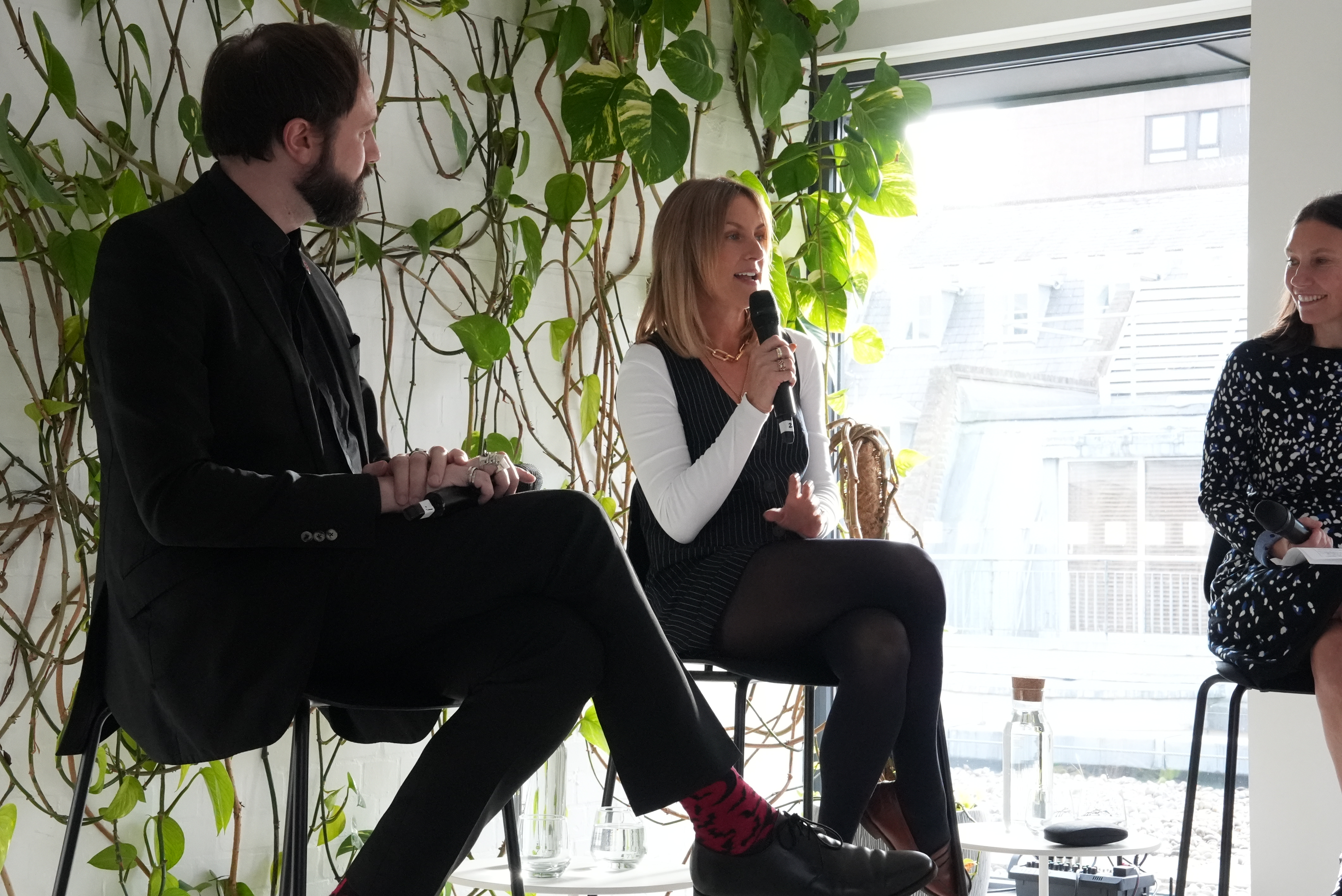
Gill Huber framed the conversation by noting that as brands reach increasingly diverse audiences, the challenge lies not just in translating words but in striking a cultural tone that maintains brand integrity while feeling native to each market. With 70% of consumers responding more positively when content reflects their culture, localisation done well can make or break brand trust.
Translation, Localisation and Transcreation
Rik defined the three tiers of global communication:
- Translation conveys understanding – it’s about clarity and accuracy.
- Localisation builds engagement – making something usable and relevant in context.
- Transcreation creates belief – translating not just language but emotion, intent and energy.
He described the continuum from “function to fact to fiction,” where transcreation sits at the highest level of creative application, transforming meaning so it evokes feeling rather than simply comprehension.
Inside Global Brands
Barbara Thuillier outlined how JustWatch manages localisation across 140 markets and two core businesses: the global entertainment guide and its media division running social campaigns for clients like Netflix and Prime Video. Her team handles both translation and creative adaptation of trailers, clips and campaigns, where tone and subtext often demand cultural as well as linguistic fluency. Humour, irony and youth slang rarely survive literal translation, so JustWatch relies on Tag’s linguistic and cultural expertise to ensure that nuance remains intact.
Kate Narbrough described Nomad Foods’ structure – made up of 10 master brands (including Bird’s Eye, Aunt Bessie’s and Goodfella’s), six endorsed brands, and 20 ice-cream sub-brands across 22 markets. Around 75% of its creative work begins centrally before being adapted regionally. Each market might sell the same idea but under a different brand or even a different product (peas in the UK, creamed spinach in Germany). For Kate, this “transcreation on steroids” requires systems that balance global consistency with local sensitivity.
Her “Captain Bird’s Eye” example showed the complexity: 80% of markets use the Captain, though he appears under different names – Captain Iglo or Captain Findus, depending on region. “The new Captain is quite George Clooney-esque in the UK,” she grinned. That means they can, for example, do something playful like “put him in board shorts”. British humour can accept that level of irreverence. “But to do that in Germany would be really inappropriate with Captain Iglo, so they’ll take a different approach,” Kate said.
Managing Speed and Scale
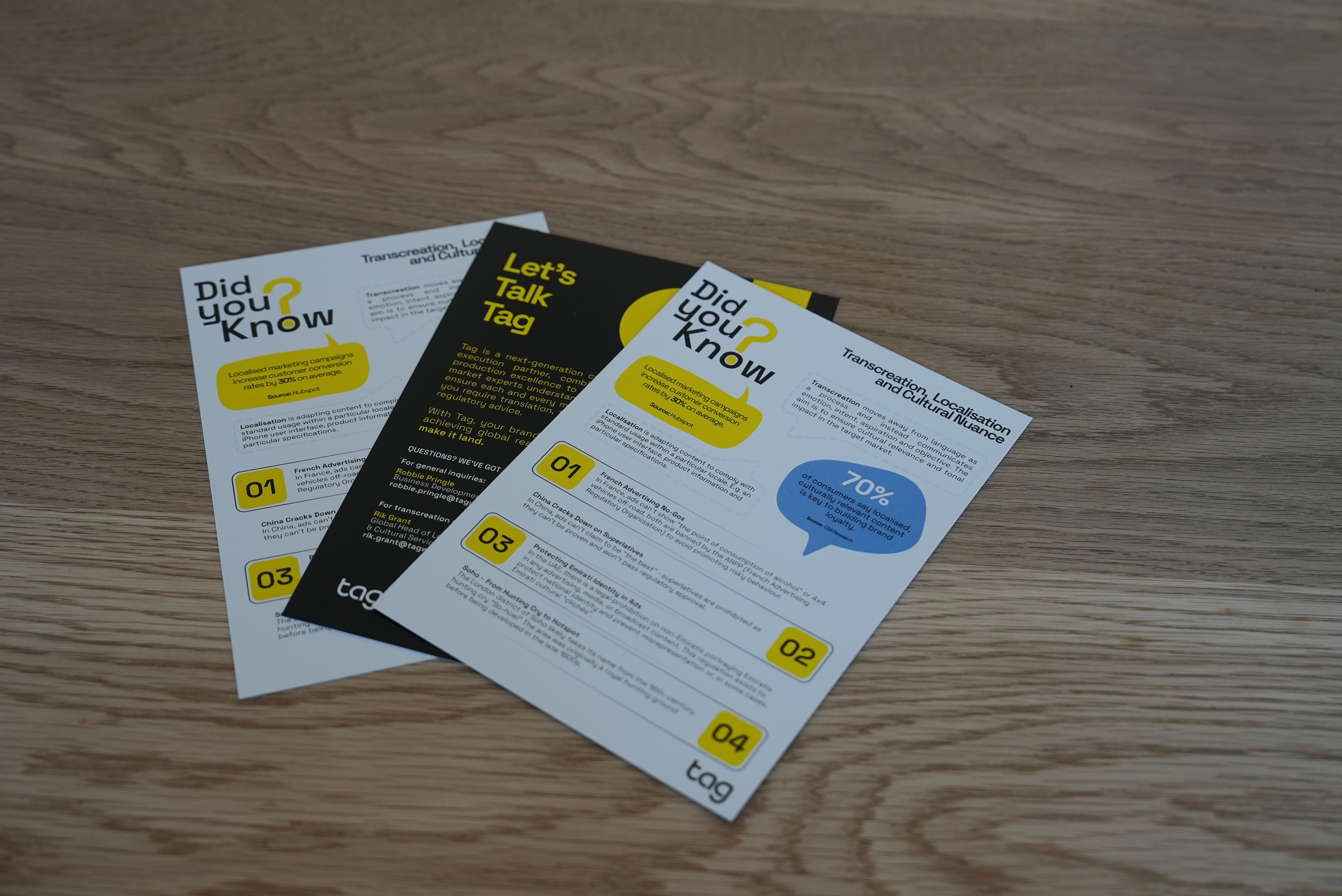
Balancing nuance with speed is the daily challenge. Kate explained Nomad’s six-cluster system to group 22 markets, each cluster with a single point of contact involved in creative development from the start, ensuring that localisation is baked in rather than retrofitted. Design markets lead creative testing, while organic social content is handled locally for agility. She believes a “tighter framework with increased flexibility” is the sweet spot.
Barbara noted that in digital entertainment, localisation must happen at scale and speed. With content flowing instantly across borders, JustWatch localises imagery, trailers and editorial voices through its network of 50 writers worldwide, writing articles and reviews to build trust in each market.
The Importance of Cultural Consultation
Rik emphasised that cultural consultation is critical: brands must understand behaviour, not just language. His analogy of navigating a Japanese bus system – where social norms differ (you get on in the middle and get off at the front) even if one speaks the language – highlighted how unseen cultural logic determines communication success. He reframed ROI as “responsibility of impact,” urging brands to consider how messages are perceived and felt once live. “You've really got to think about how that is going to be perceived, seen, felt and interacted once it goes live. Because you only get to make a first impression once.”
Respect for difference, he argued, is essential. “You can’t arrive in another country, throw your values on the table, and insist everyone start adopting them.” He described cultural consultation as the process of learning how to “fit in and stand out at the same time.”
Gathering Insights Across Markets
Barbara was clear that effective insight comes from people on the ground – native experts who understand local context – combined with rigorous double-checking through partners like Tag. Mistakes can damage not only JustWatch’s reputation but also those of global clients like Hulu or Prime Video. Kate added that Nomad tiers markets by priority depending on the brief, clustering them differently to test spectrums of adoption or brand equity, acknowledging that “markets are not created equal.”
When Cultural Insight Improves Creative
Rik shared two case studies showing cultural consultation in action:
A global payments platform initially depicted a male professional gamer and female casual gamer. Feedback from Nordic and German markets suggested reversing the gender roles to subvert stereotypes. The agency adopted this insight, producing a stronger, more progressive campaign.
Lurpak’s 'The Mighty Spoon' campaign needed to transform significantly when it ventured into the Middle East, where imagery, script, setting and regional expectations all played a valid part in ensuring the campaign was adapted faithfully – whilst being tailored for that region rather than keeping its original Anglo-centric positioning.
The Role and Limits of AI
The panel turned, inevitably, to artificial intelligence and its place in localisation workflows.
Barbara uses AI for speed: translating synopses or adjusting short ad copies, always followed by human proofing. It’s useful for first drafts but unreliable for nuance – “it simply doesn’t work yet.”
Kate employs AI image generation to adapt visuals. By virtually swapping backgrounds or products, Nomad can reflect regional kitchens and food rituals without expensive or wasteful reshoots – “we can’t ethically ship product around the world for one food shoot.”
Rik warned that AI is “an unreliable narrator,” built on frequency-based averages rather than meaning. For nuance, culture, and emotion, it falls short. “To speak another language is to understand another form of logic,” he said – and AI, built on Anglo-centric logic, will always seek literal equivalents, producing technically correct but often unnatural results.
He likened AI’s outputs to “the uncanny valley of language,” where translations may appear correct to non-speakers but feel inherently wrong to natives – just as an almost-human face looks unsettling. Used for speed and lower-tier tasks, AI is useful, but remarked “you won’t stand out by sounding like everyone else.”
Both Barbara and Kate described governance systems: JustWatch relies on careful review and learning through trial and error, while Nomad’s cross-functional AI Council updates policy weekly and emphasises partner transparency.
The Future of Transcreation
Looking ahead, Rik predicted technology will increase speed and automation, but brands must understand its limits. Machine translation and generative tools will handle routine adaptation, but meaningful creative still depends on human cultural intuition. “If you create median-average language, your response will be median average too,” he warned. “And what are brands trying to do? Be Different, grab people's attention and secure it and turn them into a consumer that is loyal will come back. You're not going to do that if you're saying the same thing everyone else does.”
Building Better Partnerships
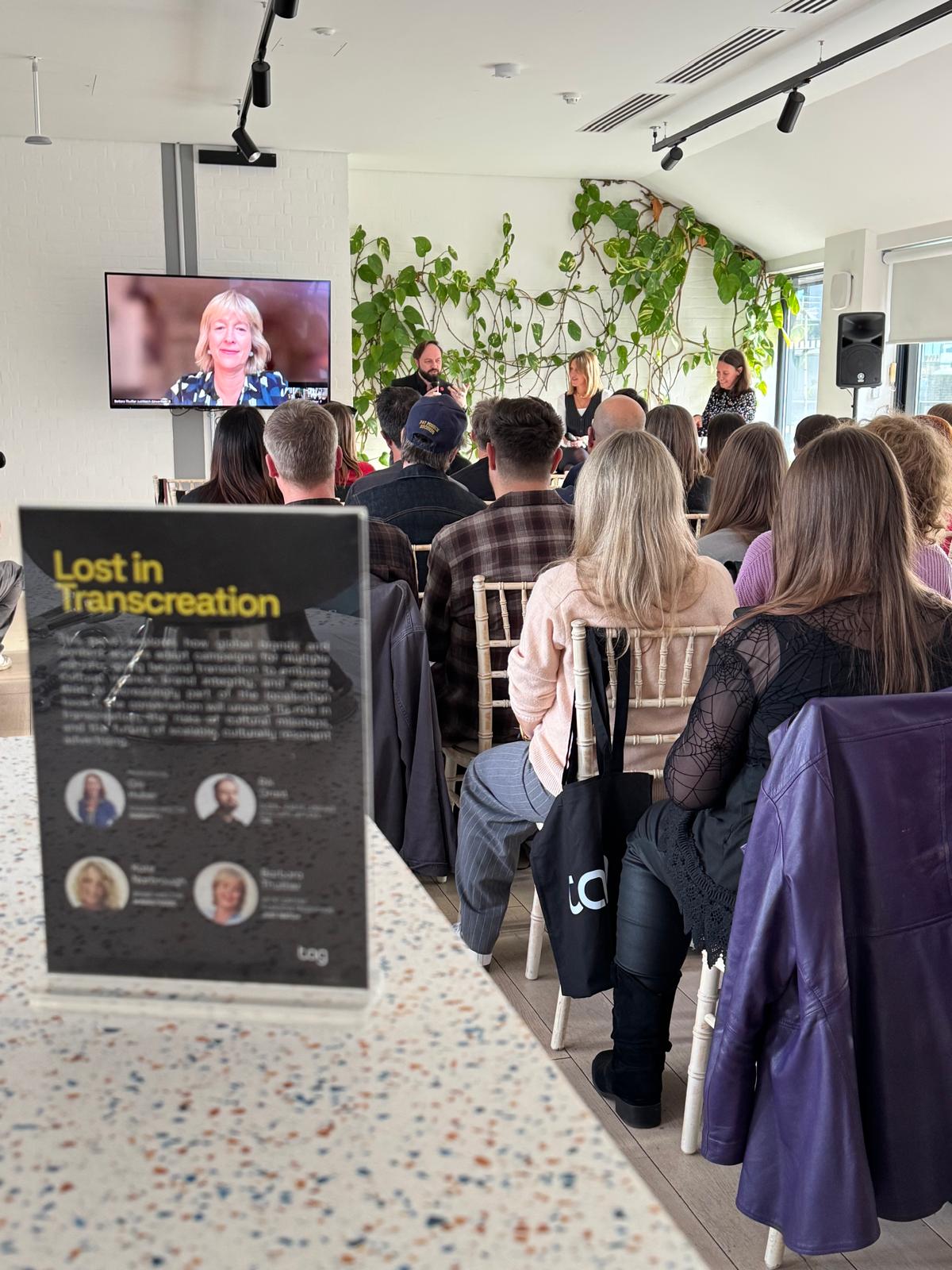
Kate called on agencies to focus less on showcasing tools and more on demonstrating how they actually impact client briefs. Having just completed a global agency pitch with Ingenuity, she said network cohesion across markets was decisive – “the agency that won demonstrated the best cohesion between all of the agency networks that we saw”. but delivering that collaboration daily remains difficult. Unlocking that collective expertise is key to successful transcreation.
Barbara added that content partners must help clients recognise that one-size-fits-all language doesn’t exist – even Spanish differs drastically between Spain, Mexico and Argentina. Her team’s role is to educate clients that true success depends on treating every market individually.
Final Thoughts
Asked what they’d each do differently:
Kate said she’d remain open to ideas flowing back from local markets – acknowledging that transcreation can make the original idea stronger.
Rik urged brands to question what they don’t know and to respect the time needed for thoughtful localisation: “You spend weeks creating master assets, language needs to be afforded time for it to breathe as well.”
Barbara wished for earlier communication about market goals to prevent last-minute issues, particularly in film localisation where one image or phrase can misfire culturally.
Across the discussion, one message was clear: effective transcreation demands empathy, curiosity and collaboration. It’s not about perfection of language but precision of understanding. Whether balancing global consistency or embracing AI, brands must respect that culture is not a constraint but the bridge between message and meaning. Because in the race to go global, it’s not speed or scale that wins – it’s the brands that take the time to mean what they say, everywhere they say it.


