


Coral Brown Puts the Funny in the Familiar in Latest Habitat Film


Habitat challenged Coral Brown to create a two-minute film centred on just one product, a chair. This deceptively simple brief then became an opportunity for Coral to explore comedy, emotion, and humanity within the context of a shared house.
Drawing on her documentary instincts, the RadicalMedia director crafted a narrative that lets the chair act as a subtle catalyst for a friendship to form between a girl and her flat mate’s new partner.
Leaning into awkward, observational humour and fourth-wall moments to reveal the nuances of co-living, Coral explains how casting, production constraints, and Habitat’s aesthetic shaped this funny, and authentically human film.
LBB> What was the original brief from Habitat and DRUM, and how did you interpret the challenge of building a film entirely around a single product?
Coral> The brief was simple but surprisingly challenging; choose one Habitat product and build a two-minute film around it. I pitched three ideas. Two were closer to my usual emotional, heartfelt work, but ‘The Chair’ was the wildcard. It was the first time I really let myself lean into comedy, something I’d wanted to explore but never had the right opportunity for.
From the start, I knew I didn’t want the film to feel product-led. I wanted the piece to sit naturally in the characters’ world, for there to be an emotional shift at the centre of the story. In my treatment, the chair is described as “a symbol of shift… not the joke, not the hero, just the thing that tips her from resistance into acceptance.” That was always the aim, let the product quietly activate something human.
I first explored a nostalgic route, a product passed down over time, but it demanded a slower, more expansive story, which wasn’t right for a one-day shoot. The shared-house world felt far more alive. There’s so much humour, awkwardness and unspoken negotiation in that stage of life; new people arrive, routines collide, dynamics change.
Ultimately, the film became about those human rhythms, the quiet chaos of learning to share space. The product simply marks the moment of peace between them. It softens the tension and gives our protagonist permission to accept change – which felt far more honest and far more interesting.
LBB> This film is the second instalment in the Habitat series following its debut released last year — what was it like stepping into an existing creative world, and what elements were non-negotiable in carrying that tone and visual language forward?
Coral> I was actually quite lucky the brief specifically invited something different from the first film. I loved the original piece, it was beautifully made, but DRUM wanted directors to bring their own voice and create something tonally unique. So, my job wasn’t to match what already existed, it was to honour Habitat’s aesthetic and warmth while building a world that genuinely felt like mine.
One of the biggest considerations was how to showcase the products without the house feeling overly polished or unrealistic? These characters are young, slightly messy – emotionally reactive people.
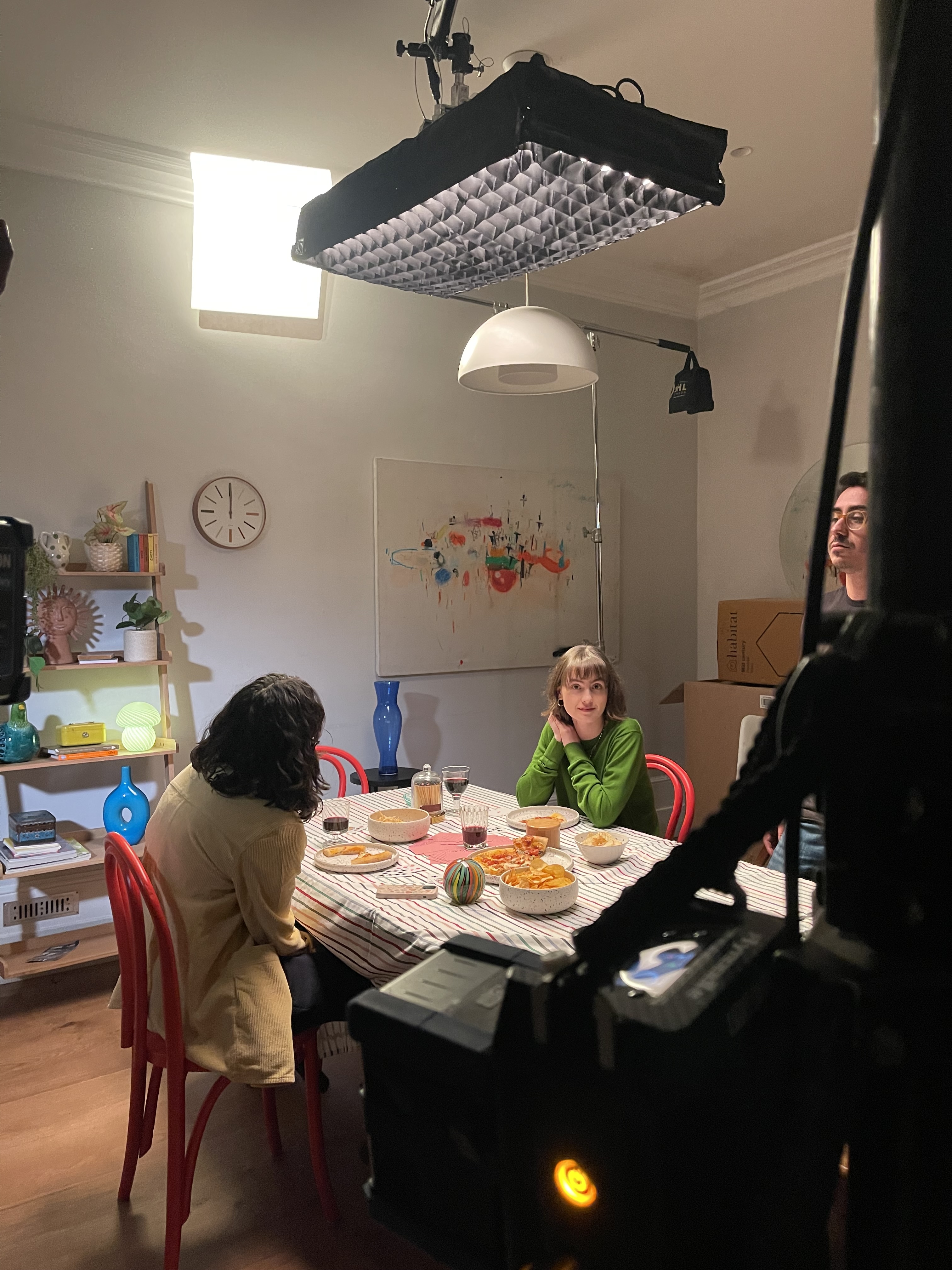
Their world needed to feel lived-in, not styled for a catalogue. Habitat’s designs are genuinely fun, bold and characterful, so the challenge was blending those pieces into a space that felt true to young house-sharers. We took care to let the products accent the characters rather than overwhelm them. So for me, the non-negotiables were: honesty, warmth, and a house that felt real to the people living in it, not just a place to display furniture.
LBB> You’ve said the openness of the brief drew you in. How did you land on this particular narrative approach — especially the dry, honest tone and the fourth-wall moments that bring the character’s inner monologue to life?
Coral> My documentary background shaped a lot of this. I’ve always been drawn to awkwardness and real human thought, the hesitations and the unspoken emotions. In docs, you have to patiently earn those moments. Stepping into a scripted world meant I could play with that vulnerability rather than wait for it, which was incredibly freeing.
That freedom is what opened the door to comedy. Dry, observational humour is really just the distilled version of this, the truth behind the thought. Instead of waiting for something to unfold, you can shape the rhythm, sharpen the beats, and let what’s unsaid carry the emotion.
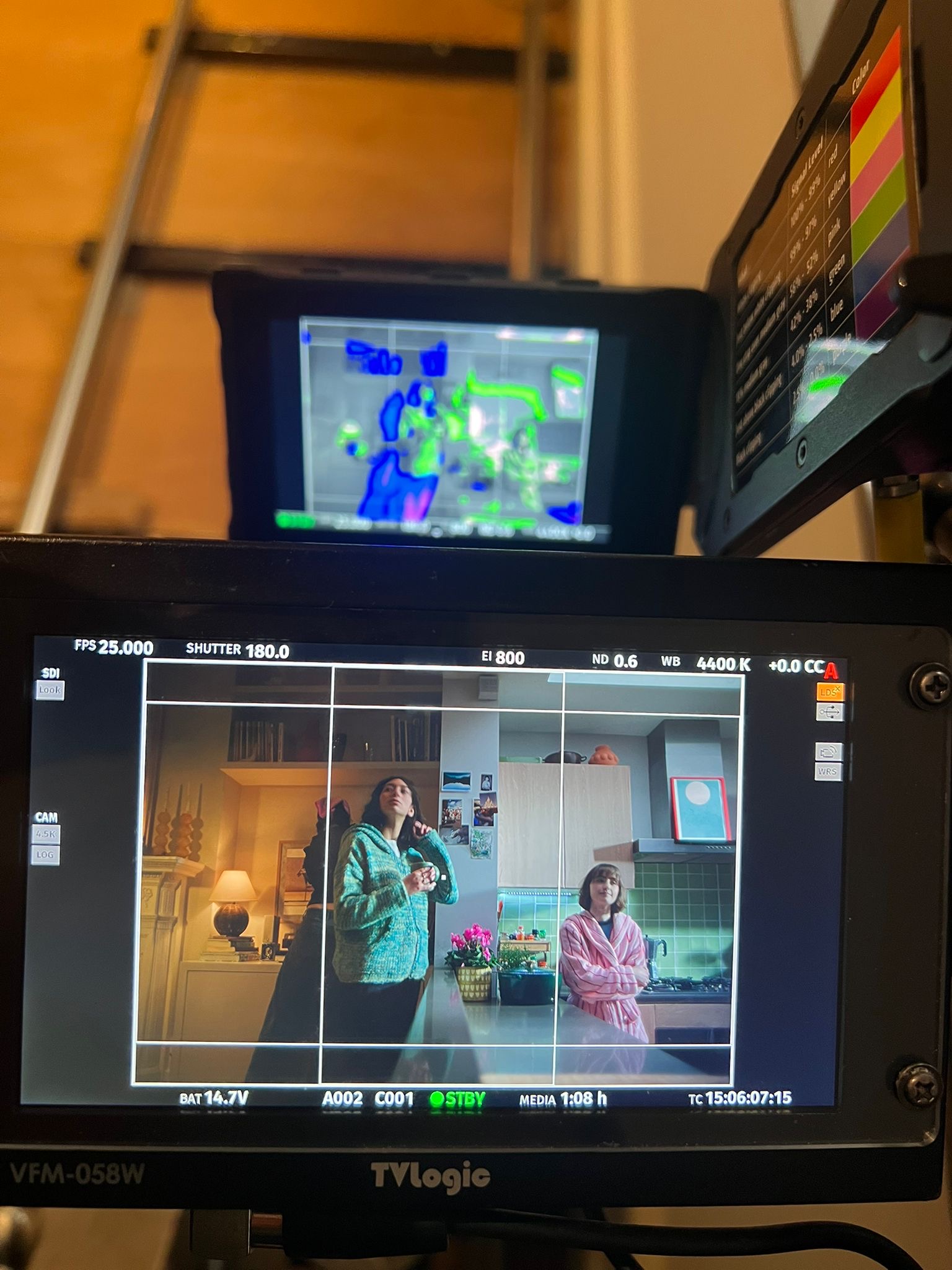
The fourth wall became the perfect bridge between those worlds. It allowed the character to speak directly to the audience with the same honesty I look for in real people. She can explain herself in dialogue, but she can also just glance at us and reveal something messy, impulsive, or half-formed. Those moments set the tone and make the comedy feel rooted in her interior life, not just in punchlines.
The humour also felt right for the setting. House-sharing at that age is naturally funny: there are boundaries, loyalties, awkward timings and tiny domestic irritations that only matter because you care about the people involved. The fourth wall lets the audience become her confidant in all of that emotional negotiation, creating pace without losing authenticity.
LBB> With only one shoot day, how did production constraints shape your writing, shotlist and overall creative decisions without compromising on performance or subtle humour?
Coral> The one-day shoot shaped everything -- writing, blocking, shotlist, performance.
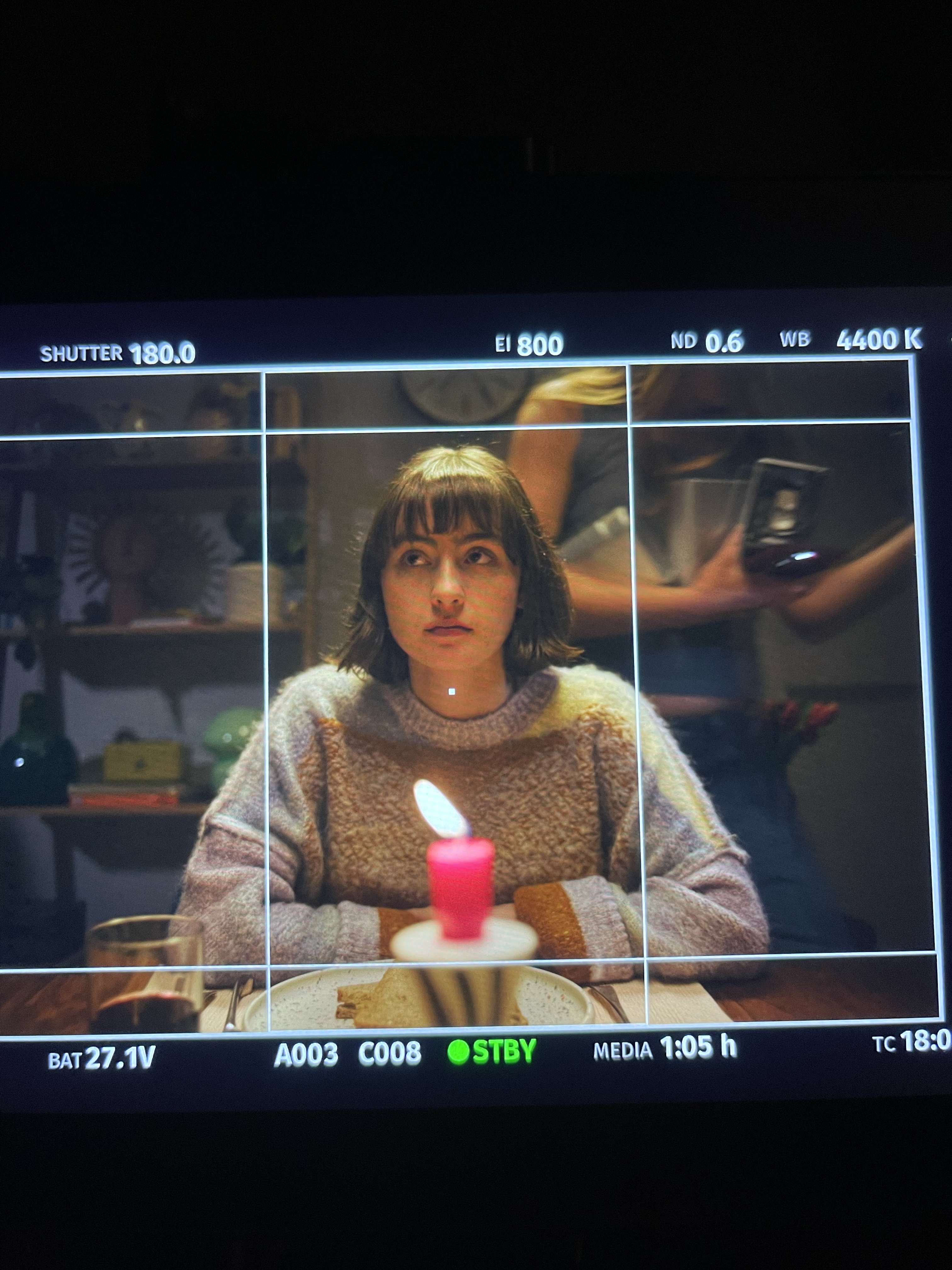
I designed the scenes so as much of the story as possible happened within single setups. You can see this especially in the dinner scene, where the reveal of the couple, the tension, and the housemate’s internal reaction all play out through whip pans and minimal movement. This came from necessity, but it actually created a really defined visual pace.
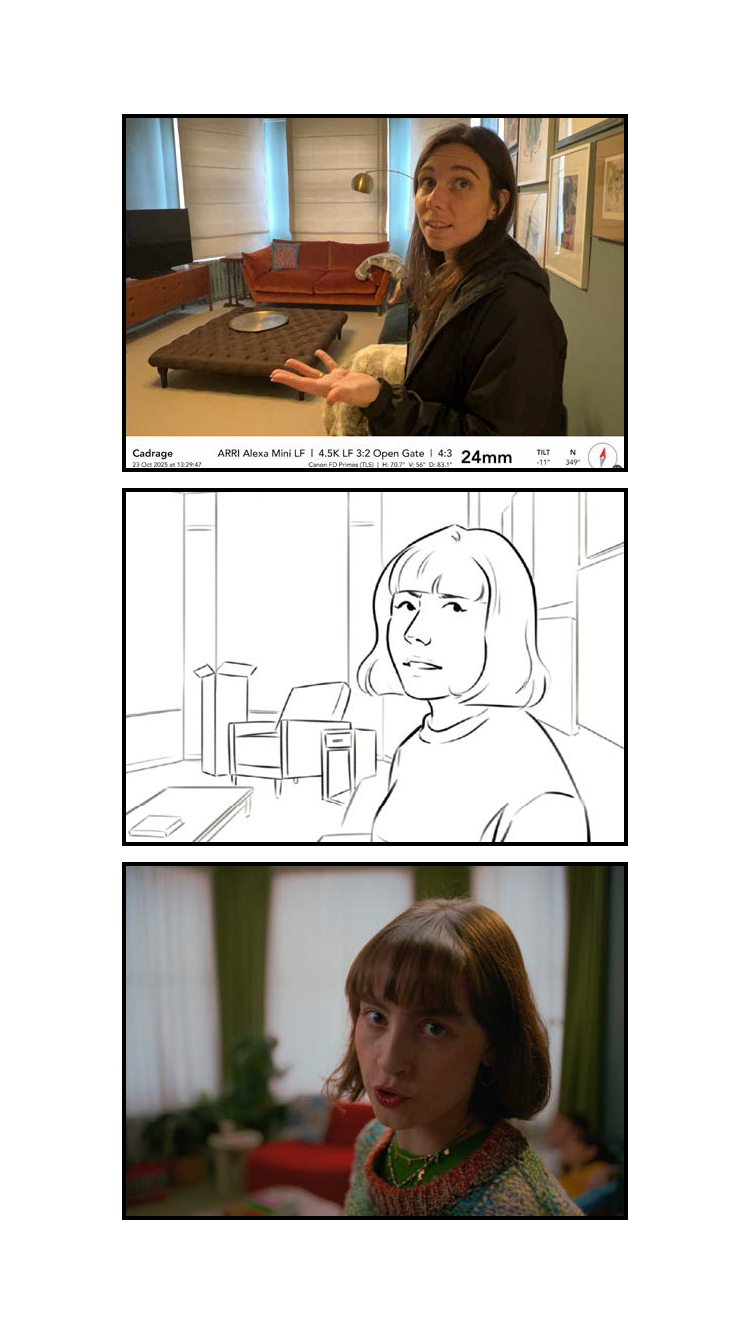
Because we didn’t have time for endless coverage or B-roll, the performances had to carry the heart and the humour. We protected time for that above anything else. Working closely with my DP, we planned shots that could hold multiple emotional beats, so we could keep the pace without sacrificing clarity or nuance. We prioritised anything that revealed relationship dynamics; everything else became secondary.
In a strange way, the constraint made the film sharper. It forced us into creative efficiency, and that ended up supporting the style of comedy we wanted.
LBB> Casting was clearly vital for carrying the film. What were you looking for in your lead, and did you know immediately that Chloe was the right fit once she walked into the room?
Coral> I needed someone who could balance humour with real emotional transparency. The narrator could easily become too annoyed or cynical, but the story only works if we still love her, if we feel like we’re experiencing the shift with her.
The moment Chloe walked in, she had that quality. She brought this wonderfully human, relatable charm to the character, sharp but warm, funny without pushing for jokes. She made the character feel like someone we’ve all known or been at some point in our twenties.
What impressed me most was how she let the audience in. She has this instinctive ability to communicate a thought mid-blink. It elevates the fourth-wall moments and makes them feel honest rather than performative. She gave the character so much more vulnerability and nuance than I even wrote on the page, she carried it beautifully.
LBB> The writing is sharp but warm — why did comedy feel like the right tool for this story, and how did you calibrate the humour so it matched Habitat’s character?
Coral> Once I committed to a house-share world, comedy felt like the most truthful way to share the story. Shared living is full of tiny emotional negotiations: the toothbrush, the mug, the records. They aren’t dramatic events, but they’re rich with humour.
For me, comedy isn’t about the punchlines, it’s about honesty. It’s about recognising yourself in someone’s awkwardness or quiet frustration. That felt right for Habitat too. Their brand has a warmth and relatability to it that doesn't feel glossy or unattainable. So the humour needed to match that: it needed to be warm, observational and rooted in real emotion. It all needed to feel cohesive with Habitat’s aesthetic.
LBB> These films live on social platforms — including Pinterest, where Habitat’s aesthetic really matters. Were there any particular considerations or adaptations you made for how the film would be experienced on those channels?
Coral> Absolutely. We always knew the film would live on platforms where people scroll quickly, so visual clarity mattered. Every frame needed to communicate tone and character within a couple of seconds.
We leaned into colour, texture, and strong composition to ensure each moment could stand alone as an image or a short loop. The hero shot of the chair, for example, was designed not just as a narrative turning point but as a quiet, loopable visual in its own right.
Essentially, we designed a film that works as a whole but also as a series of micro-moments, each with its own emotional clarity.


