


Practical Effects, Puppets Front McCann NZ’s First Work Personifying ‘Speed Demons’


The first work to launch from McCann New Zealand since the merger of DDB and FCB uses real, handmade puppets, miniatures, and prosthetics to bring “human feeling” ‘speed demons’ to life to promote road safety.
Each spot in the campaign for New Zealand’s transport agency, Waka Kotahi, comes with its own uniquely awkward, emotionally-loaded demon, representing a social pressure faced by young New Zealanders on the road that is believed to fuel speeding. The work is directed by FINCH’s Michael Hili.
Co-chief creative officer Leisa Wall -- formerly FCB’s CCO, before Omnicom’s acquisition of IPG led to the global retirement of the FCB and DDB brands -- told LBB speeding has become “socially rewarded”, with the campaign framing danger as external and avoidable.
“The real danger for young drivers isn’t just the road, it’s the social pressure to rush,” Leisa explained.
“By reframing speeding as something avoidable and a choice, not a thrill, the campaign gives drivers back control. If rushing is the problem, then refusing to rush becomes a powerful, self-directed decision.”
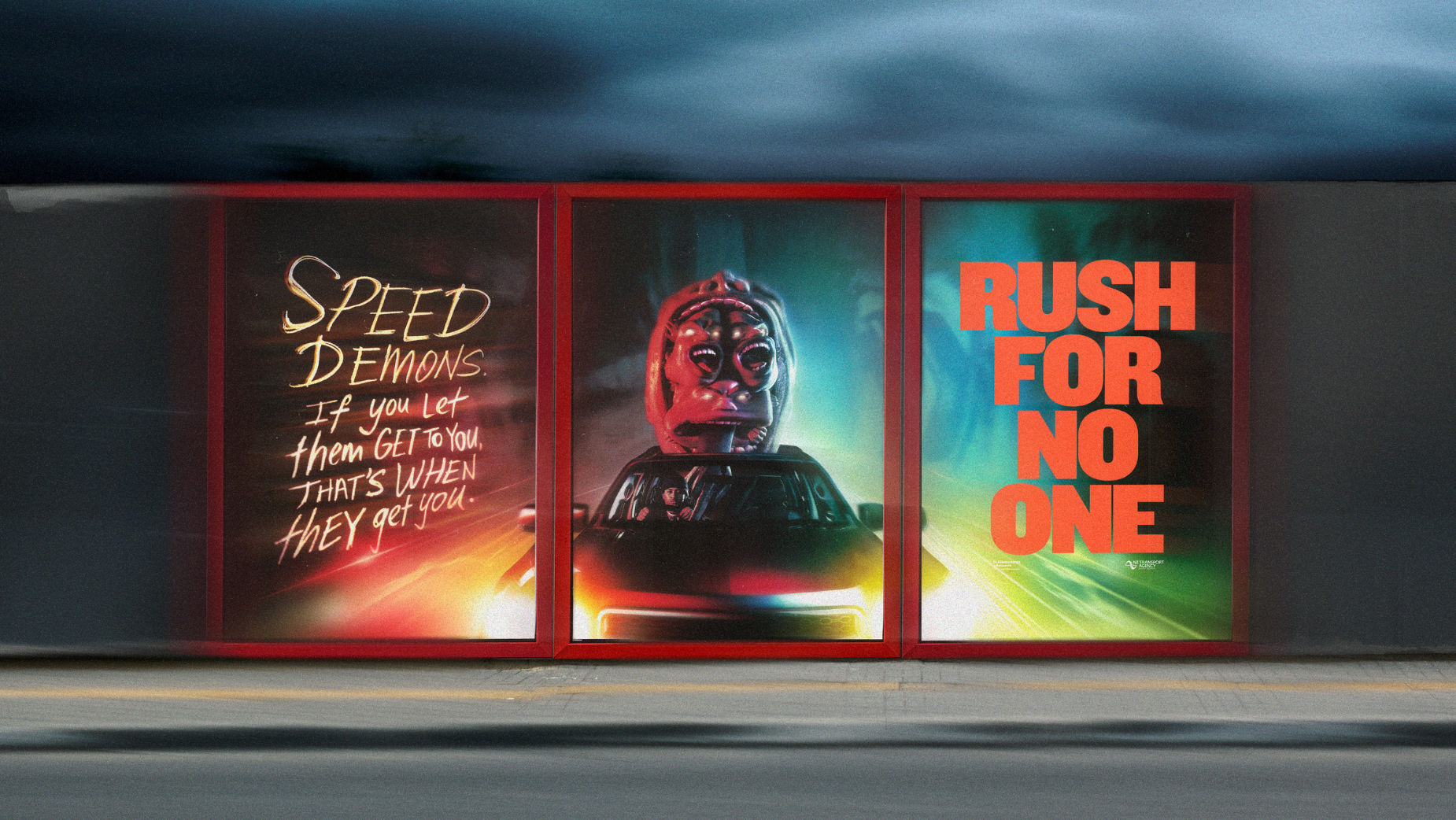
Rather than focusing on individual behaviour, ‘Speed Demons’ highlights the various situations that can pressure young people to exceed the speed limit -- demons like backseat drivers and tailgaters. Leisa said these ‘characters’ are “instantly recognisable to young drivers”.
“The mate telling you to hurry up, the car behind you sitting on your bumper, the feeling of being judged for slowing down. They’re small moments, but they’re exactly where speeding decisions happen. By personifying those pressures as Speed Demons, the campaign makes the invisible visible.
“Rather than telling young drivers what not to do, it redefines what is cool by creating a new enemy: rushing. The heroes aren’t the ones pushing limits or rebelling against the rules -- they’re the ones who refuse to rush, for anyone or anything.”
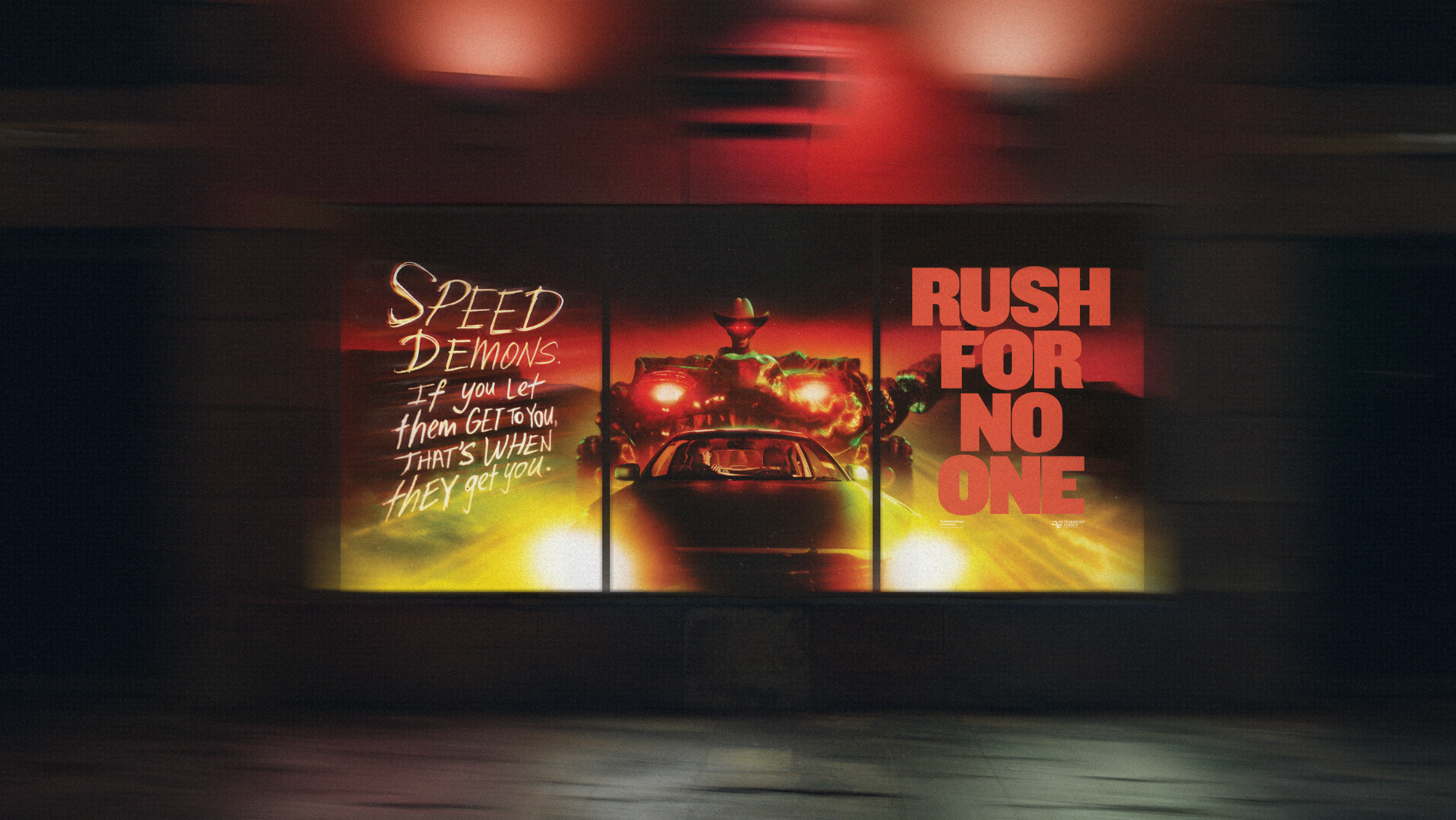
A theatre designer by trade, acclaimed filmmaker Michael Hili and the production team at FINCH brought his signature, tactile approach to the screen. Captured in-camera, the team applied an array of techniques and materials -- including 3D-printed skeletal cages, papier-mache sculptures, silicone head castings, replica cityscape miniatures, and hand-painted backgrounds -- to bring the demons to life. Speaking to LBB, Michael said he just “always worked this way.”
“I don’t really know the potential of an idea until I’ve sketched it, built it, tested it, broken it, sworn at it — then built it again,” Michael said.
“Commercials can be engineered to avoid risk: the most efficient route to the safest outcome. Creatively, that’s fallow ground. A scheduled relay race -- pass the file, pass the problem, pass the responsibility.
“Practical effects invite the opposite. They pull everyone into the mess together. Iteration, accidents, breakthroughs. And that’s where the idea gets guts, gets specific, and builds a memorable identity.”
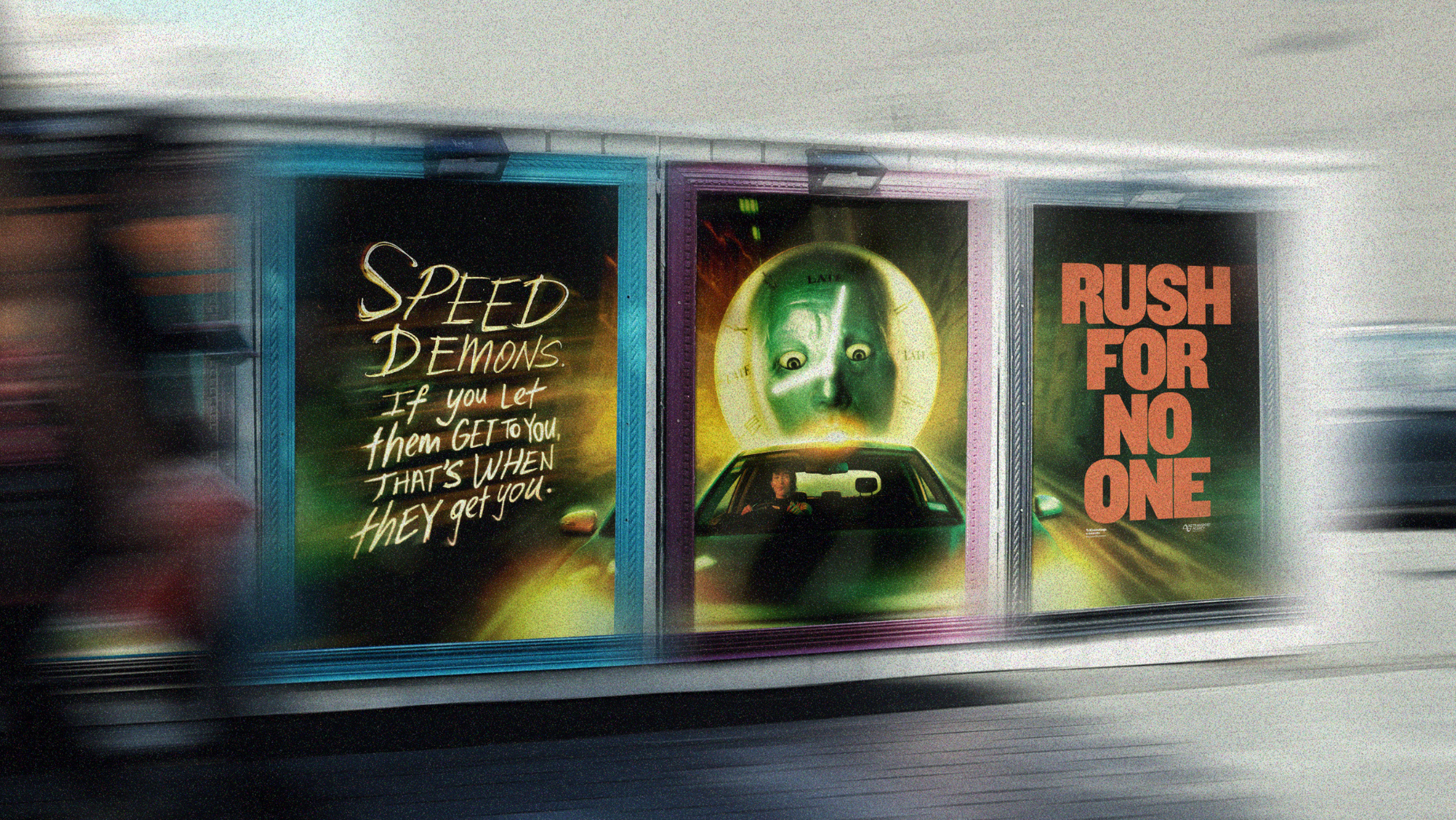
Michael added while he built the props, the “whole team’s fingerprints are all over it.”
“These NZTA spots have teeth. I think they’ll make some people feel awkward and hit others right in the gut. That outcome excites me, and it’s not something I could’ve reached through an AI pipeline.
“AI is too nice to me, too quick to agree. I need resistance. Ideas need resistance. Materials that argue back. Mistakes, limitations, dead ends. That’s where the work gets teeth.”
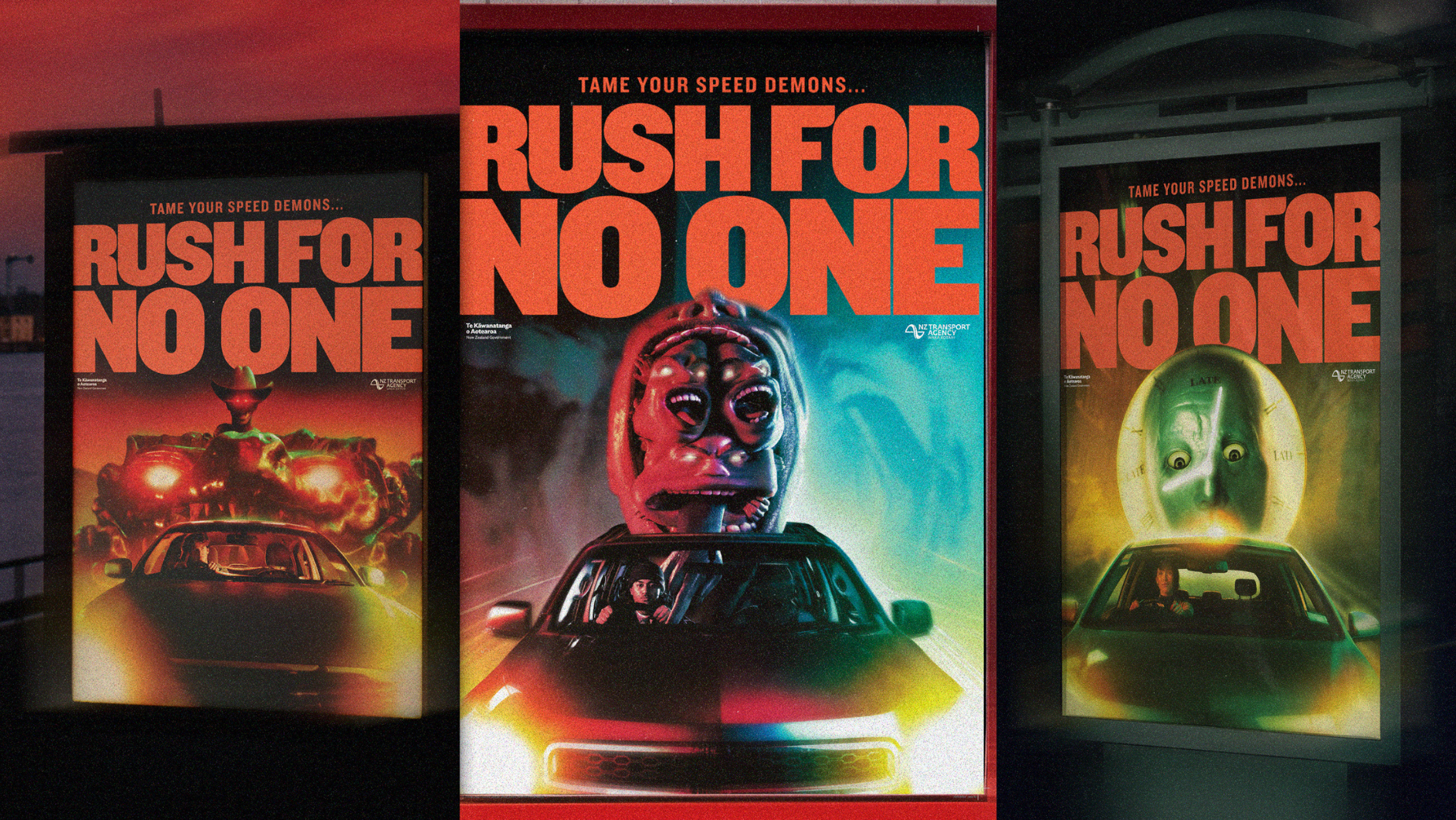
The work takes a different approach to the more horrifying category conventions – a change of perspective McCann creative Guy Perry said was necessary to stop people tuning out.
“Young people have grown up surrounded by shock tactics, and many have learned to tune them out,” Guy told LBB.
“Fear-based messaging was no longer cutting through; it risked reinforcing the idea that speeding was rebellious or edgy. Instead, we wanted to flip the power dynamic. By making rushing uncool and slightly ridiculous, the campaign removes its status. The horror isn’t in the crash -- it’s in letting social pressure control you.”
According to research from the New Zealand Transport Agency, speeding behaviour is often triggered by circumstantial factors, such as running late, being tailgated, or being spurred on by peers. Additional data shows nearly one-third of all New Zealand road deaths involve people aged 18 to 24.
“Our research revealed just how much pressure young drivers feel to speed from those on the road and in their car,” Matt Kingston, co-chief strategy officer at McCann NZ, said.
“We wanted to elevate the resistance of this kind of pressure to a position of confidence and power.”
Emma Hartley, marketing and content manager at NZTA Waka Kotahi, confirmed the campaign’s approach needed to “shift an entrenched behaviour” by trying something different.
“‘Speed Demons’ is a departure from our traditional style of advertising, but at its core is still trying to do the same job; change behaviour to reduce harm on our roads,” she said.
The campaign has launched New Zealand-wide across TVC, digital, and OOH.


