


Inside the Winter Edition of the OkayStudio Directors’ Dinner


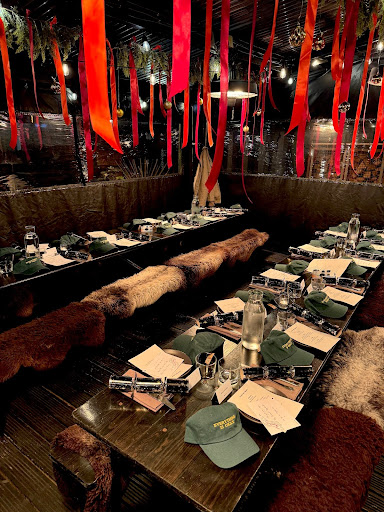
The second edition of the OkayStudio Directors' Dinner gathered an extraordinary mix of talent under one roof.
Thirteen directors – ranging from comedy specialists to documentary auteurs – sat down with OkayStudio’s editors and colourists to share reflections on 2025, the evolving landscape of production, and the projects that excite them for 2026.
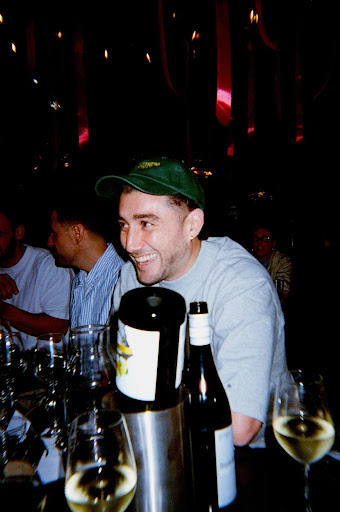
Luke Brookner.
"Our Directors’ Dinner series brings together the directors we’re genuinely excited by with the editors, colourists and VFX artists who can elevate their vision,” said Jack Howard, executive producer and commercial director at OkayStudio, about the initiative.” It’s an evening built for considered conversation and creative spark, echoing the spirit of the old creative salons. It’s rare to assemble this calibre of talent under one roof, and the atmosphere is always electric."
The directors who attended were: Arthur Studholme (Magna Studios), Chris Nicholas (CODA/Outsider), Coral Brown (RadicalMedia), Edie Amos (Kode), Hector Aponysus (Parl Pictures), Imogen Harrison (Sticker), Jason Bock (Prettybird), Joao Retorta (Freelance/Only Child Collective), Jocelyn Anquetil (Caviar), Luke Brookner (Sticker), Rollo Hollins (Armoury), Ruth Pickett (Hungry Man), and LOCKY (RadicalMedia), with OkayStudio colourists Marina Starke and Alex O’Brien, editors Sam Hardy and André Rodrigues also joining.
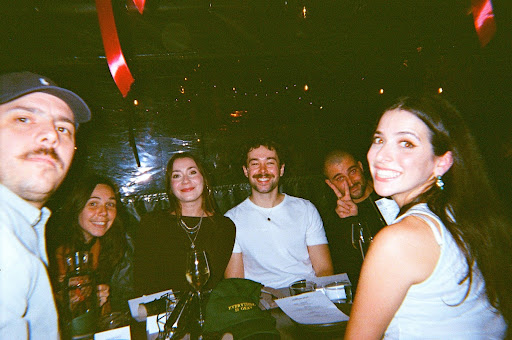
From left to right: Joao Retorta, Coral Brown, Athene Xenia Aristocleous, Chris Nicholas, Hector Aponysus, Sydney Levy.
LBB> Looking back on 2025, what has inspired you most, and how has your craft evolved this year?
Marina Starke> Projects that truly inspire me are always story-driven. I love working on meaningful films that leave an impact on viewers. "Last year, I had the chance to grade a feature about child marriage, selected as Kenya’s submission for Best International Feature, and a Palestinian family portrait chosen as Jordan’s submission for the upcoming Academy Awards. Both films are currently running in festivals and cinemas, which has been very special to witness. Projects like these remind me of how we as filmmakers can give a voice to people who are often invisible, spark important conversations, and hopefully inspire change. They’ve also taught me to focus my colour work even more on serving the story rather than simply making images look cool or beautiful.
Hector Aponysus> I'm really grateful for the recognition that my film 'Plongeurs' got this year, when I was making it I felt some really strong emotions that I didn't anticipate. When we got it into the edit it was obvious we'd shot some really beautiful stuff but I think the real craft was finding a way to translate those feelings into something that resonated with people on screen. I think that's what it's all about, finding a way to get people to feel the same emotions you felt. I think that experience taught me that part of the craft is being sensitive to your own emotions and letting them guide you to something that's (hopefully!) meaningful.
Imogen Harrison> I’m totally inspired by the people I’ve been working with. I love when HODs come energised from a project they’ve been shooting with someone else, full of ideas and their own visual references. It’s the best!
Jocelyn> I’ve been working on my erotic comedy/horror short, ‘PORNTERGEIST’, so I’ve been watching a lot of porn (!!) finding lots of inspiration in different sex magazines, from avant garde illustrated ones through to hardcore mid 2000s men’s mags, erotic movies from the 70’s & 80’s, and modern art/porn like the stuff made by Four Chambers. That plus 'America’s Next Top Model' reruns and reconnecting with my teenage new wave/alt rock music taste and you get a pretty good idea of what’s going on in my brain. My craft has evolved thematically, I’ve started shooting stills, and everything feels more holistic than before..
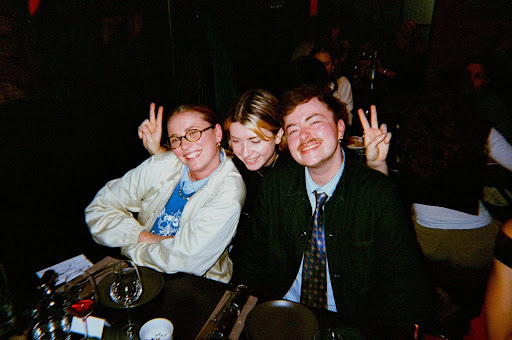
From left to right: Edie Amos, Jocelyn Anquetil, Alex O’brien.
LBB> Tell us how you work with your editors/directors, and what true collaboration looks like.
André Rodrigues> I love to be in a dialogue with the director - either pre-production, during production but also after we lock the edit. I think true collaboration is about opening up the process and sharing it with creative partners so we can all push the piece together and make the best work possible.
Jason Bock> Open channels and zero fear. I want a room where we can play, push, crack ideas open, argue, laugh, and share the weird references living rent free in our heads. The work gets better when we’re not just colleagues but actual humans talking to each other without filters.
Coral Brown> True collaboration, for me, is letting someone else’s perspective surprise you, almost like discovering a hidden scene you never knew you shot. I walk into an edit with curiosity, not ownership, because the film deserves more than just my interpretation.
LBB> What qualities do you value most in your creative collaborators?
Ruth Pickett> The ability to understand what I'm aiming for, but also bring their own flavour and spark and ideas to the process. I'm not looking for HODs who are happy to entirely execute my vision without bringing their own extra spice and elevating the project in the way that only they can. Additionally, someone who is as passionate and hard-working as I am, and doesn't mind going the extra mile to make a project really special.
Chris Nicholas> People who encourage experimentation without fear of failure or judgment. You need energy to try 100 things to get to what might be the right choice. Films are made by lots of great choices. A great editor I once worked with told me he just tried everything — it's then up to you to have the taste to choose which one is actually good. That's the quality I look for: people willing to explore, without ego getting in the way.
Imogen Harrison> Obsession with craft is the baseline, but the ability to be a good human alongside that is very important for me. Communication. Big ideas. Gentleness. Dedication and passion without bravado. The ability to fight for what you love, and let go when someone else’s idea feels right.
Rollo> Great humans x great taste.
Coral> People who are honest and willing to challenge an idea without trying to break it. If we respect every department as part of the same ecosystem, then the work becomes lighter, braver, and better.
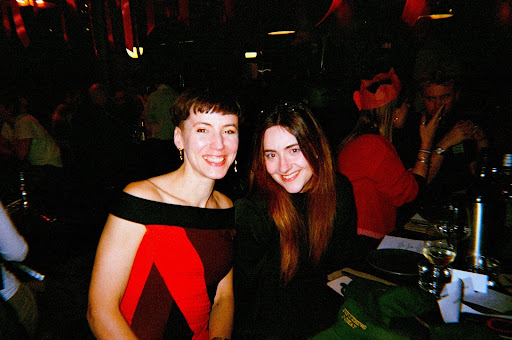
From left to right: Ruth Pickett, Marina Starke.
LBB> What are the biggest production or storytelling challenges right now, and how do you support each other?
Hector Aponysus> Budgets are tight, brands play it safe, and inflation means money doesn’t go as far as it used to. As a director you have to be flexible and reactive to those restrictions and still find a way to be creative. It's hard out there and I think it's good to remember that we're all in this together. As directors it can sometimes feel a bit all against all, I think it's good to remember that everyone has their moment and it's important we celebrate each other's wins and do our best to support one another.
Rollo Hollins> The gap between traditional broadcast audiences and social audiences is closing faster than we think and there is an opportunity to creatively push the way we tell our narratives further to bridge that gap.
Ruth Pickett> The financial contraction of the industry has been a huge challenge. Fewer projects are being made, with less money -- and it seems as though some people and companies are making what they perceive to be "safe" choices as a result. This can often mean giving the opportunities to a "Safe Pair of Hands"; someone who is already established in the industry -- rather than newer voices or those from underrepresented backgrounds. In terms of navigating these challenges -- I can't pretend it's not hard! But I think you just have to stay true to your voice and your style and trust that it will cut through eventually.
Joceyln> Everything’s expensive. Everything’s fucked. Everyone’s overstimulated. Drowning out the noise and trying to find your own voice is getting harder… I guess try and inspire those around you, have open conversations and build ideas outside of Pinterest boards and IG threads, go back to basics a bit.
André> Shorter schedules and probably shoot days -- I think being aligned early on really helps dodge some issues on the shoot that can then be found in the edit - also sometimes simplifying an idea can help for a clearer message without taking away its creativity.
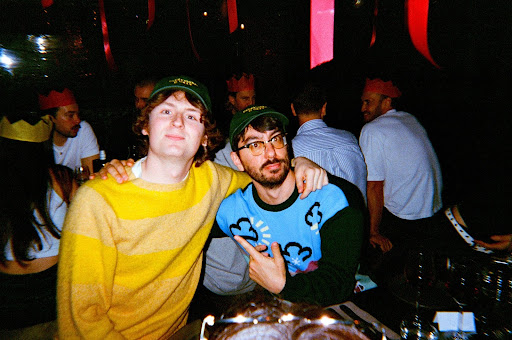
From left to right: Arthur Studholme, Andre Rodrigues.
LBB> How have recent developments in tech changed the way you work, and how do you feel about the pace of change?
Marina> Resolve’s AI Magic Masks have opened up new creative possibilities, though the technical stability isn’t fully there yet — they’re powerful, but the handling still feels a bit immature. This is exactly how I want to use AI: please select the table in the background so I can darken it and take attention away from it. Simple, practical tasks that free up space for the creative work.
Arthur Studholme> I try to keep AI out of my process where possible, but I have to say I used an amazing AI rotoscoping tool that honestly saved me weeks of my life. Big respect to BorisFX. There are some areas where AI is going to be amazing. But I try to use AI as a tool, usually in post production on personal projects to take over grunt work. In terms of idea generation, etc, I keep it as far away as possible.
Joao Retorta> The pace of tech development is wild, and honestly hard to keep up with sometimes. Especially AI, of course. I haven’t fully learned it yet, but it’s definitely something I want to dive into and add to the creative toolbox. I’m really curious about it, as well as I am intimidated.
Rollo> The way we communicate has to keep changing, or we won’t be heard, so I embrace it. Tools will change, but the intent, the craft stays the same.
Athene Xenia Aristocleous.
LBB> What’s a dream brief or project that could push your creative collaboration in 2026?
Ruth> Getting my first feature made as a director – a comedy-horror co-written with Luke Rollason -- would be an absolute dream. I'm also going be directing a delightful comedy short film which tells the story of a young working class woman from a big Irish family in Luton. It's written by a wonderful comedy writing duo, Teresa Burns and Sam Lyden. We're aiming to shoot that in early 2026, we've raised the majority of the finance and are just looking for the last bit - so anyone that would be keen to come on board and support working class female voices in comedy please get in touch!
Jason Bock> I’m developing a couple of long-form projects and the dream is carving out focused time to sink into them without distraction. Long-form forces you to slow down and build worlds instead of moments. I know that journey will stretch me in ways short-form never could, and that’s exactly what I’m looking for.
Edie Amos> I’m cutting my first co-direction project, a large-scale music film blending live concert and narrative vignettes. As a director who has always worked solo, this has been a collaboration in the biggest possible way. It has been invaluable to watch how another director works, and find ways to complement each other to maximise the realms of what’s possible for the project.
Chris> My big goal is breaking into scripted narrative work. That's what I'm most excited about. This year, I’ve shifted my approach: saying no more often, living more frugally, carving out time to write. That discipline is paying off. I have a script that's nearly ready to cast, and in the commercial world I'm getting scripts for ads that take a more narrative approach. What's inspired me most is seeing that things are moving. Collaborating with talented actors and developing characters to a scale I've not yet been able to get my hands on. Some of it will be firsts for me: special effects, working with script supervisors, script reads and rehearsal days. But also what I know - connecting with talented individuals, working longer with each other and creating better things or at least putting oneself out there to try.
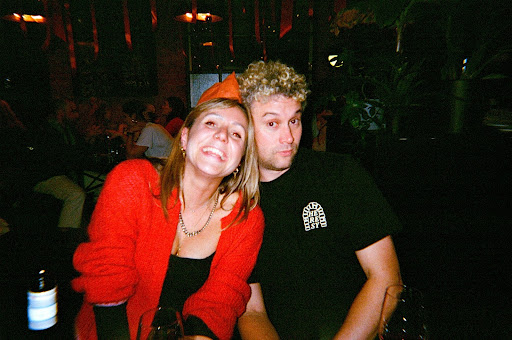
From left to right: Olivia Atkins, Rollo Hollins.


