


5 Minutes with… Kenny Herzog


After 10 years as an agency creative at shops including Ogilvy, Nicebigbrain and Toy, Kenny Herzog made the leap into directing in 2008 with his first endeavour, the comedic short ‘The Dude’. Written by Herzog, the film went on to become a much-loved national campaign for Bud Light.
Today, Kenny is a director at O Positive, his home for the majority of his directing career. A go-to director for comedic commercials featuring A-list athletes and celebrities, his relatable, matter-of-fact storytelling style can be seen in recent work for ESPN’s iconic ‘This Is SportsCenter’ campaign.
Another case in point is his high-profile series of spots for Foot Locker via BBDO New York, which helped spark the long-awaited ‘Fight of the Century’ between Manny Pacquiao and Floyd Mayweather. In a Sporting News article, Pacquiao’s trainer Freddie Roach credited the Foot Locker commercial with shaming Mayweather into finally agreeing to the bout.
But for all the scale and star power of his commercial work, one of the most profound influences on Kenny’s approach to craft came from a far more personal project – a home movie made for his wife to mark their 10th wedding anniversary.
To find out more, LBB’s Addison Capper caught up with Kenny.
LBB> You started out as an agency creative before moving into directing - what made you decide to make that leap?
Kenny> Directing had been floating around in the back of my mind for a while, but I never really had the time – or the nerve – to focus on it. I was working as a copywriter and writing for Jim Jenkins, who was directing for hungryman and doing a lot of direct-to-client work for TV networks. When he called and said, ‘I’m starting my own production company. You should think about directing,’ it kind of gave me permission to take that idea seriously. I went back through a pile of old scripts and thought ‘Dude’ could make a great spec spot to pull off. After one shoot, I knew I wanted to make the leap. And, cosmically, that one spec spot snowballed into a national campaign for Bud Light.
LBB> Did that early success change your path or confirm you were onto something?
Kenny> Dude… it absolutely changed my path. Even though it was just one spot on the reel, Jim Jenkins and Ralph Laucella felt that they could get me projects as a director. So I was signed to O Positive Films shortly after that.
Honestly, it was eye-opening. The first time I was on set, something just clicked. Things move so fast on a shoot that it sort of wakes something up in me. That’s when I feel most creative – like everything’s firing at once.
LBB> How do you think your creative background still shows up in the way you approach briefs or collaborate with agencies today?
Kenny> I spent most of my agency career married – creatively speaking – to Jim Larmon, who was an idea machine. Jim would have these great ideas and I would try and shape them into scripts. It was about setting up the joke and shaping the beats so that the final joke landed with impact.
Looking back, my directorial work is just that same process: taking a premise and trying to make it entertaining, unforgettable, and just slightly sharper than it is.
Being a writer on the agency side also helped me realise how important collaboration is. It was very frustrating for me to have a script and give it to a director and let them take it the rest of the way. So being on the other side of that, I strongly believe in constantly kicking around ideas and collaborating with the original visionaries at every step.
LBB> Over the years, your work has developed such a distinctive comedic tone. What makes comedy work for you? Is it in the script, the casting, the rhythm, or something else entirely?
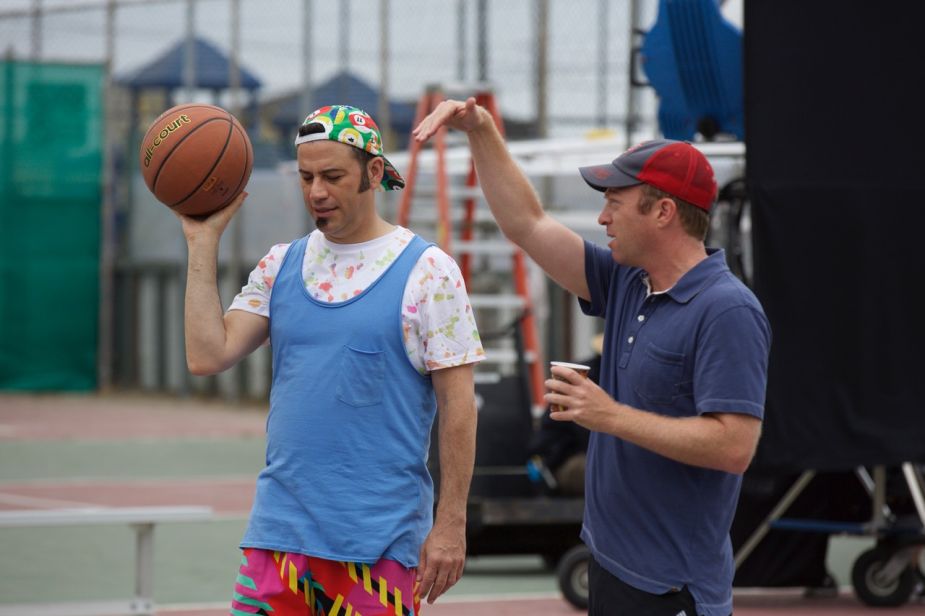
Kenny> Well, comedy needs all of those things or the whole contraption collapses. But I’d say it all comes down to nailing a performance. Whether I’m working with seasoned actors or pro athletes, I’m chasing the funniest, most authentic moment I can get out of them.
LBB> What do you think defines great comedy direction?
Kenny> The relentless pursuit of coming up with a funnier line, sharper beat, or better moment all the way throughout the process.
LBB> What do you hope directors who are just starting out in the business take away from watching your reel?
Kenny> On my reel, there are a few spots for the same brand. When you’re just starting out, I think that’s something to aim for – not just doing one job and moving on. If you have a great experience on set, that chemistry shows in the work. And more often than not, it leads to more opportunities to do even better work together.
LBB> For the New York Lottery spot ‘Why Four?’, you were directing the actor while also standing in as the other characters in real time. How did that process work on set?
Kenny> Let me start by giving a massive shout-out to Blake DeLong. He absolutely crushed the four performances.
The challenge was establishing the rhythm of a four-way conversation while technically only shooting one actor and capturing plates of him in every position. I figured it would be better if he had other actors sitting around the table to play off of. But I worried directing three other performers might become a bit of a circus. So instead, I found two extras who matched his height to keep the eye-lines consistent when talking to his other ‘brothers’, and I took the fourth chair myself.
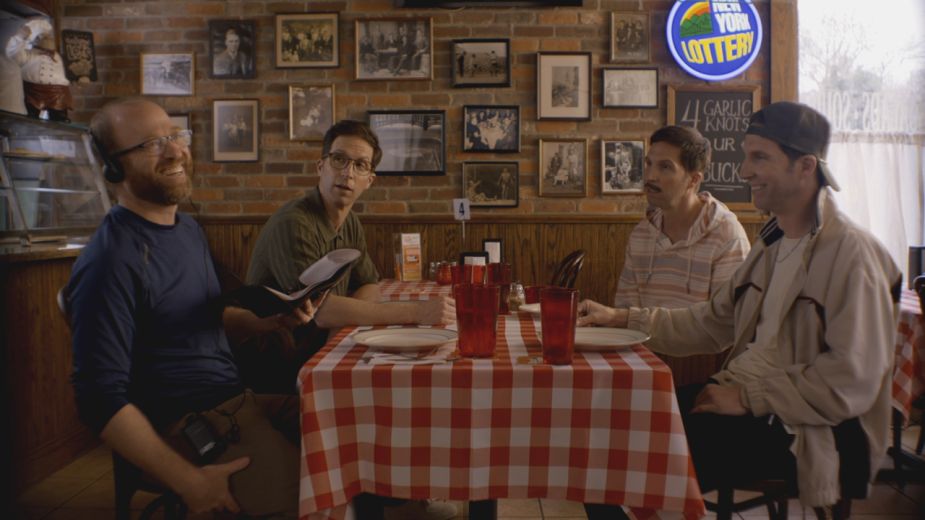
I gave the extras one line of dialogue, so our actor would know to look over to them at the right moments. Then I’d move around between seats, reading the other brother parts and feeding him lines. It ended up being the most direct and effective way to control the rhythm and energy of the scene. And most importantly it allowed the main actor to stay completely locked into the reality of conversing with three other people.
Honestly, I still wasn’t sure how it was all going to come together when we wrapped. Then the editor, Chris Franklin at Big Sky Edit, who’s just a master at finding rhythm and tone, showed me his first cut, and it completely blew me away.
LBB> The Foot Locker campaign that allegedly helped make Pacquiao vs Mayweather happen - that’s quite a legacy! What was that experience like?
Kenny> Before these two spots, Foot Locker was already making waves in sports culture – thanks to the conversation-starting work coming out of BBDO, led by the creative brilliance of Dan Lucey and Chris Beresford-Hill.
Targeting Floyd Mayweather, who’d been dodging Manny Pacquiao for years, was a genius idea. The spot didn’t allegedly help make the fight happen – it did. There are interviews with Manny, his trainer Freddie Roach, and even Mayweather himself saying the taunting and teasing from that first Foot Locker spot pushed him to finally agree to fight Manny.
The first spot was shot in General Santos City in the Philippines, Manny’s hometown, his gym, and where he was actually the mayor. (Also, fun fact: it’s the tuna capital of the world). Manny was pretty nervous about having to act, and he didn’t want to do a lot of takes, but it worked. It was raw, it was fun and it lit the boxing world on fire.
By the time I shot the second spot in LA, the first one had already blown up – talk shows, ESPN, everywhere. And the guys at BBDO brilliantly capitalised on it. They wrote what’s still, to this day, the best script I’ve ever been handed. And I think it’s the best directing I’ve ever done – getting a nuanced, funny performance out of someone who’s been punched in the noggin about a million times, plus he understood very little English.
Six months earlier, on the first shoot, getting a performance out of him was like pulling teeth. He hadn’t acted before. This time, in the second spot, he had to play a version of himself that was heightened, expressive, and a bit self-aware.
And he delivered. An emotional roller coaster: confusion, excitement, disbelief.
If you watch both spots back-to-back, the difference is night and day. By then, because of all the hoopla around the first spot, Manny fully understood what we were trying to do. And he absolutely nailed it.
LBB> You’ve worked with a lot of star athletes and celebrities. How do you get natural, funny performances out of people who aren’t professional actors?
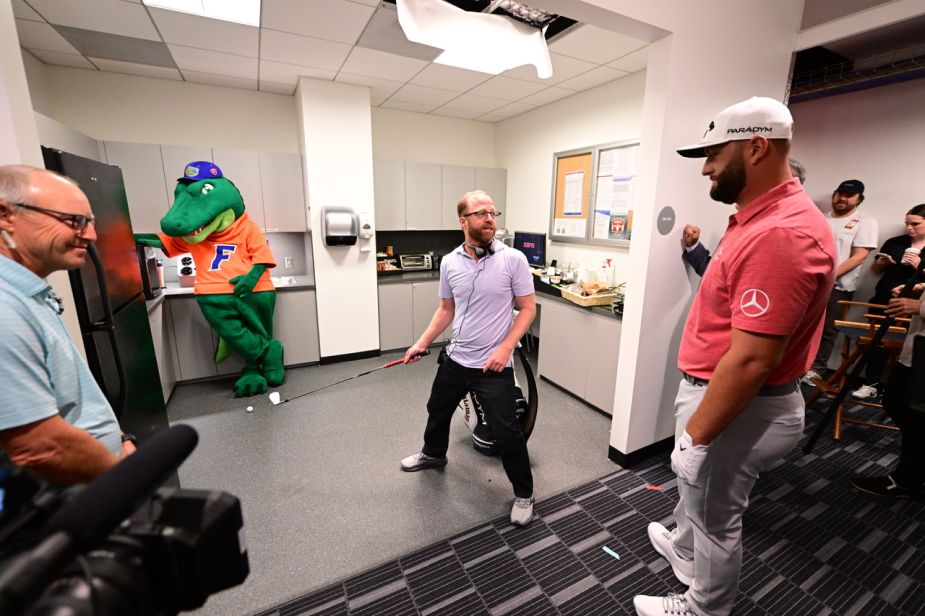
Kenny> Well, I’ve had the advantage of getting really clever scripts that call for natural, grounded performances. A prime example is the ‘At Home with Baker Mayfield’ campaign by Gregg Nelson and Mike Sullivan at Arnold, which showed Baker Mayfield at home doing relatable home-owner stuff. I find that most of the more successful athlete spots are the ones that show athletes in a human, relatable way. So lots of times it’s about guiding them to understand that their natural demeanour is what makes the spot work – it’s less about acting and more about avoiding the urge to try too hard.
It all starts at the first meeting. I’m just out to earn their trust. Trust that I have their best interests in mind. That I’m going to make sure they come across funny and likable.
The other big part of it is knowing or sensing when an athlete has had enough and it’s time to move on to something else. I’m always prepared with alternate ideas or lines for them to try in each setup, even if we know they won’t make the final cut, just to keep things feeling fresh for them and to avoid that repetitive delivery that happens when you say the same line over and over. That’s when they’ll look for an escape back to their trailer. Giving them a few different dialogue options helps them stay present, keeps the energy up, and sometimes even uncovers something funnier or more natural than what was scripted. After that, I like to circle back to the original line – it’s amazing how often they approach it with a fresh perspective and a better rhythm.
LBB> Comedy is evolving fast – from TikTok humour to deeply cinematic brand storytelling. Where do you see your work sitting in that landscape?
Kenny> As much as comedy is evolving, it kind of stays the same. It’s got to be funny. I’d say I don’t live in one particular corner of comedy. I shot a spot for E&Y that parodies the spy thriller genre and really leans into that cinematic feel. And I just finished some fun TikTok content with simple set ups, for Uber Eats and Tide. The look needs to be in service of the humour.
LBB> Looking back, which campaigns feel like career milestones, either because they taught you something or pushed you creatively? Pick a few and give us some anecdotes!
Kenny> I’d say the first spot I shot after signing with O Positive was a milestone. It was a promotion for Comcast for a free call to mom on Mother’s Day out of Goodby. The concept was simple – a mom faints because her son calls her. It felt like a solid idea, but I thought it would be much funnier if we had moms from all over the world fainting and landing in different, unexpected ways. Since it was the first script I’d be directing that I hadn’t written myself, I wasn’t sure if I should push them or not – if I could pitch changes without offending anyone. But the agency was totally open to it, and it ended up becoming a very funny spot and winning a Lion at Cannes.
Another milestone in my career was a silly home video I made for my wife, Sharon. My wife and I were celebrating our 10th anniversary, and had a big party, and I made a little video to play at the party. It was basically an apology for my shortcomings as a husband. I hired a look-alike actress to play my wife and I played myself. It was decidedly low-fi, and never something to share on my director’s reel. Yet, the process of making that video fundamentally recalibrated my entire approach to being on a set. Treat every shoot like a home movie. Strip away the external pressures of a big production, and boil down every set to the essential intimacy of capturing the moment.


