


Collider Brings Tech to Turandot With Avatar Responsive to Every Performance


Collider has created an avatar for Opera Australia’s ‘Turandot’, designed to a real-world scale, and taking over six weeks to make.
The Turandot avatar is an animated clip featuring a slow construction of the opera star’s face accompanied by aria ‘Nessun dorma’, ending with a reveal of Turandot’s face created with armour.
The clip promoted director Ann Yee's imagination of ‘Turandot’, and was created by Collider avatar creator Andrew Thomas Huang, and creative and technical director Glenn Stewart.
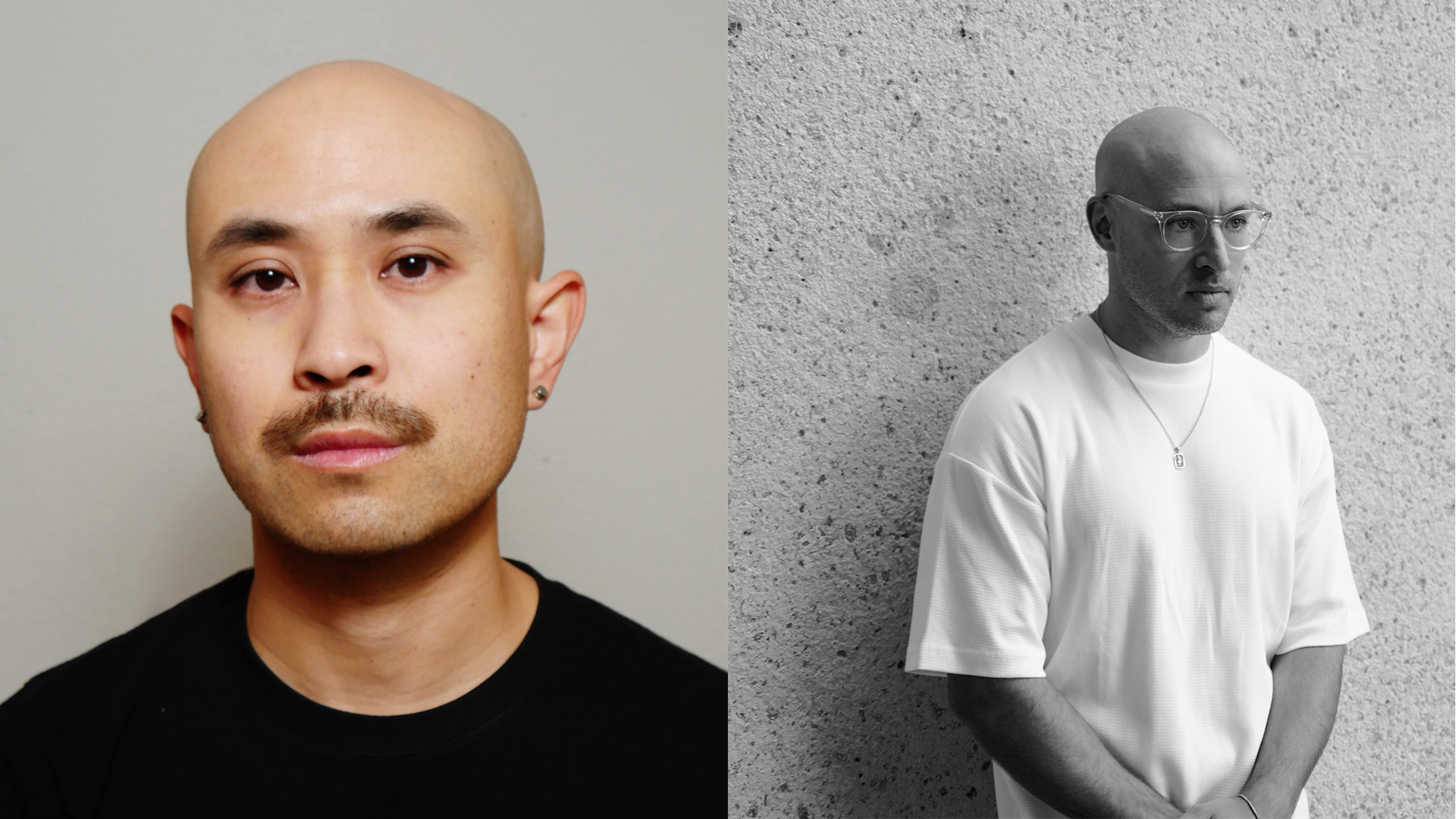
Glenn told LBB creating the avatar was a highly technical and difficult process, as “micro changes” in a conductor’s timing or length of applause affected every decision.
“This wasn’t just something that at the first note you could hit play on and then let it run, it needed to move and flow and react to specific moments and beats in the opera.”
The first step was to previsualise ideas for Turandot’s emotions, then “[break] them down into smaller segments, that could seamlessly loop and hold before the next action would be cued.”
It took six weeks to create the project’s blueprint using sketches and storyboards from the art department.
“I was looking at needing to render up to at least 150,000 frames at anywhere between 4-6k resolution for a finished 50fps output,” he continued, adding he was thankful for previous projects in 2025 that helped prepare him for rendering challenges in this production.
He said “integration with the lighting design was crucial”, because of how powerful the projectors were.
“They can easily flood areas of the stage with light you don’t want, but they can also be used very deliberately to amplify the intensity of a moment.
“To help bridge our projections with the beautiful stage lighting, we designed a number of pre-rendered lighting gradients that would project behind the avatar, mimicking traditional set lighting [which were] trialled throughout rehearsals to bring our two worlds together.”
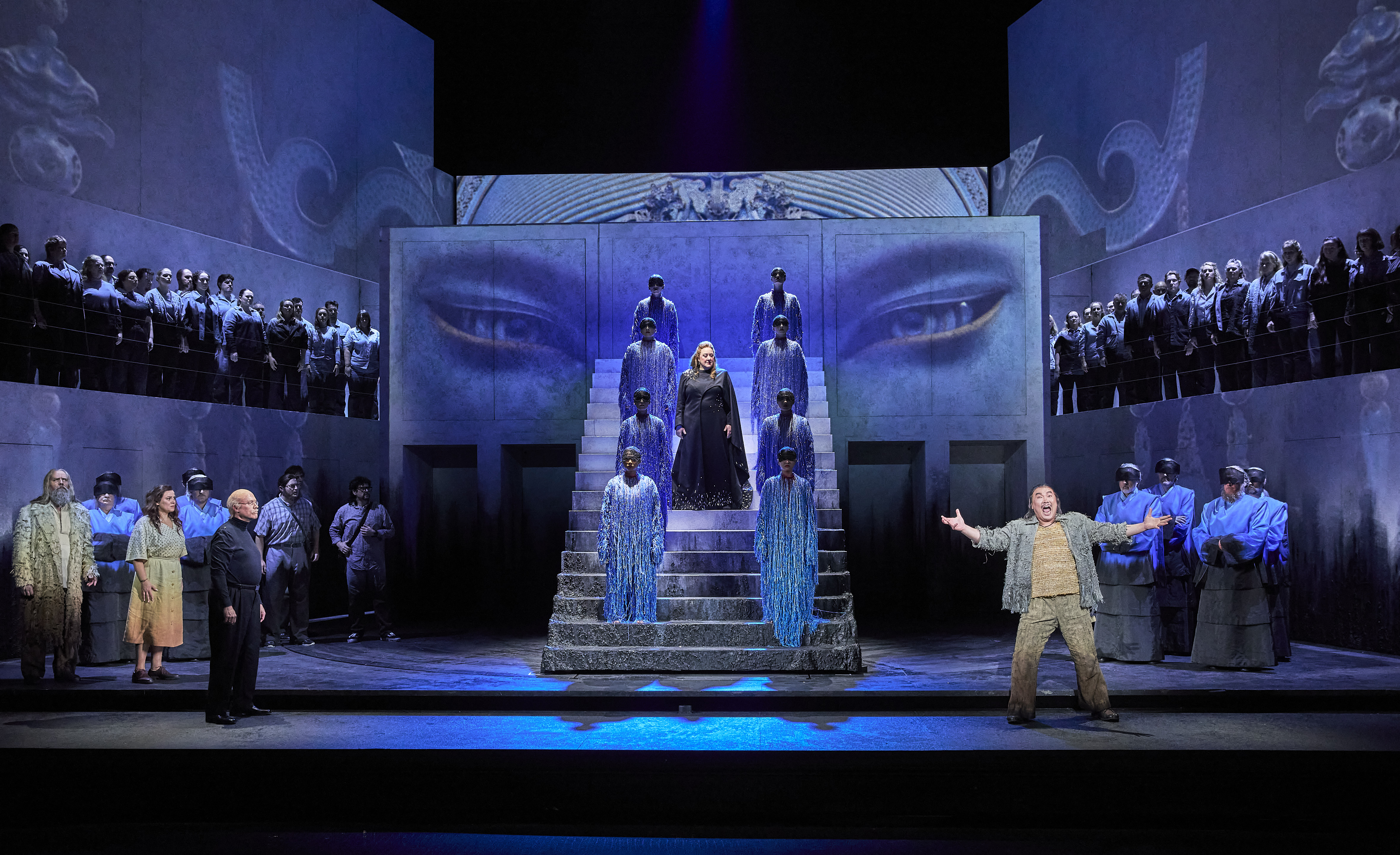
An unexpected challenge Andrew and Glenn encountered was the costume department’s intention to physically recreate the crown, requiring it to be designed at a real-world scale.
The usual shortcuts 3D design afforded were no longer possible, Glenn said, and intersecting geometry was not allowed either.
Explaining the inspiration for the armour, Andrew said it arose from Ann’s “instinct” to symbolise Turandot as a “psychic mask”.
“Turandot needs to arm herself emotionally against the onslaught of suitors trying to claim her.
“To encapsulate her character, we needed an avatar that conveyed power and strength but that also masked her pain and served as an emotional defense.”
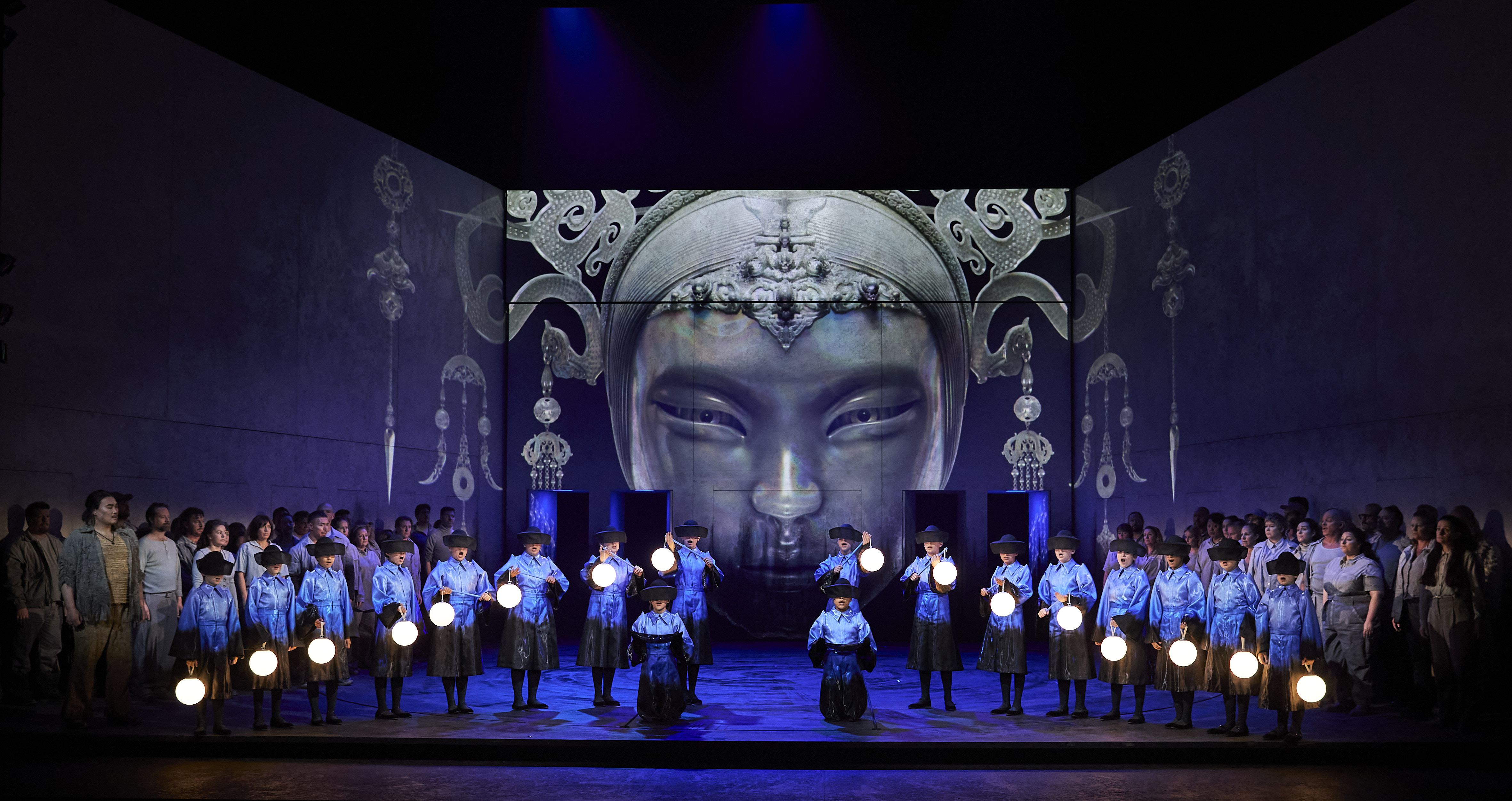
The armour reflects Ann’s vision of a “liquid earth materiality”, Glenn observed, but early explorations were “too liquid” or “too granular”.
“The quality of it had to mirror the black stains of the set, an almost mineral-like accretion that grew up the walls.”
Asked about the animation approach to an iconic opera, blending modernity with tradition, Andrew said it made sense “to utilise the latest tools to give Turandot an aura of futurity.
“Her archetypal presence throughout the piece is elevated by the glowing digital nature of it and the digital realm is where much of our myth making is currently taking place, so I think the medium we chose works wonderfully.”
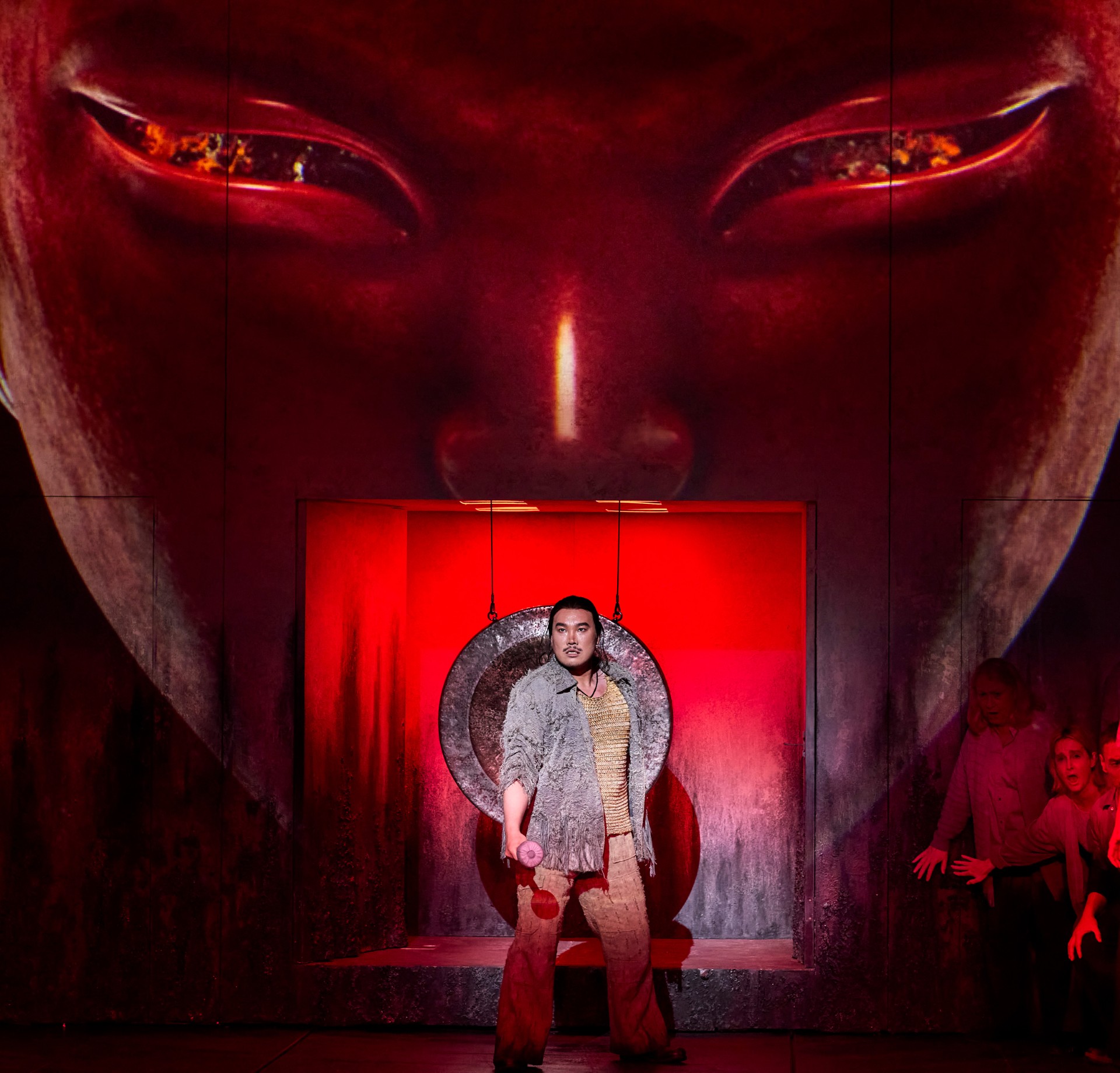
Andrew feels “honoured” to be involved in the production, crediting Ann with making opera “accessible” to him. The director discovered his work when she saw a large-scale sculpture of a Chinese goddess he made for the Sydney Biennale.
“The work we did on Turandot felt like a continuation of this Chinese mythological conversation in my work. So I’m grateful for this chance to dive into opera while continuing my artistic practice in a way that feels totally native to me.”
He added of Ann’s take on the opera,“I loved her sensitivity to the story and her masterful communication as a leader to explain to us the narrative and technical requirements for audiences to feel the emotional depth of Turandot’s journey.
“Her strength of vision was clear to me from the start.”
Glenn said the avatar was one of his “proudest career moments”.
“One of the most rewarding parts of the project was being able to technically crack some really complex creative and logistical challenges.
“Finally seeing it on opening night, with all the cast, choreography, costumes, and lighting, and feeling [Turandot’s] imposing Orwellian presence over it all was incredibly moving.”


