


Keli Holiday, Thelma Plum, Shannon Noll Lead Visual Feast of a Rallying Cry to ‘Ausify Your Algo’


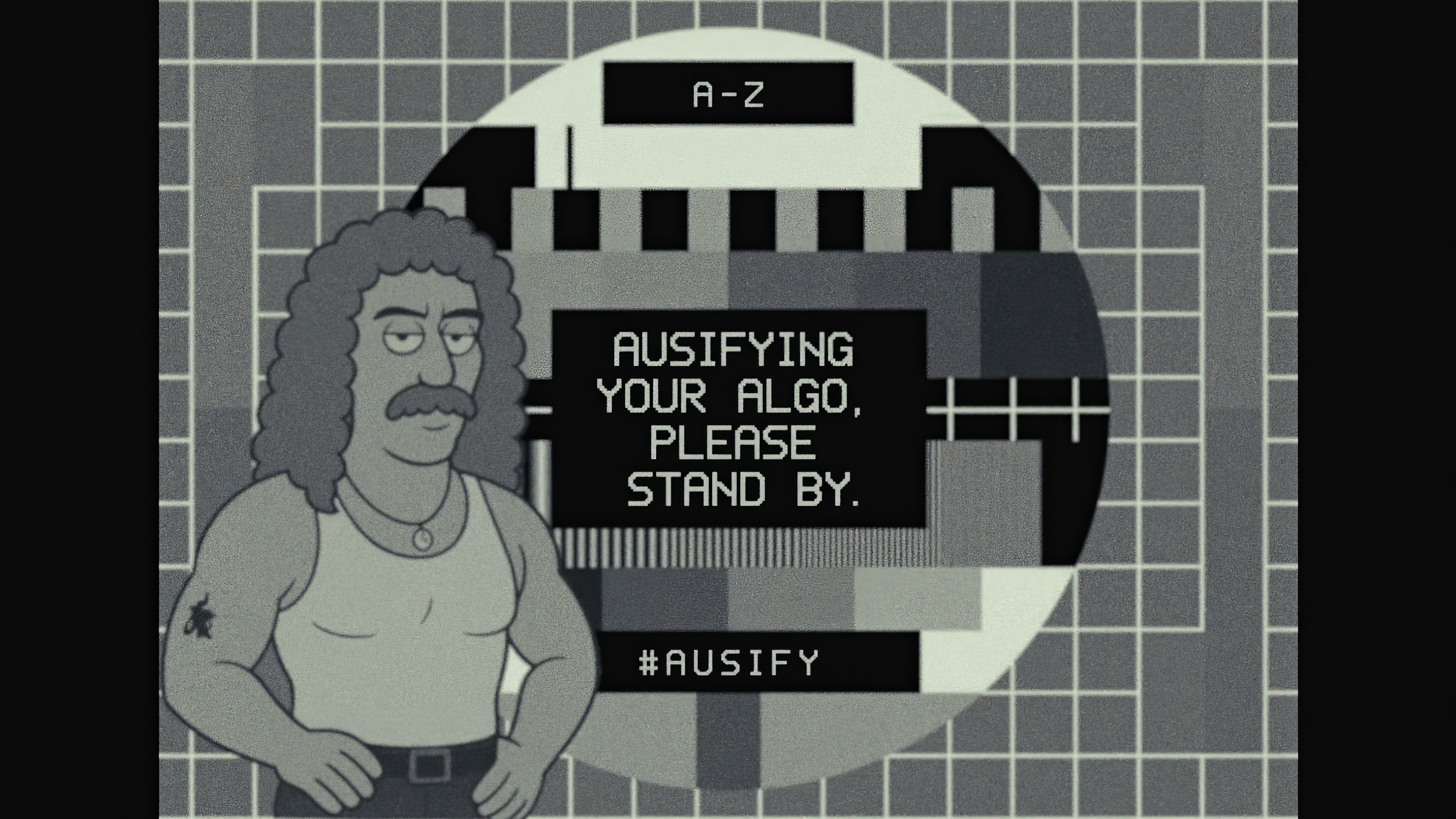
Keli Holiday -- the singer of ‘Dancing 2’ and a recently-launched cover of Bruce Springsteen’s ‘I’m On Fire’ -- has been Simpsons-ified, wheeled across a set, and rendered glitchy in a two-minute film urging Australians to “defy your feed” and “Ausify your algo”.
Cam Blackley and Emily Taylor’s Bureau of Everything led the campaign -- which launches in line with Australian Music Month -- after winning the Music Australia account in August. Partnering with VERSUS directors Tanya Babic and Jason Sukadana, Cam told LBB the project isn’t “a cry for help from the Australian music industry, it’s actually a rallying call” for Australians to embrace an anti-establishment defiance and unclog “the arteries of our airwaves”.
The two-minute hero film opens with a kaleidoscope of Keli turning into a glitchy, disappearing collection of pixels to illustrate how “Aussie music is being ghosted” by streaming platforms’ algorithms (just 8% of the music Australians listen to is local).
Thelma Plum explains how listeners can diversify their feeds by “giving some Fs” and searching the A to Z of Aussie artists: from A.Girl, Baker Boy, and G Flip to Xavier Rudd, Zion Garcia, and 3%.
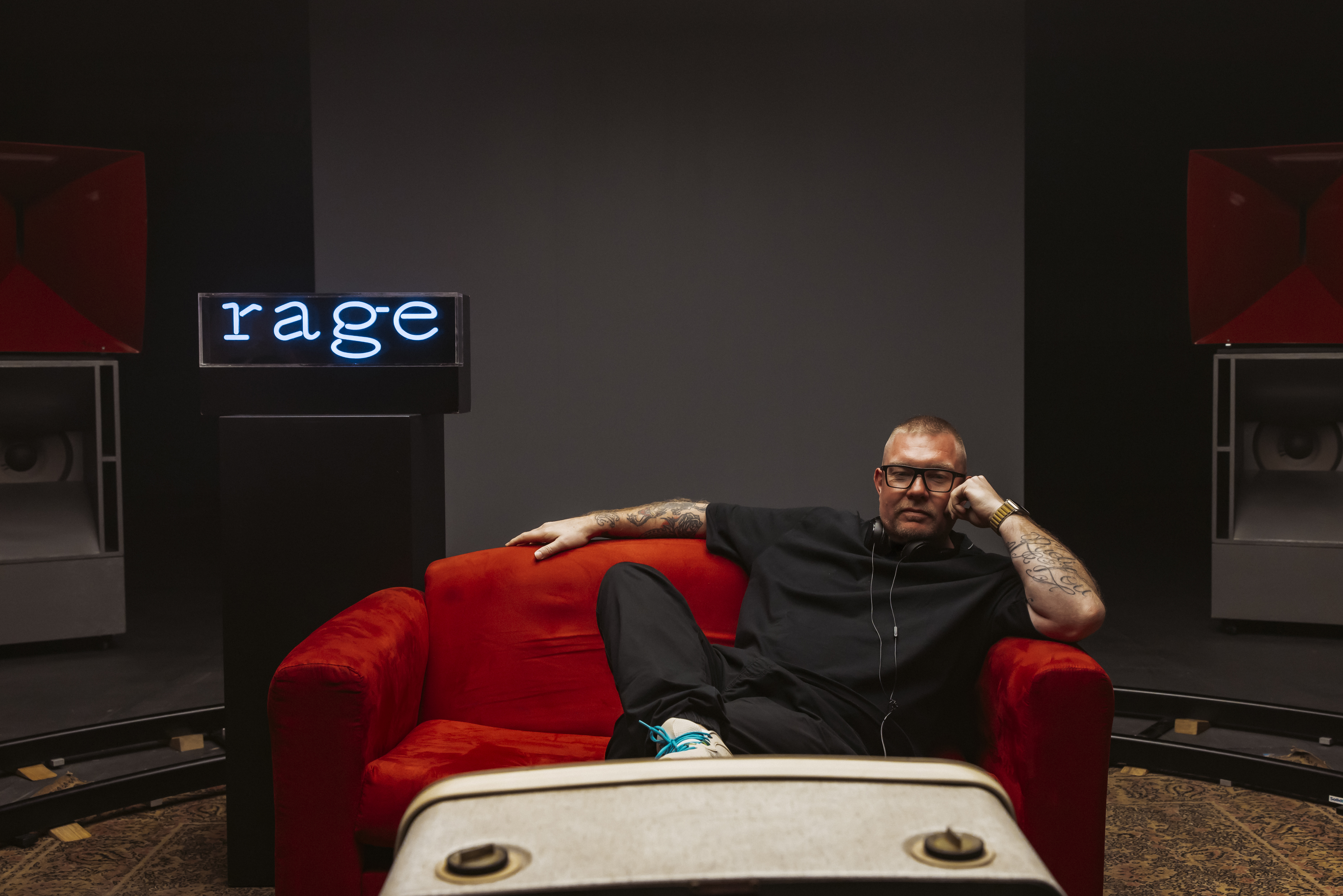

The spot is a visual feast, and an easter egg hunt: Daphne Berry says “searching’s the antidote to monoculture”, a digital road sign rolls with artists’ names in alphabetical order, Ben Lee explains “recommendation models love big data sets” while operating a claw machine hiding his gold record, and an orchestra samples ‘Dancing2’ before the real Rage couch and Shannon Noll appear.
Keli Holiday is having a moment. ‘Dancing2’ topped the ARIA charts following its release, and just last week, his orchestral Like A Version rendition launched for triple j, alongside a cover of Bruce Springsteen’s ‘I’m On Fire’ featuring Baker Boy playing the yidaki. Cam explained he was locked in for ‘Ausify’ before Dancing2 hit the airwaves.
“We may not have got him had it been out there, just because of the scheduling and the amount of PR and promo,” the indie co-founder and CCO said in an interview alongside the film’s directors.
“It blew up. And then they allowed us to use the music as well … We cut up the orchestration from another famous Australian track, knowing we couldn't use it, and then Keli's agent was like, 'Hey, we'd be happy to let you use it [Dancing2].’”
The film was planned in just three and a half weeks, and shot in a day. The production company, VERSUS, had to wrangle a schedule for between 20 and 30 on-set artists, while Bureau of Everything had to continuously rewrite scripts as talent was confirmed, right up until the day before the shoot (and “every single visual device was dependent on the talent,” as director Tanya explained). The ABC confirmed the team could borrow the Rage couch the day before shooting.
Bureau of Everything wanted it to feel like a piece of edutainment, less an ad and more a music video. “We were talking about the way Sesame Street works,” Cam quipped of how the children’s show weaves in lessons, noting “you're being taken along for the ride with it. And that’s really what it needed be. It couldn't be an ad.”
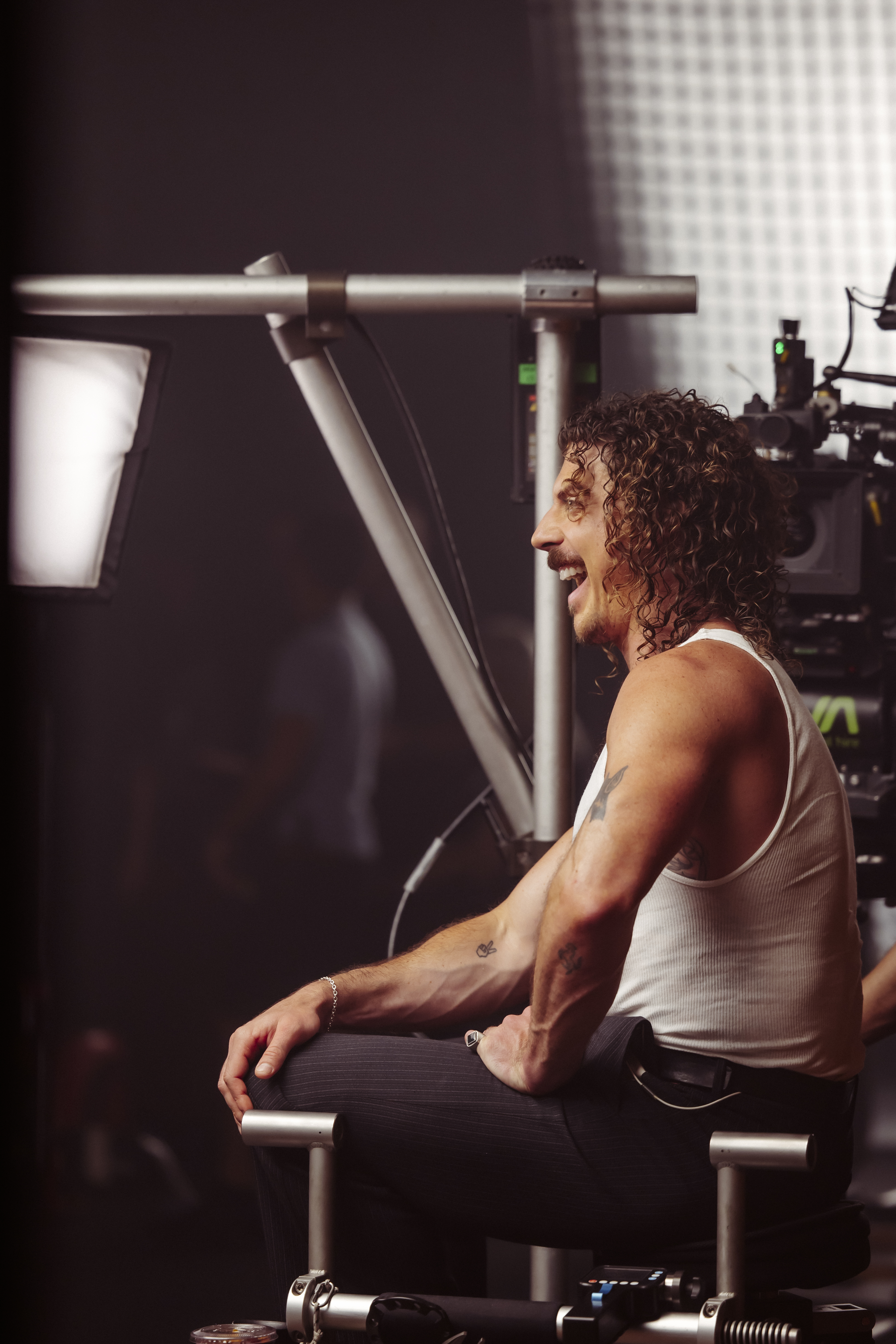
Tanya told LBB she and Jason started by mining referencing from music videos they had already created.
“One thing that's really important in all of our work is just really honing in on an Australian aesthetic,” she noted.
“And that's very difficult to define, but if you look at a lot of our work, you can pick up on this very Aussie vibe, which for us is sort of grounded in cinema from the 70s, 80s, and 90s, like that really cool, in-camera shit that we just love. There's a grit and an authenticity to it that's just so unmistakably Aussie. And that was the other thing, making sure that the Australian-isms visually were peppered throughout without being cringe.”
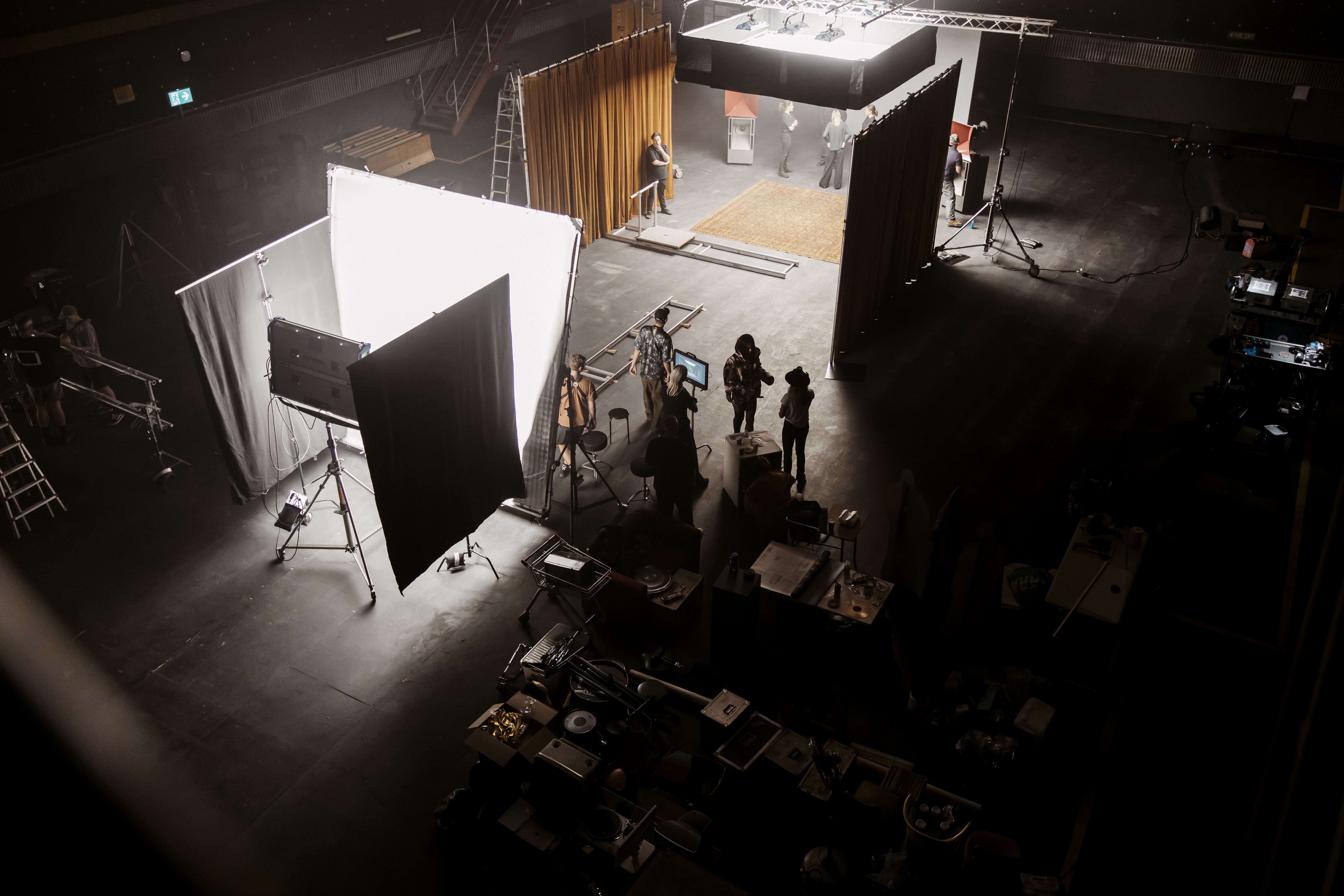
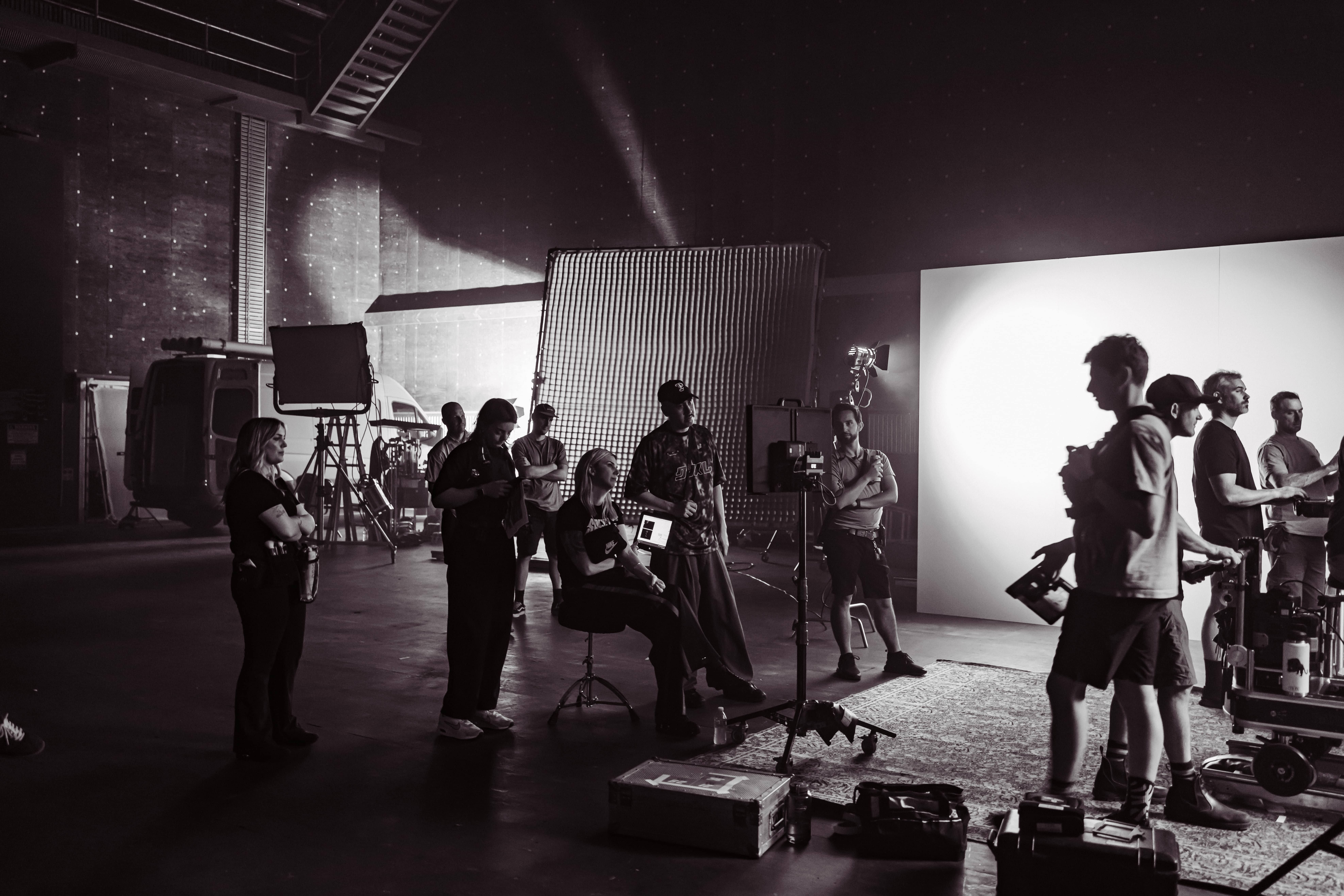
The time and location constraints -- one day, one location -- meant the directing pair landed on a master set and a master wide shot, zooming in on little vignettes they could shape “as the talent evolved and as the copy evolved.” Tanya likened the process of locking in talent as the shoot day drew closer to “when you're playing Tetris and it speeds up and everything's sort of falling down all at once.”
Jason explained, “The first decision we made was to utilise this lifting the veil kind of thing, where you see dolly tracks and all that kind of stuff and so we had these theatrical sets that allowed us to bring new things in and have [elements of] surprise and use a lot of production design.”
One of the original moodboards featured photos of sets from ‘Countdown’, the Australian music TV show that ran across the 1970s and 80s. “They were made for 80 bucks a week back then, probably 1,000 bucks [now], but they're made of paper mache,” Cam said of the feeling he wanted the film to evoke. “They were real and they made sense with the bands but they weren't polished and that's what made it feel Australian.”
Tanya added that on set it felt “DIY”-esque, because “everyone was on the tools doing a whole bunch of different jobs the entire time. If we didn't approach it in that way, if we just approached it like a traditional TVC where everyone stayed in their lane, then we wouldn't have been able to make the magic that we made.”
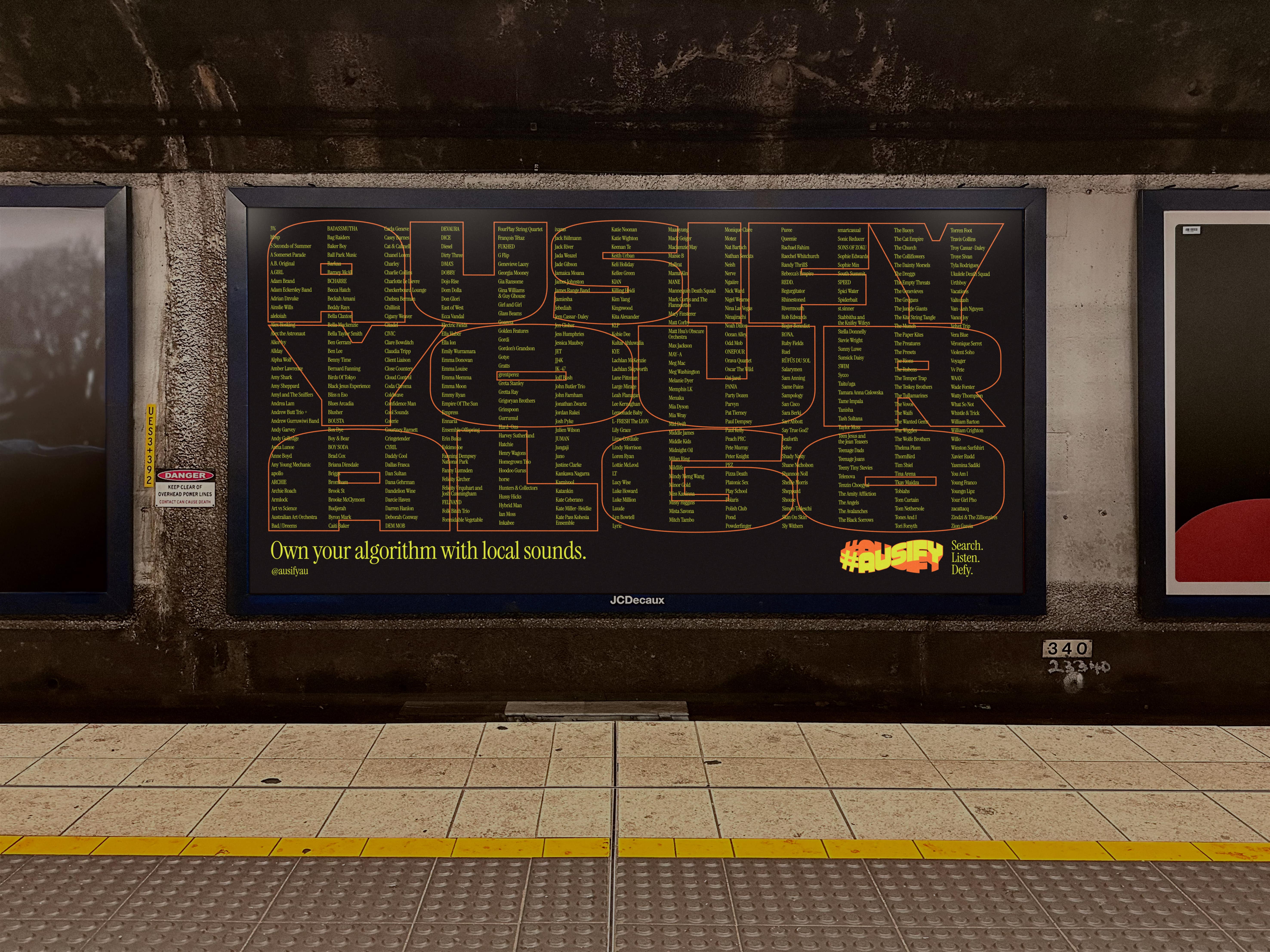
When Bureau of Everything pitched for Music Australia’s business, one slide of the pitch deck featured a poster containing an A to Z of Australian musicians. Those 600 names, laid out en-mass, made Cam think, “that has to be the concept of the film.”
As a structural device, the A to Z gave the film a spine and allowed the crew to establish, and play with, rhythm and momentum. They knew, for example, that the middle section -- L, M, N, and O -- needed to give the audience a breather and anchor the story.
“That allowed us to have a little bit of fun to talk about blowing up monoculture or Ben Lee getting into the science of big data,” Cam said.
“It gives you a little bit of a break from the pace and it allows it to really roll along, but you're captivated.”
Cam and Tanya said Shannon Noll was the crowd favourite on shoot day, with artists who couldn’t be on-set at the same time as him leaving him video messages to watch.
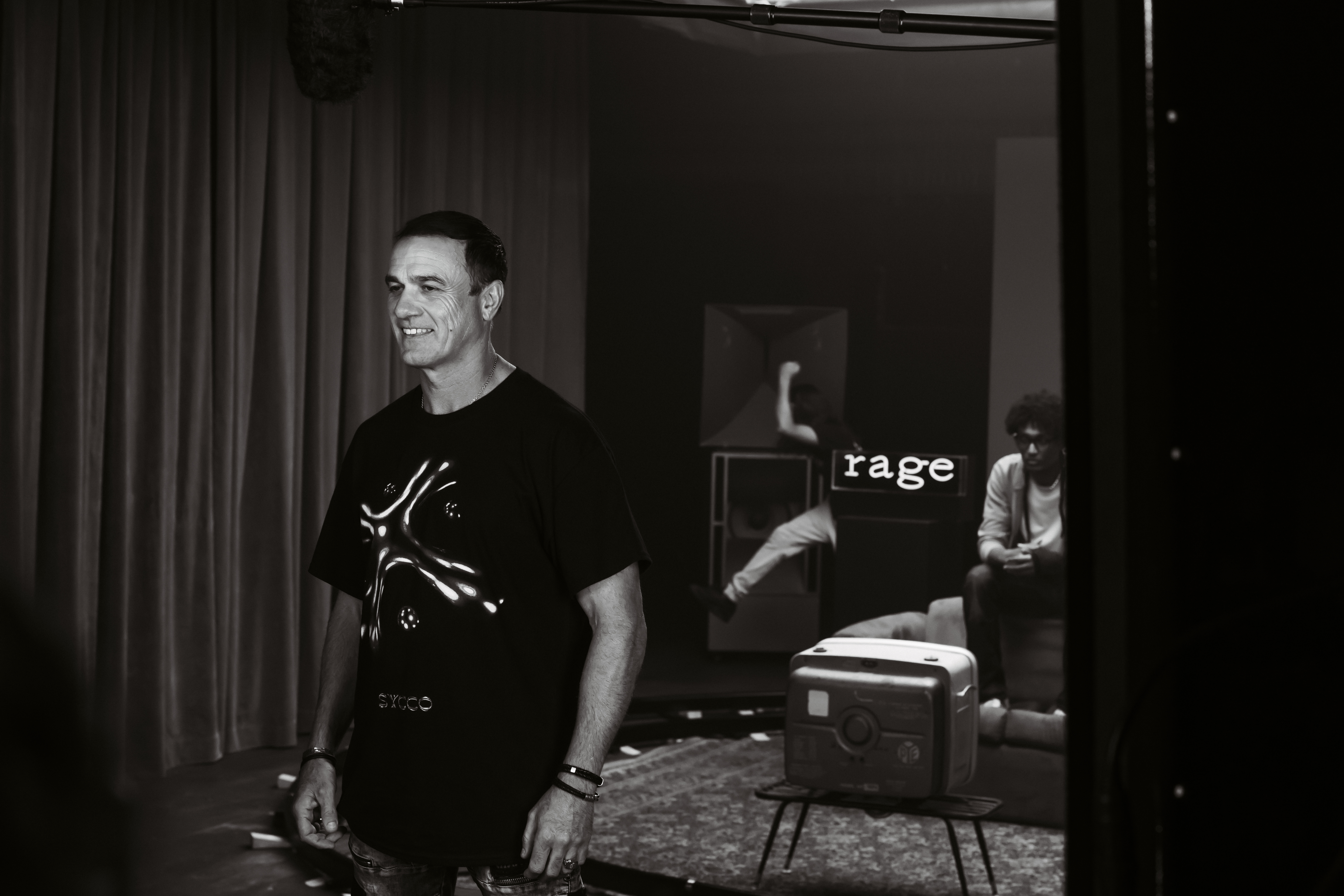
“Imagine having 20 or 30 artists on set,” Cam said. “I didn't know what was going to happen. I didn't know if they would need green rooms or whatever, but they were all sitting outside, having chats. It was a real vibe.”
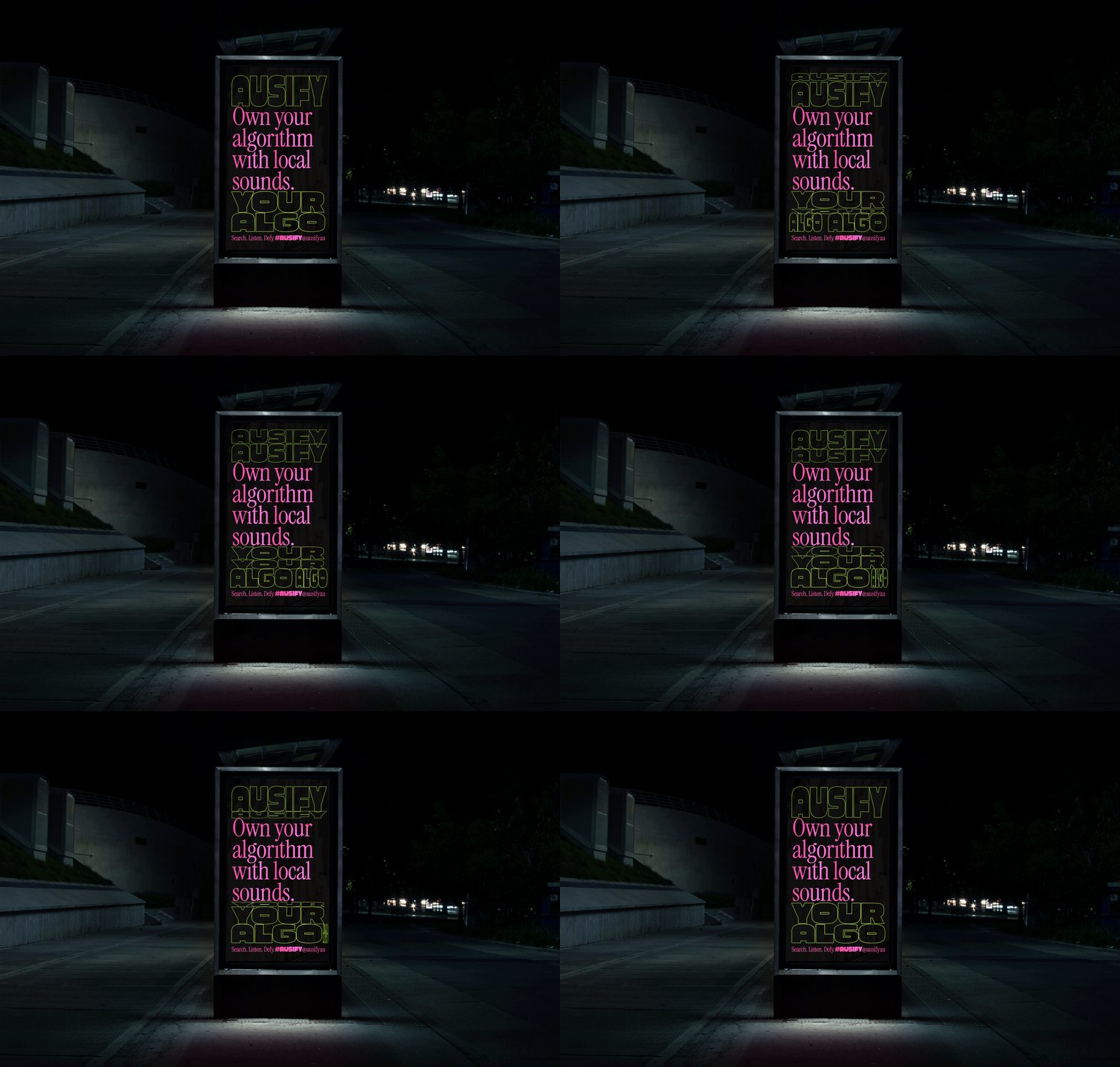
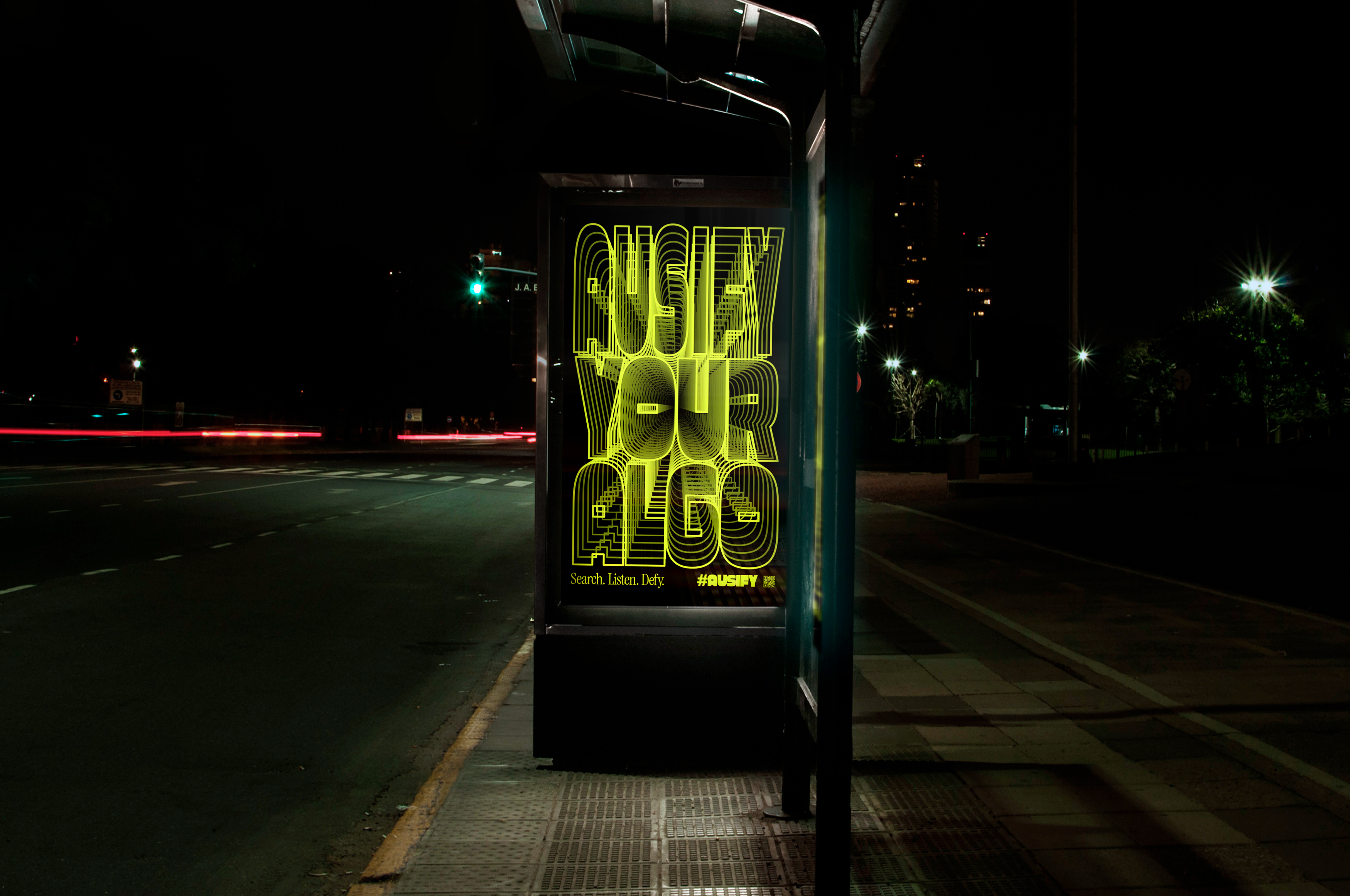
The campaign will celebrate one letter of the alphabet each day, and 100s of Aussie artists, throughout November. Artists, managers, labels, promoters, festivals, venues, and industry partners and bodies -- including radio stations and streaming platforms -- will spread the #AUSIFY message nationally.
The ‘Ausify’ website features a guide on how to “Ausify your algo”, links to local playlists, and a unique generator which serves up a constant stream of Aussie music recommendations, designed by ED Studios and powered by DISCO. ‘Ausify’ will act as a brand platform for Music Australia to build on.
Millie Millgate, director of Music Australia, said the goal is for Australians to “take back control of their algorithms.”
“Australian artists can be overshadowed by global content, although together we can all help change that,” she said.
“Every local artist you seek out, play, follow, save, share, request and see live helps our musicians rise. By choosing Australian music, we can shift our algorithms, support our artists, and help our local scene thrive.”
Cam said Music Australia’s trust allowed the project to “stay fresh along the way”. He and Bureau co-founder Emily Taylor worked on Tourism Australia at M+C Saatchi, and view this project as “another piece in our love affair with the country.”
“I do appreciate the way that the clients approached this and the way it was allowed to move at an interesting pace,” he said. It feels good because it was a good feeling on set. Very little stop-start.”
Tanya and Jason feel they’ve made something “really special” and said despite the logistical chaos, they’ve never felt “so respected and so trusted.”
“We've never worked within the commercial space in such a collaborative and respectful way where everyone was just absolutely going so hard and working so fast and with so much trust and respect for one another. That also meant that the experience of making it was really special,” Tanya said.
“When that experience is wonderful and you feel like you're a part of something, a part of a movement, a part of something special that's actually gonna change things, that's when we look at each other and go, 'Holy shit, I can't believe we get to do this and call it work'. It was just an incredible experience.”
Cam agreed. “It didn't feel like an agency-director relationship at all,” he said. “I want to make more work right now with these guys.”


