


Why UNICEF Canada Brought Back Its Iconic Orange Box for Halloween


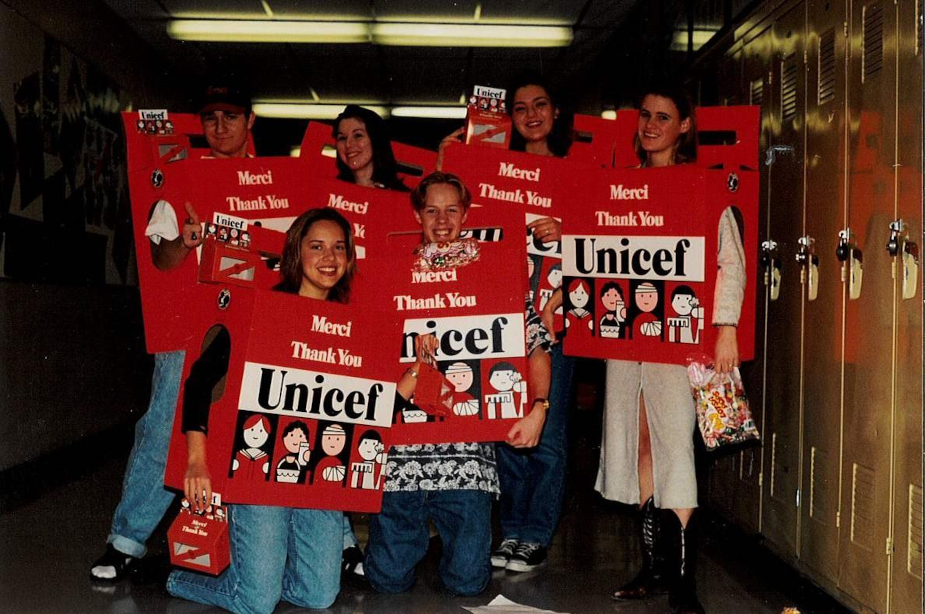
If you’re of a certain age in Canada, and you grew up in a place where trick-or-treating was a prevalent pastime, you undoubtedly remember UNICEF’s orange boxes. Sure, they usually clashed with whatever costume you were wearing, and year after year, a few households would inevitably be confused as to why kids were asking for donations alongside candy, but in a way, that was just a part of the holiday’s magic. It simply wasn’t Halloween without a box of jingling coins hanging around your neck.
At a certain point however, this tradition faded. Perhaps it was with the early part of gen z growing too old for candy collecting, but for a good while, kids would be spotted just in costume – no box to be seen. That is, until this year. Responding to a rising global need for charitable aid, UNICEF Canada, in partnership with creative agency Public Inc. decided that it was time to revive this spooky staple… but with a twist.
Playing off of a growing sense of cultural nostalgia, and the value of adapting to modern donation methods, the two worked with apparel brand KOTN to launch a limited-edition t-shirt depicting this iconic item. Featuring a built-in QR code, this simple concept punched well above its weight, inspiring donations across the country and, crucially, reminding Canadians that Halloween used to be – and still can be – a charitable time.
To learn more about how this came together, LBB’s Jordan Won Neufeldt sat down with Public Inc.’s CEO, Phil Haid, as well as chief creative officer Jill Applebaum, and UNICEF Canada’s chief strategic engagement officer, Sara Zerehi, for a chat.

LBB> From the top, what was the brief for this year’s campaign, and where did the idea to bring back the orange boxes – and put them on shirts – come from?
Sara> This campaign started with a simple but powerful insight: nostalgia and community are a force for good. For generations of Canadians, the orange UNICEF Halloween box served as a shared childhood memory that made ‘giving’ part of growing up. We wanted to harness that emotion to remind people they can still make a difference for children around the world today.
Our brief was clear: revive one of UNICEF’s most iconic traditions in a way that felt fresh, modern, and meaningful. The idea to bring back the orange box came from wanting to reconnect with those who remember it, and invite a new generation to make giving part of their Halloween again.
Phil> With the goal of giving the orange box a new life in the digital age, we landed on a simple, classic t-shirt featuring the box that could be worn with pride and scanned for donations. Parents and caregivers can wear it while kids trick-or-treat, putting the caring back in scaring. It's simple, stylish, and has a social impact; what's not to love? Once we brought the idea to UNICEF, the team was immediately on board.
LBB> Specifically, what made now the right time to bring it back? And what made this approach feel right for the moment?
Jill> Nostalgia is big right now. People long for simple, less chaotic times, especially when you talk to millennials and gen x. Incidentally, those folks comprised the majority of parents who were taking their kids trick-or-treating this year, so we thought, ‘let’s tap into their love of childhood to help them teach their own kids about the power of helping others’.
We also happened to have a relationship with KOTN and knew it would be a great partner, given its values alignment and quality of clothing. A few phone calls later and, as they say, the stars aligned.
Sara> There’s also a real cultural appetite right now for connection and meaning, especially around holidays that bring people together. In fact, the orange box remains one of the most commonly asked about items by Canadians – a clear sign of the goodwill and nostalgia it still holds. So, we wanted to tap into that affection and turn it into renewed impact for children. Halloween has always been about community, and we saw an opportunity to reintroduce the orange box at a time when people are craving that sense of shared purpose.
As for the t-shirt, that was a natural evolution: wearable, shareable, and perfect for the digital age. By embedding a QR code, we turned nostalgia into instant action, making it simple to give anywhere, anytime. It’s a creative way to honour our history while meeting Canadians where they are today.
LBB> Of course, strategy and publicising this broadly was an important part of the campaign’s success. How did you ensure this got as much reach as possible, across various channels?
Phil> Once we had the shirt design ready to roll, we set about pitching to media, influencers and others that we knew could help us spread the world. Most of us who grew up in Canada know the UNICEF box at first sight, and have a deep love for its place in our childhood, so getting audiences on board turned out to be surprisingly (or, perhaps, unsurprisingly) simple.
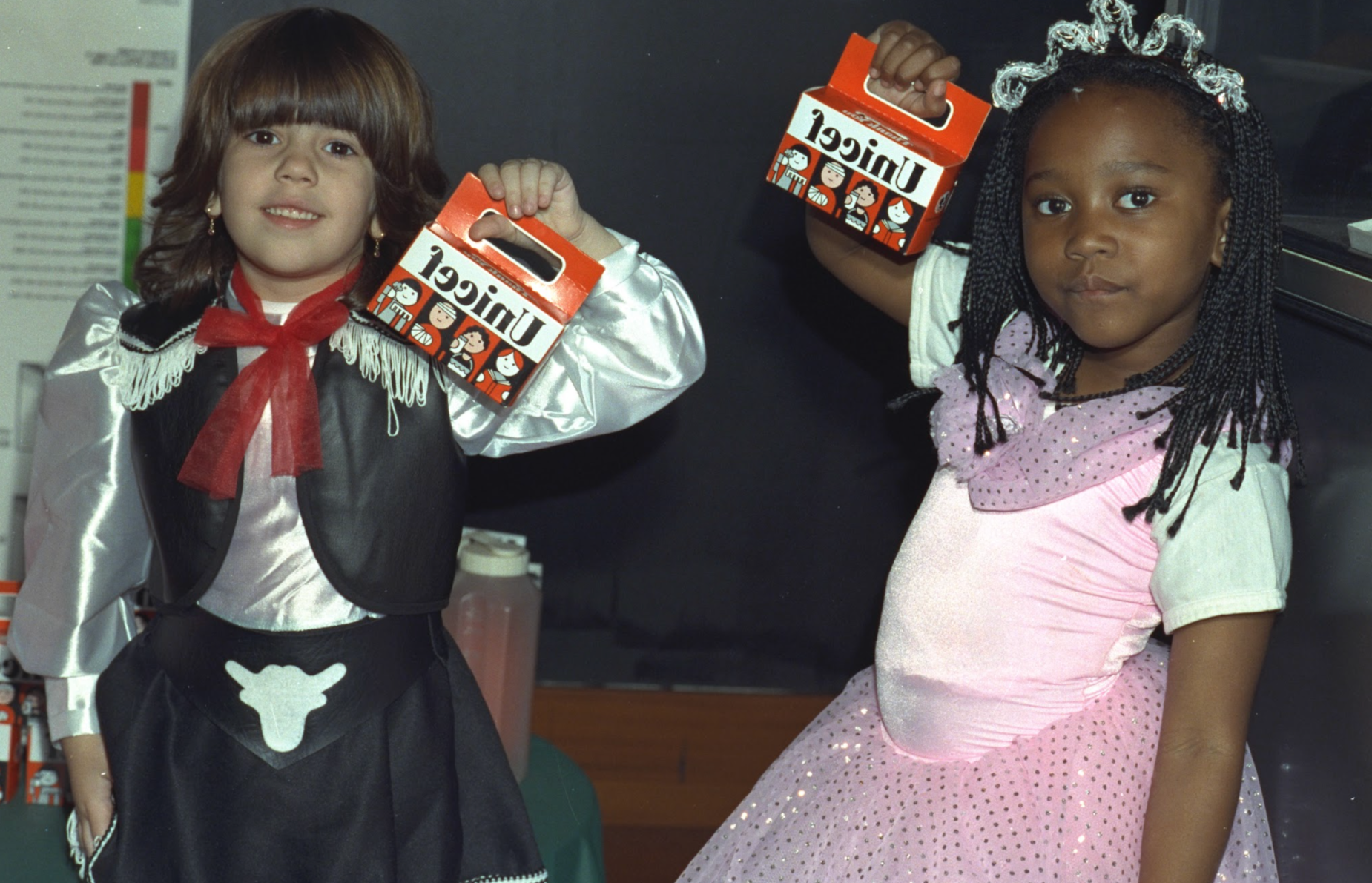
A lot of our inspiration for social content and video promotion came from people’s childhood photos, where they were all dressed up for Halloween with the UNICEF box clutched firmly alongside their candy collection devices. Pairing those moments alongside the newly-designed and wonderfully comfortable KOTN shirt had audiences reacting almost immediately.
LBB> What challenges did you face, and how did you overcome them?
Sara> One of the biggest challenges was striking the right balance between nostalgia and innovation, creating something new that still felt instantly familiar. We also wanted to ensure that the donation process was as seamless and secure as possible through the QR code experience, versus bringing back a physical box. We overcame both those challenges through close collaboration, testing, and staying true to our purpose: making giving simple, meaningful, and joyful.
Jill> It was a little later into the summer when the idea struck and all the pieces fell into place. Getting a new item of clothing launched into the world takes time, but we thankfully had great partners who helped us get things moving as quickly as possible. Despite very fast turnaround times, our new, digital limited-edition UNICEF box shirt was ready to ship well before Halloween!
LBB> What lessons did you learn along the way?
Jill> There is so much power in nostalgia, and it’s even stronger when people remember the good something helped create in the world. We all long for the simpler days of childhood and feel an even deeper sense of pride when we remember we were a part of something that helped people. Those are the kinds of emotions that can help change the world.
Sara> We also learned that innovation doesn’t have to mean starting from scratch. Sometimes, it’s about reimagining something beloved in a way that feels right for now.
LBB> Since launch, how have people responded?
Sara> The response has been overwhelmingly positive. Canadians have shared their memories, posted photos, and told us stories about carrying their orange boxes as kids. Parents are especially excited to share that experience with their own children. It’s sparked a real sense of intergenerational connection.
We’ve also seen strong engagement across our earned media and digital channels, with people embracing the simplicity of the QR code and the meaning behind the campaign.
LBB> How does this campaign fit into your marketing for the future? And is there anything you’d like to share about supporting UNICEF Canada?
Sara> This campaign represents how UNICEF Canada is evolving, finding creative, digital-first ways to connect Canadians to impact. The orange box revival is a symbol of that shift: rooted in our legacy, yet future-facing in understanding how donors behave today.
We’d also love to explore new ways to build on this idea in the years ahead, whether through expanded partnerships or other creative collaborations that make giving easy and culturally resonant.
The humanitarian need for children has never been greater. Conflicts, climate change, and a global funding shortfall have put millions of children at risk, with an estimated 213 million children in need of humanitarian aid. UNICEF works before, during, and after emergencies to make sure children not only survive, but thrive through access to safe water, nutrition, healthcare, and education. Canadians should know that their support truly saves lives. Every donation, no matter the size, helps UNICEF reach children who need it most.
We encourage people to think about giving not just as a reaction to crisis, but as an ongoing commitment to building a safer, healthier world for children. That’s exactly what the orange box represents: small, consistent acts of generosity that add up to something extraordinary.
LBB> Finally, what did the opportunity to bring back the orange box mean to you?
Phil> The thing we heard most from so many ‘Publicans’ was the joy in the idea that they could share a moment from their childhood with their kids – one that teaches us all to look for small ways to do good and help others. We love Halloween, but it’s all the better when you pair it with the chance to put the caring back in scaring.
Sara> It's incredibly meaningful. The orange box is part of our national story; it taught generations of Canadians what it means to care for others. Bringing it back reminds us that those values are still alive and needed today.
For our team, this campaign isn’t just about fundraising. It’s about driving awareness, reigniting a spirit of compassion, and reminding Canadians that they can make a difference for children, one small act at a time.


