


UNESCO Launches First Virtual Museum of Stolen Cultural Objects


Theft, looting, and illicit trafficking of cultural property are global scourges of our time, worth billions of dollars and constantly growing. They fuel organised crime and contribute to the financing of terrorism. Since its founding, UNESCO has developed landmark legal instruments to combat this trafficking, including the 1970 Convention on the Means of Prohibiting and Preventing the Illicit Import, Export, and Transfer of Ownership of Cultural Property.
DDB Paris and UNESCO have been working hand in hand since 2020 on the issue of cultural object trafficking. After an initial global awareness campaign, the goal was to go even further in raising public awareness, especially among younger generations. What if we could restore visibility to stolen cultural objects around the world through an immersive virtual experience? This is how the idea of a virtual museum, conceived by DDB Paris, was born.
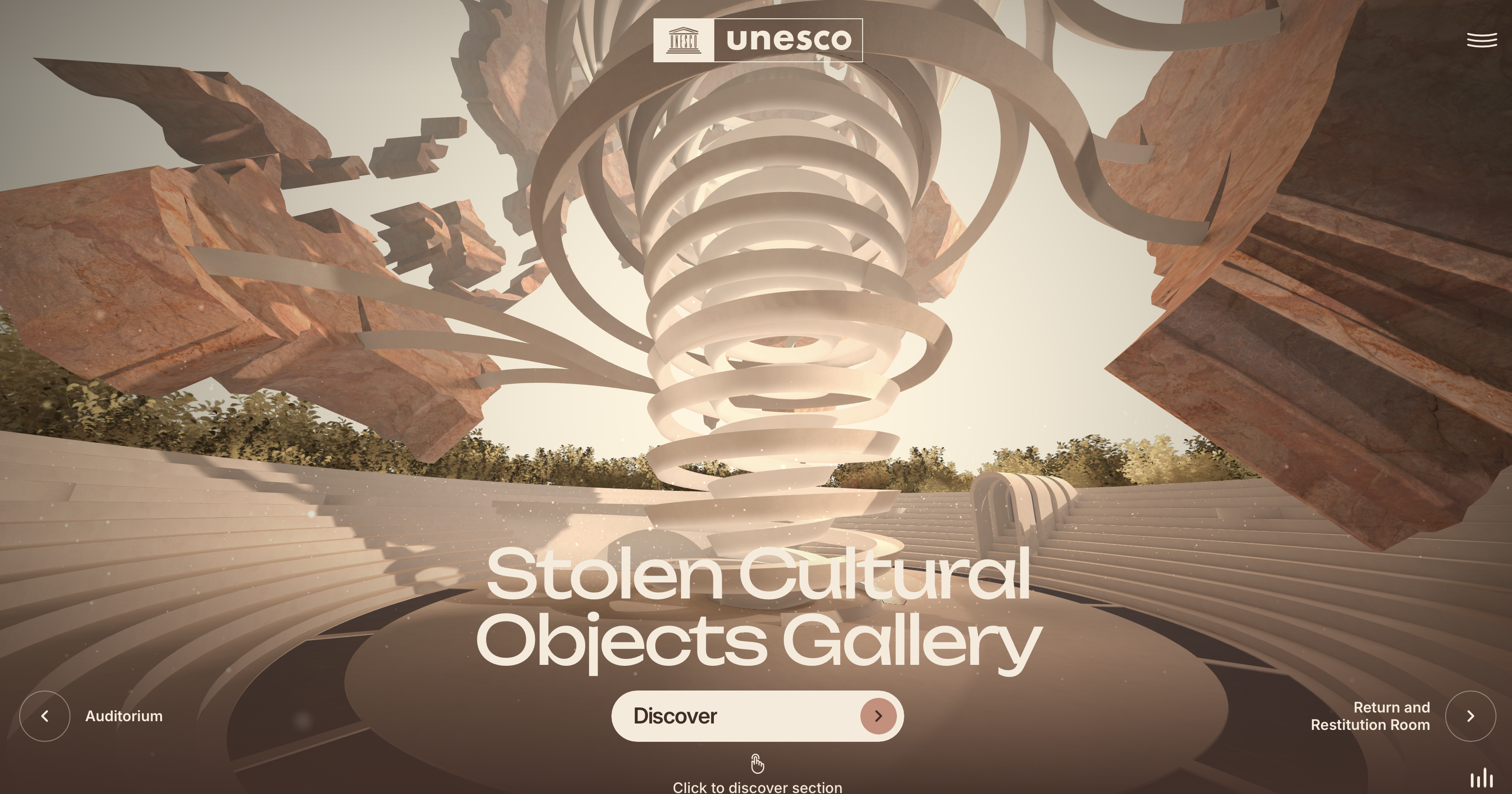
UNESCO has now unveiled the very first Virtual Museum of Stolen Cultural Objects, the result of four years of collaborative work.
The museum features stolen and missing objects from all regions and eras, with the support of Saudi Arabia, the United States, Greece, Interpol, and 44 other countries around the world.
"These objects are virtual. Nobody knows where they are, or what they actually look
like. We try to fill the gaps. We have been working with communities so they can tell the stories behind them," Ernesto Ottone, assistant director general for culture of UNESCO
Alexander Kalchev, CEO and CCO of DDB Paris, continued, “This museum is not just a place for exhibitions. It is a tool for action. By making all these objects recognisable, we make their resale more difficult.”
The museum was designed by Pritzker Prize Laureate Diébédo Francis Kéré, who worked hand in hand with the creative studio makemepulseto imagine and build a highly symbolic place.
"I’ve been thinking about the baobab having roots: cultural objects can be seen as roots that hold the community together," Diébédo Francis Kéré, architect.
This dialogue between an architecture that embodies values and its digital expression opens up new perspectives: it makes the stolen objects perceptible, reveals their symbolic and cultural value, and brings communities together around a shared heritage. makemepulse, in partnership with UNESCO and its member states, has developed a groundbreaking generative AI solution to transform photographs of stolen artifacts into lifelike 3D models, restoring not only their appearance but also their significance. By combining advanced AI with artistic expertise, these cultural treasures are brought back into the public eye, making them both visible and protected from illicit trafficking. Users will be able to share their own gallery of objects within the museum. The more people visit it and talk about it, the more objects can be recovered and returned to their rightful owners. These restored objects will be shown in a dedicated “restitution room.”
"The idea was to build the biggest collection so we can empty our museum in the end, when these objects are returned to their country of origin," Ernesto Ottone, assistant director general for Culture of UNESCO
The museum is now online, following its official inauguration at the opening of the global cultural event Mondiacult 2025 in Barcelona.
The campaign will also be rolled out worldwide in mid-November, primarily through video online, press, OOH, social media, and PR.
Explore the museum: https://museum.unesco.org


