“Real Roads, Real Light, Real Riders”: Behind Triumph’s Ambitious Global Brand Campaign


Boasting over 100 years of heritage, Triumph Motorcycles has earned its reputation for innovation and excellence. Ever since its first motorcycle went on sale in April 1902, the brand has carved out a legacy as a disruptor – never settling and always looking ahead.
Its recent global creative platform and campaign, ‘True Originals Never Settle’, speaks to the brand’s energised spirit. Featuring a lineup of 16 models from Triumph’s Modern Classics range, the spot was filmed across six US landscapes over the course of seventeen days by director Nick Dean through Mojave Productions. The campaign – Triumph’s most ambitious to date – is a two minute-long tribute to the brand’s innovative ethos.
The platform, spearheaded by Triumph’s lead creative agency Drummond Central, was built around the brand’s refusal to live in the past. “The insight was that being a ‘True Original’ isn’t about looking back; it’s about having that same pioneering spirit today,” says the agency’s creative director Kevin Hughes.
With director Nick at the helm, and production from Mojave, the team brought a combination of obsession, authenticity, and grit to the spot.
To find out more about the campaign, and how it's shaping Triumph Motorcycle’s next chapter, LBB’s Abi Lightfoot caught up with Kevin, director Nick and Harrison Mark, executive producer and partner at Mojave productions.
LBB> ‘True Originals Never Settle’ marks a new global platform for Triumph Motorcycles. What was the insight and inspiration behind this new creative direction?
Kevin> Triumph has this incredible history, but the brand refuses to live in the past. The insight was that being a ‘True Original’ isn’t about looking back; it’s about having that same pioneering spirit today. ‘Never settle’ captured that mindset perfectly. It speaks to the engineering, the design, the way people ride these bikes. The line encapsulates the way Triumph keeps moving forward. That’s what shaped the whole platform: a celebration of heritage, but with a very present, very alive sense of momentum.
LBB> The platform consolidates Triumph Motorcycles as innovators within the industry but also celebrates the brand’s legacy – why was it so important to strike this balance, and how did you achieve it in the creative direction?
Kevin> That balance is the magic of Triumph. The Modern Classics have this duality built into them. Timeless design paired with serious modern engineering. Creatively, we had to live in that same space. So we crafted something that feels beautifully made and full of character, but always pushing onwards. Motion became our guiding principle: every frame needed energy, whether it was a shift in light, fabric catching the breeze, or the camera subtly pushing in.
It meant the work could nod to Triumph’s heritage without ever feeling stuck in it. The texture and romance are there, but the tone is unmistakably progressive. That’s how we kept both sides of the brand in harmony.
LBB> Why were Mojave and Nick the right production partners to bring this ambitious vision to life?
Kevin> Mojave and Nick were perfect because they instinctively understand the Triumph world. We’ve worked closely with them for years, and they share the same obsession with authenticity and craft that Triumph lives by.
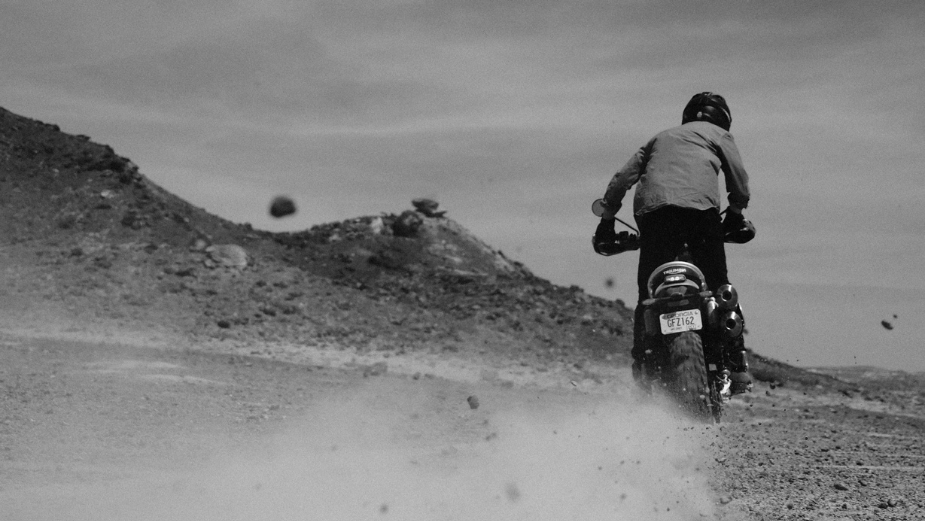
Mojave brought energy and fantastic attention to detail. They helped us push the scale of the idea while keeping it grounded and believable. And Nick has this ability to create something cinematic without losing the grit and honesty of real riding – real roads, real light, real riders. That combination is exactly what the campaign needed.
LBB> The film spans numerous locations in the US - how is Mojave equipped to handle large scale campaigns of this kind?
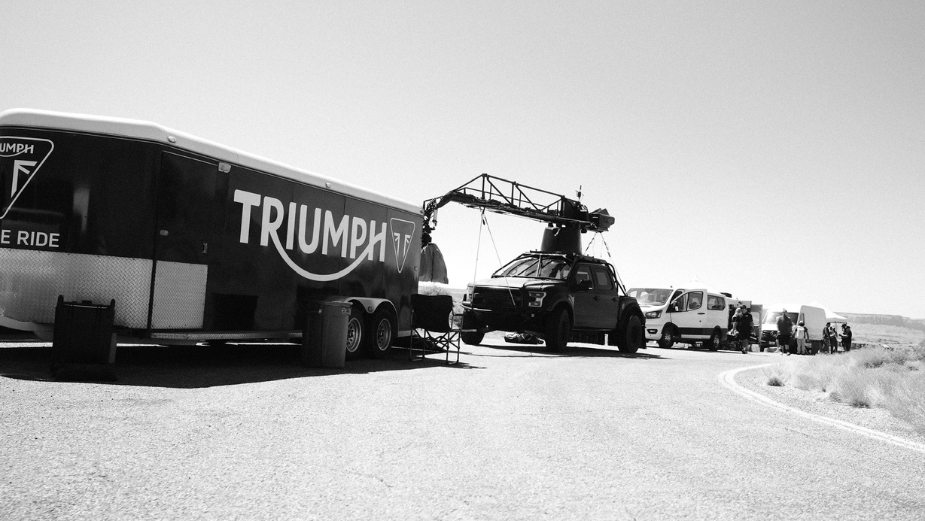
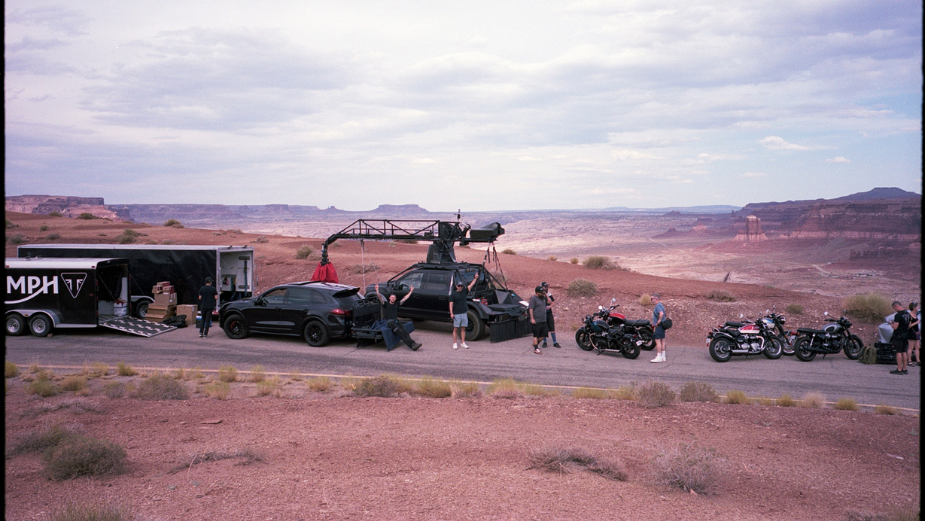
Harrison> We’ve always taken a boots on the ground approach to production at Mojave. With forty travelling crew and six locations across Utah and Colorado, assembling the right team was essential. The challenge lay in managing the realities of two weeks on the road while maintaining the level of care and precision expected of a campaign of this level. The result was a production that ran smoothly, supported the crew, and delivered the high standard we set for ourselves. Something we’re all very proud of.
LBB> What were the key factors to consider when working in each location to ensure the best filming conditions possible?
Harrison> The aim was to showcase the full range of bikes in environments that suited them, while looking for visual continuity throughout. There really was no room for compromise on location. We needed immaculate roads, fast corners, and expansive landscapes, each chosen to highlight a specific model from the Modern Classic range. From 46 degree mornings on mountain passes to 110-degree desert flats, every location demanded planning and preparation to keep the shoot controlled, safe, and consistent.
Nick> All of the locations varied heavily to one another. Heat was a big hurdle. We were shooting in Moab in 110-degree weather and ended up melting one of our lenses, then a few days later we were shooting in 46 weather at 14,000 feet in Colorado.
LBB> Why was Nick Dean the right person to direct this spot?
Harrison> We needed a director capable of uniting the scale and ambition of this campaign, both creatively and logistically. Triumph had never undertaken a brand film of this scope, so it required someone who could bring cinematic weight without losing authenticity. Nick approaches each project with that sense of scale. His instinct for storytelling and visual energy made him the clear choice to deliver something the motorcycle world has not seen before.
LBB> The campaign was in development for 11 months, and production took three weeks spanning six locations. How do you gear up to direct a campaign of this scale, and ensure consistency at each point of the process?
Nick> I’m a firm believer that prep is 75% of my job. I like to have an airtight plan while giving myself room to be agile on the day, with the ability to lean into opportunities that may present themselves.
LBB> The campaign is charged with energy and feels as though it never stops moving between locations, very much in line with the idea of ‘Never Settle’, how did you achieve this?
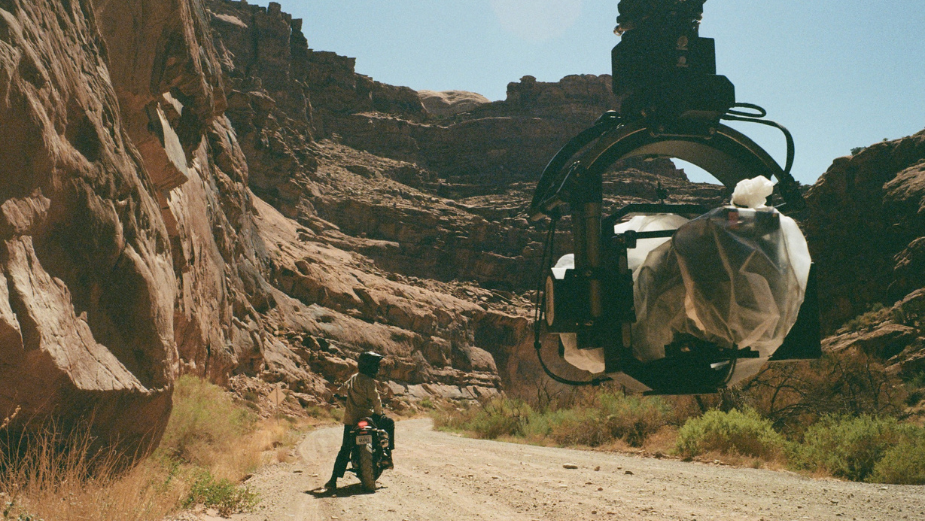
Nick> The riders and the action did the heavy lifting, but I wanted to make this feel bigger. I wanted scale. That feeling where you’re so far out there, you feel small. I’m used to cutting in tighter and tighter to make the action feel up close but I wanted to challenge myself to go wider and not lose it. With the locations we were in, they had to be as much a character as the riders and the bikes.
LBB> You’ve worked with Triumph before, and have also worked with a number of automotive brands. Why do these adrenaline fuelled, action-packed campaigns stand out to you as a director? Where do the opportunities for creativity lie?
Nick> Through my own experience, vehicles have been cornerstones of my own personal growth and change. I don’t consider myself a fanatic of cars / bikes / and the racing world. I wouldn’t say I’m tapped into the culture. But I’ve always been fascinated with heights, speed, things that make us all hold our breath a little longer. There’s something deeper at play with these themes. When I tap into them it’s not the rush I see, it’s something spiritually unlocking. A glimmer into something more that I am most fascinated about.
LBB> Your background is in music and sound design, how does that experience and knowledge come into play when directing?
Nick> My music background has given me instincts that I think developed something of an energy barometer that help me see the shape of a project. Music was my entire life up until around the pandemic. It’s always been my first language. My team always laughs at me because I sometimes describe things in sound design noises. It gets the points across. It’s so ingrained in me that whenever I write a script I hear the music in my head as I see the images. Music has given me a sense of pacing and timing when writing. Giving me a sense of the inhale and exhale of a moment. It’s also been a key ingredient in my editing.