


This Director-Creative Partnership Proves the Power of Unconventional Industry Relationships


While partnerships aren’t an uncommon affair within the landscape of adland, the majority of these are self-contained within the confines of individual companies. Art directors and copywriters pairing up at an agency? Check. Directors running a production company together? Certainly. But a director and an executive creative director teaming up, despite not working for the same business? That’s certainly a little more rare, which is exactly what makes the partnership between Hard Work Club’s Meghan Kraemer and Nick Ball (repped by OPC in Canada, MJZ in the UK and US , ANORAK in Germany, and FINCH in Australia) so fascinating.
Having come together on two campaigns thus far, this newly-minted duo is a fascinating demonstration of the creative potential that can be achieved when people break away from traditional partnership structures. Not only is the work itself outstanding, but at a time when the industry is seeing much change, their mutual appreciation for walking the line between brilliant and bust is fundamental proof that chemistry, regardless of company, is the backbone of great product – something worth watching in the years to come.
To learn more about all of this, and the value of challenging the status quo, LBB’s Jordan Won Neufeldt sat down with Meghan and Nick for a chat.
LBB> A relationship of this calibre between an ECD and director isn’t something you see every day. So, how’d this all kick off? Tell us your story!
Meghan> I’ve been a fan of Nick’s work for a long time, but it was a year ago that I found myself jumping on a Zoom call to brief him on a job. What should’ve been just another Friday afternoon agency-director call immediately felt different. Within minutes, we’d spun into our own creative orbit. By the time the hour was up, our producers looked like they’d just walked in on something they shouldn’t have. The chemistry was immediate.
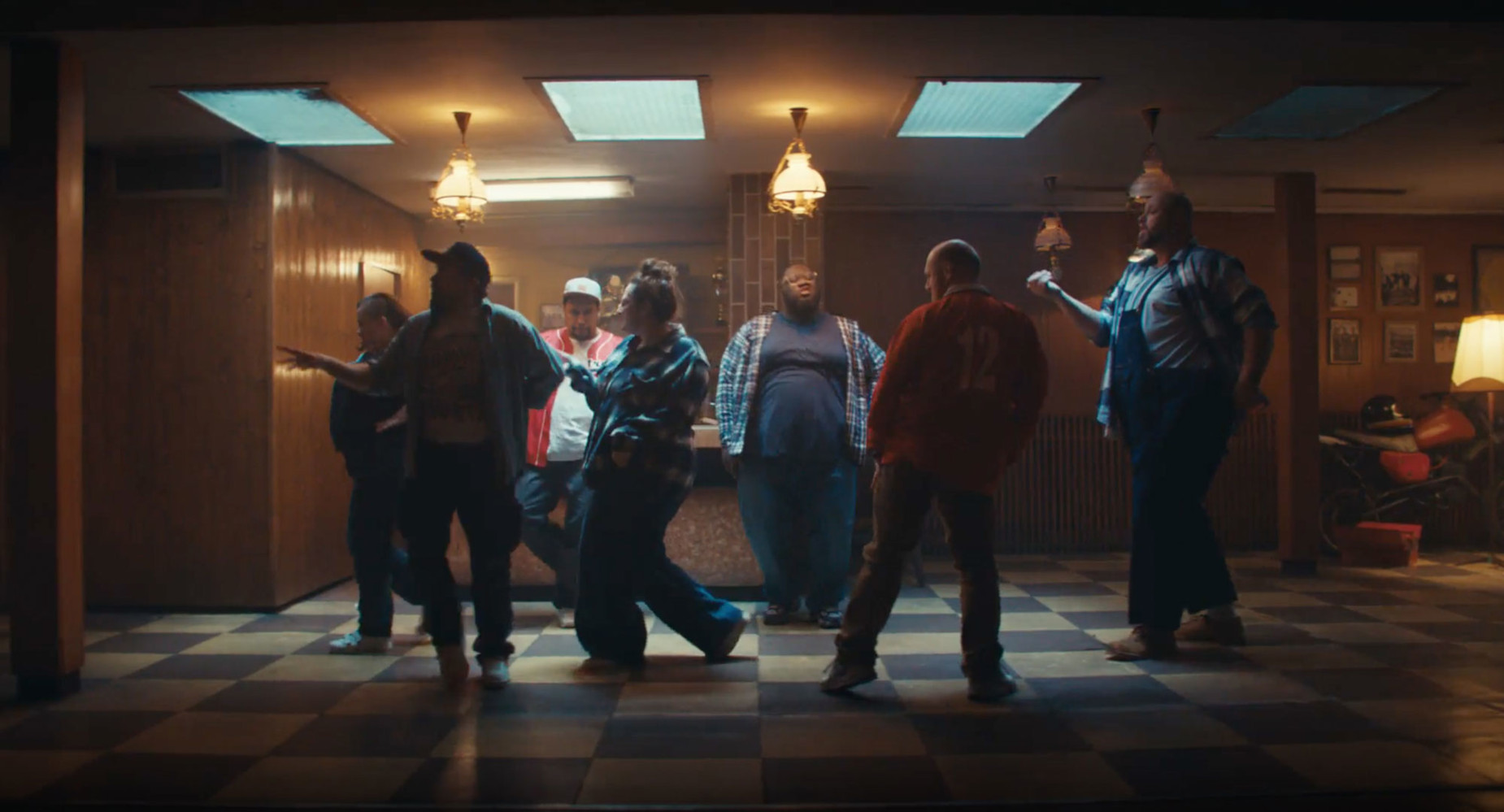
We’ve done two campaigns together so far: ‘Your Door to More’ with DoorDash, and a second project that is yet to be released.
Nick> Prior to that call, I didn’t know Meg or Hard Work Club, truth be told. But that only made it more interesting. I’m pretty selective about the jobs I take on, and even more so about the ideas. I always try to read a script clean, without the baggage of agency or client. Just weigh up what’s on the page, ask myself if there’s actually something worth chasing, then quietly hope the people on the other end want to jam the way I jam.
From the first moment it just clicked. And the rest was recognising that and saying ‘yep, that’s the good stuff’.
LBB> While the chemistry was there, was an immediate ethos obvious from the get-go? What did it take to align on values, and how has that evolved over the years?
Meghan> We both chase work that hits with honesty yet surprises with the unexpected. We’re obsessive with detail. We share a belief that great work has to be specific. Not broad, not generic – pointed, particular and painstakingly considered. These aren’t things we had to workshop or align on. We’re simply wired the same way.
Nick and I are transgressive idealists at heart. It’s clear we both like to crack things open, bend tired beliefs, and dismantle whatever blocks the work. For us, process means blowing up the barriers and staying open to wherever the weird twists of creativity want to go.
Nick> Honestly I’ve never sat down and aligned on values with anyone in my life; that’s agency PowerPoint talk. What actually happened is we got on a call, and within minutes we were off-script, making each other laugh, pushing the idea into stranger, sharper places, and realising we were both allergic to the same boring shit.
That kind of shorthand is rare. It doesn't show up on credentials or checklists; it’s about instinct. It’s about being brave enough to throw out half-baked thoughts and risk sounding stupid. Most people are too scared to do that.
And here’s the difference with Meg. She had the trust and the confidence with her client to let me push – to let me challenge. That’s when chemistry kicks in: when a director’s input isn’t a threat, but a tool to make the work sharper together.
LBB> You’ve emphasised this mutual appreciation for risk – why is this so important for creating great work, and how do you walk the line between brilliant and bust in the process?
Nick> Risk is the only thing that keeps this job interesting. The safe route will give you work that fills a schedule, but it’ll never stay with anyone. The pieces I’m proudest of are the ones that made me feel a little sick beforehand – when the idea felt too audacious or too exposed, and we went for it anyway.
The line between brilliance and bust is razor thin, and that’s the point. I’ve never feared losing jobs. I always want to swing big and swing hard because it’s just how I’m built. And when you look at my reel, it’s really just a record of the moments where that instinct was backed.
But risk only matters if the agency stands behind it, sells it, and holds steady when the client starts to wobble. Without that, it collapses. I’d rather crash and burn chasing something sharp than deliver something polished that no one remembers.
Meghan> Risk is the spark. A staggering 16% of ads are remembered and correctly attributed. That’s it… 16%. We can’t move the needle of our clients’ business with ‘safe’, forgettable work. We have to stick our necks out and swing at something distinct. Not because it’s more courageous or whatever, but because it’s smarter.
The takeaway for me is that risk can’t be carried alone. Agencies have a lot to lose if the work tanks. Nick gets that. He stays all the way through. That makes it easier to hold steady. There’s trust in knowing we’re both out on the tightrope, together.
LBB> Given that you work on opposite ends of the industry, how does that shape the relationship? What can others take from it?
Nick> Company names are just logos on a deck. They don’t mean much once the work starts. What matters is: are they in? Are they pushing with you, in the mud, solving it together?
Meghan> Nick’s got a hundred projects left to direct. I run a creative agency. We live in different countries and time zones, so most of our work will happen apart. But when we do collaborate, that bar is set, and we’ll hold it high.
We’re both bored of the traditional ‘agency versus production’ performance. Those walls don’t exist for us. That’s what others could take away: get out of your corner and stand fully in someone else’s. That’s where the work gets sharper.
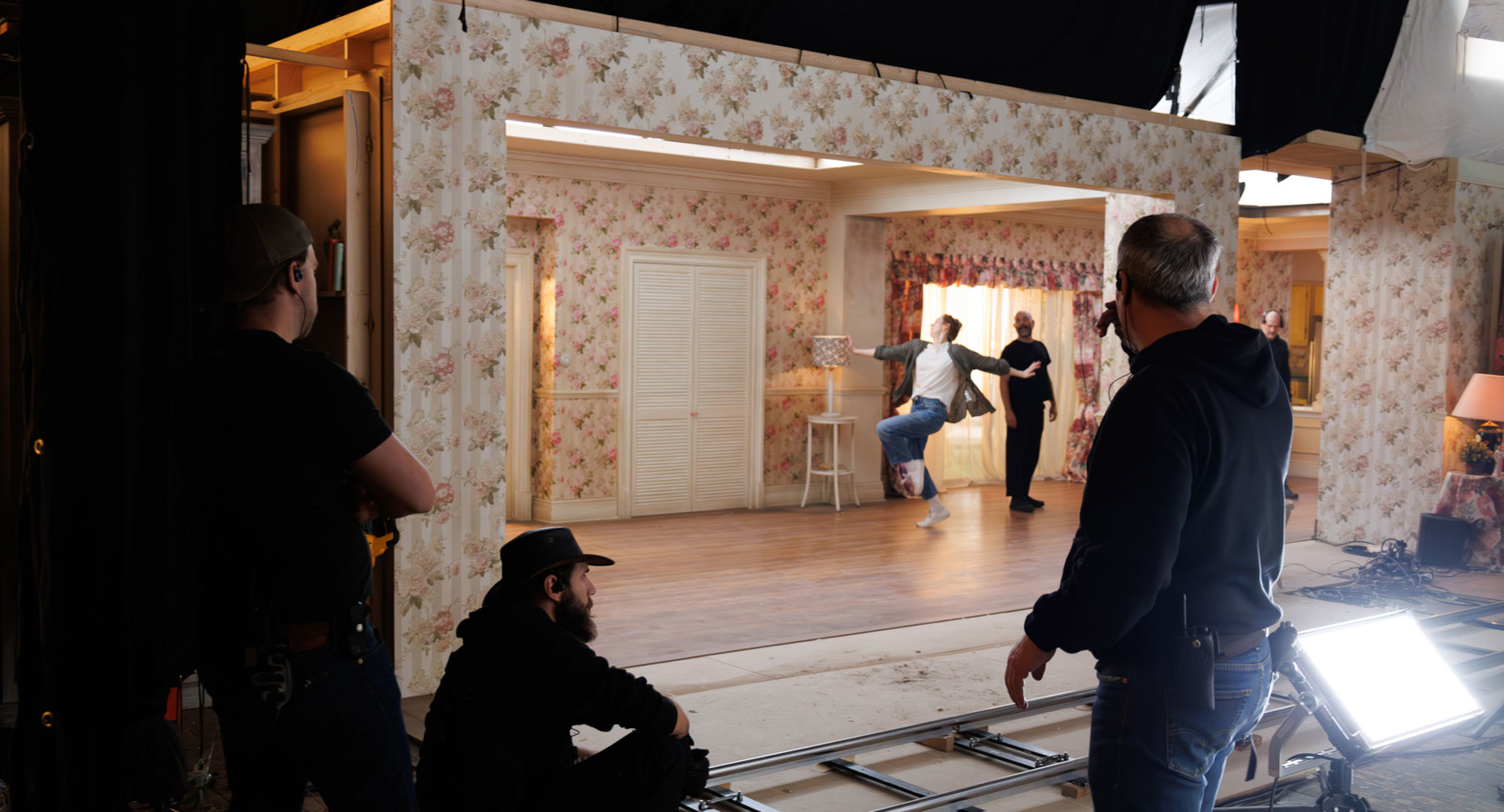
Beyond that, we blur roles and shapeshift. Nick is a director with a writer’s brain and a conceptual mind that never shuts off. I’m a creative with a director’s obsession for detail. We challenge each other, but also know when to step back, give space, and let the other steer. That back-and-forth, that tension – that’s the chemistry.
LBB> With that in mind, what’s the difference between working together, and really getting in the mud together?
Nick> The best partnerships aren’t tidy. They live in instinct, vulnerability, and the willingness to look a bit stupid. You have to let someone else see how you really think. That’s where the trust lives, and when the work gets good.
My advice would be to lean into that mess. Find the people you trust, throw yourselves at it together, and don’t be afraid to get it wrong. Sometimes, the mistake ends up being the best bit, and sometimes, the strongest thing you can say in the middle of it is ‘I don’t know’.
And here’s the other part. Keep the door open. Use your director. Bring us in when the idea is still fragile and let it ripen with pressure. Trust that we can make it stronger. We sit outside the machine, which means we can see the bullshit and the blind spots. That perspective is valuable. Have confidence to let the idea be pushed, pulled, sharpened, and make sure your clients understand that too. You can protect the idea or you can grow it. The best work happens when you know when to do which. If all you’re doing is guarding it at all costs, you’re not making it better. You’re just holding it back.
Meghan> We’re also lucky. We agree on a lot of things, in fact, far more than you’d believe or would seem plausible given the thousand micro-decisions you have to make throughout the creation of a campaign. So, that’s a very random, fortuitous thing. Show us 25 wardrobe options for a talent’s shirt, 99% of the time we’re picking the same one.
But it’s not friction-free. We’re honest, but generous. We keep our expectations high and our egos in check. And we trust that when the other speaks up, it’s for a reason.
LBB> Do you believe it’s important for more creative partnerships like this to emerge? And if so, do you think this is the right type of approach for everybody?
Meghan> The old agency model is nearly obsolete. AI is reshaping everything, timelines are collapsing, budgets are tighter than ever. That’s why new kinds of creative partnerships are essential.
Our approach to collaboration isn’t universal, and our style won’t be for everyone, but therein lies the point: yours shouldn’t be either.
Nick> Everybody’s process is different, and this is not going to be everyone’s cup of tea. But for both of us, it marked a real shift in what we expect from a creative partnership. Once you have felt that level of trust, it’s hard to settle for less.
It doesn’t have to be the model for everyone, but it does raise the bar. You stop accepting the default and start chasing the version that makes the work sharper, braver, and worth showing up for.
LBB> Finally, do you have any encouragement for creatives who might be interested in getting messy, but hesitant to take the plunge?
Nick> One of the most powerful roles a director can play is to be relentless in the pursuit of the right thing. Sometimes that means being the Trojan horse, carrying the risk, taking the flak, pushing harder than feels comfortable. I’ll do that every time if it serves the work.
What makes it work with Meg is that she isn’t just letting me do that – she’s right there with me. Together, we make the risk feel less like freefall, and more like momentum.
The more creatives lean into that instead of fearing it, the braver the work will be. A director’s job is not just to behave and execute; it’s to make the uncomfortable leap possible. And when both sides lean into that, the work doesn’t just get made, it gets sticky.
Meghan> I think back to that first Zoom call and the intense realisation that we were in this thing together. No posturing, no lines in the sand, no ego, just throwing ourselves at the work and seeing what sticks. That’s when it gets dangerous… in the best way. Somehow, our chemistry is both a safe harbour and a complete wildfire. Once you taste that kind of chaos, you can’t go back to neat and tidy.


