


Why Participation Is Rebuilding Entertainment


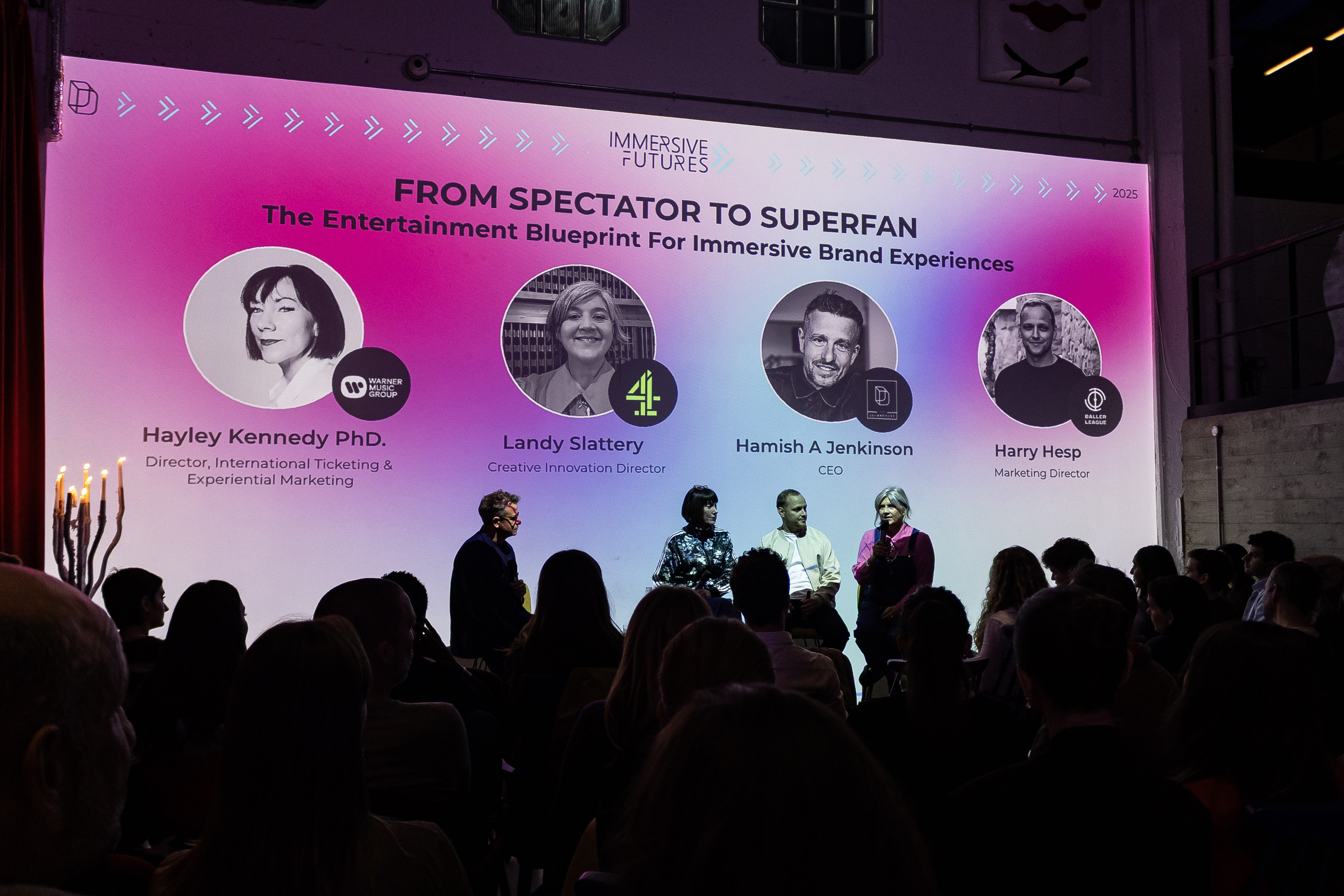
The Department has revealed a set of insights following its latest Immersive Futures evening, an annual gathering that brings together senior voices from entertainment, culture, technology and brand experience. This year’s edition, titled From Spectator to Superfan, featured leading speakers from Channel 4, Warner Music Group and Baller League, discussing how audiences are transforming from passive viewers into active participants.
The discussion made one thing very clear: the entertainment industry is being rebuilt around interaction. Audiences no longer show up only to watch - they come to join in. This idea sat at the heart of the evening.
Participation over spectatorship
Marketing director of Baller League, Harry Hesp, captured this shift directly, “We’re not here to invest in traditional football. Our goal is to get people to fall in and attend – not just watch.” That sentiment became a recurring theme, with brands encouraged to design experiences that invite choice, play and emotional involvement, rather than only pushing out messages from a distance. Creating genuine community is becoming more powerful than chasing raw reach.
Fandom as a growth engine
Hayley Kennedy, director of international ticketing and experiential marketing at Warner Music Group, underlined the commercial value of superfans, “Superfans are ambassadors – the people who bring their friends, family and contacts into the ecosystem.” The group agreed that loyalty now comes from the feeling of belonging. When brands give fans something to be part of, advocacy follows naturally.
Technology has become part of the story
Channel 4’s creative innovation director, Landy Slattery, spoke about launching one of the UK’s first Apple Vision Pro apps, “It wasn’t about ROI, it was about learning where the world is going.” Technology, the audience heard, should amplify the emotion of an experience rather than replace it. AI, XR and other emerging tools have shifted from being toys or gimmicks to storytelling opportunities that extend brand worlds.
Speed, relevance and cultural timing
Culture now moves faster than campaigns. Brands discussed treating activations more like content drops: responsive, time-sensitive and built with scarcity. As Harry explained, “We had to move fast – what mattered was momentum and believability.” The night’s consensus was that audiences respond better to relevance than to polished perfection.
Experience is becoming the product
Retail, entertainment and brand experience are now converging. Hayley described the rise of pop-up environments where people can, “see, feel and touch” the world of a brand. Live interaction at the point of sale is strengthening affinity and driving purchase. In other words: 'shop the show'.
New opportunities in IP
Entertainment IP is expanding beyond single campaigns into bigger worlds that can scale across gaming, commerce and content. “Our IP is moving into new territories - gaming, commerce, content all coming together,” said Harry. The future, the speakers noted, lies in worlds that brands own, not in one-off stunts.
The insights behind the evening
The audience was presented with data that underscored this shift in behaviour. Gen z already accounts for a significant proportion of consumers, and 90% of marketers now say experiential activity increases engagement. The report also found that 65% of gen z share content around live events, and 70% feel closer to brands offering immersive experiences. In other words: participation drives connection.
Five ideas emerged as the new rulebook:
- Fans want to be part of the experience, not just follow it
- Brands must become world-builders, not message broadcasters
- Technology should heighten emotion, not replace it
- Cultural timing matters more than ever
- High-quality, interactive experiences are the new baseline


