


Shifting the Perception of Urban Recyclers in Canada and Beyond


Around the world, in many cities, you can find people who earn income by collecting and returning refundable containers of various types. Every day these urban recyclers – ‘binners’ or ‘valoristes’, as they’re called in Canada – walk the streets, facing whatever temperatures and weather conditions are hurled at them, ceaselessly ensuring their role is played to perfection within the recycling ecosystem.
Unfortunately, this line of work is not often recognised as something meaningful by the world around them. Despite consistent efforts and a tangible, positive community impact, carrying around refundables in everything from shopping carts to plastic bags still comes with inherent social stigma… which is exactly why creative agency No Fixed Address jumped in to help.
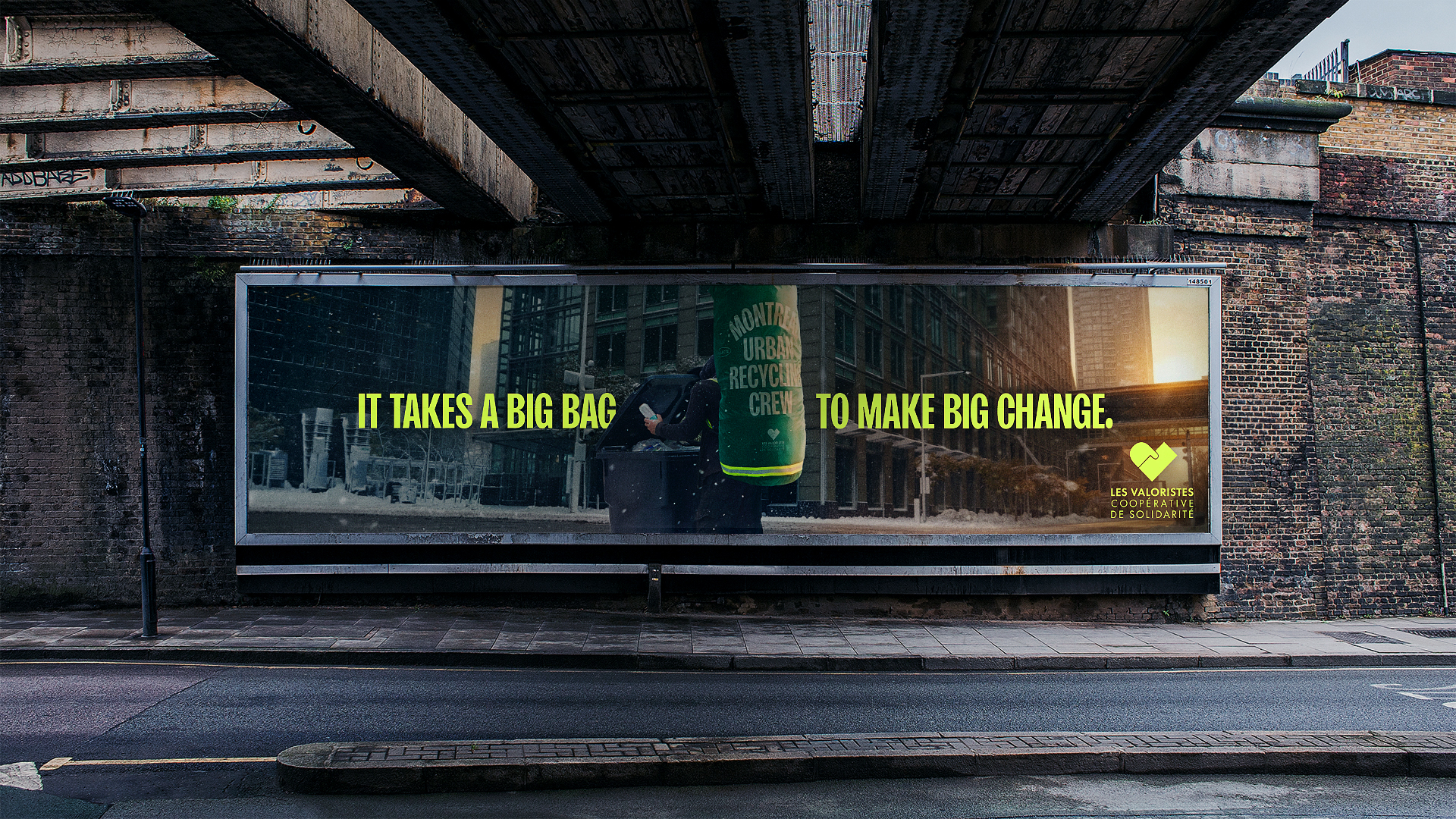
By partnering up with Les Valoristes Coopérative de Solidarité, a group of working binners based out of Montreal, the agency worked to design a new carrying bag that changes outward perceptions of the job, and makes it easier to boot. Named ‘The Dignity Bag’, this new creation offers a 240-can capacity (the same number as the standard plastic bags used by many recycling depots), and aims to make urban recycling safer and more publicly respected. Not simply a PR stunt, an emphasis was placed on making it light, effective and affordable – a piece of gear worthy of professionals through and through.
Launched via a pilot programme in Montreal – something captured in the campaign’s well-crafted hero film, which tells the story of a binner named Alex – the team at No Fixed Address is eager to see an initiative like this not only expand across Canada, but into other countries. To learn more about the process behind the grassroots endeavour, LBB’s Jordan Won Neufeldt sat down with creative director Jean-Phillipe Dugal and executive creative director Stuart Macmillan for a chat
LBB> Tell us about your partnership with Les Valoristes Coopérative de Solidarité. Who reached out first, and how did your talks lead to the undertaking of this endeavour?
Jean-Phillipe> This idea is a very personal one for me. I know people who work as binners in my hometown of Sherbrooke, Quebec, so I know how hard they work and how essential what they do is. I also know how unappreciated their efforts are. So, when we started researching this idea and who we could potentially partner with to make it happen, Les Valoristes was the obvious choice. The organisation is dedicated to improving the lives and livelihoods of binners in Montreal – including changing how society perceives them – so we knew right away that our missions were aligned.
LBB> Specifically, what were the conversations like leading up to the decision to design a bag? Why did it feel like the right course of action, at this given moment?
Jean-Phillipe> We knew from the beginning we wanted to create a tool that would do two things: better the working conditions of binners, and improve how they’re seen and treated when out in the streets working.
We kept coming back to the idea of a bag because there was an obvious need for it; most binners just use whatever plastic bags or containers they can find. It also provided a visible canvas for the second part of the idea: helping to make their work more visible and appreciated.
LBB> How did the bag come to life, and what was the experience of working with actual binners and integrating their feedback like?
Stuart Macmillan> At No Fixed Address, we work in small teams which keeps us close to each other, to the creative, and to the pace a project like this demands. So, once we landed on the concept of a bag, that mindset led to rapid, iterative sketching: multiple sizes, multiple features, and dozens of small experiments.
We also started reaching out to potential producers to see if anyone was willing to help us. Luckily, we met Quinn Cook, who runs BWI Enterprises in Alberta. He loved the project and agreed to help us manufacture our first prototypes and the run of bags for the pilot in Montreal. He was instrumental in helping us choose the right materials and fine-tuning the functional elements of the design.
At the same time, we were bouncing back and forth with Marica Vazquez Tagliero and Karine Projean at Les Valoristes, as well as some of the binners (like Alex) to make sure we got the dimensions and fit right. Early prototypes included features like a single-can entry on the side, but ultimately the binners decided it wasn’t that useful, so we removed it from the design. The bag would’ve looked and felt very different if we hadn’t been able to work with actual binners. It was essential that they were open to collaboration from the beginning.
LBB> Specifically, how did you settle on the materials and shape? What made this the best way to suit the needs of people who do this for a living?
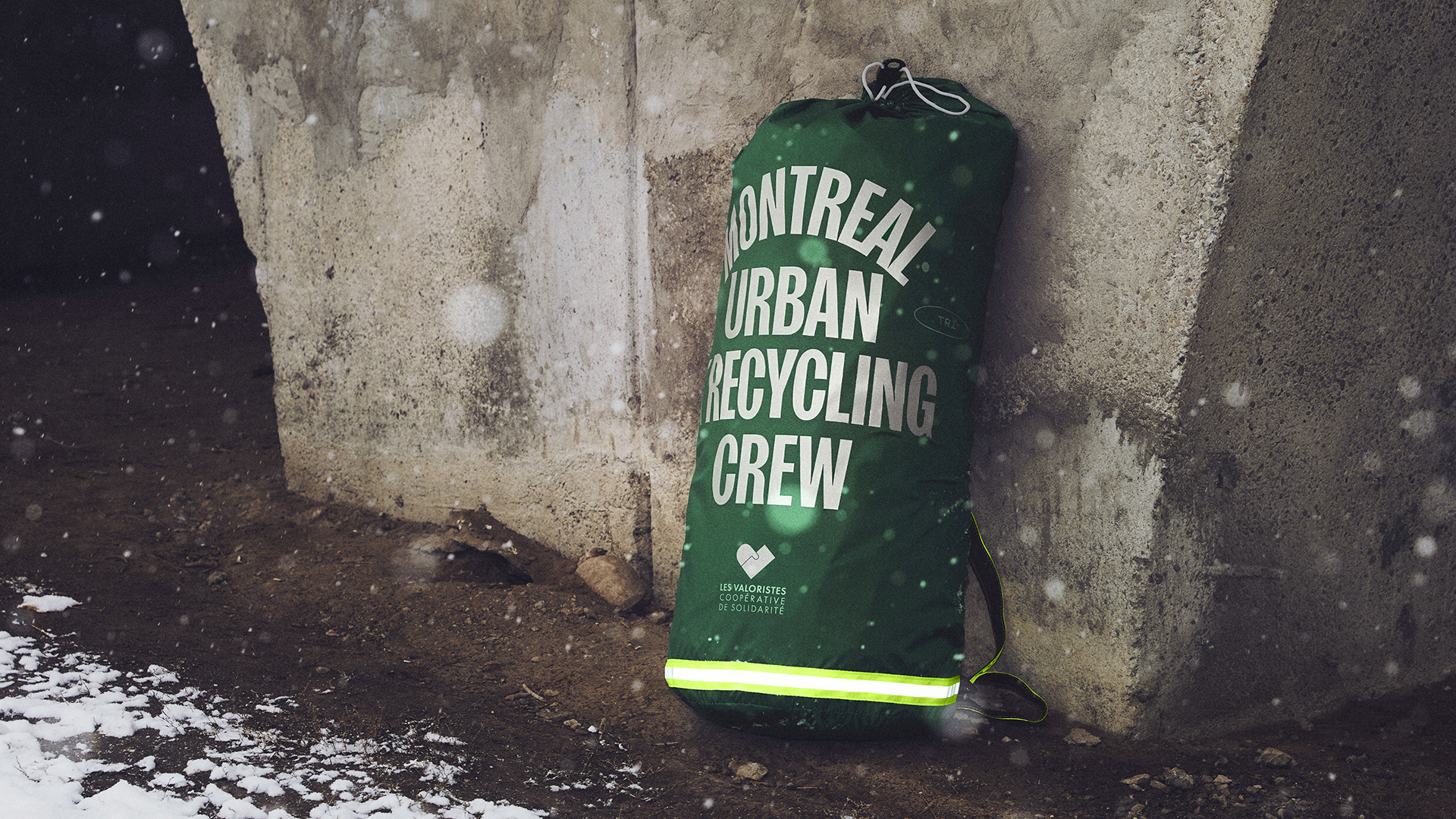
Jean-Phillipe> First, we knew the bag needed to be a functional tool and that the materials needed to be durable, weather-resistant and lightweight. It also needed to offer high-visibility and reflective elements to make sure the binners could work safely at all times. And, we wanted the material to be recycled or deadstock wherever possible… all while keeping everything affordable. After all, the less the bag costs, the more we can potentially get funding to scale.
The title graphic on the back of the bag was also designed for the city or neighbourhood name to be customisable (e.g. Toronto Urban Recycling Crew). ‘The Dignity Bag’ is a project that started here, but is built to be ready for the world.
LBB> You also worked with director Thomas Soto to bring a promotional film to life. What made him the right person for the job, and what was that collaboration like?
Stuart> Jean-Phillipe and I had known Thomas for a few years, but never had the chance to collaborate with him until this summer, where we worked together on ‘The Hard Way’ (a great project for Greenfield Natural Meat Co.). As we were finishing post-production, we started talking about upcoming projects, and the ‘The Dignity Bag’ came up. We knew Thomas had shot some really touching, personal short films in the past that felt really close to the tone we needed, so the more we talked, the more it became obvious who the right person for the job was.
He’s also really well supported by the team at Les Enfants (thank you Céline Ceillier!) and once the studio was on board, all of the other pieces started falling into place, including Shoot Studio and its photographer, Gabrielle Lacasse, whose shots were incredible.
LBB> As part of this, you told the story of a binner named Alex. How did you come across him, and work to authentically capture his story?
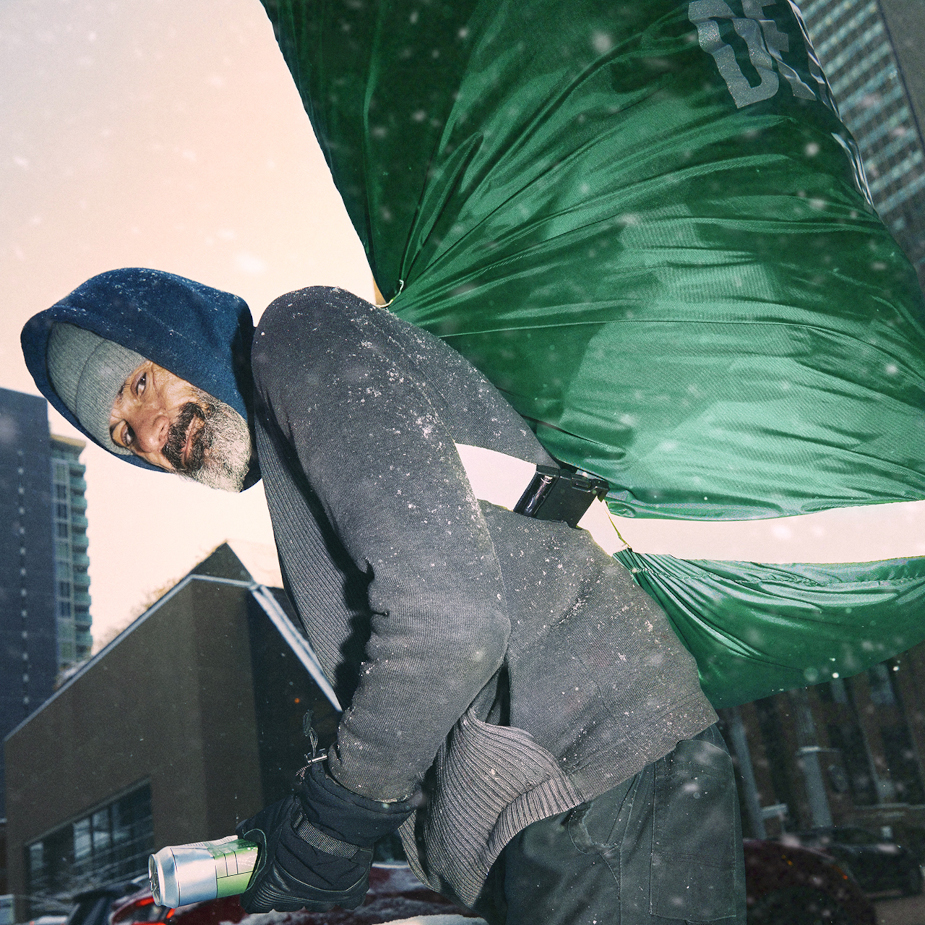
Stuart> Alex works with Les Valoristes. He’s at their depot almost every morning dropping off the cans he’s collected throughout the night. And, from the moment he was suggested for the project, it was clear why: Alex carries a quiet pride in his work, knowing that each can he gathers represents a small but meaningful contribution to his community.
From day one, our priority was dignity and truth, so Thomas spent a week walking his routes with him, watching him work, and just getting to know him better as a person. When it came time to film him for the project, it felt like a continuation of their previous conversations – all very natural and unforced. This made it feel authentic… because it was.
LBB> Overall, how was filming? How long did it take, and do you have any anecdotes from the experience?
Stuart> This was a pro bono project for the production side, so shooting had to fit in between everyone’s other work (including the production of the prototype bags for the shoot). We also wanted to shoot as early as possible so we could launch before the end of the year, which meant we were targeting early November so that we would be sure we wouldn’t have to deal with snow.
As it happened, the night before the shoot, the earliest snowstorm in 50 years started. It didn’t stop for two days. We were shooting sunrise to sunset both days, outside in the cold the entire time. After we wrapped, everyone across the agency and production teams was exhausted, and freezing. But Alex went out and worked for another eight hours that night!
LBB> The music supporting the campaign is excellent – tell us about how this aspect came to life!
Stuart> Jean-David Perron at Supersavant was part of the first discussions we had with Thomas, so he was all in from the beginning too. We knew that music would be really important to help us nail the right tone. With this kind of project, it’s so hard to strike the right balance between delivering on the emotion and empathy, but also the optimism and energy you want people to feel. It’s a very, very fine line between music that feels fresh and compelling, and something that feels cliché and manipulative. But Jean-David and the Supersavant team nailed it.
LBB> And what about the supporting OOH? What was the design process like here?
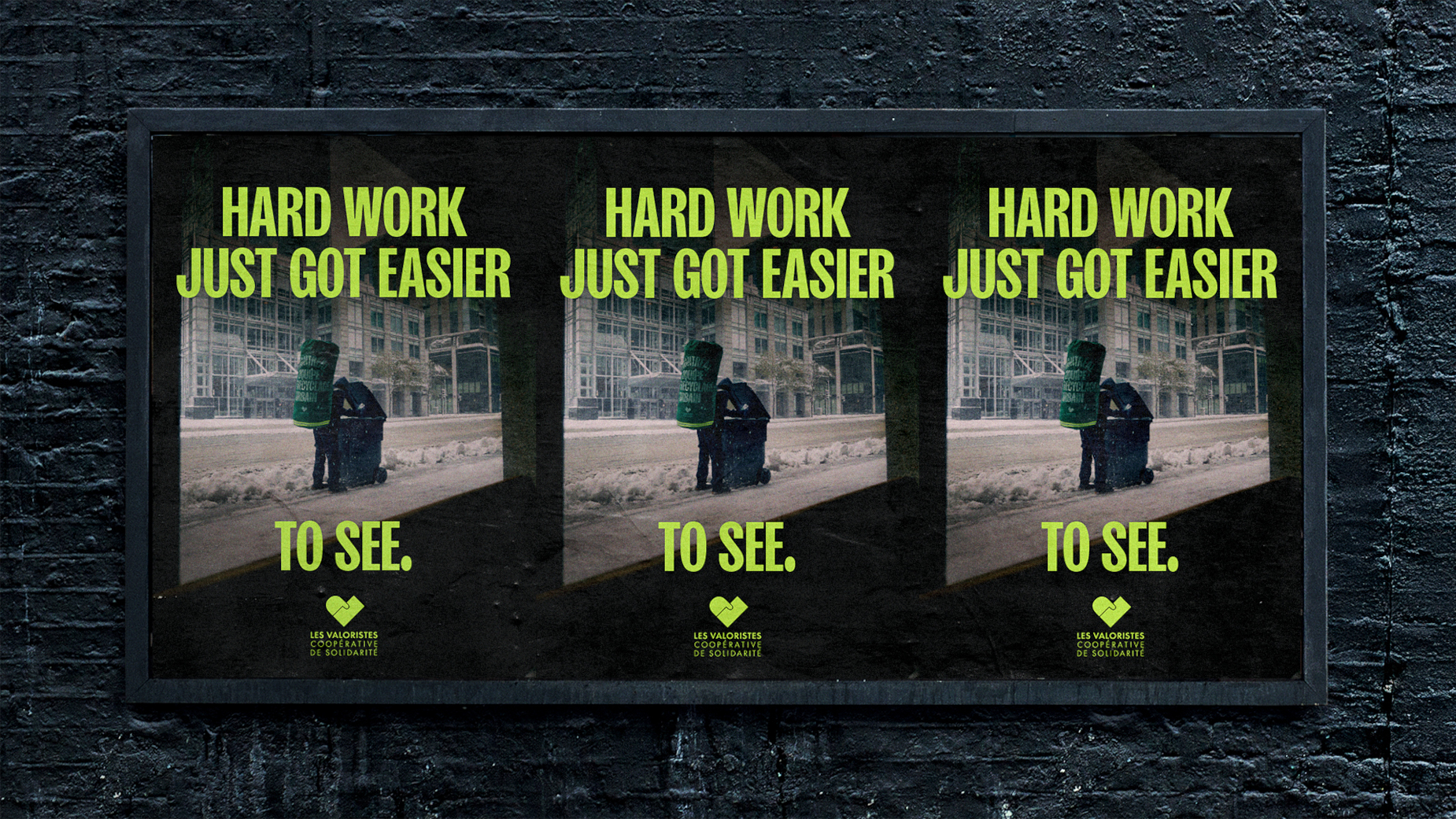
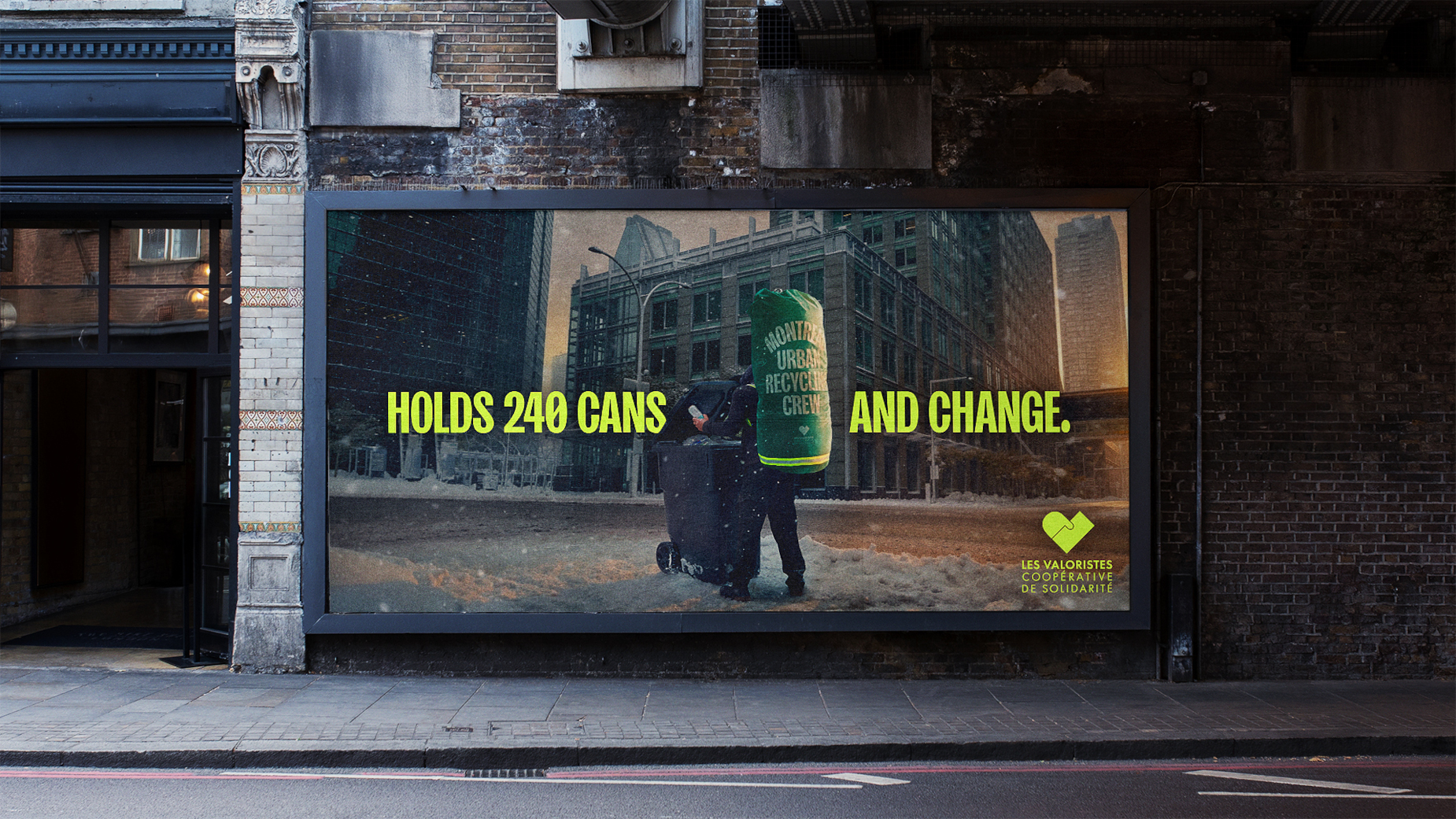
Jean-Phillipe> We had really beautiful mockups designed that featured our binner with the bag in a ray of morning light downtown. So, when we woke up to that snowstorm, we needed to pivot quickly.
Thankfully, Gabrielle is a really talented street photographer, so she quickly found the angles we needed for the OOH. We had really bold, simple lines, but we knew it was a subject with lots of layers, so we needed to convey a lot of information in the visuals. We also needed to show off the bag but also the binner doing his work. And, once we had our selects, the team at Shoot worked overtime on retouching until the images were perfect.
After that, it was just a matter of our media team working really hard to get OOH space donated for the campaign!
LBB> What challenges did you face in the making of this campaign, and how did you overcome them?
Jean-Phillipe> This is a subject with a lot of potential pitfalls in how you communicate it. There’s a lot of misinformation and miscommunication around binners and urban recycling in general, so we needed to ensure that we were telling a compelling story and choosing the right facts to support it.
There’s also always scheduling issues when working pro bono, but everyone was so passionate about this project that we were always able to find solutions. The fact that we were also designing and producing a physical, functional tool added many more layers of complexity, but our teammates were phenomenal, from leadership, to production, to PR.
LBB> Since launch, how have people responded?
Jean-Phillipe> Well, it’s only just launched, but the response has been amazing so far. Normally we complain that our friends and family have no idea what we do (and don’t really care, to be honest), so with this project, we know we’ve created something special since people from outside of the industry are engaging with it. Our hope is that all of this leads to the right people who can get behind ‘The Dignity Bag’ and fund it for their communities. If we can start seeing binners using this while they work in cities across the country, we can be very proud.
LBB> Finally, what does the chance to bring a bag like this into the world mean to you?
Jean-Phillipe> This takes me back to the first question. It really is a very personal project for me, but based on the response we’ve had so far, it’s clearly something that resonates with lots of different people. It’s a subject that’s relevant from Montreal, to Vancouver, to Singapore, to Melbourne, to Buenos Aires. The ultimate goal of this campaign is to secure funding to bring the bag to as many different communities as possible. It would mean a great deal to us to see this all over the world.


