


Meet the Journalist Who Covered Khmer Rouge Leader Pol Pot’s Final Interview


As part of the ‘Portraits of CREATVAsia’s Associates’ series, Othello Khanh, managing director of The CREATV Company speaks with Marc Laban, founder of AsiaWorks which specialises in developing and producing compelling and powerful content for digital, social and broadcast.
Below, Othello recollects getting to know Marc and shares his huge impact on what The CREATV Company went on to accomplish.
Marc Laban is a true veteran in current affairs. His company, AsiaWorks, is a pioneer in the field in Southeast Asia in the period after the American war in Indochina. Marc is what they’d call an old-hand journalist, a hard-boiled one at that: in 1997, he accompanied award-winning reporter Nate Thayer to a Khmer Rouge jungle camp in Anlong Veng to film the final interview with the infamous Pol Pot.
He’s covered the region for all the news agencies and introduced my company, CREATV, to the world of news. A decade ago, my own company didn’t have the necessary permits to do news reporting and could only do documentaries. Marc would change all of that.
In 2012-2013, John Kerry, the US Secretary of State, was on his way to Vietnam to visit. Marc needed someone he could trust to take care of his client, ABC News. I was lucky enough to be contacted and took the job. It went very well and was a stepping stone that allowed us to get permission from the Vietnamese government to cover current affairs.
We bounced jobs to each other from that time on. I was confident, knowing I had a good partner who could offer excellent service. When burning issues of the moment erupted, I’d get the call from Marc on my cell, and it was action time.
These calls always came at 3am, with a brief introduction: “This is the New York desk, can you pass a few phone calls for us.” It was either ABC News or CBS News.
Thanks to Marc, our range of clients expanded. We learned the requirements of the largest news networks in the world. Since that first job with John Kerry, we were contacted by ABC and became the desk for covering the disappearance of MH 370 in Vietnam, Thailand, Singapore, and Malaysia. During the previous Trump regime, we covered the Kim Jong Un meeting in Hanoi for CBS News.
These days, AsiaWorks is more focused on branded content. However, in the era of mass consumption of news on social media and “alternative facts”, Marc has much to teach us about the world of current affairs and the lessons it leaves for today.
It’s an honour for us to welcome Mr Marc Laban to our Little Black Book series.
CREATV> You have had a long and impressive career in journalism. Looking back, what first drew you into the job and how did you end up in Southeast Asia?
Marc> I graduated from Toronto Metropolitan University in 1984 with a degree in radio and TV. The next day, I walked into CBC and worked on the national election coverage. That launched my career in Canadian broadcasting.
I spent years moving between CBC and CTV, traveling across Canada as a producer. But I was restless for something bigger. I wanted to work overseas.
In 1991, I decided to stop waiting for a formal posting. A colleague and I bought our own equipment and decided to take the show on the road.
I'd traveled through Southeast Asia as a teenager, so Bangkok seemed like the natural choice. The timing was perfect. Burma was at war, the Khmer Rouge were still active in Cambodia, and Thailand was politically unstable.
We pitched some stories to my former contacts at CTV, and they were interested. Those early years were a hand-to-mouth existence, but the region was full of compelling stories that needed telling.
I never looked back.
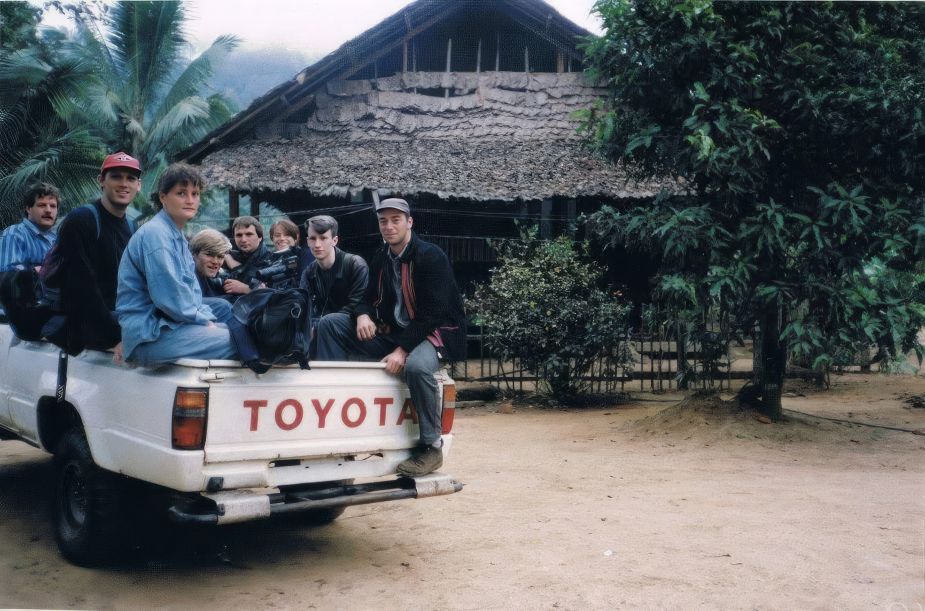
Above: Burma, 1992. On the way to Manerplaw, the HQ of the KNU, the Karen ethnic group fighting the government of Myanmar. Pictured next to Marc at the end of the truck is then unknown freelancer by the name of Anderson Cooper
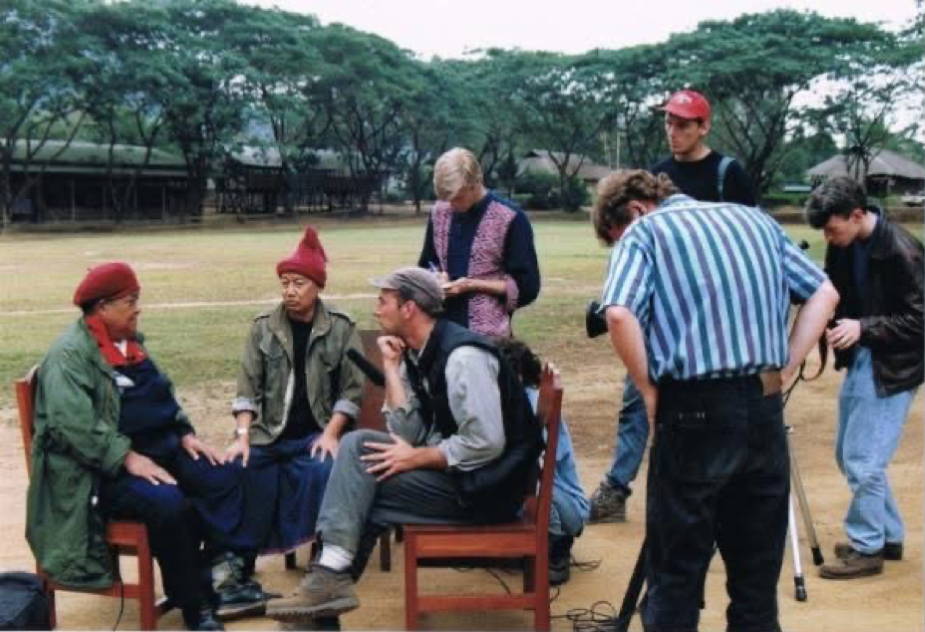
Above: Burma, 1992 with Anderson Cooper interviewing General Bo Mya.
CREATV> AsiaWorks is considered a pioneer in the region after the American war in Indochina. What was the vision when you started, and how has that evolved over the decades?
Marc> AsiaWorks was launched in December 1996 as a collective of four like-minded journalists who saw an opportunity. We pooled our resources to buy equipment together and set up shop in Bangkok.
A key figure was Derek Williams, a New Zealander who had started his career covering Vietnam during the war. After years with CBS, he'd moved to Bangkok as a freelancer with an impressive client roster.
By then, I'd built up my own list of broadcasters who called on me regularly. Between Derek's connections and mine, plus our other partners, we had a decent flow of work from the start.
We also had something unique: the only satellite link in Bangkok. Everyone fed their material through our facility, including the major agencies.
It's hard to imagine now, given how transmission technology has evolved, but back then we were the only option in town.
CREATV> Can you share the story of how you ended up accompanying Nate Thayer in 1997 to the Khmer Rouge jungle camp for Pol Pot’s final interview? What was that experience like on a personal and professional level?
Marc> The opportunity came through David McKaige, one of our AsiaWorks partners. David had worked the Cambodian border as a Reuters stringer and knew Nate Thayer from those days.
Nate had spent years building relationships with both the Thai military and his Khmer Rouge contacts. In early 1997, his persistence finally paid off with an offer to meet Pol Pot, who hadn't spoken to Western journalists in 18 years.
The Khmer Rouge had fractured by then, and Pol Pot was deposed and under house arrest. David accompanied Nate on the first trip to Anlong Veng, the Khmer Rouge stronghold across the Thai border, to film Pol Pot's show trial where his own comrades denounced him.
But there was no interview on that first trip, which frustrated Nate. He kept applying pressure and finally got approval to return in October 1997. That's when I joined David and Nate for the second crossing into Anlong Veng.
Having covered Cambodia extensively, including the UN-sponsored elections in 1993, I understood the historical significance of meeting Brother Number One. It was both a personal and professional milestone.
In journalistic terms, you could call it the last great get of that era, and I felt honored to be part of it. Nate passed away in 2023. He was a complex, sometimes controversial figure, but I'll always remember him as a principled and tenacious journalist who never compromised his standards.
For AsiaWorks, the Pol Pot interview established our reputation with news agencies worldwide.
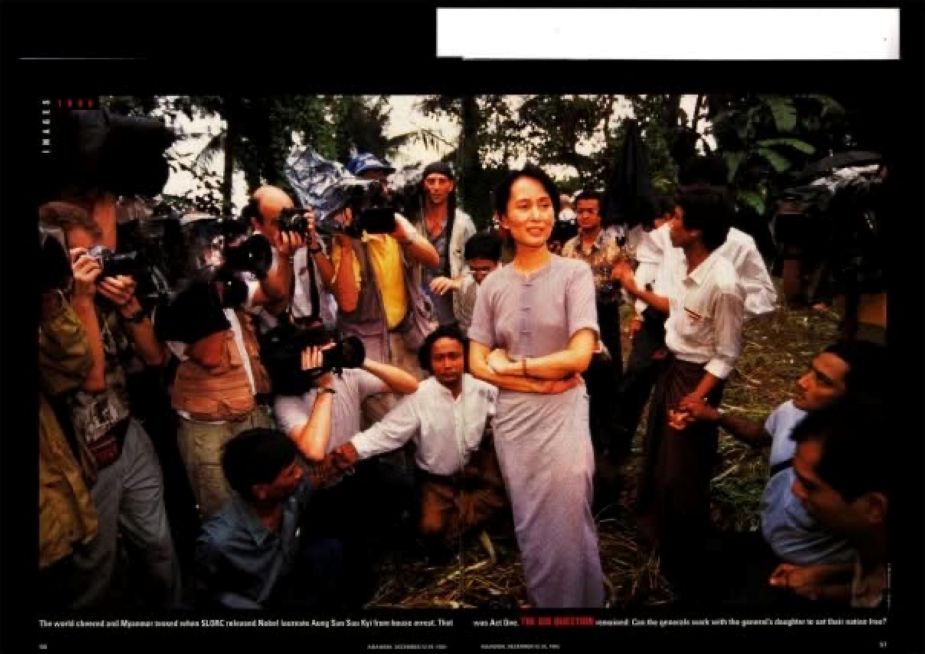
Above: July, 1995. Yangon, Myanmar. Release of Aung San Suu Kyi (Photo by Voja)
CREATV> We first worked together when John Kerry came to Vietnam and have covered several projects together since. How would you describe our working relationship and what are your fondest memories?
Marc> I was working regularly for ABC News in the region when they called me in December 2013 for a project in Ho Chi Minh City. Martha Raddatz was hosting ‘This Week’ and had secured an exclusive interview with Secretary of State John Kerry.
I flew in from Bangkok with our star sound technician, Somyot Pisapark, to handle crewing and equipment for the interview. ABC needed a satellite uplink to send the three-camera shoot back to Washington immediately for post-production.
We reached out to CREATV, marking our first collaboration. It was extremely short notice, and organising a satellite truck in Vietnam wasn't easy in those days. But Othello and his team made it happen without missing a beat. The truck was there when we needed it, fully operational.
What I remember most was a moment in the hotel when an ABC technician was experimenting with a store-and-forward device that transmitted material over the internet. Othello and I exchanged knowing looks, realising we were witnessing the leading edge of a technology that would transform transmission forever. Which, of course, it did.
CREATV also provided us with a local fixer, Che Ton, who was a firecracker. She kept the police off our backs when we were filming street scenes around the city.
John Kerry himself was fascinating – a Vietnam War veteran who became an anti-war activist after returning home. Though the interview focused more on America's international challenges at the time: Iraq, Afghanistan, Syria, and North Korea.
Martha Raddatz represents the best of old-school journalism. Gracious and a consummate professional. There aren't many like her left.
That ABC experience in Ho Chi Minh City launched our partnership. Shortly after, we signed a simple alliance agreement between AsiaWorks and CREATV, looking forward to future collaborations.
CREATV> What have been some of the biggest business challenges you’ve faced and how did you overcome them?
Marc> Covid presented a massive challenge for AsiaWorks. We couldn't film anything due to restrictions, but our overhead costs continued while new revenue disappeared completely. Unlike the industry shifts we'd navigated over the years, covid was impossible to predict or prepare for.
We pivoted to one of our other core services: live events. Our background in satellite transmission, multi-camera production, and live streaming suddenly became invaluable. Corporate and development clients who were also struggling still wanted to move forward with seminars and events. They just weren't interested in doing it through Zoom – they wanted something better.
We trained our staff on vMix software and took it to market. The response was overwhelming.
vMix is a complete live video production and streaming solution that transforms a basic video call into a full television production with all the professional touches. Clients like Microsoft, UNICEF, and major financial institutions signed up for our services. In some cases, we could host events from our studios and bring in participants from around the world for interactive live broadcasts.
As covid restrictions eased, the business evolved into hybrid events, combining live action on hotel stages with remote participants. We still use vMix at our offices for smaller events and streaming projects.
Like everything in our business, it will likely fade away or be replaced by newer technology. But vMix will always hold a special place in our hearts as the solution that carried us through covid.
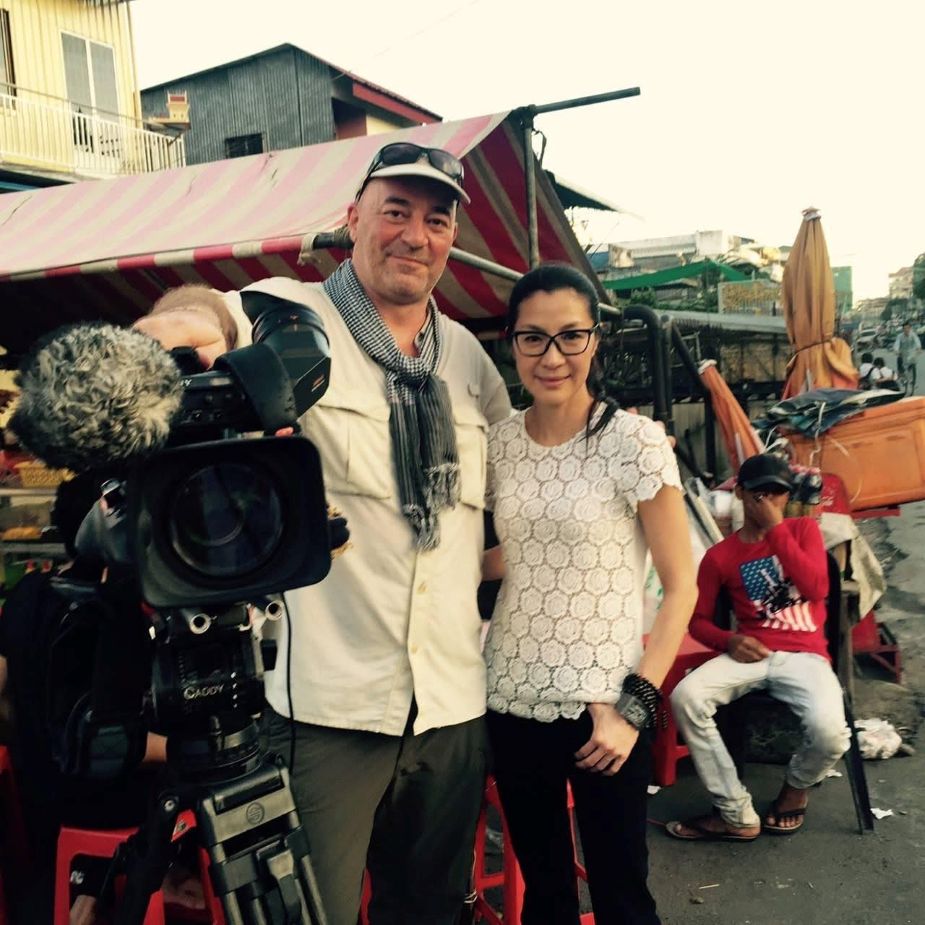
Above: December 2014, Phnom Penh, Cambodia. Filming Formula One PSA with Michelle Yeoh
CREATV> AsiaWorks is now more focused on branded content. What drove that shift, and how do you balance journalistic values with commercial content creation?
Marc> We work in an industry that never stops changing.
The retreat from international news coverage began in the late ’80s and accelerated through the ’90s. For AsiaWorks, that created opportunity. We could provide crews and editorial support at a fraction of the cost of broadcasters sending teams from London or Tokyo, or they simply deployed correspondents from their few remaining bureaus and we provided the production.
We expanded during those years, opening offices in Singapore and Jakarta. Those were the days of wine and roses, but we knew it wouldn't last.
In the ’00s, news divisions faced mounting pressure to cut costs. Cable and satellite channels intensified competition. Media companies focused on consolidation and stock prices. The idea of news coverage as a public service was crushed under financial pressure.
At AsiaWorks, we had to rethink our strategy completely. We turned to entertainment networks like National Geographic and Discovery, who were still investing in long-form documentaries and series. As television professionals, this work was extremely rewarding. We had time to craft our films and create meaningful content.
Interestingly, we made a conscious decision to pass on reality TV, which was booming at the time. Perhaps not the wisest financial choice, but reality TV didn't offer the storytelling opportunities that were core to our identity. No regrets there.
National Geographic and Discovery were beloved and widely watched. Until they weren't. The streamers arrived, led by Netflix with others close behind. Our core work dried up again.
Fortunately, we'd covered our bases by cultivating clients in the corporate and development sectors. Our storytelling skills kept us competitive, and despite increased market competition, our track record for quality video production kept us in the race.
Now, in the social media age, the same principles apply. Whether it's a corporate branding video or a campaign for an NGO or UN agency, the rules remain constant: tell a story and make it sing.
The creative engine that's driven our evolution is the same one that powers breakthrough solutions for our clients.


