


Hernán Corera and Lucas Brañas Blend Tango and Futurism in 'Pensando en Ella'


Directors Hernán Corera and Lucas Brañas speak with Cris Gee about how a tango from the future connected Buenos Aires, Tokyo, and funk.
Cris Gee> How did the collaboration with Dante Spinetta begin, and what was the starting point for the 'Pensando en Ella' -Thinking of Her- music video?
Hernán Corera and Lucas Brañas> The collaboration with Dante was very organic. From the first meeting, there was both an aesthetic and emotional connection. 'Pensando en Ella' immediately struck us as deeply cinematic, it speaks of love and loss, but also of Buenos Aires and its modernised melancholy with an urban pulse. Dante described it as his tango, and from there we built a visual narrative that fused funk, R&B and the spirit of tango’s 2x4 rhythm, balancing classic and contemporary tones.
Cris Gee> The result has a distinct aesthetic, minimalist, elegant, with nods to Japanese art. How did that visual approach emerge?
Lucas Brañas> From the outset, we wanted to avoid the visual overload so common in today’s music videos. We aimed for something restrained, emotional, and deliberate, where every gesture and silence carried meaning. The idea of blending 1960s Buenos Aires with a futuristic Japanese atmosphere came from seeking a balance between nostalgia and modernity.
At the centre of the set, the bleeding piano symbolises a broken relationship, a heart that has lost its music. We wanted everything to revolve around that poetic image.
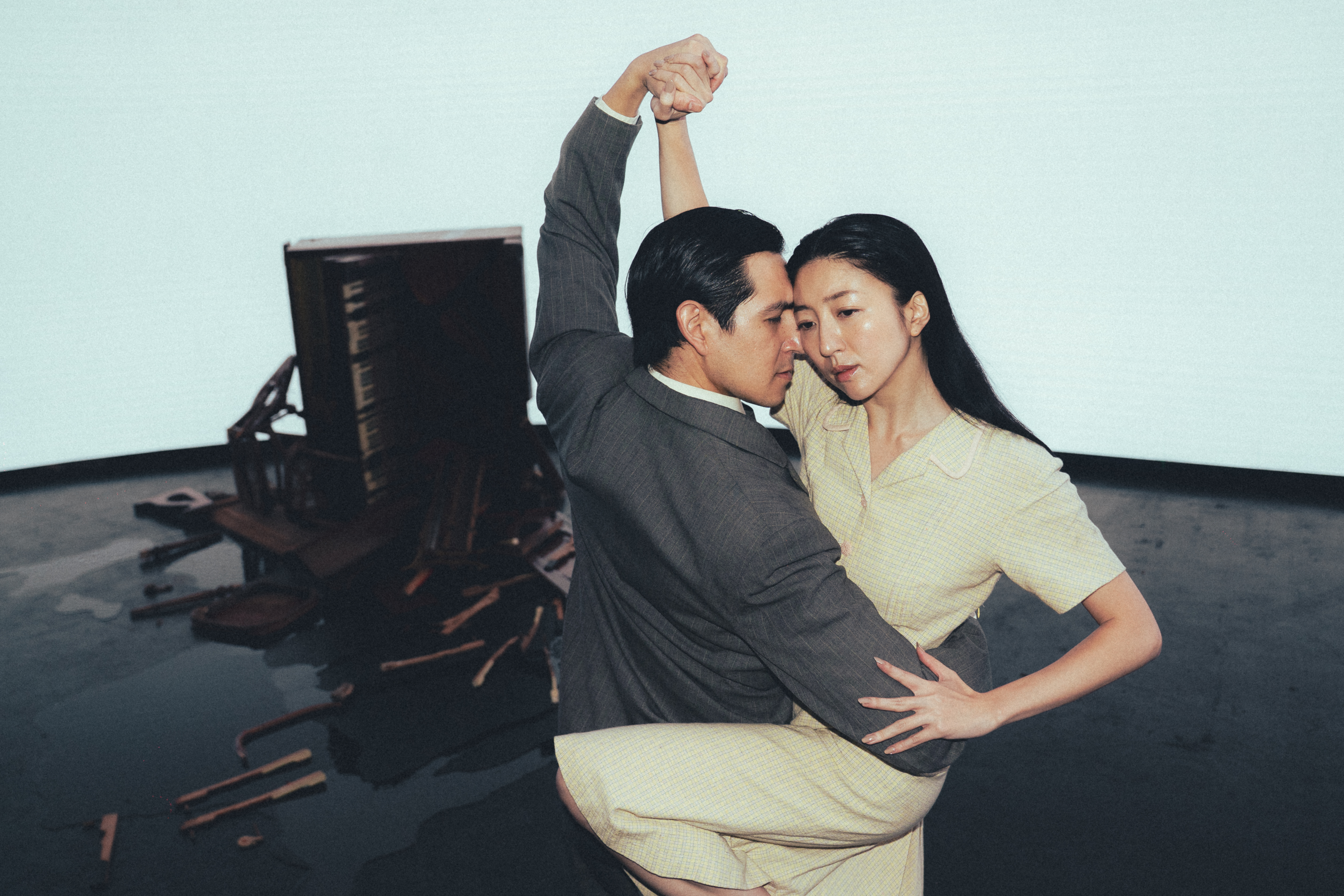
Cris Gee> The choreography plays a central role. What was it like working with José Lugones?
Hernán Corera> José arrived straight from Denmark and literally choreographed the piece on the plane. That spontaneity was key. His dance expresses what the lyrics only hint at: he can’t leave her and she can’t leave him.
Beyond his remarkable talent, José has a rare sensitivity: his technique never overshadows emotion. He’s performed internationally, even for figures like Putin and Obama, but here he surrendered fully to the story, understanding that movement had to be narrative, almost confessional.
Cris Gee> There’s a very distinctive use of space and light. What role did technology play in shaping that visual language?
Hernán Corera and Lucas Brañas> We shot at Virtual Studio Cacodelphia, but instead of using screens with Unreal Engine environments, we opted for a plain white screen as the sole source of light. We turned a virtual production tool into an expressive element. That neutral light, bathing everything, creates a contemplative, almost spiritual atmosphere. It was our way of showing that technology can serve poetry.
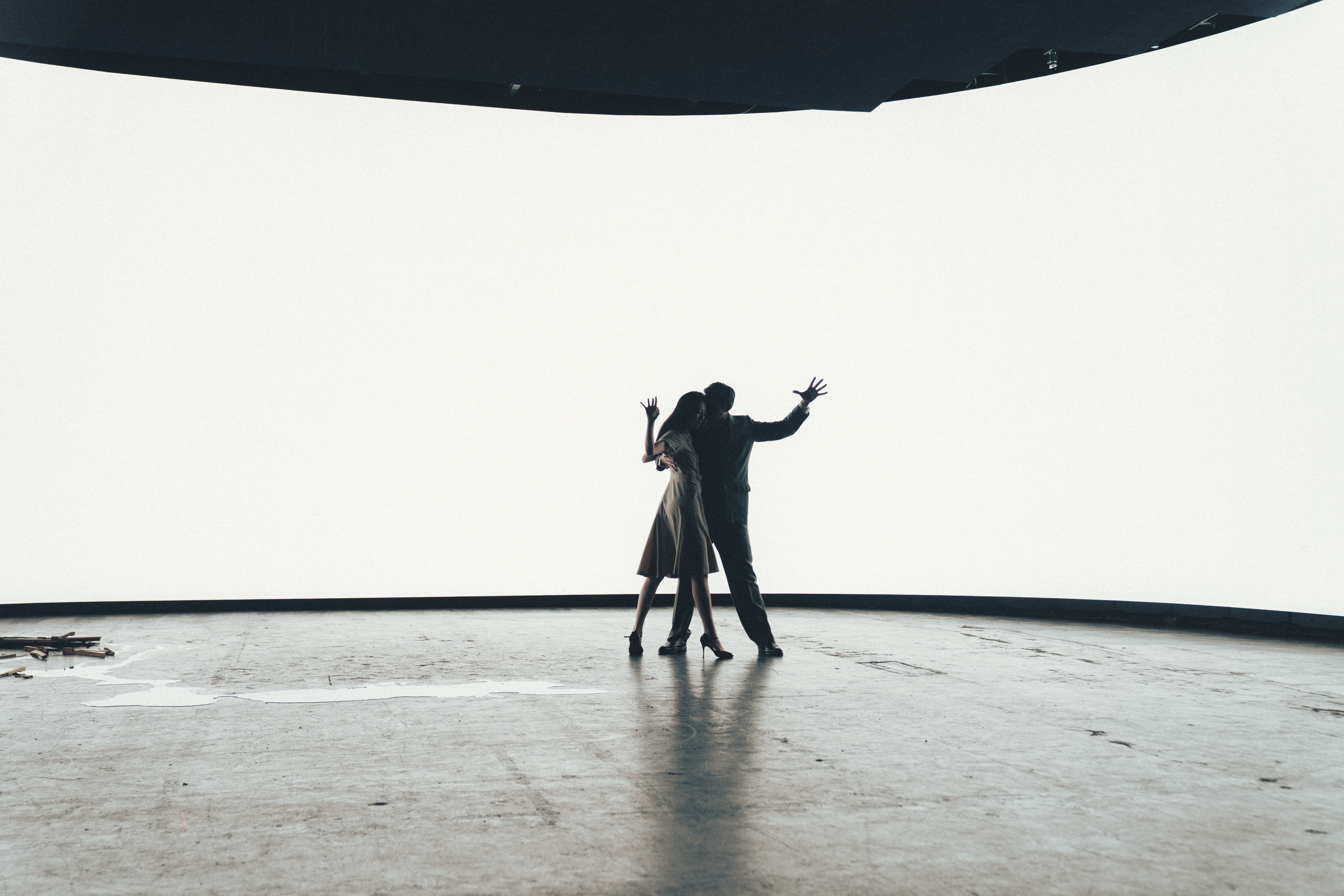
Cris Gee> The handheld long take gives the piece a very raw, living energy. Why did you choose that format?
Lucas Brañas> We wanted the camera to breathe with the characters, to move with their emotional rhythm. The long take helped preserve that emotional continuity, while in the edit, handled by Kevin Jenkins, we introduced precise cuts to match the song’s inner pulse. The final edit works like a score, with moments of stillness, tension and release.
Cris Gee> There seems to be a strong sense of creative unity between the directors and the artist. What was that shared process like?
Hernán Corera> It was built on total trust. Dante gave us complete freedom to interpret the song visually. The initial concept was more pop, something reminiscent of early 2000s videos, but we gradually moved away from that towards a more sober and poetic tone, closer to Piazzolla than to traditional tango. At Mama Hungara, there’s a very fluid dynamic, we accompany and amplify each other’s languages, allowing ideas to reach their fullest expression without losing spontaneity.
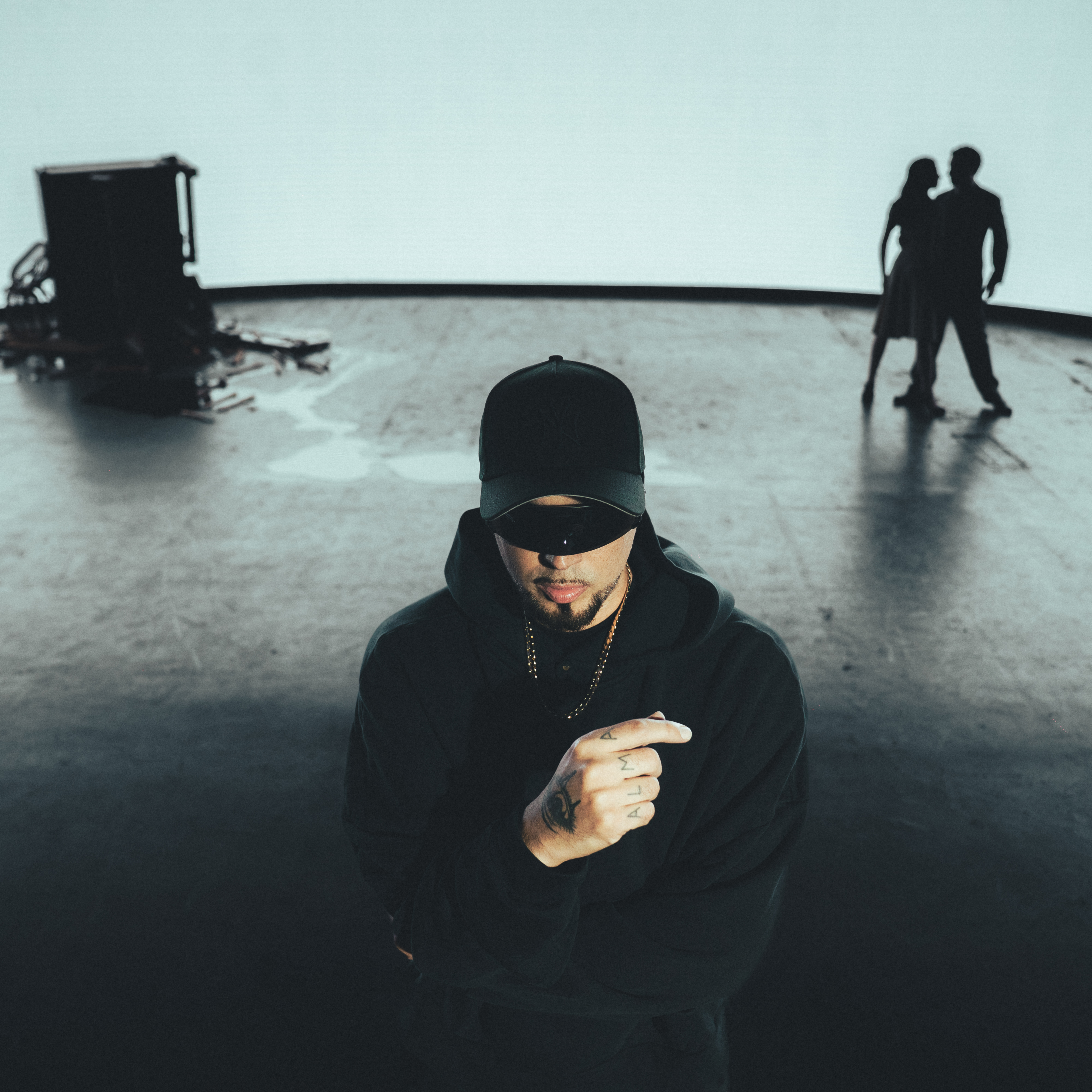
Cris Gee> The video feels like a dialogue not only with Buenos Aires but also with Japan. How does that connection fit within the overall concept?
Hernán Corera and Lucas Brañas> It’s essential. Tango has a long-standing relationship with Japan since the 1920s, when Gardel’s records crossed the Pacific, the genre has found a deep emotional resonance there. That Japanese sensitivity, the aware, or awareness of the fleeting, permeates the spirit of this piece. 'Pensando en Ella' is a story of heartbreak, but also a love letter to Buenos Aires and to the art of filmmaking itself.
Like cinema, tango continues to evolve without losing its soul; this work breathes vulnerability, precision, and beauty.


