


AI Gold Rush? “Velocity Without Intention Creates Expensive Chaos”


While some directors are currently experimenting with the possibilities and capabilities of AI, Julie Réali is reaching for those tools with confidence on an as-needed-basis. With expertise in digital media and cutting-edge technology, Julie is a tech-native director in the commercial filmmaking space determined to keep a humanistic core in storytelling amid a technological revolution sceptical of the need for humanity.
Guiding Julie’s work is a question, ‘What is it to be human — now, and next?’ To her, AI is not a panacea and she can see how the patina of speed, scale and efficiency is only going to hurt brands when it eventually wears off. “Audiences don't reward speed. They reward distinctiveness, authenticity, cultural fit. More outputs don't build brands; they build noise.”
AI: A Tool And A Process
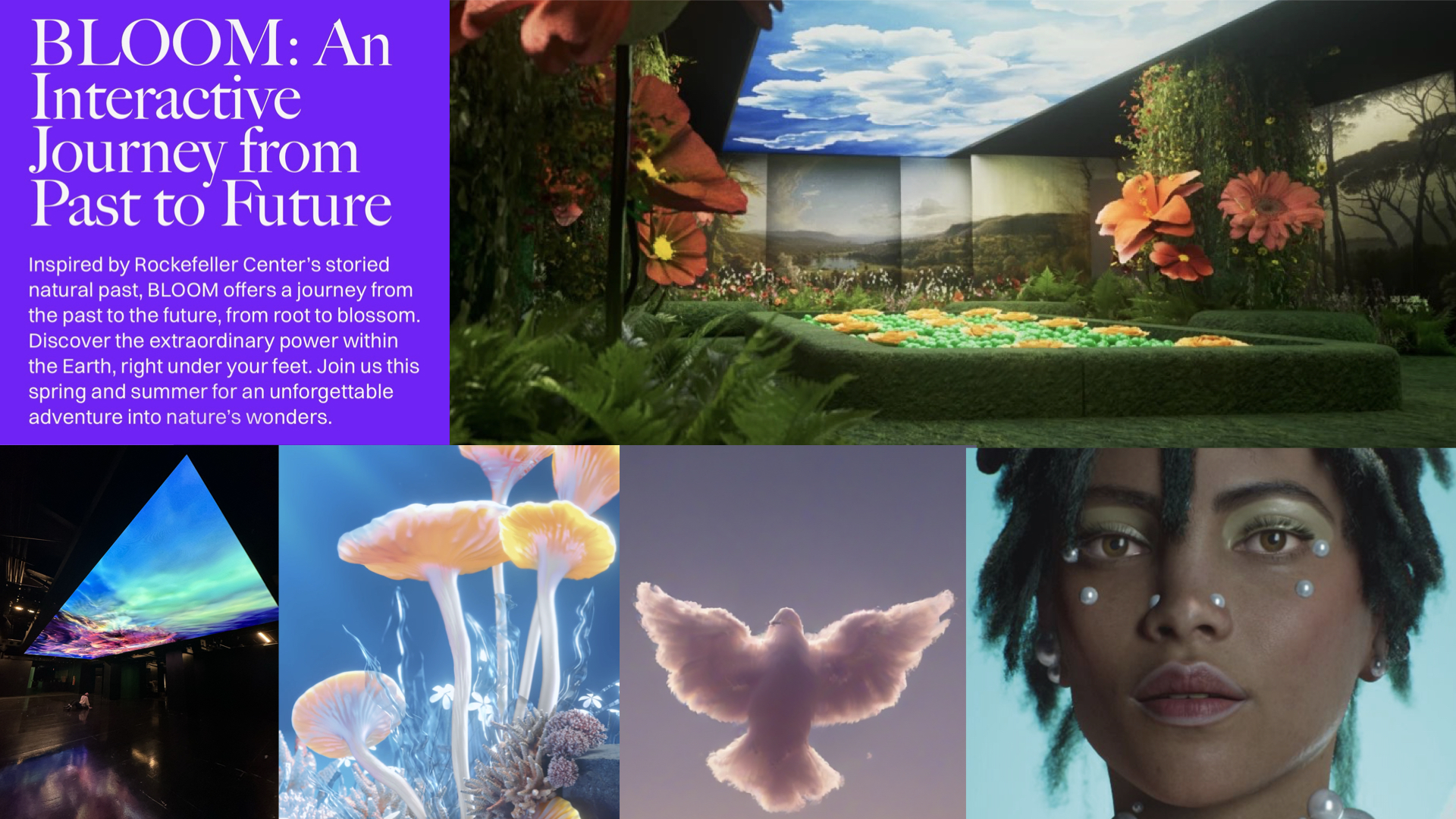
Julie, who’s used AI on projects like ‘Bloom’ – an immersive project at Rockefeller Center where digital experiences meet nature’s playground – and Bruce Brubaker’s ‘The Big Ship,’ an experimental take on a song by the legendary Brian Eno – sees the competitive edge not in “who uses AI fastest” but “who has the discipline to decide where and when to slow down.”
She spent years at Dailymotion and Vivendi building global strategic partnerships that saw her “architecting systems for more, faster, everywhere. I understand what industrial-scale media acceleration looks like from the inside.” She learned an invaluable lesson. “Velocity without intention creates expensive chaos.”
Later, when Julie co-founded Space Cowboys, a post-production studio with a global network, she made the decision to decentralise. “Not because it was trendy, but because I'd seen what happens when creative decisions get funnelled through similar minds, with the same references. You get homogeneity. You lose your signature.”
Homogeneity and anonymity aren’t qualities that brands, or directors for that matter, can afford to court in today’s marketplace. AI is a road to both. On her last music video, ‘Feet’ for Max Baby’ (produced by HENRY and AI studio Lipstick), Julie had the option of doing the whole thing in AI. “Script to screen, fully automated. But I stopped to ask: where would it make sense?”
She landed on just one scene featuring a tornado – a phenomenon unrealistic to capture live. Julie worked with an AI artist “to shape environments that could blend seamlessly with live-action.” It was a process, she recalls. “We iterated. The result wasn't faster. It was richer. AI expanded the vision, but it was time invested – conversations, judgment calls – that gave it meaning.”
AI at Human Speed
Julie has thought a lot about what ‘AI at human speed’ can look like; to her it’s “a design principle for integration. It means asking: Where does speed serve the vision? Where does it flatten it?” Of course, AI grants a time saving element – what is the saved time being spent on? “The time AI saves should be spent on what machines can't do: intuition, creative vision and conversations that shape good into unforgettable,” Julie says.
That’s because “in a world where everyone can generate anything, the competitive edge is authorship. The choices you make. The places you slow down. The signature saying ‘this could only have come from here’," Julie says. For ‘The Big Ship,’ she leveraged AI image generation with 3D and visual morphing sequences using prompt-to-image workflows and particle systems in Unreal Engine with the goal of capturing the human experience of hearing music. It’s a perfect encapsulation of her principles at work: using technology to communicate what technology cannot do – have an emotional response to a piece of art in a way only a person can.
Rejecting the stance of techno-pessimism or techno-optimism, Julie is a techno-realist who embraces the technology that’s here today and yet to come. She cites Donna Haraway’s ‘The Cyborg Manifesto,’ which asks us to see outside the rigid boundaries of human and machine towards a beneficial coalition. Says Julie, "We are already cyborgs. The question is whether we're intentional ones. AI at human speed isn't about resisting the future, it's about living fully in the present. It's about deciding, project by project, where the machine accelerates and where the human governs."


