Generalist Is Not a Dirty Word


‘To work in film, you must be a specialist. To work in advertising, you must be a generalist.’
This mindset was drummed into an enthusiastic (yet arguably late to the party) 27-year-old me at the start of my visual effects career. A background in fine art offered few limitations and I yearned to carry that freedom into my digital world. Why did I have to pick? What if I got bored specialising in one aspect – or worse still – what if I didn’t know enough to be a generalist?! No one wants to be a master of none, but what was wrong with a (good) Jack of all? And how could I evade the looming stereotype of generalists seemingly being considered less valuable? All the questions, none of the answers. Just tonnes of departments and as many software packages, some feeding my creative hunger and others leaving my stomach hollow.
So, what’s the difference? The Oxford Dictionary has this to say:
Generalist: noun; a person competent in several different fields or activities
Specialist: noun; a person highly skilled in a specific and restricted field
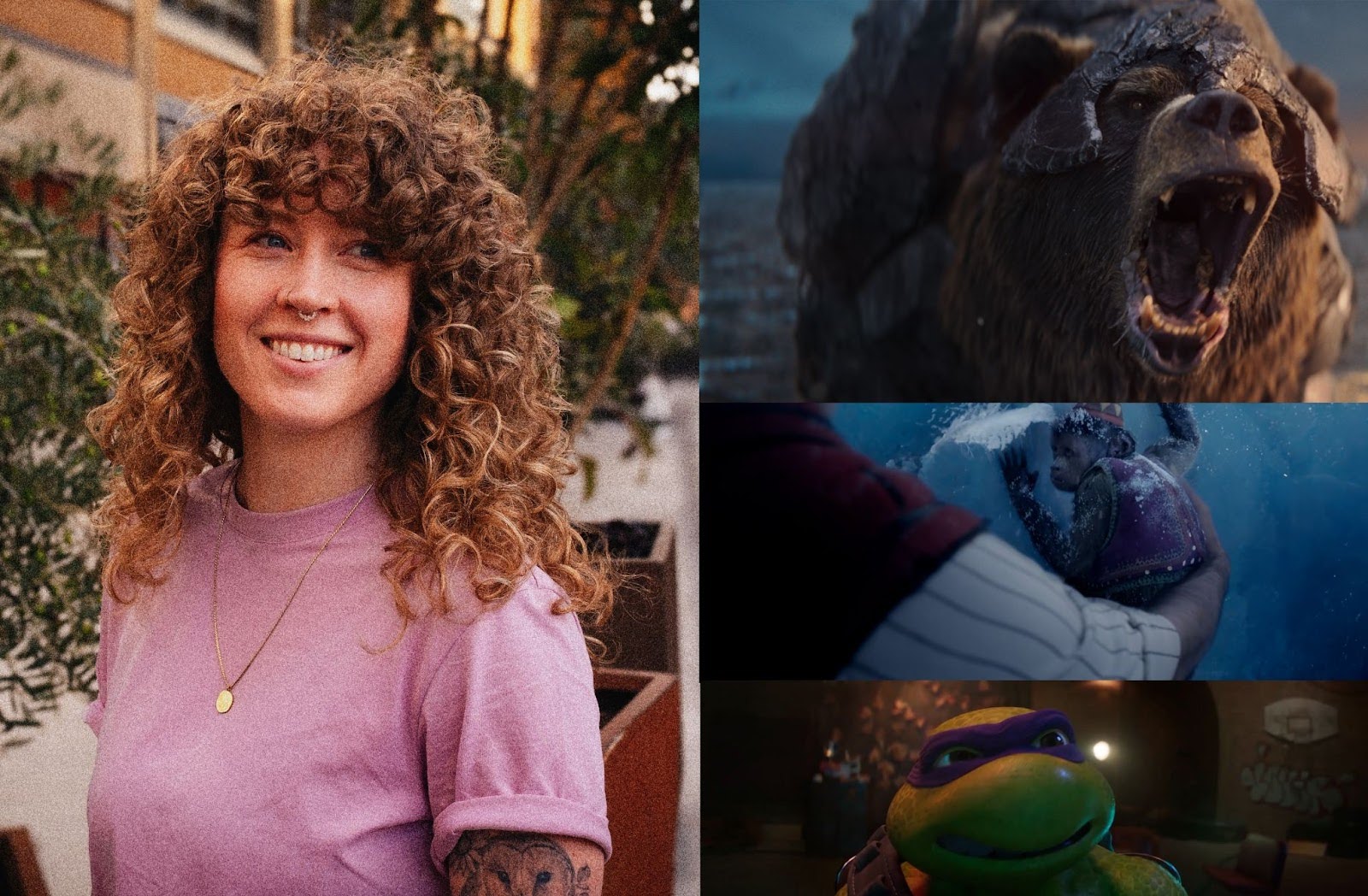
In other words: a generalist crosses departments, whilst a specialist may focus on one aspect of the pipeline: like lighting, FX, look dev or animation. Over the past eight years (which is mad, ‘cos I’m somehow still only 29?) I’ve played both sides of the coin. Initially, lighting felt like the most natural progression artistically, but an early gig on Peter Rabbit intro’d me to creature FX (fur and cloth). Later, I learnt FX (smoke, fire, liquid) and upon moving to the UK I got buckled up as a groom artist looking at rollercoaster rides (because why not?). By this point, I’d probably have called myself a Houdini generalist. I took on tasks from the departments I felt most comfortable with, whilst darting around adjacent ones. Without that incessant need to know every single skillset in CG.
For years though, I felt unexplained confusion about my lack of desire to specialise. I loved lighting – but it never felt like my everything. I enjoyed creature work – but not even Aladdin’s sidekick Abu satisfied my craving for being across multiple parts of the process. When I made the leap into advertising, the faster turnarounds served me well, but my confusion on my calling wasn’t totally alleviated.
The thing that did, was my ADHD diagnosis in 2024. Multitasking, pattern recognition, chattiness and outside-the-box thinking suddenly became obvious traits linking my temperament to my ideal job role. I came to understand that jumping around within the process was what made me creatively tick.
And whilst I took comfort that peers would come to accept me in spite of this – I actually started getting jobs because of it. At One of Us and DNEG, I was tech-focused enough to mould Houdini pipelines in accordance with CG processes for Aladdin and Fast & Furious Presents: Hobbs & Shaw. Look, Mum, no hands! That’s the thing about generalists. We’re equal parts tech geek and creative visionary. Without one or the other, we’re simply not fulfilled.
In film at least, generalists tend to be undercover specialists. Technically minded, yet malleable, receptive and with an open mind to troubleshoot. We speak a lot about problem solving in our industry. In visual effects, generalists are akin to Sherlock Holmes. They move in and around a project with an unparalleled tenacity for plugging holes and fixing issues in a fast-paced environment. It’s a chameleon-like quality which proves a safe pair of hands for their specialist team members and clients alike.
I’ve observed so many ways of working. How boring would the world be if we all worked in the same way – all had the same brain? Advertising thrives on momentum. As do I. That constant requirement to jump between multiple projects and adapt along the way is oddly harmonious for my brain. Starting out, I attended many industry talks highlighting hyper-focussed paths, but I wasn’t seeing that same attention for people who made a career out of liking, well, lots of things. And I’m not mad about it. Nor am I mad about being told that film specialises, and advertising generalises. Because in reality there’s as much space for loyal deep-divers of a core capability as there is for the lovers-of-giving-things-a-go. Generalists bridge gaps, solve problems and move the job forward, whether it’s the new blockbuster or a Christmas campaign.
The moral of the story: Generalist isn’t a dirty word. It’s as clean as they come.