


Building Bridges: How DSPs and Media Owners Are Driving DOOH Standardisation


As digital out-of-home (DOOH) advertising continues its rapid expansion into the programmatic world, two critical terms keep emerging in industry conversations: standardisation and collaboration. These aren't just buzzwords, they're the foundation upon which we'll build a more efficient, transparent marketplace.
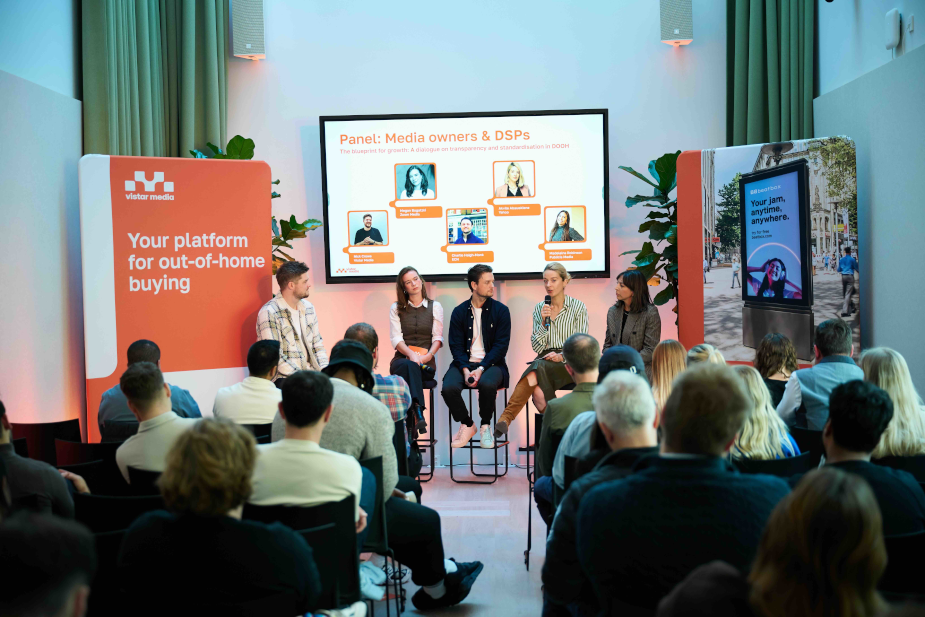
At our recent Vistar Connects London event, I had the pleasure of chairing a panel discussion with experts representing different perspectives across the ecosystem. The panel included: Layla Soufi from Vistar Media, Akvile Alsauskiene from Yahoo, Charlie Haigh-Monk from ECN and Megan Bogatzki from Zoom Media. Together, we explored how DSPs and media owners are working to create the standards that will unlock DOOH's full potential.
Here are the standout insights from the session:
1. Standardisation unlocks scalability
Megan Bogatzki from Zoom Media was emphatic about the industry's most pressing need. “I think the biggest thing for me is stabilisation of the multiplier,” she explained. “If we don't define what an impression is worth and understand differences between channels, we have difficulties in securing budgets.”
Without standardised definitions of what an impression actually means across different DOOH formats and environments, the industry cannot scale effectively. Once that education has been done and standards are in place, she argued, “we'll be able to scale budgets and also stop that race to the bottom in terms of CPMs.”
She continued, “We will run into issues like fraud or questionable impression multipliers. People will lose trust with the channel which is problematic. So that's not what we want. We want to grow holistically as a channel. We are working together really hard to get that done. So, we do need that push to get the standards into place now.”
Megan's comment speaks to a broader industry need: creating transparent, consistent methodologies that all parties can trust. Without this foundation, comparing DOOH performance to other digital channels remains challenging.
2. Collaboration, not competition
Charlie Haigh-Monk from ECN brought a collaborative perspective to the table. When talking about who drives standardisation, he discussed the different contributors and ways everyone could contribute asking, “how do we all add in?”
He explained that as DOOH transitions into the programmatic world, the goal isn't to fight against other channels, but to make the process “as easy to buy as possible.” Speaking from his experience at ECN, he noted: “We're an in office provider, it's quite easy for me to sit here and say that we have done the standardisation quite well.”
But he stressed the importance of continuing the conversation and ensuring that every player is brought into these discussions. “I know you [at Vistar Media] have enabled that a lot with bigger and small media owners. And I think that needs to definitely happen to push forward.”
When all stakeholders speak the same language and understand the same metrics, the entire ecosystem benefits. This shared understanding allows for more sophisticated campaign planning, more accurate measurement, and ultimately, greater confidence in DOOH as a performance channel.
3. Progress on the DSP side
From the demand-side perspective, Akvile Alsauskiene from Yahoo brought optimism about standardisation becoming reality. When asked how readily DSPs are looking for standardisation to happen, she confirmed the momentum is building. “There's a lot of duplication. When it comes to planning, we receive a lot of screens that are the same, but they have different [creative] ideas. We're trying to make it as easy as possible.”
The DSP community recognises that standardised practices benefit everyone. Layla Soufi from Vistar Media shared ways to make the process easier.
“From omnichannel DSPs across planning and buying, to working with the video owners to try and help them standardise as much as possible, and looking at how much we can automate. Also, getting the media owners to talk to each other to understand the different narratives they have, especially on creative approvals.”
Layla continued that this alignment between buy-side and sell-side priorities is accelerating progress and there are ways to execute campaigns, compare performance across inventory sources and ultimately drive better outcomes for advertisers.
“From a technical perspective, let's try to standardise as much as possible. Creative specifications is a tougher topic, but let’s consider what other information we can share to make it easier to plan and buy, and make sure that we're not preventing the growth of the channel.”
Our panel revealed an industry at an inflection point. The technical capabilities exist, we have the collaborative will, and the commercial incentives are aligned. What's needed now is sustained focus on execution.
Continuing the conversations, bringing more players into the fold, and building the measurement frameworks are the next steps that will make DOOH as accountable and comparable as any other digital channel.
The message was clear: standardisation isn’t an obstacle to overcome but an opportunity to seize. Once we get this right, we won't just make DOOH easier to buy, we’ll make it impossible to ignore.


