


Canva Predicts 2026 Will Be 'Imperfect by Design'


Canva’s 2026 Design Predictions Report determined that the year ahead would be defined as the year of ‘Imperfect by Design’. Ruling that perfect was “overrated”, it predicted that brands and creators will be looking to harness ‘visual authenticity’, embracing design that feels innately human whilst simultaneously embracing the capabilities of AI.
The annual report is the third of its kind, informed by analysis of design and search activity, expert insights from the Canva Designer Advisory Board, and a survey of 1,000 creators across the US and Brazil. From this information, Canva identified 10 design trends that will shape creative and design culture in 2026, with findings showing that as creators embrace AI power, they also crave the human touches that make design feel personal.
The 10 design trends, ranging from ‘Reality Warp’ and ‘Prompt Playground’ to ‘Notes App Chic’ and ‘GrannyWave’ have their own distinct personalities, reflecting the behaviours of creators from around the world. Canva also unveiled an ‘Design DNA’ feature alongside the report, an AI-powered tool offering users a custom recap that celebrates their creative output in 2025.
Canva’s executive creative director Cat van der Werff says that the report is grounded in “real data and real cultural intuition – not guesswork”, gleaned from Canva’s growing community of creators and the insight that they offer into how design is evolving in real time.
Cat spoke with LBB’s Abi Lightfoot to discuss the accuracy of Canva’s 2025 predictions, the lengthy process of building this year’s report, and share what ‘Imperfect by Design’ means to her.
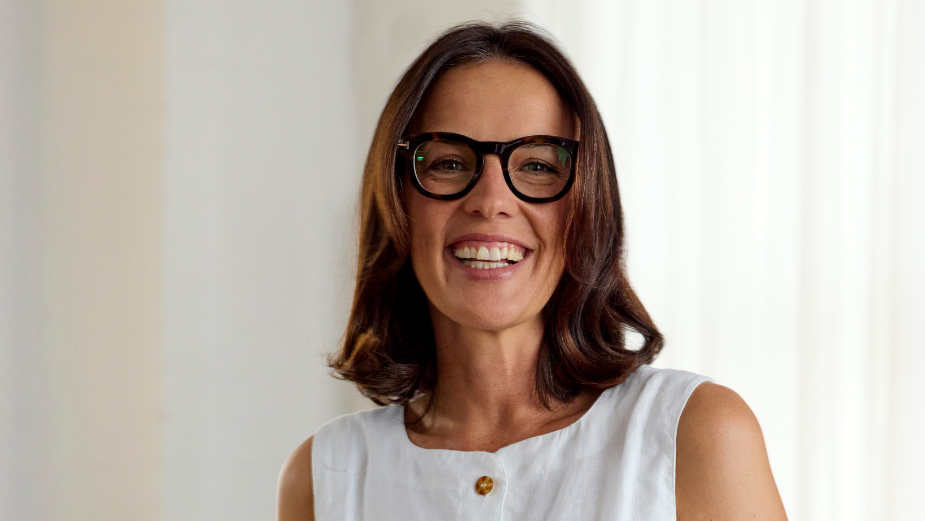
Canva’s executive creative director Cat van der Werff
LBB> Looking at the year gone by, how accurate were Canva’s 2025 Design Trends for the state of creativity in 2025, which predicted: “2025 is the year nostalgic, handcrafted design meets the precision of new technology.”
Cat> Looking back, our 2025 predictions really came true as creators continued to experiment with mixing their own instincts, style, and unique expression with AI’s powers in fun and creative ways. Our most popular trend, ‘Analogue Meets AI’, showed millions of creators across the globe blending old-school and modern visual aesthetics. ‘Analogue Meets AI’, rose 84% year-over-year and gained more than 170M+ additional impressions. What really stood out was how creators used AI to boost their own creativity, not replace it.
LBB> Your 2026 Design Trends Report names 2026 the ‘Year of Imperfect by Design’. How have people's attitudes around creativity and design shifted over the past year to shape this trend?
Cat> Every year, creativity takes on a new shape, molded by the world around us, the technology that inspires us, and what we’re all needing right now. AI is clearly changing the way people create and design, especially as many more start using it in everyday creative work. Even as the technology gets faster and smarter, achieving visual authenticity is still the end game as creators continue to accept and embrace AI as a creative collaborator, but at the same time crave the imperfections that make content feel personal, authentic, and human. As we look ahead to 2026 and beyond, a clear shift is happening in that 73% of the creators we surveyed are optimistic about AI-generated content and design, while 80% also agree it is the year they regain full creative control.
When we looked at what’s driving many of our trends, desires for things like connection with others, self-expression, play and experimentation, and nostalgia for simpler times also really stood out. You can see this in trends like ‘Explorecore’ and ‘Notes App Chic’, where people are choosing more hand-written, tactile, and typically ‘real’ aesthetics. For example, searches for editorial styles like ‘Zine’ and ‘Substack’ are up 85% and ‘DIY’ and ‘scrapbook-style’ jumped 90% year over year across our global community.
LBB> Tell me more about the process behind building the 2026 Design Report. At what point in the year did research begin, and how did you collate insights from the Designer Advisory Board alongside the Creator Survey and Canva Designs?
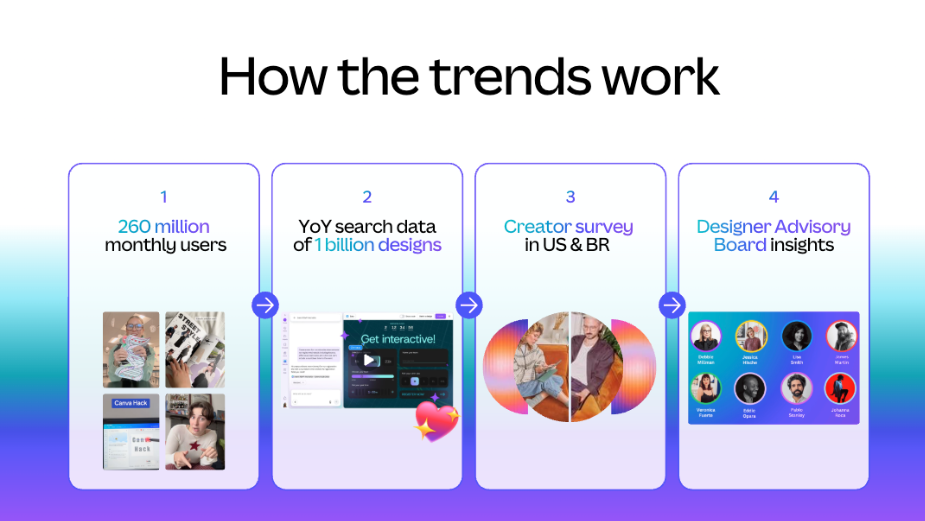
Cat> At Canva, we’re fortunate to be growing our community of creators quickly. More than 260 million people design on Canva and they create over 386 designs every second, which adds up to over a billion designs a month in 2025 alone. What this does is give us an incredibly unique and rich view into how design is evolving in real time.
Each of our 2026 Design Trends is based on what we’re seeing grow across our community. We started the research in July by looking at year-over-year growth across more trending search terms, comparing January–June 2024 with January–June 2025. Following that, we then surveyed 1,000 creators in key markets like the U.S. and Brazil to understand how they’re feeling about design, AI, and where creativity is headed.
We then layered all of that data with insights from our Designer Advisory Board, including creatives like Debbie Millman and Jessica Hische, to give it a truly human lens. So, in short, all of our trends and insights are grounded in real data and real cultural intuition – not guesswork.
LBB> How did you collate all of the trends, from ‘Explorecore’ to ‘Block Party’ to land on ‘Imperfect by Design’ as an overarching theme?
Cat> When we stepped back and looked at all the trends together, a clear throughline emerged. Across the data and in conversations with our Designer Advisory Board, we saw a clear blend of embracing AI, from our ‘Reality Warp’ trend to the rise of vibe coding, while intentionally holding on to the uniquely human quirks and imperfections that make content feel raw, honest, and able to connect on a personal level.
This isn’t about pulling away from technology. AI is still a central part of creative workflows, with 77% of creators describing it as an essential partner. What’s shifted is the mindset, in that creators want to use AI on their own terms, in ways that amplify their personality, taste, and originality. That’s how we landed on ‘Imperfect by Design’, a moment where messy, inconsistent, and human touches aren’t flaws, they’re all part of design’s charm.
LBB> What does ‘Imperfect by Design’ mean to you?
Cat> To me, ‘Imperfect by Design’ is about giving ourselves permission to create without chasing perfection. As more creators use AI to bring their ideas to life, 2026 feels like the moment where blending that technology with human imagination really matters. It’s about curiosity, creativity, and bending AI to fit your style and instincts – not the other way around.
The work that really stands out now feels human, raw, and honest, not overly polished or automated. I love seeing people let go of the pressure to be perfect or to play the algorithm game, and instead use technology as a tool to express who they really are and connect on a human level. From sensory textures to cinematic storytelling, ‘Imperfect by Design’ is a reminder that great ideas rarely start perfect, but they always start with imagination.
LBB> The report sheds light on what creators think about AI, with 80% of US respondents agreeing that “2026 is the year we regain creative control.” Why is Canva the right tool to balance AI usage alongside human craft?
Cat> At Canva, we believe the best creative work happens when technology supports human craft, not when it takes it over. That’s why we think of Canva as an ever-evolving Creative Operating System, not just a design tool. From your first idea to collaborating with a team, running a campaign, teaching a class, or publishing social content, the entire creative journey happens all in one place. And then AI is woven throughout that whole process to help you start from a blank page faster, experiment more freely, and make the work truly your own.
Now with our new Canva Design Model, we also offer fully editable AI outputs with manual control, wrapped into a platform where everything from forms and email design and video is fully connected. It’s this nice blend of simplicity, power, and interoperability that really sets our creative process apart. We’re also really proud of our new Ask @Canva feature, a true creative partner for design advice for everything from formatting, quick edits to generating first drafts, so people can stay focused on their vision, voice, and taste.
The most original ideas come when people riff with AI, not just take its first suggestion, and that’s exactly what Canva is built for. It’s not here to replace creativity, but to enable it.
LBB> Where can we expect to see examples of ‘Imperfect by Design’ creativity and design in the real world?
Cat> We’ll start seeing ‘Imperfect by Design’ creativity everywhere. It’s already taking over our social feeds and internet culture, but it’s also just as present in the real world across beauty, fashion, interiors and branding.
Because these trends are so flexible, we predict they’ll show up in lots of different visual mediums. For example, ‘Notes App Chic’ might look like a work poster made with AI, then finished with messy handwriting and real photos of the team. For brands, it could be sharing behind-the-scenes sketches or creative storyboards to make polished brand campaigns feel more human. ‘Opt-Out Era’ is all about keeping things simple, so we can expect more brands to use clean serif fonts, layouts and storytelling that cut through the noise online.
More broadly, we might see trends like ‘Texture Check’ show up in the beauty looks where makeup and nails feel more glossy, soft, or velvety – things you almost want to touch. In fashion, ‘Drama Club’ could show up in the form of everyday outfits with a bit of cinematic flair, like satin pants, velvet tops, or statement coats. And in home décor, ‘Prompt Playground’ brings grid patterns, checkerboard rugs, or pixel prints.
No matter how often you create, these trends are all about making them your own. Our design trends toolkit lets you experiment, play, and turn ideas into something that is not just on trend but that you’re truly proud of.


