


Brand Experiences in MENA: Tech Innovation Meets Human Connection


Some of the most ambitious brand experiences of recent years have come out of the Middle East. It’s clear why creatives like Mariano Gomez make the journey to be at the centre of it all.
Hailing from Patagonia, Mariano arrived in the region in 2018, bringing a background in industrial design and specialisation in spatial development for events, exhibitions, and public engagement. He began as a 3D lead at some of Dubai’s leading experiential agencies, before joining Imagination Riyadh this year as a creative lead, blending design and innovation to tell interactive stories for global brands such as Porsche, BMW, Audi, PlayStation, and Christian Louboutin. Wide-ranging and memorable, his list of launches, festivals, exhibitions, stands, and conferences even includes a Dubai Mall helter-skelter for Charlotte Tilbury.
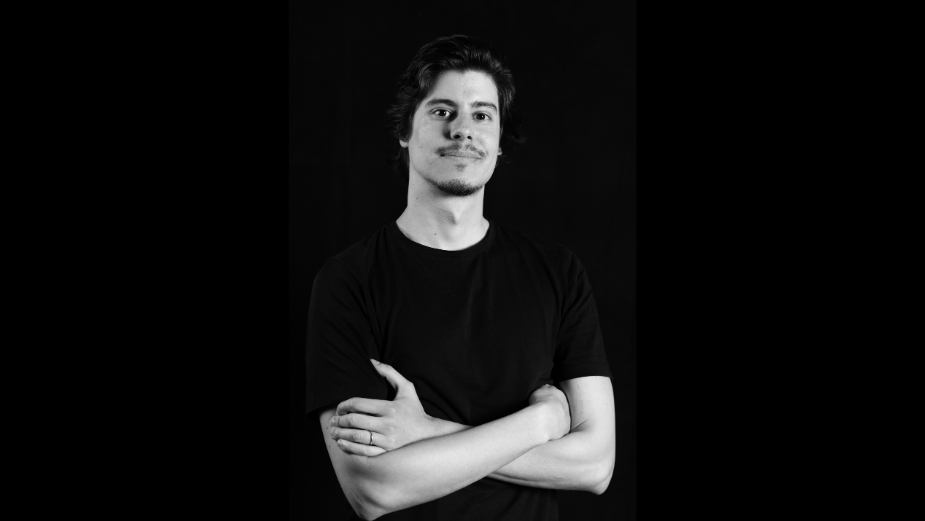
Above: Mariano Gomez, creative lead, Imagination Riyadh
LBB’s Zara Naseer sat down with Mariano to hear about the rapid development of brand experiences in MENA, how he’s finding the balance between the excitement of advancements in tech and keeping humans at the core, and why, sometimes, the best creativity is found inside the box.
LBB> Across your years on the scene, how have you seen experiential in MENA evolve?
Mariano> Storytelling has always been there – we’ve always wanted to spread a message and create a connection between the brand and visitors – but now human-centred narratives have become the main subject. Before, perhaps, it was a little bit more flashy, there were more PR stunts, whereas now it’s more about meaningful connection. Technology is just a tool to give that human message more reach and impact.
Experiences have always longed for measurable impact, and now, with all the tech, we can really get those numbers: how many visitors stepped inside, how many registered, how many interacted with a certain experience, how many saw it from afar. It also helps us when we’re starting to design an experience for a target audience: what do these audiences do, what do they like, what don’t they like?
LBB> What makes MENA such an attractive playground for someone working in experiential?
Mariano> The context of the last 10 years is that we’ve seen exponential growth and a lot of investment in the future of each city. For example, in Dubai, we had the Expo 2020, and there was a huge focus on the city at that time and turning it into a hub. What makes it an exciting playground is that there’s a lot of ambition and there are a lot of visionaries. The ideas are big and the turnarounds are fast. People are craving genuine innovation, they’re trying to lead, and for that, you have to try to break some rules, or use the latest tech, or be on top of what everyone else is doing.
I’m from Argentina, so for me, coming to the MENA region was a complete shift, and what I saw was this entanglement between the traditional aspect and the forward-thinking futurism. It’s a very broad spectrum and it’s quite cool to see.A recent project with the Ministry of Tourism is a great example of this blend. The focus was global, and it was a conference to bringing many countries and cultures and traditions together; but at the same time, it happened here in Riyadh, and part of the focus was to show how the kingdom is making changes, what they want to enhance, how they see the future of tourism, and that they’re thinking years ahead and looking to establish trends.
LBB> On the flip side, does it face any unique challenges?
Mariano> You have to learn what the cultural nuances are, what subjects are sensitive, what works, what doesn’t. Outdoor conditions too – when it’s hot, it’s really hot, so nothing happens outside. Lastly, timelines are very condensed and expectations are super high. Logistically speaking, it does push you to the limit.
LBB> What kinds of experiences do MENA audiences have a particular appetite for?
Mariano> Ones that feel exclusive yet shareable. Innovative yet authentic. They have to be memorable and leave a lasting impression. And definitely experiences that you can participate in, not just watch. They have to be interactive or immersive.
LBB> What trends are prominent/emerging in the region right now?
Mariano> The one that everyone would say is AI integration. It’s the new gamechanger, and something that we’ve never seen before.
Personalisation has been a talking point for many years, giving everyone their own experience that’s not just cookie cutter. But it was very challenging to create something truly customisable because of the logistical or tech aspects – everything was already encoded.
Now, with AI, you can create instant massive worlds that are unique to your prompts, and it can simultaneously track different people’s interactions with them. Before, that would require preprogramming, it’d have certain limits, and would take some time; whereas today, in a room of 20 or 50 or 100 people, they can all be having their own complex experiences with real-time responses. That’ll be applied to almost every aspect of an experience, and that’s very interesting.
LBB> What MENA brand experiences that you’ve been a part of have you learnt the most from?
Mariano> There are three examples that come to mind right away. One was for the luxury cosmetics brand, Charlotte Tilbury. For me, it was one of my first big projects. We came up with a helter-skelter that was going to go into the Dubai Mall. I’d just started working in the industry, so it really opened up my mind to thinking outside the box, to come up with a fun eye-catching concept that people would see from afar and be attracted to.
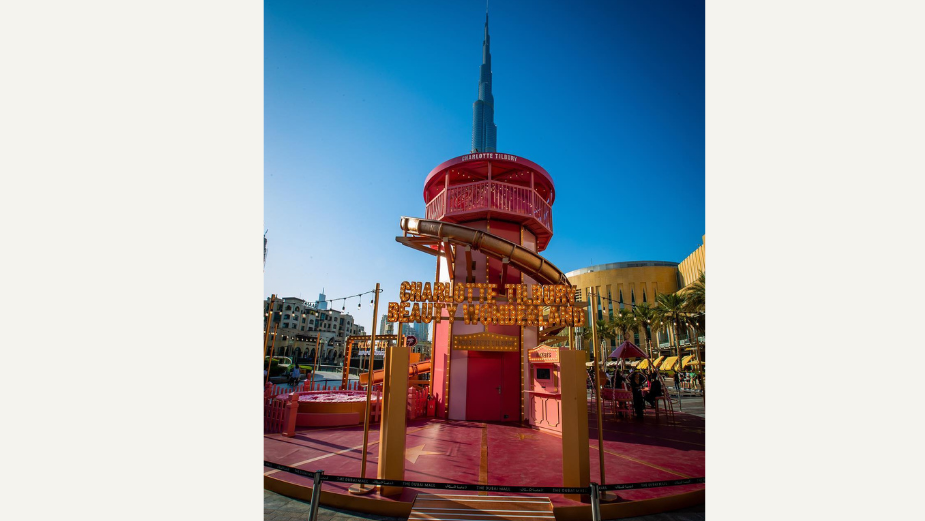
Above: Charlotte Tilbury - Pillow Talk, Beauty Wonderland (Helter Skelter) @ The Dubai Mall, 2019
I also worked with Porsche on icons of Porsche, which is a concept they’re now doing the fourth edition of. I worked on the first and second. They created a festival, which is nothing new in the industry, but it was the first time for the brand. It brought all the classics and all the fans that own classic cars together to showcase them, with full-blown activations and experiences around it to help others connect with and learn about the brand, because it has a long history people might not be aware of. It was successful and they’ve repeated it year on year, because it had a large impact within the brand’s community.
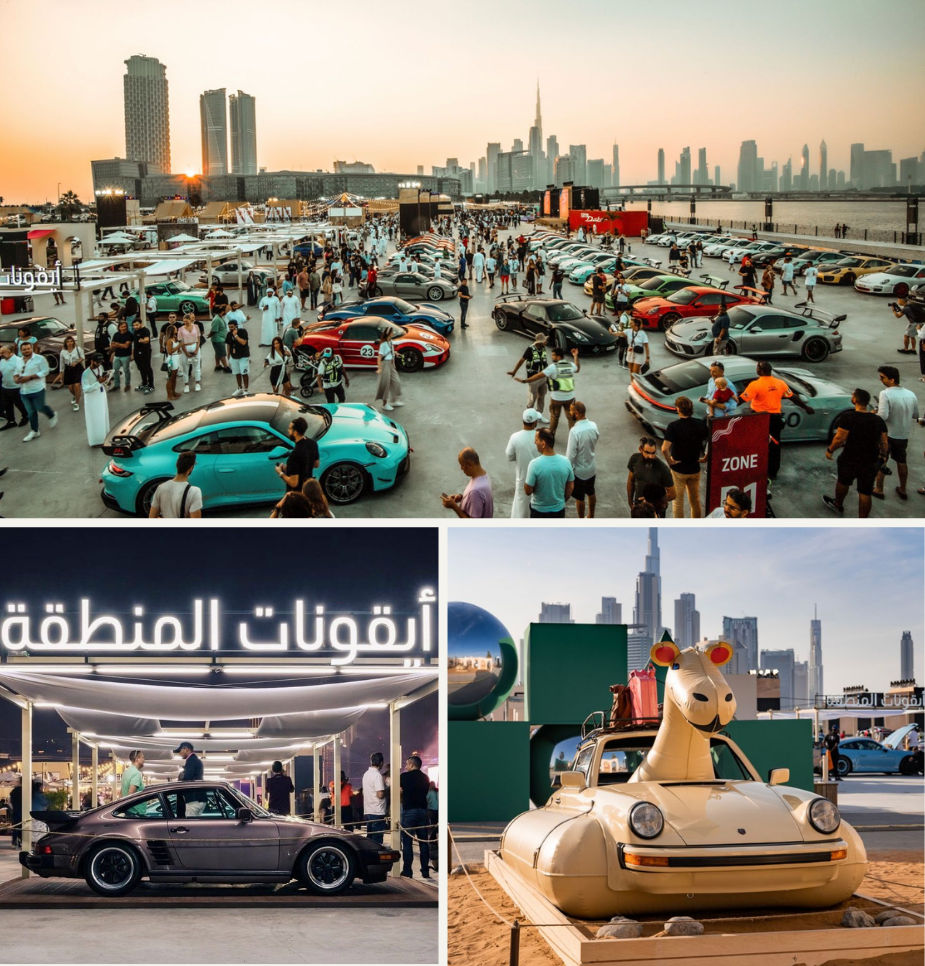
Above: Icons of Porsche - Safari Edition (2 ed.) @ Dubai Design District (D3), 2022
Then there was Tourise, which I was working on last week. Similarly, it was very successful the first time, a very large-scale conference with AI integration and forward thinking, and they’re already thinking about the next experience. It taught me ways of creating experiences and making them last.
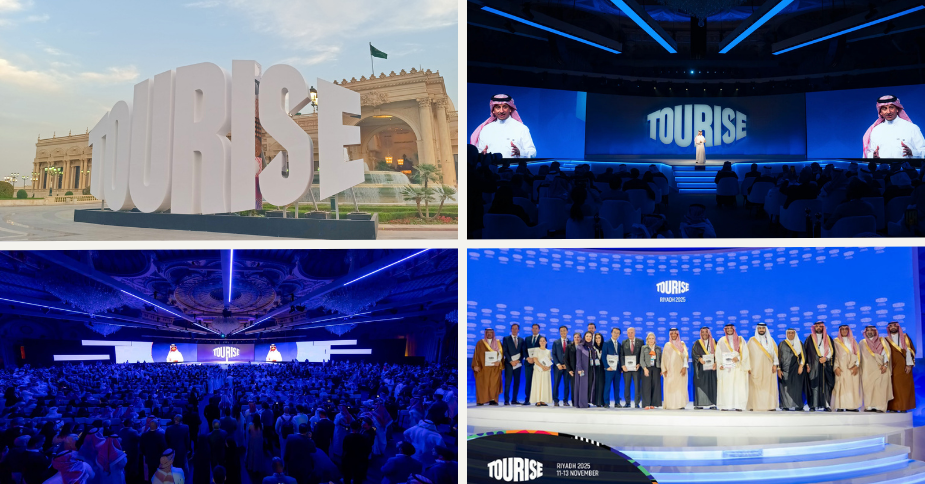
Above: Tourise, Riyadh 2025 @ King Abdulaziz International Conference Center (KAICC)
With small activations, the designer sometimes doesn’t get as involved in what happens after; but as my career has developed, and with these three projects, I’ve been more involved in what happens outside my desk, and the logistical aspects just blow my mind.
LBB> How do you push the bounds of your imagination when it comes to this line of work?
Mariano> If I'm designing something, I first contemplate what I would like to see. I try to meditate and visualise myself on the doorstep of the event or inside and consider, ‘what do I want to feel amazed by?’ I’ve worked on many events, so maybe I’m less impressionable now, and I need more novelty to amaze me.
The second thing is remembering that thinking inside the box also requires creativity and imagination. We think that imagination sits outside, when actually it’s more difficult to think within constraints. Finding a solution to that is even more creative and requires a lot of imagination.
LBB> What are your predictions for the future of brand activations in MENA?
Mariano> I predict that we’ll enhance AI integration to make things more hyper personalised and more efficient. I think we’ll try to enhance sustainability as well, because at the moment we work with a lot of temporary structures and there can be a lot of waste – with more modularity, we can repurpose or store them to use again. Things are being done, but there’s always room for improvement.


