


Behind the SickKids Campaign Highlighting the Importance of Burn Prevention for Canadian Children


Receiving a burn of any kind at any age is scary, but it’s safe to say that when children are involved, it’s an especially concerning affair. A demographic with developing, sensitive skin, and that in far too many cases might not know better, means greater potential for serious damage… which, unfortunately, creates situations that hospitals like SickKids end up dealing with on a regular basis.
This is something that Skin and Bone’s owner and executive producer, Liane Thomas, was well aware of. Having heard enough stories through her friends Charis Kelly, a nurse practitioner at SickKids, and Joel Fish, a paediatric burn surgeon, she realised an informative campaign emphasising the importance of child burn prevention was just the play, especially for February, which is Burns Prevention Month in Canada.
Working with director Nolan Sarner, as well as a talented group of creatives, this endeavour would result in a series of spots depicting various household situations that – while seemingly normal – pose genuine threat to unassuming children. From hot irons being left in the open, to baths running at too high a temperature, each film captured the menacing nature of everyday scenarios, whilst emphasising that it only takes a second for a life to change for the worse, or prevent harm. Featuring a voiceover from Jason Priestly, it all came together to walk the line between PSA and emotional creative, which is officially now in-market, making a real difference.
To learn more about how all of this came together, LBB’s Jordan Won Neufeldt sat down with Liane and Nolan for a chat.
LBB> From the top, how did you get involved in this project? Which side approached which, and why was this something Skin and Bones wanted to do?
Liane> A dear friend of mine, Charis Kelly, is a nurse practitioner at SickKids, and her husband, Joel Fish, is one of the few paediatric burn surgeons in our country. Because of this, I’ve wanted to create something for them for a long while, and draw attention to how many burns can be prevented with simple adjustments at home.
This also grew out of the fact that parents and caregivers who are attending children when they get burned live a life of shame, guilt and pain. It’s something I’ve discussed with both Charis and Joel before, and so I really wanted to make a film that could serve as a voice for them and help. That’s how all of this got started.
LBB> From here, what was the ideation process like? How did you refine these sentiments into a single campaign, and hone in on your approach?
Liane> Once things were rolling, I immediately thought of freelance creative team Mark Fitzgerald and Kerry Reynolds, and I asked if they would be open to helping me. They came back with some ideas, and together we landed on the creative strategy, ‘when you become aware of what causes childhood burns, they become 100% preventable’. It's such a clear and concise message attached to the problem, and we loved the simplicity of it.
From there, we really wanted to make sure there was a filmic, photographic and emotional quality to the imagery, because it had to feel universal. So, I went to our director, Nolan Sarner, right away. His approach to craft felt perfect for bringing this idea to life, and as soon as I sent it to him, he responded favourably.
LBB> Nolan, tell us more about this! Why was this something you were so eager to take on, and what was your storyboarding process like?
Nolan> What excited me about this project was the challenge, because at a bare-bones level, these are educational videos featuring inanimate objects. Turning a pot or changing the temperature on a faucet – these aren't compelling ideas on paper, so finding a way to execute them was an alluring creative task.
What I knew right away was that we needed to lean into ‘all it takes is a second’, which has two different, but equally important, meanings. All it takes is a second to cause a burn, and all it takes is to prevent a burn from happening. Our cinematographer, Jon Glendon, and I put a lot of time into thinking about how we'd make these images unassuming, but then transform them to menacing. How does a mug of coffee become an object you immediately know can upend your life?
To solve this, we decided to forgo moving the camera a tonne. This helped us showcase the environments of the spots, so viewers sit in these unassuming atmospheres, before the slow push focuses your attention, followed by bold, graphic closeups, underscoring the power of that heat, and these now obviously dangerous situations. Then, a solution is presented and the camera slowly pulls wide, revisiting our unassuming moment that, with an almost imperceptible change, has altered everything. ‘All it takes is a second’ has a completely new meaning now.
We also decided early that in each of the scenes, we needed to present the perspective from a child's point of view. A handle hanging off a stove is an invitation, for example. Only after that could we focus on how to resolve it with the simple solution that is presented. After all, for Charis, Joel and the SickKids team, success is one less person coming to the hospital.
LBB> What sort of equipment did you use to achieve this effect, and how did you work practically to cultivate this sort of aesthetic?
Nolan> This was a long and patient process. Because of the project focusing on everyday scenarios, we needed elements beyond the objects to draw viewers in.
The first thing we did was search for a location that had very distinct and interesting spaces to build from. Film – we used 35 millimeter – also carries a sense of lived experience, and its texture gave the image a human weight, which this project craved. Combined with production design, these elements elevated the tone perfectly.
Another thing we emphasised was lighting for different times of day across the four scenarios. It felt important to remind viewers that burns can affect anyone at any time, and we were very careful about this. In the kitchen, they're making breakfast. In the mug sequence, it's evening. These small details made a world of difference in the final result.
LBB> Tell us about the shoot itself! Where did you film, how long did it take, and do you have any anecdotes from on set?
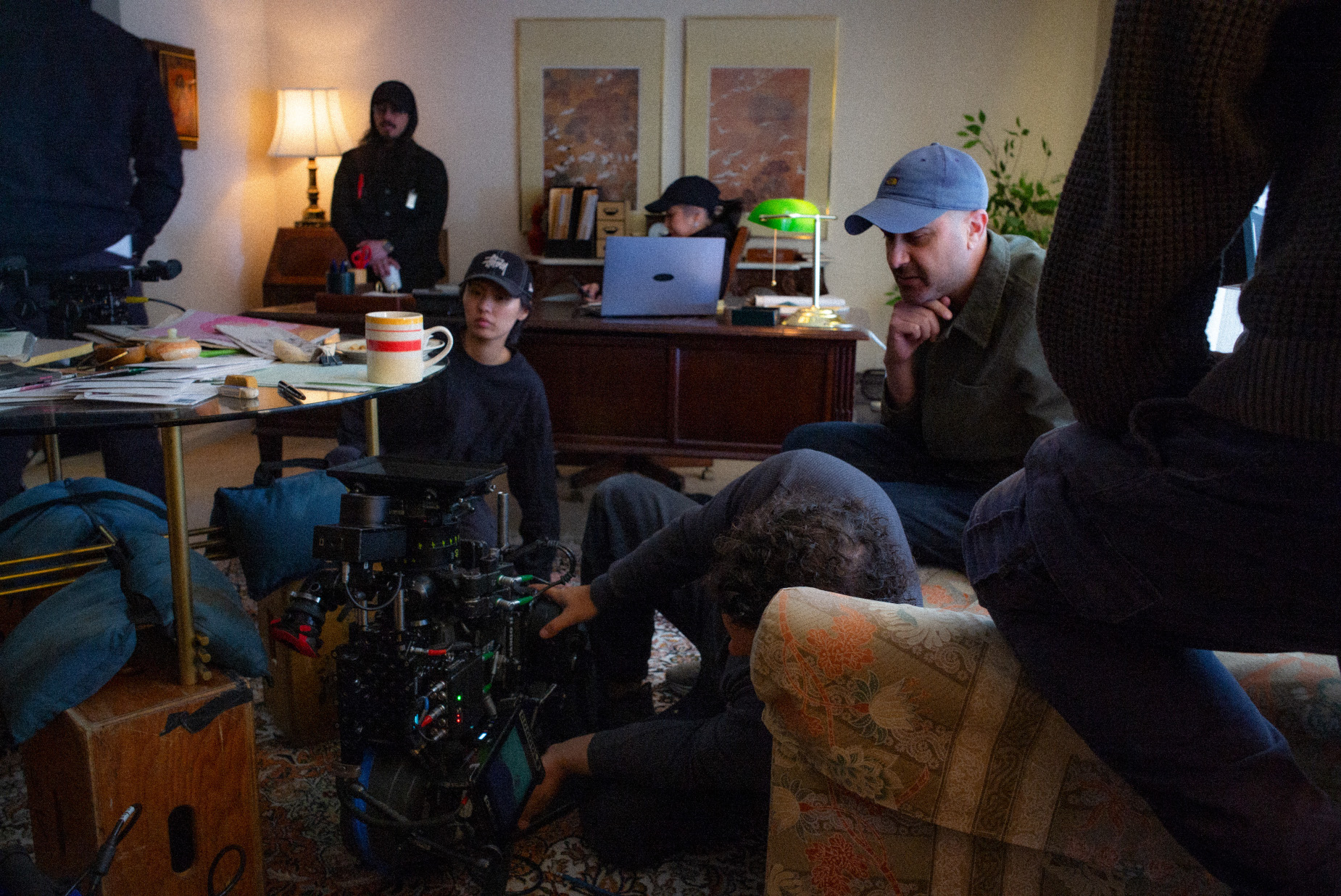
Nolan> We shot on location in East York, Toronto. The house we used provided us with all the different locations we were looking to achieve, which was really helpful, since the shoot itself was only one day.
That being said, the bathroom was a nightmare. It was 2 feet by 3 feet, which made it difficult to navigate the rigging and allow the camera to track properly. That being said, we eventually figured it out!
Liane> As another anecdote, Joel actually took the time to attend the shoot, and when he showed up that morning, he was armed with bags of bagels, schmears, and stuff for the crew, in order to try and give back. It was surreal.
On top of that, at the end of filming, this incredible man who literally saves lives stood up and offered his thanks, praising us for what we were doing. He gave this beautiful speech, talking about what this meant to him, and how overwhelming it was to see so many people coming together for a project like this. It was a very humbling experience. It’s not every day in this industry that we get to make a real difference like this!
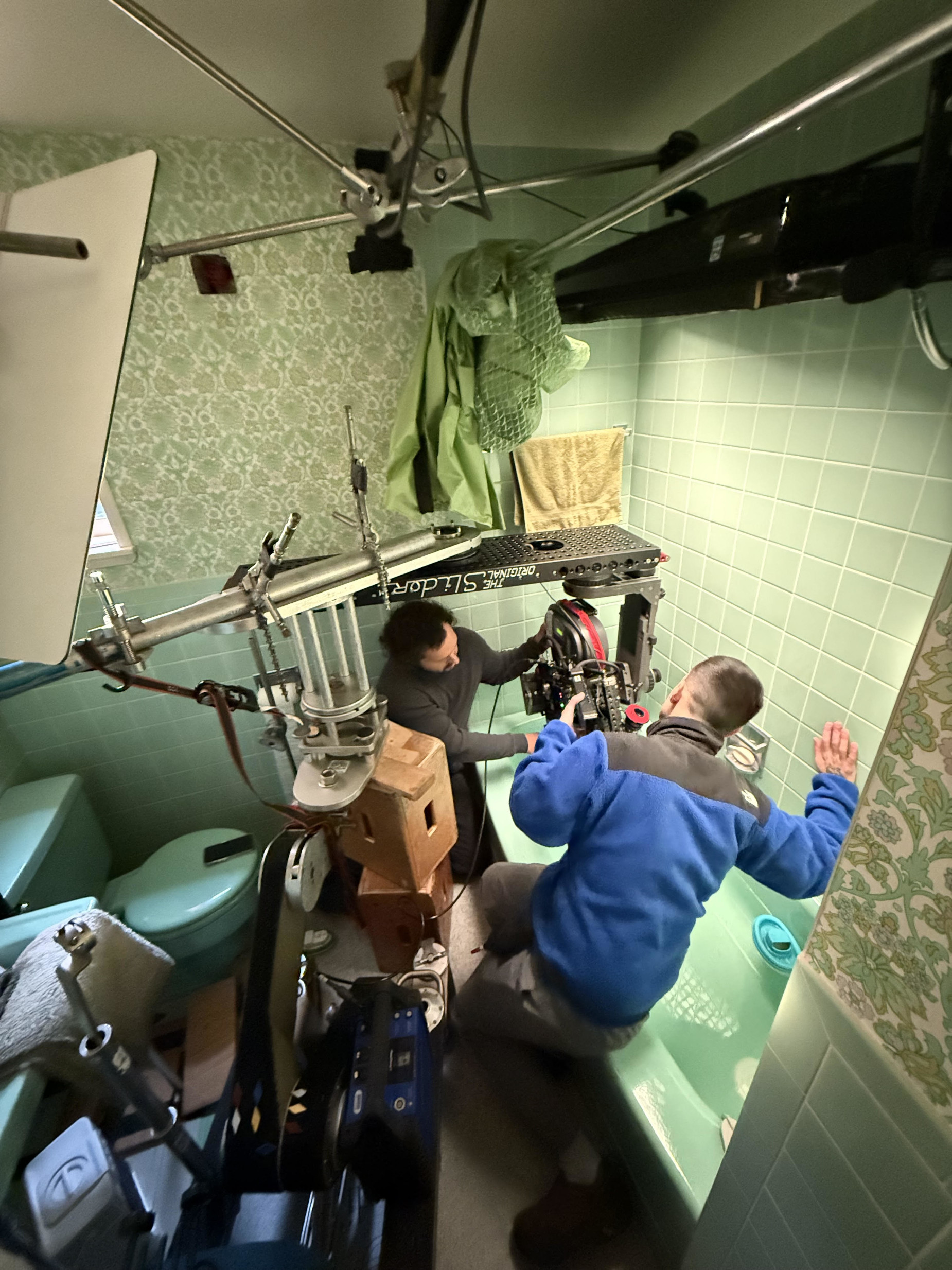
LBB> Some of the shots in particular – like the water in the tub and the burning element – are super impressive. What did it take to achieve these? And were any sequences especially challenging?
Nolan> It was really a matter of looking at these objects, and then working with Jon to figure out how we'd compose the images in a way that felt menacing, but also magnetic. What we eventually realised was that compositions were everything. Even the slight canter in the framing was important, since it'd lend an off-kilter feel, and we didn't want to look at these things in a normal way.
The pot was probably the easiest one to create that sense for, because it has bubbles, steam, and a red-hot element. But then you look at something like the bath, which can burn a child at a way lower temperature than an adult. We didn't want to over-dramatise things, so there's a very subtle steam to it, and we got our camera close to help viewers feel the water rising, before travelling to the faucet and emphasising it pouring down, which gives the sequence power and presence.
The iron was another tricky one. When shooting, we wanted to feel the presence of the heat coming off the plate… but we didn’t want to leave a hot iron sitting around. So, we decided to create our own heat. We actually used torches out of frame that dissipated the air and made it feel hot, which the camera then captured. Everything across these spots is about subtlety. That simplicity gives it its power.
LBB> Did you have a hand in the post process? How did editing go?
Nolan> We worked with Michael Barker at Outsider Editorial on this, who was a fantastic collaborator. Initially, the ask was four individual 30-second spots, but on set, it became increasingly apparent to me that there also needed to be a 60-second spot. So, I told him I wanted to cut a 60, and then we worked closely for two days, before presenting the longer cut, which people loved.
During this process, what Michael and I found was the importance of bringing sound design into the mix. There’s ambulance sounds, hospital sounds, 911 phone calls – all things that you could hear during a burn incident. And we edited it to have everything crescendo, right before the solution is brought to life.
I also want to highlight the grade on this project. We worked with colourist Simon Bøisx at Arketype, and he was an incredible asset to enhancing the images!
LBB> Speaking of sound, the music also does a great job elevating tension. How did you find the right theme for the spots?
Nolan> Fun fact: we originally didn't plan to have any music. However, something I do with every editor before I get in the room is encourage them to present what they think will work. Because of this, Michael actually found the track, and immediately, it was something we all loved.
We initially didn’t know if we could afford it, but we also couldn’t match it with cheaper music, which created a bit of a situation at one point. Incredibly, however, the hospital ended up pitching in to pay for it.
LBB> What lessons have you learned in the making of this campaign?
Nolan> I've learned patience. This project has been a labour of love for a long time. We actually shot back in August, so I've been waiting for this to come out. But, it's been well worth the wait.
Aside from that, I think this was a good reminder that encouraging the people you hire to have a voice is essential. When trust is there, good work happens.
Liane> The power of community, and having a cause worth rallying around. So many people got behind this project. From Eggplant Music & Sound, to Outsider, to Arketype, to the crew, and even the firefighters who donated, everybody we went to immediately wanted to help. Even now, Mark Mason is working with us to turn this into an out-of-home campaign. There's just incredible love and support from the community, because this cause is so important to people.
LBB> Finally, is there an element of the work you’re most proud of?
Liane> Aside from seeing the community come together, I've wanted to do something for Charis and Joel for a long time. So, the chance to give back to two people I care about means so much to me.
Nolan> I'm very proud of the help this will provide families who are uneducated. Burn prevention requires such simple steps, but a lot of people don't know them. Now they will.
I'm also very proud of the execution. All of my work is about lifting good ideas up and creating the emotional capital they deserve, and the end result of this project is just that. It's emotionally resonant and educational at the same time, which was a very tough thing to ask of it, but very rewarding to achieve.


