


Animation Trends Within Advertising with Jay & Jin


Coming off an award-winning year in 2025, the visionary animation director duo Jay & Jin are best known for merging their architectural background with the artistry of animation, crafting innovative storytelling experiences. Last year, their title sequence for the renowned film for Mac Miller’s ’Balloonerism’ album took home Bronze at Ciclope, and their campaign reimagining 5 Gum’s iconic late-2000s ‘How it feels to chew 5 Gum’ platform performed with wild success on social media.
Hailing from Thailand and based in LA, their unique style harmoniously blends 2D and 3D techniques, conceptual narratives deeply rooted in cultural perspectives, and a nuanced sensitivity towards capturing transient moments.
Currently, they serve as commercial animation directors, steering global campaigns, crafting visuals for A-list artists, and contributing to narrative worldbuilding in films.
Jay & Jin sat down with LBB to discuss their upcoming short films, ‘A Place to Call Home’ and ‘Himmapan’, the importance of a strong treatment, and their background in architecture.
Name: Jay & Jin
Location: LA
Repped by/in: Hornet in the US
Awards:
2025 Ciclope: Bronze: Animation – Title Sequences for Mac Miller’s ‘Balloonerism’ Title Sequence (directors)
LBB> What are some upcoming projects that you're excited about? Tell us a bit about them?
Jin> We are currently creating two short films, ‘A Place to Call Home’ and ‘Himmapan’, both exploring fictional versions of Bangkok through fantasy-driven world building.
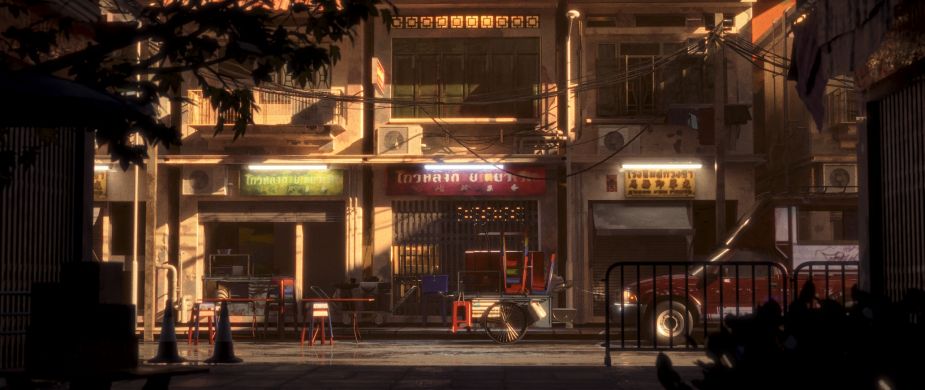
‘A Place to Call Home’ is a phone-call-narrated short that revisits memories of a Chinese immigrant’s home in ’70s Bangkok – inspired by the lives of my parents and grandparents. The film uses fragments of memory and phone recordings from my family to explore what home and belonging mean.
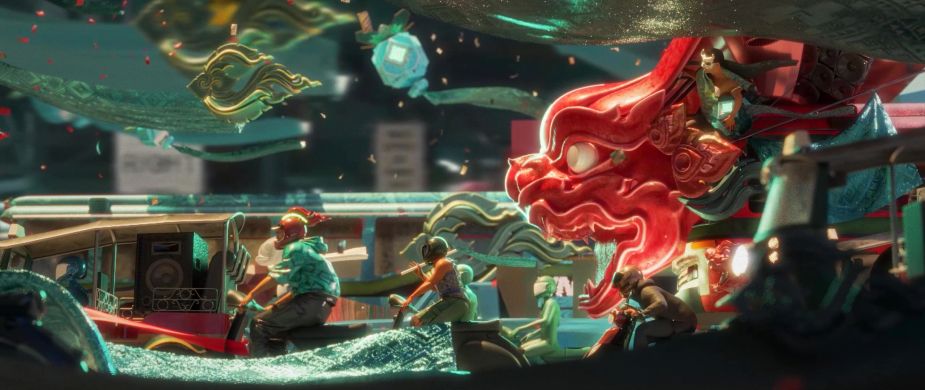
‘Himmapan’ explores Bangkok through a futuristic lens: set in a speculative, semi-flooded future Bangkok, the film follows a delivery driver during a Thai festival as culture, technology, and spirituality begin to overlap.
Both projects give us the freedom to reimagine the city and share personal memories of Bangkok in a more emotional and poetic way.
LBB> What excites you in the advertising industry right now, as a director? Any trends or changes that open new opportunities?
Jay> What excites us right now is how animation in advertising is leaning more into nostalgia and analogue-inspired feelings. There is a growing interest in work that feels textured, imperfect, and emotionally familiar, rather than overly polished.
We are also seeing more openness toward experimental and story driven approaches, where ads are allowed to build a mood and narrative instead of just delivering a message.
On top of that, AI is opening up new visual possibilities. It can introduce fresh and sometimes strange aesthetics that would have been difficult or even unthinkable to achieve before, which makes the space feel more open and playful.
LBB> What elements of a script sets one apart from the other and what sort of scripts get you excited to shoot them?
Jin> What really sets a script apart for us is when it pulls you into a fictional world. We get excited by ideas that feel familiar on an emotional level, but are presented in a way that feels fresh or unexpected. We are especially drawn to scripts that leave room for world building, where the story is not just about the message, but about creating a place, mood, or set of rules that the audience can step into, even for a brief moment.
LBB> How do you approach creating a treatment for a spot?
Jay> Our approach usually starts with world building. We both come from an architecture background, which naturally appealed to us because it sits so closely to design, space, and human experience. At the time in Thailand, it also felt like the most relevant path to explore those interests. We often treat space as a character in itself, using it to carry emotion, suggest history, and influence how the story unfolds.
When we begin a treatment, we first define the context. Where does this world exist, what culture shapes it, and how do people or creatures live inside it? Visually, we approach treatments much like concept artists. We focus heavily on atmosphere, materiality, and environmental design. Our work is very user-centric. We design at the human, architectural, and urban scale to make worlds feel believable and lived in.
When the creative allows, we like to physically navigate the spaces we build. Using more tactile camera choices like handheld or imperfect movement helps the world feel immersive instead of overly composed. For us, a strong treatment makes the audience feel the space, not just observe it.
LBB> If the script is for a brand that you're not familiar with/ don’t have a big affinity with or a market you're new to, how important is it for you to do research and understand that strategic and contextual side of the ad? If it’s important to you, how do you do it?
Jin> It is super important for us. Before thinking about visuals or style, we try to understand the context the ad will live in. The platform comes first since it directly affects the format, length, pacing, and who the audience is.
From there, we look at the existing landscape around the product or genre. We study what has been done before so we understand the conventions, expectations, and gaps. That groundwork helps us figure out where our creative input can actually add something meaningful, rather than just feeling different for the sake of it.
LBB> What type of work are you most passionate about – is there a particular genre or subject matter or style you are most drawn to?
Jin> We are most passionate about projects that are driven by world building. Animation really shines for us when it creates a context that feels familiar, but is presented in a way that sparks a new feeling or perspective.
Style wise, we naturally lean toward maximalism. We love when a world feels lived in, where every corner has its own small story and nothing feels empty or purely decorative. People often describe our work as stylised through the way we use light. We treat lighting almost like paint, using it to highlight certain details, shape characters, and guide emotion, rather than just illuminate a scene.
LBB> What misconception about you or your work do you most often encounter and why is it wrong?
Jay> A misconception we hear a lot is that we only like making work that feels dark or grungy. That is not really true. While we are drawn to texture and mood, we actually love using vibrant colour and always jump at it when it makes sense for the idea.
Growing up in Bangkok definitely shaped how we see things. The city is dense, layered, and a little chaotic in the best way, and that energy naturally shows up in our work. Sometimes that reads as messy or heavy, but for us it is more about embracing contrast and imperfection rather than sticking to one look or palette. We always let the concept lead, not a fixed style.
LBB> How do you strike the balance between being open/collaborative with the agency and brand client while also protecting the idea?
Jay> For us, it starts with respect and a real effort to understand where the agency and client are coming from. We try to understand the intention behind their notes rather than reacting to them on the surface.
Coming from a design background, we actually enjoy working with constraints. Most constraints exist for a reason, even when they do not immediately make sense, and they often help sharpen the idea rather than limit it. Where we tend to draw the line is when changes start to break the internal logic of the world we are building. As long as that logic holds, we are very open to collaboration.
LBB> What are your thoughts on opening up the production world to a more diverse pool of talent? Are you open to mentoring and apprenticeships on set?
Jin> Definitely. Some of the best projects we have made came from working with people from very different backgrounds. We are from Thailand, and working in the US has made us realise how much our own upbringing shapes our perspective and becomes a strength rather than a limitation.
In the kinds of stories we are drawn to, especially around nostalgia and memory, it is interesting to see how people from completely different backgrounds can still connect to the same feelings. That contrast often brings new layers to the work. Because of that, we are very open to mentoring and apprenticeships. We enjoy creating spaces where different perspectives can meet and learning goes both ways.
LBB> Your work is now presented in so many different formats – to what extent do you keep each in mind while you're working (and, equally, to what degree is it possible to do so)?
Jay> We do think about format early on, especially because it affects composition and how the work is experienced. When we are working on commercial projects, we often start in a square format since it is easier to adapt across platforms like social and web.
For more open and creative projects, we have been leaning toward ultrawide ratios for a more cinematic feel, or 4:5 when we want something that feels more playful and dynamic.
That said, we try not to let format become too restrictive. It is always a balance between being mindful of where the work will live, and leaving enough space for the idea to lead.
LBB> What’s your relationship with new technology and, if at all, how do you incorporate future-facing tech into your work (e.g. virtual production, interactive storytelling, AI/data-driven visuals etc)?
Jin> We have a pretty hands-on and crafty relationship with new technology. Part of that comes from not having a traditional animation background, so we tend to approach the process from the outside in rather than following a fixed pipeline.
A lot of our work is built around tools like Blender, which is open source and driven by a community-based way of sharing knowledge and tools. That mindset already encourages experimentation and flexibility, so newer technologies like AI naturally fit into our workflow.
We see AI less as a replacement, and more as something we can adapt and integrate into both production and creative tasks. It helps us move faster, test ideas more freely, and sometimes arrive at visuals or aesthetics that we would not have found otherwise.
LBB> Which pieces of your work do you feel show what you do best – and why?
Jay> ‘Himmapan’: In the midst of a bustling and vibrant Thai festival, a delivery driver sets out on a transformative journey. This animated short film transports us to a semi-flooded future Bangkok, where digital embodiments of culture, belief, and humanity coalesce harmoniously. Guided by his impatient digital companion, the driver navigates the terrain of the future city and uncovers connections that transcend the superficial and begin to enter the realm of spirits.
‘A Place to Call Home’: A phone-call-narrated animated short nostalgically explores memories of a Chinese immigrant’s home in the ’70s Bangkok slums. The film uses a series of evocative memories and vignettes to explore the concept of home and what it means to different people. Whether it's the difficulties of a daily routine, the warmth from nature, or the simple joy of being surrounded with empathy, the film celebrates the powerful sense of belonging that comes from feeling connected to a place.
Mars Wrigley 5 Gum: A new animated campaign reimagining the brand’s iconic late-2000s platform for today’s hyper-digital audience. Directed by us, the series features four animated films and a collection of internet-native memes that blend sci-fi influence, architectural worldbuilding, and surreal humor. The work carries forward the original campaign’s cinematic ambition while offering a contemporary interpretation shaped by internet culture and rapid content consumption.
Mac Miller’s ‘Balloonerism’ Title Sequence: The mysterious introduction to the short film accompaniment to Mac Miller’s posthumous album, ‘Balloonerism’. The opening titles foreshadow the surreal, dreamlike world where kids peer into adulthood and shadows begin to take shape. Inspired by classic cinema, the opening title sequence evokes a storybook slowly coming to life.


